
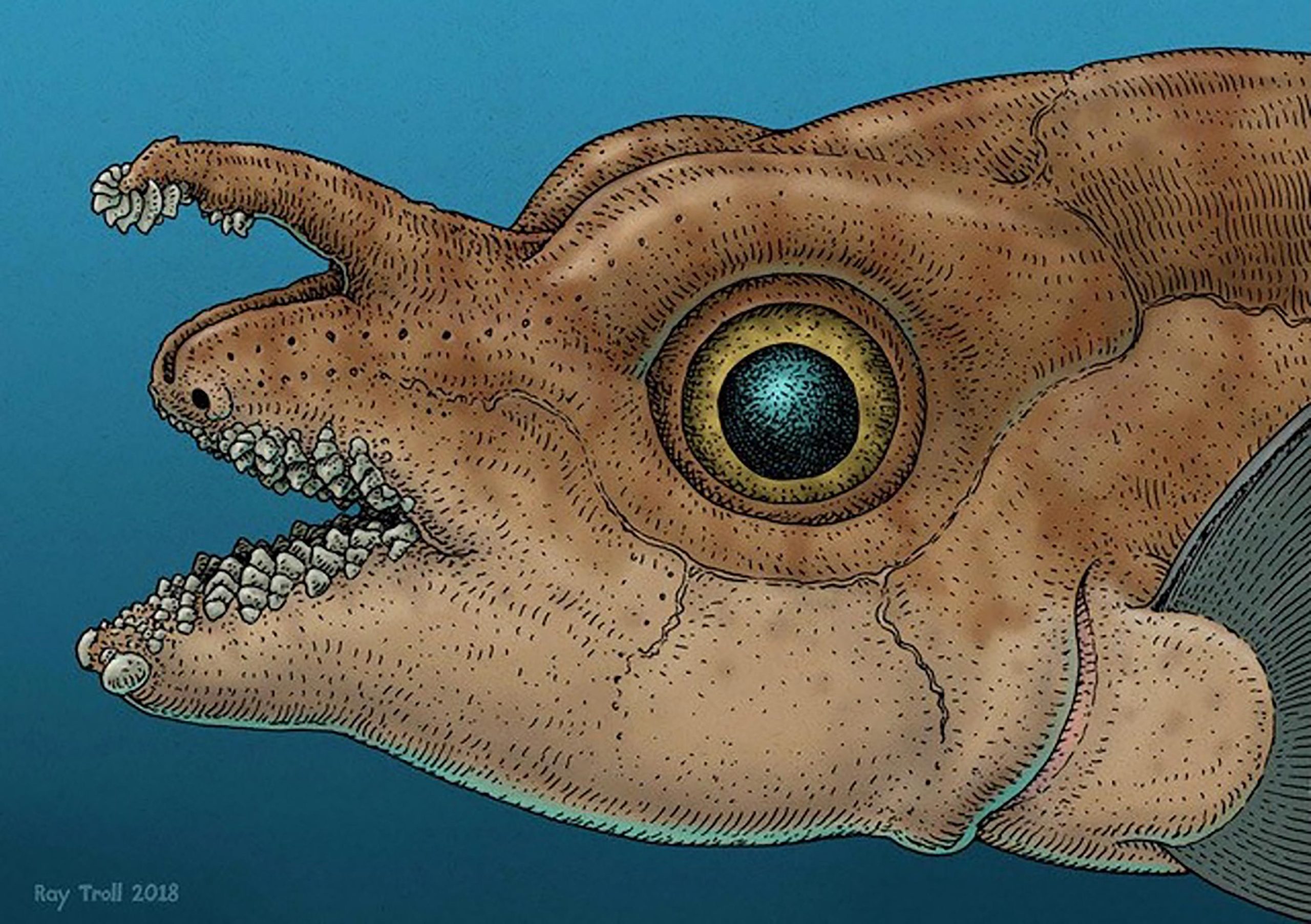
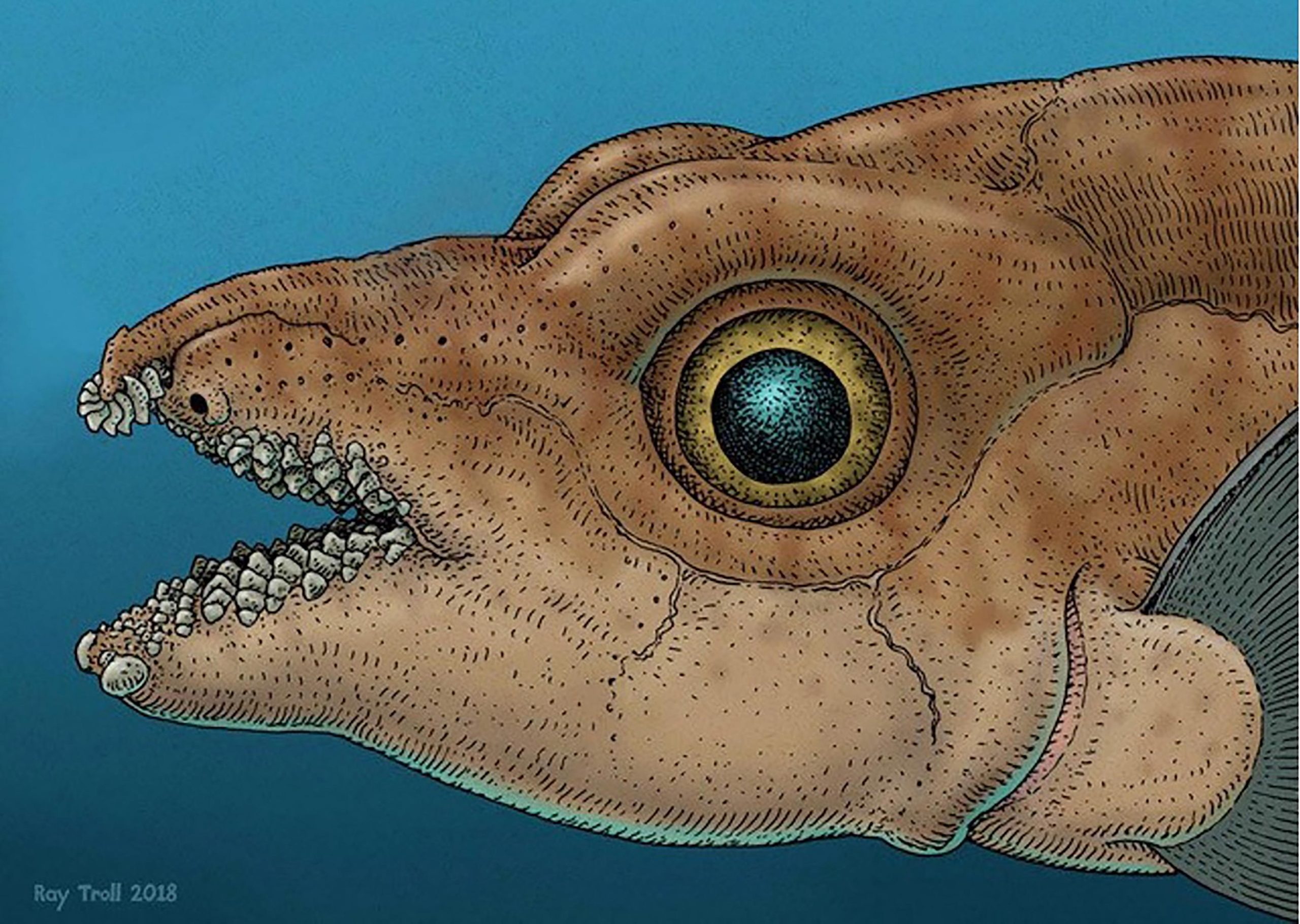
Male spotted ratfish have true teeth on a forehead appendage used for mating.
Across vertebrates, teeth share many defining traits. Regardless of their shape, size, or sharpness, they stem from the same genetic origins, display similar physical features, and are typically found within the jaw.
Recent discoveries challenge this long-standing assumption. Spotted ratfish, a shark-like fish that inhabits the northeastern Pacific Ocean, possess rows of teeth not in their mouths but on their foreheads. These teeth line a cartilaginous structure known as the tenaculum, an appendage that bears a striking resemblance to Squidward’s nose.
An evolutionary shift in perspective
For decades, scientists have debated the origins of teeth—structures so crucial to survival and evolutionary history that they are often taken for granted. Much of this discussion has focused exclusively on oral teeth, without seriously considering the possibility that teeth might develop in other locations. The discovery of forehead teeth on the tenaculum now raises new questions about where else they might occur and how such findings could reshape our understanding of dental evolution.
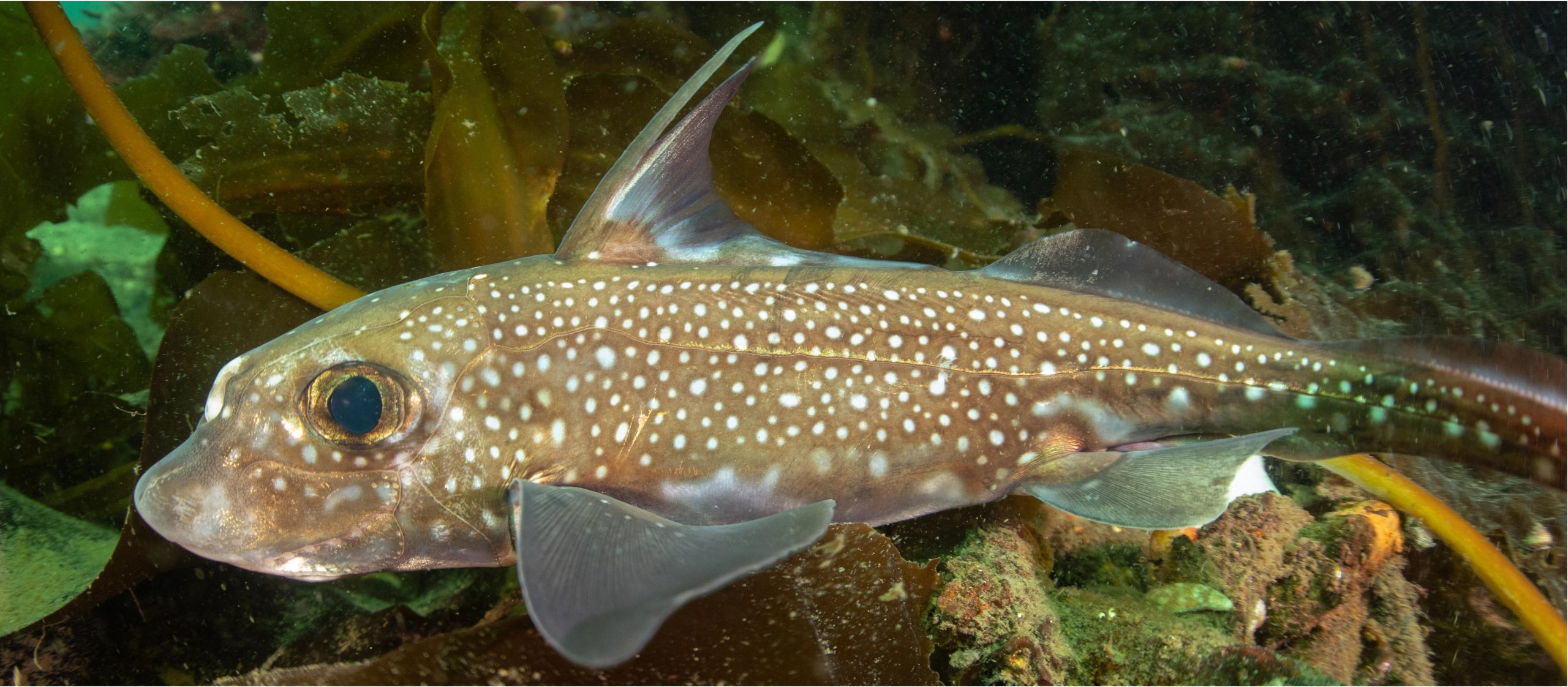
“This insane, absolutely spectacular feature flips the long-standing assumption in evolutionary biology that teeth are strictly oral structures,” said Karly Cohen, a UW postdoctoral researcher at the University of Washington’s Friday Harbor Labs. “The tenaculum is a developmental relic, not a bizarre one-off, and the first clear example of a toothed structure outside the jaw.”
The findings were published in Proceedings of the National Academy of Sciences.
Abundant spotted ratfish in Puget Sound
Spotted ratfish are among the most common fish in Puget Sound. They belong to the group of cartilaginous fishes known as chimaeras, which diverged from sharks on the evolutionary tree millions of years ago. These fish grow to about 2 feet in length, with their long, narrow tails making up half of their body size. Only adult males develop a tenaculum on their foreheads. At rest, this structure resembles a small white peanut between the eyes, but when raised, it becomes hooked and lined with teeth.
Males use the tenaculum in different contexts: they display it to ward off rivals, and during mating, they employ it to grasp females by the pectoral fin, preventing the pair from drifting apart.
“Sharks don’t have arms, but they need to mate underwater,” Cohen said. “So, a lot of them have developed grasping structures to connect themselves to a mate during reproduction.”
Spotted ratfish also have pelvic claspers that they use for this purpose.
Denticles versus true teeth
Many sharks, rays, and skates are covered with tooth-like structures known as denticles. In contrast, spotted ratfish are “pretty naked,” Cohen explained, apart from the denticles found on their pelvic claspers. This observation prompted researchers to ask: what happened to the rest of their denticles?
Prior to this investigation, scientists considered two possibilities. One idea was that the “teeth” on the tenaculum were simply denticles, remnants of a more extensive covering from the past. The other theory suggested that these structures were genuine teeth, comparable to those that grow inside the mouth.
“Ratfish have really weird faces,” Cohen said. “When they are small, they kind of look like an elephant squished into a little yolk sack.”
The cells that form the oral region are spread farther afield, making it plausible that at some point, a clump of tooth-forming cells might have migrated onto the head and stuck.
Testing competing theories
To test these theories, the researchers caught and analyzed hundreds of fish, using micro-CT scans and tissue samples to document tenaculum development. While sharks can be quite hard to study, spotted ratfish abound in Puget Sound. They frequent the shallows surrounding Friday Harbor Labs, the UW research facility located on San Juan Island. They also compared the modern ratfish to ancestral fossils.
The scans showed that both male and female ratfish begin making a tenaculum early on. In males, it grows from a small cluster of cells into a little white pimple that elongates between the eyes. It attaches to muscles controlling the jaw and finally, erupts through the surface of the skin and sprouts teeth. In females, it never materializes — or mineralizes — but evidence of an early structure remains.
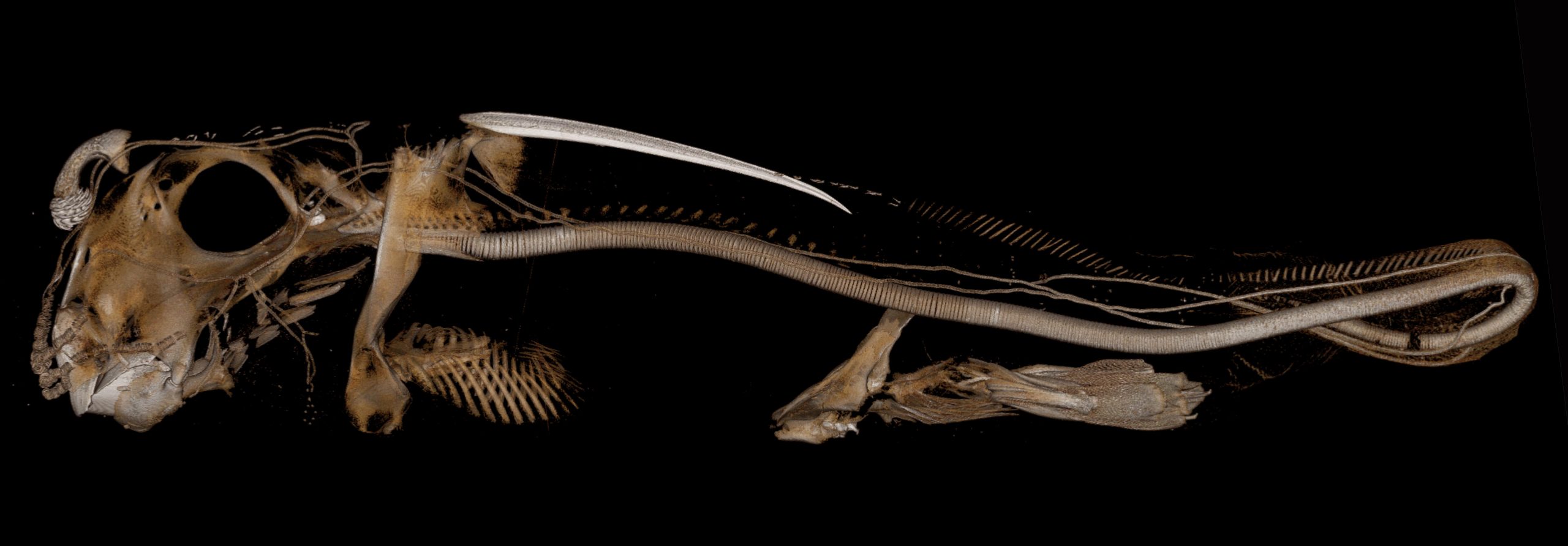
The new teeth are rooted in a band of tissue called the dental lamina that is present in the jaw but has never been documented elsewhere. “When we saw the dental lamina for the first time, our eyes popped,” Cohen said. “It was so exciting to see this crucial structure outside the jaw.”
In humans, the dental lamina disintegrates after we grow our adult teeth, but many vertebrates retain the ability to replace their teeth. Sharks, for example, have “a constant conveyor belt” of new teeth, Cohen said. Dermal denticles, including the ones on the spotted ratfish’s pelvic claspers, do not have a dental lamina. Identifying this structure was compelling evidence that the teeth on the tenaculum really are teeth and not leftover denticles. Genetic evidence also backed this conclusion.
“Vertebrate teeth are extremely well united by a genetic toolbox,” Cohen said.
Genetic evidence for true teeth
Tissue samples revealed that the genes associated with teeth across vertebrates were expressed in the tenaculum, but not the denticles. In the fossil record, they also observed evidence of teeth on the tenaculum of related species.
“We have a combination of experimental data with paleontological evidence to show how these fishes co-opted a preexisting program for manufacturing teeth to make a new device that is essential for reproduction,” said Michael Coates, a professor and the chair of organismal biology and anatomy at the University of Chicago and a co-author of the paper.
The modern adult male spotted ratfish can grow seven or eight rows of hooked teeth on its tenaculum. These teeth retract and flex more than the average canine, enabling the fish to latch onto a mate while swimming. The size of the tenaculum also appears to be unrelated to the length of the fish. Its development aligns instead with the pelvic claspers, suggesting that the migrant tissue is now regulated by other networks.
“If these strange chimaeras are sticking teeth on the front of their head, it makes you think about the dynamism of tooth development more generally,” said Gareth Fraser, a professor of biology at the University of Florida and the study’s senior author.
Sharks often serve as the model for studying teeth and development because they have so many oral teeth and are covered in denticles. But, Cohen added, sharks possess just a sliver of the dental diversity captured by history. “Chimeras offer a rare glimpse into the past,” she said “I think the more we look at spiky structures on vertebrates, the more teeth we are going to find outside the jaw.”
Reference: “Teeth outside the jaw: Evolution and development of the toothed head clasper in chimaeras” by Karly E. Cohen, Michael I. Coates and Gareth J. Fraser, 4 September 2025, Proceedings of the National Academy of Sciences.
DOI: 10.1073/pnas.2508054122
This research was funded by National Science Foundation, the Save Our Seas Foundation, and internal endowments at Friday Harbor Labs supporting innovative early-career research.
Never miss a breakthrough: Join the SciTechDaily newsletter.
Follow us on Google and Google News.
1 Comment
Explore The Amazan beneath; a few…