
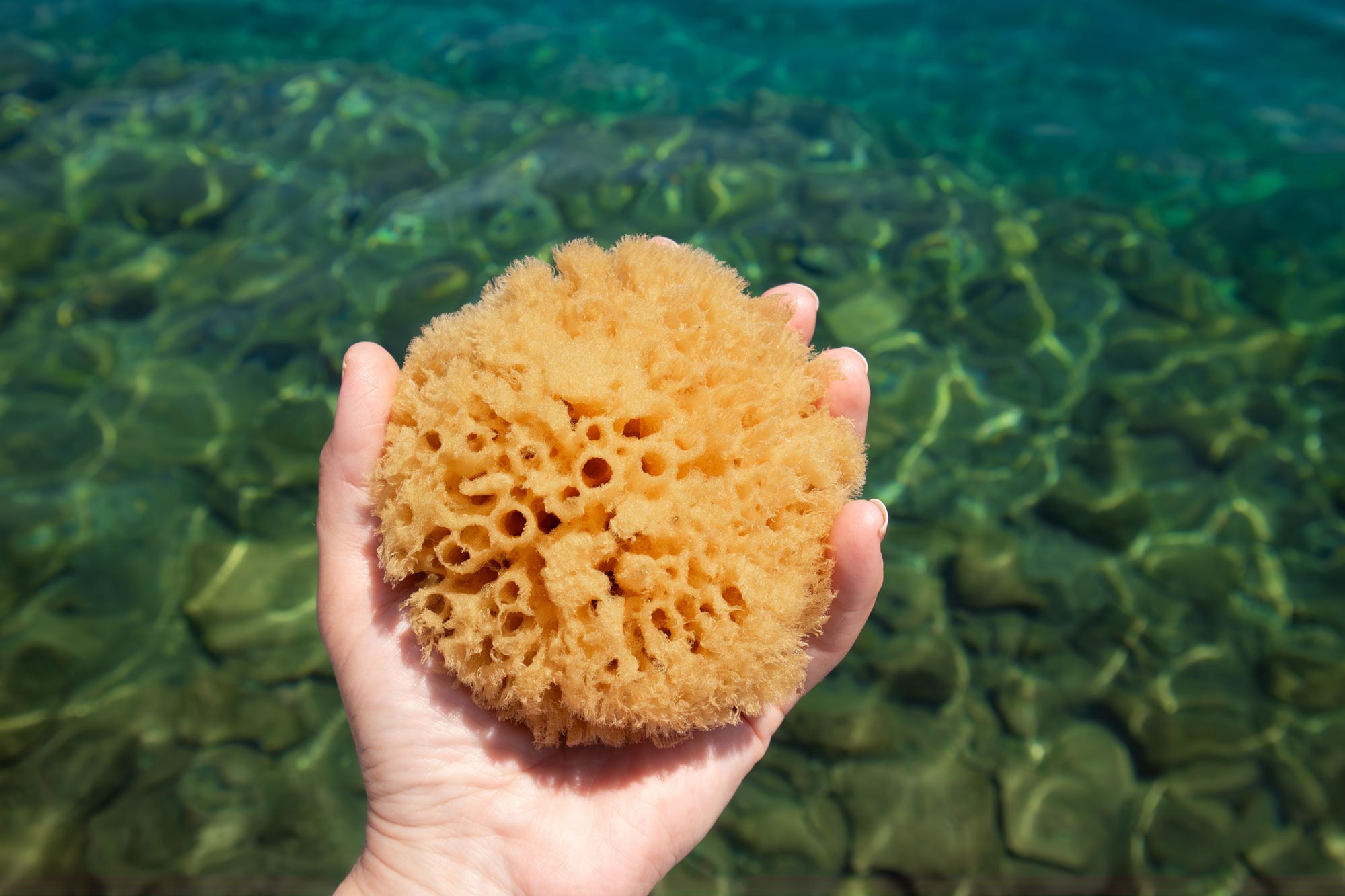
New research suggests Earth’s earliest sponges lacked skeletons, explaining why their origins appear older than the fossil record.
Sponges are considered some of the oldest animals on Earth, yet researchers have struggled to pin down when they first appeared. Studies of DNA from modern sponges, together with chemical clues preserved in ancient rocks, point to an origin at least 650 million years ago. The research was recently published in Science Advances.
That early date has sparked debate because it comes at least 100 million years before the earliest known sponge fossils. An international research team led by Dr. M. Eleonora Rossi of the University of Bristol’s School of Biological Sciences set out to resolve this mismatch by focusing on how sponge skeletons evolved.
Sponge Skeletons and the Fossil Record
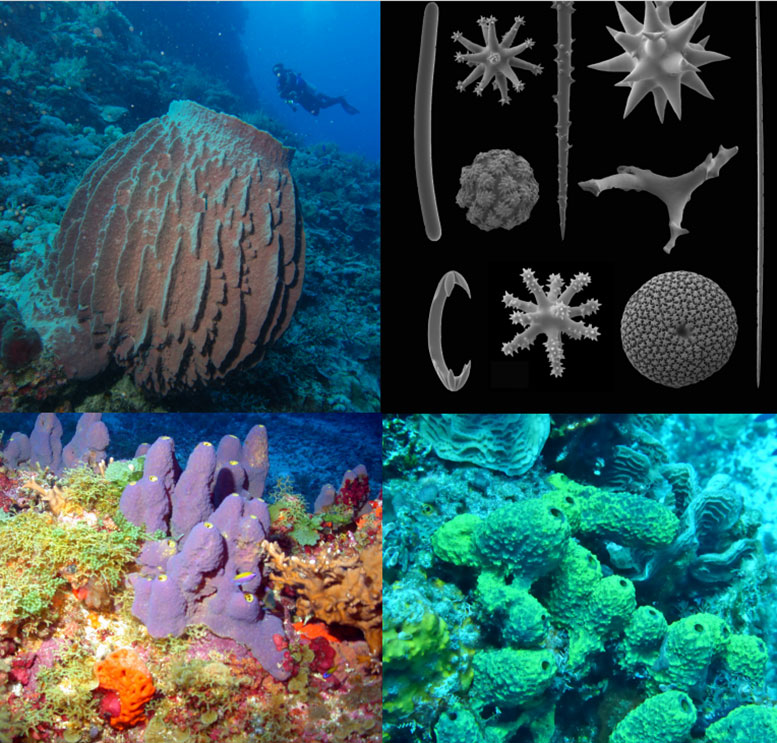
Many living sponges are supported by skeletons built from countless tiny, glass-like needles known as spicules. These structures fossilize well and appear in rocks dating to about 543 million years ago, during the late Ediacaran Period. Because older rocks lack spicules, some scientists have questioned whether sponges truly originated as far back as genetic and chemical evidence suggest.
Dr. Rossi and colleagues tackled the question in two steps. First, they combined fossil data with genetic information from 133 protein-coding genes to build an updated timeline for sponge evolution. Their results place the origin of sponges between 600-615 million years ago, bringing molecular estimates closer to what the fossil record shows. Next, they examined the history of sponge skeletons and found that spicules likely arose separately in different sponge lineages, rather than evolving once in a single common ancestor.
Dr. Rossi, Honorary Research Associate, said: “Our results show that the first sponges were soft-bodied and lacked mineralized skeletons. That’s why we don’t see sponge spicules in rocks from around 600 million years ago — there simply weren’t any to preserve.”
Independent Origins of Sponge Skeletons
Further evidence for this idea comes from modern sponge diversity. Although many sponge skeletons look similar at first glance, their underlying composition and genetic basis vary widely.
Dr. Ana Riesgo, a world-leading expert in sponge evolution from the Museum of Natural Sciences in Madrid (Spain) said: “We already had some clues that suggested sponge skeletons evolved independently. Modern sponge skeletons may look alike, but they’re built in very different ways. Some are made of calcite, the mineral that makes up chalk, others of silica, essentially glass, and when we examine their genomes, we see that entirely different genes are involved.”
Modelling the Evolution of Skeletons
To formally test these ideas, the team used a statistical computer model to reconstruct the evolutionary history of sponge skeletons.
Dr. Joseph Keating, also an author on the study, explained: “We used a Markov process, a type of predictive model that’s widely applied in fields like finance, AI, search engines, and weather forecasting. By modelling transitions between different skeletal types, including soft-bodied forms, we found that almost all models strongly reject the idea that the earliest sponges had mineralized skeletons. Only an unrealistic model treating all mineral types as equivalent suggests otherwise, and even then, the results are ambiguous.”
The results of this study raise interesting questions about early sponge evolution.
Professor Phil Donoghue, Professor of Palaeobiology at the University of Bristol said: “Given that nearly all living sponges have skeletons composed of mineralized spicules, we might naturally assume that spicules were important in early sponge evolution. Our results challenge this idea, suggesting that early sponge diversification was driven by something else entirely—and what that was is still a tantalizing mystery.”
Professor Davide Pisani, Professor of Phylogenomics at the University of Bristol, concluded: “But this is not only about sponges. Sponges are the first lineage of reef-building animals to evolve and might as well have been the very first animal lineage, although this is still debated. Understanding their evolution provides key insights into the origin of the very first reef systems. This is about how life and Earth co-evolved, and how the evolution of early animals changed our planet forever, ultimately enabling the emergence of the animal life forms we are familiar with, humans included.”
Reference: “Independent origins of spicules reconcile paleontological and molecular evidence of sponge evolutionary history” by Maria Eleonora Rossi, Joseph N. Keating, Nathan J. Kenny, Mattia Giacomelli, Sandra Álvarez-Carretero, Astrid Schuster, Paco Cárdenas, Sergi Taboada, Vasiliki Koutsouveli, Philip C. J. Donoghue, Ana Riesgo and Davide Pisani, 7 January 2026,Science Advances.
DOI: 10.1126/sciadv.adx1754
Never miss a breakthrough: Join the SciTechDaily newsletter.
Follow us on Google and Google News.