
Close Menu
    Facebook X (Twitter) Instagram
    SciTechDaily
    • Biology
    • Chemistry
    • Earth
    • Health
    • Physics
    • Science
    • Space
    • Technology
    Facebook X (Twitter) Pinterest YouTube RSS
    SciTechDaily
    Home»Space»Is Europa Habitable? Juno Spacecraft Measures Oxygen Production on Jupiter’s Moon
    Space

    Is Europa Habitable? Juno Spacecraft Measures Oxygen Production on Jupiter’s Moon

    By Southwest Research InstituteMarch 28, 2024No Comments5 Mins Read
    Facebook Twitter Pinterest Telegram LinkedIn WhatsApp Email Reddit
    Share
    Facebook Twitter LinkedIn Pinterest Telegram Email Reddit
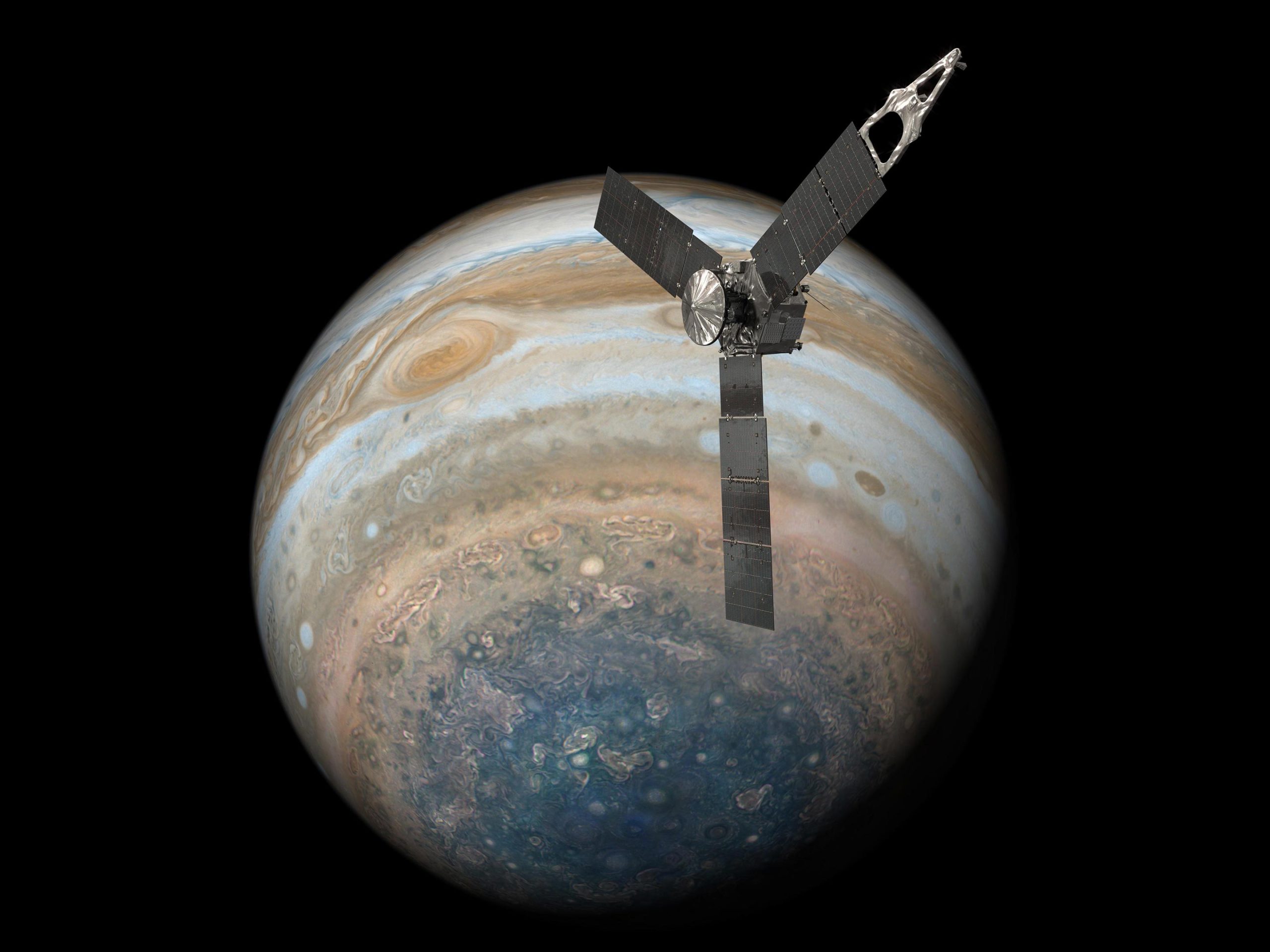
    NASA’s Juno Spacecraft Soaring Over Jupiter
    For the first time, SwRI scientists used the Jovian Auroral Distributions Experiment (JADE) instrument to definitively detect oxygen and hydrogen in the atmosphere of one of Jupiter’s largest moons, Europa. NASA’s Juno spacecraft, using its SwRI-developed instrument, made the measurements during a 2022 flyby of Europa. Credit: NASA/JPL-Caltech

    NASA’s Juno spacecraft has provided crucial data on the charged particles in Europa’s atmosphere, revealing insights into its potential for supporting life. This study, involving in-situ measurements of oxygen and hydrogen, brings new understanding to Europa’s environmental conditions and its subsurface ocean’s habitability.

    NASA’s Juno spacecraft has directly measured charged oxygen and hydrogen molecules from the atmosphere of one of Jupiter’s largest moons, Europa. According to a new study co-authored by SwRI scientists and led by Princeton University, these observations provide key constraints on the potential oxygenation of its subsurface ocean.

    “These findings have direct implications on the potential habitability of Europa,” said Juno Principal Investigator Dr. Scott Bolton of SwRI, a co-author of the study. “This study provides the first direct in-situ measurement of water components existing in Europa’s atmosphere, giving us a narrow range that could support habitability.”

    Juno’s Europa Flyby

    In 2022, Juno completed a flyby of Europa, coming as close as 352 kilometers to the moon. The SwRI-developed Jovian Auroral Distributions Experiment (JADE) instrument aboard Juno detected significant amounts of charged molecular oxygen and hydrogen lost from the atmosphere.

    “For the first time, we’ve been able to definitively detect hydrogen and oxygen with in-situ measurements and further confirm that Europa’s atmosphere is made primarily of hydrogen and oxygen molecules,” said SwRI Staff Scientist and co-author Dr. Robert Ebert.
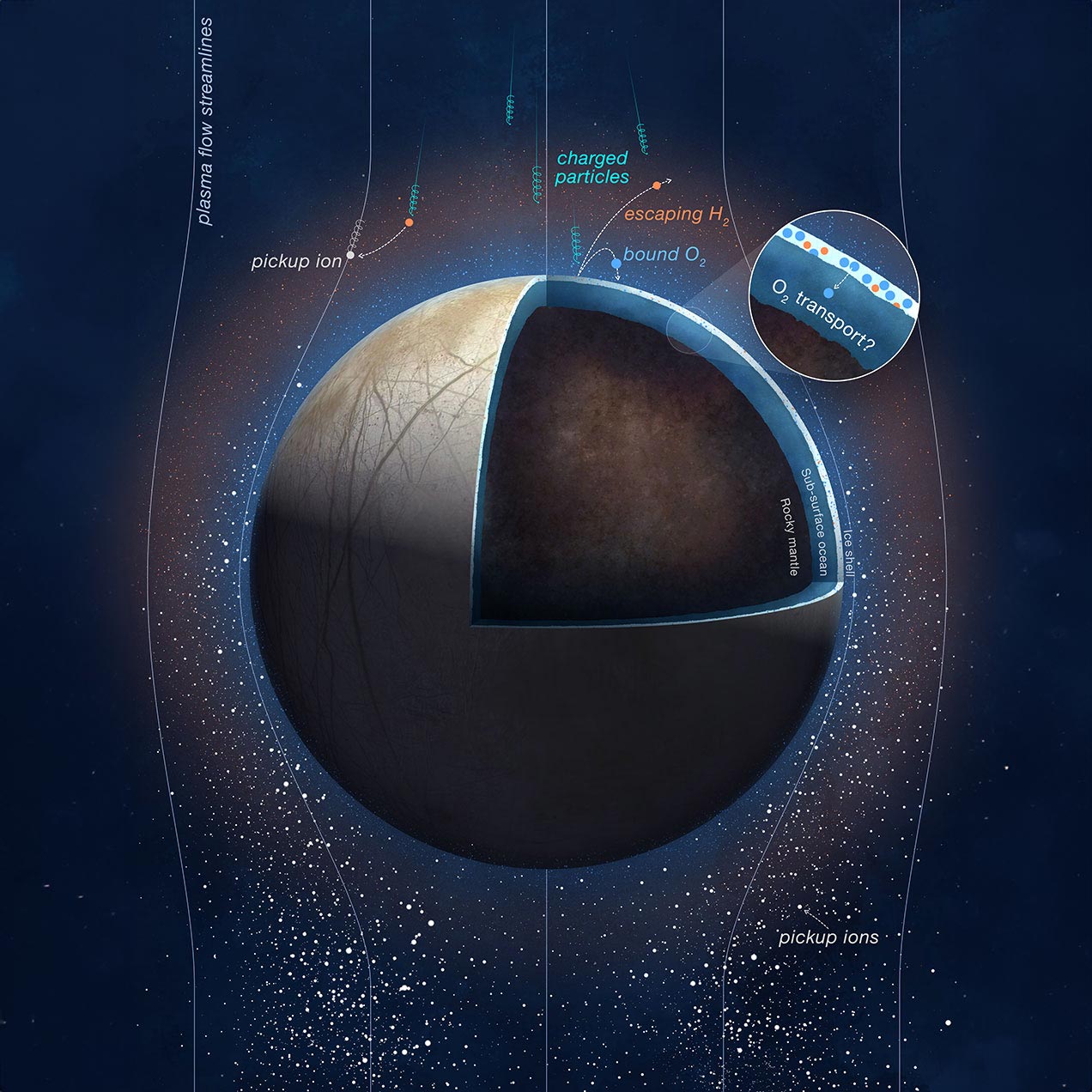
    Charged Particles From Jupiter Impacting Europa’s Surface
    This illustration shows charged particles from Jupiter impacting Europa’s surface, splitting frozen water molecules into oxygen and hydrogen molecules. Scientists believe some of these newly created oxygen gases could migrate toward the moon’s subsurface ocean, as depicted in the inset image. Credit: NASA/JPL-Caltech/SWRI/PU

    The source of these molecules is thought to be water ice on Europa’s surface. Jupiter’s rampant radiation breaks H2O’s molecular bonds, leaving behind oxygen and hydrogen. The heavier oxygen molecules remain more constrained to the surface, or near-surface atmosphere, while the lighter-weight hydrogen predominately escapes into the atmosphere and beyond. Oxygen produced in the ice is either lost from the atmosphere and/or sequestered in the surface. Oxygen retained in Europa’s ice may work its way to its subsurface ocean as a possible source of metabolic energy.

    Europa’s Oxygen Production and Implications

    “Europa’s ice shell absorbs radiation, protecting the ocean underneath. This absorption also produces oxygen within the ice, so in a way, the ice shell acts as Europa’s lung, providing a potential oxygen source for the ocean,” said Princeton University Research Scholar Dr. Jamey Szalay, the study’s lead author. “We put narrow constraints on the total oxygen production at Europa currently at around 12 kg per second. Before Juno, previous estimates ranged from a few kg per second to over 1,000 kg per second. The findings unambiguously demonstrate oxygen is continuously produced in the surface, just a good bit lower than we expected.”

    “We designed JADE to measure the charged particles that create Jupiter’s auroras,” said SwRI Staff Scientist and co-author Dr. Frederic Allegrini. “Flybys of Europa were not part of the primary Juno mission. JADE was designed to work in a high-radiation environment but not necessarily Europa’s environment, which is constantly bombarded with high levels of radiation. Nonetheless, the instrument performed beautifully.”
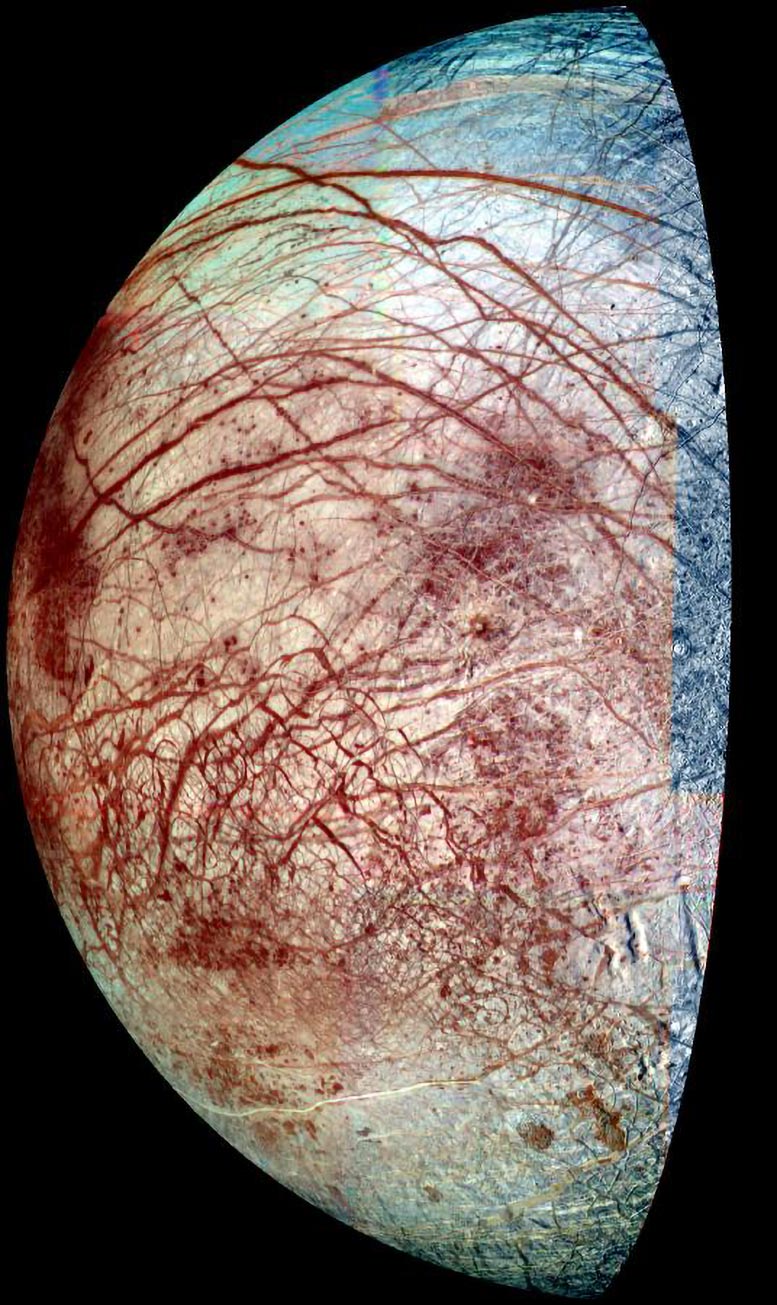
    Europa's Frozen Surface
    For the first time, SwRI scientists used the Jovian Auroral Distributions Experiment (JADE) instrument to definitively detect oxygen and hydrogen in the atmosphere of one of Jupiter’s largest moons, Europa. NASA’s Juno spacecraft, using its SwRI-developed instrument, made the measurements during a 2022 flyby of Europa. Credit: NASA/JPL/University of Arizona

    The new measurements contribute to a greater understanding of Europa and its environment, open the door for newer, more precise models. The study’s new estimation of how much oxygen is produced within Europa’s surface, for instance, could inform future research related to its subsurface ocean and potential habitability. As these observations provide the first charged particle composition measurements within Europa’s vicinity, they provide an important new window into the moons’ complex interaction with its environment.

    “Europa is a fascinating object because scientists are confident a liquid ocean exists in its interior,” Ebert said. “Water is important for the existence of life and can be found in or on objects with varying characteristics. Europa is a good place to search for water within our solar system.”

    For more on this research, see Surprising Oxygen Insights From Europa’s Close Flyby.

    Reference: “Oxygen production from dissociation of Europa’s water-ice surface” by J. R. Szalay, F. Allegrini, R. W. Ebert, F. Bagenal, S. J. Bolton, S. Fatemi, D. J. McComas, A. Pontoni, J. Saur, H. T. Smith, D. F. Strobel, S. D. Vance, A. Vorburger and R. J. Wilson, 4 March 2024, Nature Astronomy.
    DOI: 10.1038/s41550-024-02206-x

    Never miss a breakthrough: Join the SciTechDaily newsletter.
    Follow us on Google and Google News.

    Europa Juno Spacecraft Moons Planets Popular Southwest Research Institute
    Share. Facebook Twitter Pinterest LinkedIn Email Reddit

    Related Articles

    Uranus Has a Tiny New Moon and It’s Only Six Miles Wide

    Bizarre Underwater Snow Gives Clues About the Icy Shell of Jupiter’s Moon Europa

    Scientists Identify a Possible Source for Red Cap on Pluto’s Largest Moon Charon

    Ganymede Casts a Massive Shadow Across Jupiter in Spectacular New Image From NASA’s Juno Spacecraft

    “Chaos Terrains” Could Be Shuttling Oxygen to Ocean on Jupiter’s Moon Europa

    NASA’s Juno Spacecraft Captures Stunning View of Jupiter’s Moons Io and Europa – And a Crater on Ganymede

    Hear the Eerie Radio Emissions NASA’s Juno Spacecraft Recorded From Jupiter and Its Moon Io

    “Beautiful!” – Ride With NASA’s Juno Spacecraft As It Flies Past the Solar System’s Biggest Moon and Jupiter

    Strange New Auroral Feature Discovered on Jupiter

    Leave A Reply Cancel Reply

    • Facebook
    • Twitter
    • Pinterest
    • YouTube

    Don't Miss a Discovery

    Subscribe for the Latest in Science & Tech!

    Trending News

    Artificial Sweeteners May Harm Future Generations, Study Suggests

    Splashdown! NASA Artemis II Returns From Record-Breaking Moon Mission

    What If Consciousness Exists Beyond Your Brain

    Scientists Finally Crack the 100-Million-Year Evolutionary Mystery of Squid and Cuttlefish

    Beyond “Safe Levels”: Study Challenges What We Know About Pesticides and Cancer

    Researchers Have Found a Dietary Compound That Increases Longevity

    Scientists Baffled by Bizarre “Living Fossil” From 275 Million Years Ago

    Your IQ at 23 Could Predict Your Wealth at 27, Study Finds

    Follow SciTechDaily
    • Facebook
    • Twitter
    • YouTube
    • Pinterest
    • Newsletter
    • RSS
    SciTech News
    • Biology News
    • Chemistry News
    • Earth News
    • Health News
    • Physics News
    • Science News
    • Space News
    • Technology News
    Recent Posts
    • What if Dark Matter Has Two Forms? Bold New Hypothesis Could Explain a Cosmic Mystery
    • Researchers Expose Hidden Chemistry of “Ore-Forming” Elements in Biology
    • Geologists Reveal the Americas Collided Earlier Than We Thought
    • 20x Difference: Study Reveals True Source of Airborne Microplastics
    • Scientists Uncover Hidden Force Powering Yellowstone’s Supervolcano
    Copyright © 1998 - 2026 SciTechDaily. All Rights Reserved.
    • Science News
    • About
    • Contact
    • Editorial Board
    • Privacy Policy
    • Terms of Use

    Type above and press Enter to search. Press Esc to cancel.