

Astronomers used the James Webb Space Telescope to detect ancient lonely quasars with murky origins. They appear to have few cosmic neighbors, raising questions about how they first emerged more than 13 billion years ago.
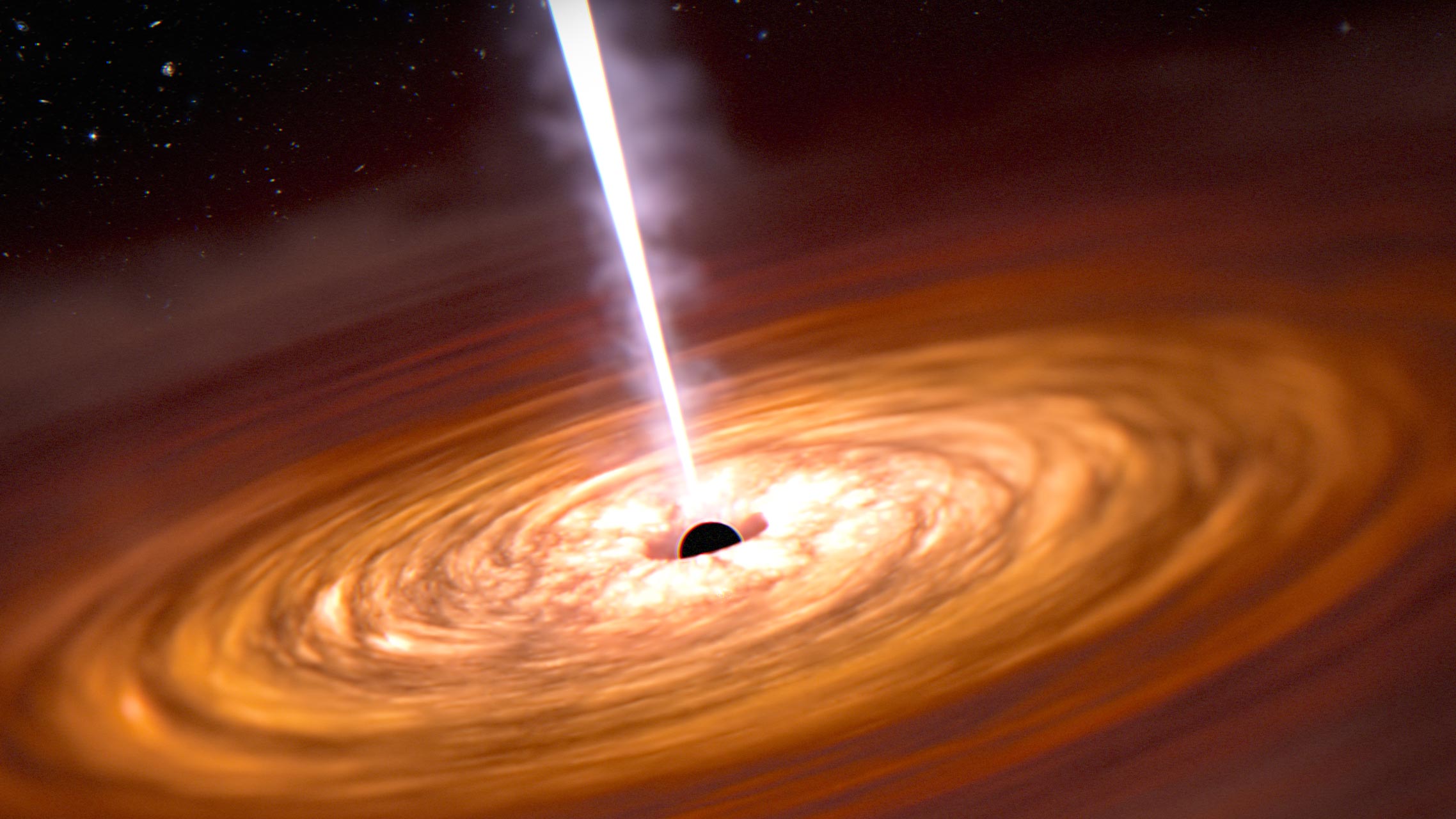
A quasar is an incredibly bright region at the center of a galaxy, powered by a supermassive black hole. As this black hole pulls in gas and dust from its surroundings, it releases an immense amount of energy, making quasars some of the most luminous objects in the universe. Quasars have been detected from as early as a few hundred million years after the Big Bang, raising the question of how they could have become so massive and bright in such a short amount of cosmic time.
Scientists have suggested that the first quasars formed in areas of overly dense primordial matter, which likely also gave rise to smaller galaxies nearby. However, a recent MIT-led study has revealed that some of these ancient quasars seem to exist in isolation, without the dense galactic environments expected in the early universe.
Observations With the James Webb Space Telescope
The astronomers used NASA’s James Webb Space Telescope (JWST) to peer back in time, more than 13 billion years, to study the cosmic surroundings of five known ancient quasars. They found a surprising variety in their neighborhoods, or “quasar fields.” While some quasars reside in very crowded fields with more than 50 neighboring galaxies, as all models predict, the remaining quasars appear to drift in voids, with only a few stray galaxies in their vicinity.
These lonely quasars are challenging physicists’ understanding of how such luminous objects could have formed so early on in the universe, without a significant source of surrounding matter to fuel their black hole growth.
The Isolation of Ancient Quasars
“Contrary to previous belief, we find on average, these quasars are not necessarily in those highest-density regions of the early universe. Some of them seem to be sitting in the middle of nowhere,” says Anna-Christina Eilers, assistant professor of physics at MIT. “It’s difficult to explain how these quasars could have grown so big if they appear to have nothing to feed from.”
There is a possibility that these quasars may not be as solitary as they appear, but are instead surrounded by galaxies that are heavily shrouded in dust and therefore hidden from view. Eilers and her colleagues hope to tune their observations to try and see through any such cosmic dust, in order to understand how quasars grew so big, so fast, in the early universe.
Eilers and her colleagues report their findings in a paper published on October 17 in the Astrophysical Journal. The MIT co-authors include postdocs Rohan Naidu and Minghao Yue; Robert Simcoe, the Francis Friedman Professor of Physics and director of MIT’s Kavli Institute for Astrophysics and Space Research; and collaborators from institutions including Leiden University, the University of California at Santa Barbara, ETH Zurich, and elsewhere.
Deep Space Discoveries
The five newly observed quasars are among the oldest quasars observed to date. More than 13 billion years old, the objects are thought to have formed between 600 to 700 million years after the Big Bang. The supermassive black holes powering the quasars are a billion times more massive than the sun, and more than a trillion times brighter. Due to their extreme luminosity, the light from each quasar is able to travel over the age of the universe, far enough to reach JWST’s highly sensitive detectors today.
“It’s just phenomenal that we now have a telescope that can capture light from 13 billion years ago in so much detail,” Eilers says. “For the first time, JWST enabled us to look at the environment of these quasars, where they grew up, and what their neighborhood was like.”
Environmental Variations Among Quasars
The team analyzed images of the five ancient quasars taken by JWST between August 2022 and June 2023. The observations of each quasar comprised multiple “mosaic” images, or partial views of the quasar’s field, which the team effectively stitched together to produce a complete picture of each quasar’s surrounding neighborhood.
The telescope also took measurements of light in multiple wavelengths across each quasar’s field, which the team then processed to determine whether a given object in the field was light from a neighboring galaxy, and how far a galaxy is from the much more luminous central quasar.
“We found that the only difference between these five quasars is that their environments look so different,” Eilers says. “For instance, one quasar has almost 50 galaxies around it, while another has just two. And both quasars are within the same size, volume, brightness, and time of the universe. That was really surprising to see.”
Challenging the Standard Model
The disparity in quasar fields introduces a kink in the standard picture of black hole growth and galaxy formation. According to physicists’ best understanding of how the first objects in the universe emerged, a cosmic web of dark matter should have set the course. Dark matter is an as-yet-unknown form of matter that has no other interactions with its surroundings other than through gravity.
Shortly after the Big Bang, the early universe is thought to have formed filaments of dark matter that acted as a sort of gravitational road, attracting gas and dust along its tendrils. In overly dense regions of this web, matter would have accumulated to form more massive objects. And the brightest, most massive early objects, such as quasars, would have formed in the web’s highest-density regions, which would have also churned out many more, smaller galaxies.
“The cosmic web of dark matter is a solid prediction of our cosmological model of the Universe, and it can be described in detail using numerical simulations,” says co-author Elia Pizzati, a graduate student at Leiden University. “By comparing our observations to these simulations, we can determine where in the cosmic web quasars are located.”
Scientists estimate that quasars would have had to grow continuously with very high accretion rates in order to reach the extreme mass and luminosities at the times that astronomers have observed them, fewer than 1 billion years after the Big Bang.
Implications of Isolated Quasars
“The main question we’re trying to answer is, how do these billion-solar-mass black holes form at a time when the universe is still really, really young? It’s still in its infancy,” Eilers says.
The team’s findings may raise more questions than answers. The “lonely” quasars appear to live in relatively empty regions of space. If physicists’ cosmological models are correct, these barren regions signify very little dark matter, or starting material for brewing up stars and galaxies. How, then, did extremely bright and massive quasars come to be?
“Our results show that there’s still a significant piece of the puzzle missing of how these supermassive black holes grow,” Eilers says. “If there’s not enough material around for some quasars to be able to grow continuously, that means there must be some other way that they can grow, that we have yet to figure out.”
Reference: “EIGER. VI. The Correlation Function, Host Halo Mass, and Duty Cycle of Luminous Quasars at z ≳ 6” by Anna-Christina Eilers, Ruari Mackenzie, Elia Pizzati, Jorryt Matthee, Joseph F. Hennawi, Haowen Zhang, Rongmon Bordoloi, Daichi Kashino, Simon J. Lilly, Rohan P. Naidu, Robert A. Simcoe, Minghao Yue, Carlos S. Frenk, John C. Helly, Matthieu Schaller and Joop Schaye, 17 October 2024, The Astrophysical Journal.
DOI: 10.3847/1538-4357/ad778b
This research was supported, in part, by the European Research Council.
Never miss a breakthrough: Join the SciTechDaily newsletter.
Follow us on Google and Google News.
10 Comments
James Webb Telescope Discovers Quasars Where They Shouldn’t Exist. If this is true, it can only indicate that your theory is wrong, not the universe.
All things follow certain laws, which can be revealed through observation and research ( such as topological structures ). When physics is passionate about studying imaginary particles and things, it is no longer much different from theology.
Scientific research guided by correct theories can help people avoid detours, failures, and exaggeration. The physical phenomena observed by researchers in experiments are always appearances, never the natural essence of things. The natural essence of things needs to be extracted and sublimated based on mathematical theories via appearances , rather than being imagined arbitrarily.
Everytime scientific revolution, the scientific research space brought by the new paradigm expands exponentially. Physics should not ignore the analyzable physical properties of topological vortices.
(1) Traditional physics: based on mathematical formalism, experimental verification and arbitrary imagination.
(2) Topological Vortex Theory (TVT): Although also based on mathematics (such as topology), it focuses more on non intuitive geometry and topological structures, challenging traditional physical intuition.
Topological Vortex Theory (TVT) points out the limitations of the Standard Model in describing the large-scale structure of the universe, proposes the need to consider non-standard model components such as dark matter and dark energy, and suggests that topological vortex fields may be key to understanding these phenomena. Topological vortex theory (TVT) heralds innovative technologies such as topological electronics, topological smart batteries, topological quantum computing, etc., which may bring low-energy electronic components, almost inexhaustible currents, and revolutionary computing platforms, etc.
Topology tells us that topological vortices and antivortices can form new spacetime structures via the synchronous effect of superposition, deflection, or twisting of them. Mathematics does not tell us that there must be God particles, ghost particles, fermions, or bosons present. When physics and mathematics diverge, arbitrary imagination will make physics no different from theology. Topological vortex research reflections on the philosophy and methodology of science help us understand the nature essence of science and the limitations of scientific methods. This not only has guiding significance for scientific research itself, but also has important implications for science education and popularization.
Today, so-called official (such as PRL, Nature, Science, PNAS, etc.) in physics stubbornly believes that two sets of cobalt-60 rotating in opposite directions can become two sets of objects that mirror each other, is a typical case that pseudoscience is rampant and domineering.
Please witness the exemplary collaboration between theoretical physicists and experimentalists (https://scitechdaily.com/microscope-spacecrafts-most-precise-test-of-key-component-of-the-theory-of-general-relativity/#comment-854286). Let us continue to witness via facts the dirtiest and ugliest era in the history of sciences and humanities in human society. The laws of nature will not change due to misleading of certain so-called academic publications or endorsements from certain so-called scientific awards.
As some comments have stated ( https://scitechdaily.com/super-photons-unveiled-sculpting-light-into-unbreakable-communication-networks/#comment-861546 ): Fortunately, we have enough pieces to put the puzzle together properly, and there are folks who have chosen to forego today’s societal structures in order to do exactly that.
Additionally, some comments have stated ( https://scitechdaily.com/science-made-simple-what-is-nuclear-fission/#comment-862083 ): You have been spewing this type of nonsensical word salad for several years now. Outrage doesn’t equal competence. If anything, your inability to convince anyone is a sign of your incompetence. Ask the commenter:Today, so-called official (such as PRL, Nature, Science, PNAS, etc.) in physics stubbornly believes that two sets of cobalt-60 rotating in opposite directions can become two sets of objects that mirror each other, and it even won awards. These so-called academic publications blatantly talk nonsense, which is a public humiliation of the normal intellectual level of the public. Do you think this is human misfortune or personal misfortune?
Isn’t this the evil consequence of the Physics Review family misleading science? Academic circle is not Entertainment industry. Have some people really never know what shame is?
God is the ultimate mathematician! A compliment to your post! 😁
KISS!
God created what you see and the unseen.
In The Intelligent Universe (p. 186), Professor Fred Hoyle states, “The main efforts of investigators have been in papering over contradictions in the big bang theory, to build up an idea which has become ever more complex and cumbersome.” He adds, “I have little hesitation in saying that as a result a sickly pall now hangs over the big bang theory. As I have mentioned earlier, when a pattern of facts becomes set against a theory, experience shows that it rarely recovers.”
Similarly, New Scientist magazine (December 22/29, 1990) comments, “The Ptolemaic method has been lavishly applied to . . . the big bang cosmological model.” The article continues, “How can we achieve real progress in particle physics and cosmology? . . . We must be more honest and forthright about the purely speculative nature of some of our most cherished assumptions.”
Both of these were written long before the James Webb Space Telescope. It has reveals so much about the universe’s origins; it’s almost like watching the ancient Ptolemaic cosmologists cling to their model despite mounting evidence proving it wrong. For those who believe in a created universe, James Webb offers more support for that perspective than for the physical theory of a cosmic explosion.
JWST is telling us that our current understanding of the universe is incomplete. That doesn’t mean everything we thought we knew is wrong. There’s plenty of evidence supporting much of the current understanding.
Our incomplete knowledge doesn’t mean that the universe was created by some being. There’s no evidence for that at all. If anything, the book that claims creation is just plain wrong about some of the basic facts of the universe.
VERY GOOD!
Topological spins create everything, topological spins shape the world.
If Massachusetts Institute of Technology is interested in science, they can browse https://zhuanlan.zhihu.com/p/4659236468.
Here’s a list of all the discoveries, thanks to the James Webb Space Telescope, that have shaken up what scientists thought they knew about the early universe.
Early Massive Galaxies
JWST discovered surprisingly massive galaxies that formed just 500–700 million years after the birth of the universe, much earlier than previously expected. These galaxies challenge our understanding of galaxy formation because they appear to have grown rapidly in a short time
NASA BLOGS: https://blogs.nasa.gov/webb/2024/10/
—-
Ancient Quasars
The detection of distant quasars powered by supermassive black holes just a few hundred million years after the Big Bang was unexpected. These observations suggest that black holes formed and grew much faster than previously thought
NASA BLOGS: https://blogs.nasa.gov/webb/2024/10/
NASA SCIENCE: https://science.nasa.gov/missions/webb/first-of-its-kind-detection-made-in-striking-new-webb-image/
—-
Heavy Element Abundance in Early Stars
Some of the early stars JWST observed show a surprising abundance of heavier elements, including carbon and oxygen. This challenges the prevailing idea that the first stars (Population III stars) were composed almost entirely of hydrogen and helium
NASA BLOGS: https://blogs.nasa.gov/webb/2024/10/
—-
Galaxies in a More Evolved State
Early galaxy formation was expected to be chaotic and clumpy. However, JWST has shown that some of these early galaxies had mature structures, with well-defined disks and spiral arms, suggesting that galaxies formed and evolved faster than anticipated
NASA SCIENCE: https://science.nasa.gov/missions/webb/first-of-its-kind-detection-made-in-striking-new-webb-image/
—-
Presence of Dust and Metals in the Early Universe
JWST detected significant amounts of dust and metals in galaxies formed just a few hundred million years after the Big Bang. This is surprising because the universe should have been too young for stars to produce and distribute these materials
NASA SCIENCE: https://science.nasa.gov/missions/webb/first-of-its-kind-detection-made-in-striking-new-webb-image/
—-
And now we can add…
Isolated Quasars in the Early Universe
JWST discovered ancient quasars, over 13 billion years old, existing in unexpectedly sparse environments. Contrary to models predicting these massive objects would form in dense regions with many neighboring galaxies, some quasars appear isolated with few cosmic neighbors. This challenges current theories on how supermassive black holes, which power quasars, could grow so large without sufficient surrounding matter to feed on. The findings suggest there may be unknown mechanisms driving black hole growth in the early universe.
NASA BLOG: https://blogs.nasa.gov/webb/2024/10/
NASA SCRIENCE: https://science.nasa.gov/missions/webb/first-of-its-kind-detection-made-in-striking-new-webb-image/
How much more proof does the scientific community need that shows the “Big Bang” theory can no longer be relied on?
In the Dynamic BIg Bang,an added property of the galaxy rotation is introduced in the new version of evolution;indipendent of the dark matter/energy,that is taken as auxiliary property of gravity than the same due to rotation of visible matter works at the root.
Dark Matter equals Dark Chatter!
All observations of quasars seem to indicate that they are local to the Milky Way.
They are clearly in front of galaxies that are further away.
Yet another contradiction caused by our assumptions about redshift