
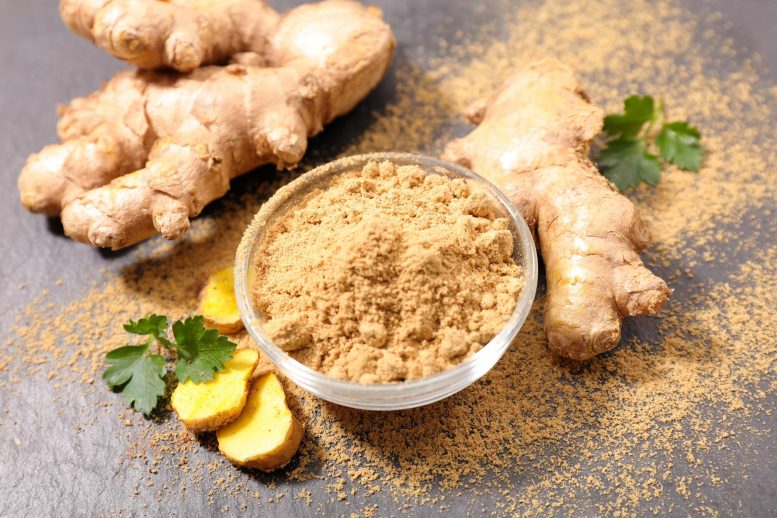
A new study explains how daikenchuto, an herbal medicine containing ginger, pepper, ginseng, and maltose, protects the gut against inflammatory bowel disease.
The benefits of a traditional herbal medicine on colitis, one of two disorders that compose inflammatory bowel disease, are reported by Zhengzheng Shi and colleagues at the RIKEN Center for Integrative Medical Sciences (IMS) in Japan (IBD). The research, which was published in the journal Frontiers in Immunology, demonstrates that daikenchuto (DKT), a herbal remedy made up of ginger, pepper, ginseng, and maltose, reduced the severity of colitis in lab mice by preserving important gut bacteria and by raising the number of immune cells that combat inflammation in the colon.
Colitis is a chronic inflammation of the colon caused by a bacterial imbalance in the gut and an abnormal immunological response. The prevalence has more than doubled in the past 20 years, and it is now a global health concern, notably in Europe and North America. Despite the number of treatments available, they are only partially effective. This has prompted some scientists to investigate traditional herbal remedies, which originated in China and are now widely utilized in Japan and other Asian nations.
Exploring Daikenchuto (DKT) for Colitis Relief
Daikenchuto (DKT) is a formula that contains specified proportions of ginger, pepper, ginseng, and maltose. It is one of 148 herbal medicines known as Kampo that were created in Japan and are often prescribed by doctors to treat a range of disorders. Previous research has shown that DKT might be beneficial in the treatment of colitis, however evidence, especially at the molecular level, has been inadequate. Thus, Shi and a team of researchers at RIKEN IMS led by Naoko Satoh-Takayama investigated its effects on a mouse model of colitis.
Colitis was induced in mice using dextran sodium sulfate, which is toxic to the cells that line the colon. When these mice were given DKT, their body weights remained normal, and they had lower clinical scores for colitis. Additional analysis revealed much less damage to the cells lining the colon. Having thus shown that DKT does indeed help protect against colitis, the researchers proceeded to analyze the gut microbiome of the mice and expression levels of anti-inflammatory immune cells.
Gut microbiomes contain numerous bacteria and fungi that aid in digestion and help the immune system. Colitis is associated with an imbalance in these gut microbiota, and analysis showed that a family of lactic acid bacteria was depleted in the colitic mice of this study. Also depleted was one of their metabolites, a short-chain fatty acid called propionate. Treating the model mice with DKT restored much of these missing bacteria—particularly those from the genus Lactobacillus—and levels of propionate were normal.
The Role of Immune Cells in DKT’s Effectiveness
Colitis is also associated with an abnormal immune response that causes the characteristic intestinal inflammation. When the team looked at innate intestinal immune cells, they found that levels of a type called ILC3 were lower in the untreated colitic mice than in the DKT-treated colonic mice and that mice engineered to lack ILC3 suffered more and could not benefit from DKT treatment. This means that ILC3s are critical for protecting against colitis and that DKT works by interacting with them. Lastly, qPCR analysis indicated that these important immune cells had receptors for propionate, called GPR43, on their surface.
“Daikenchuto is commonly prescribed to prevent and treat gastrointestinal diseases, as well as for reducing intestinal obstruction after colorectal cancer surgery,” says Satoh-Takayama. “Here we have shown that it can also alleviate intestinal diseases like colitis by rebalancing Lactobacillus levels in the gut microbiome. This likely helps reduce inflammatory immune responses by promoting the activity of type 3 innate lymphoid cells.”
Reference: “A Japanese Herbal Formula, Daikenchuto, Alleviates Experimental Colitis by Reshaping Microbial Profiles and Enhancing Group 3 Innate Lymphoid Cells” by Zhengzheng Shi, Tadashi Takeuchi, Yumiko Nakanishi, Tamotsu Kato, Katharina Beck, Ritsu Nagata, Tomoko Kageyama, Ayumi Ito, Hiroshi Ohno and Naoko Satoh-Takayama, 2 June 2022, Frontiers in Immunology.
DOI: 10.3389/fimmu.2022.903459
Never miss a breakthrough: Join the SciTechDaily newsletter.
Follow us on Google and Google News.
2 Comments
please, send me more information
thank you,