
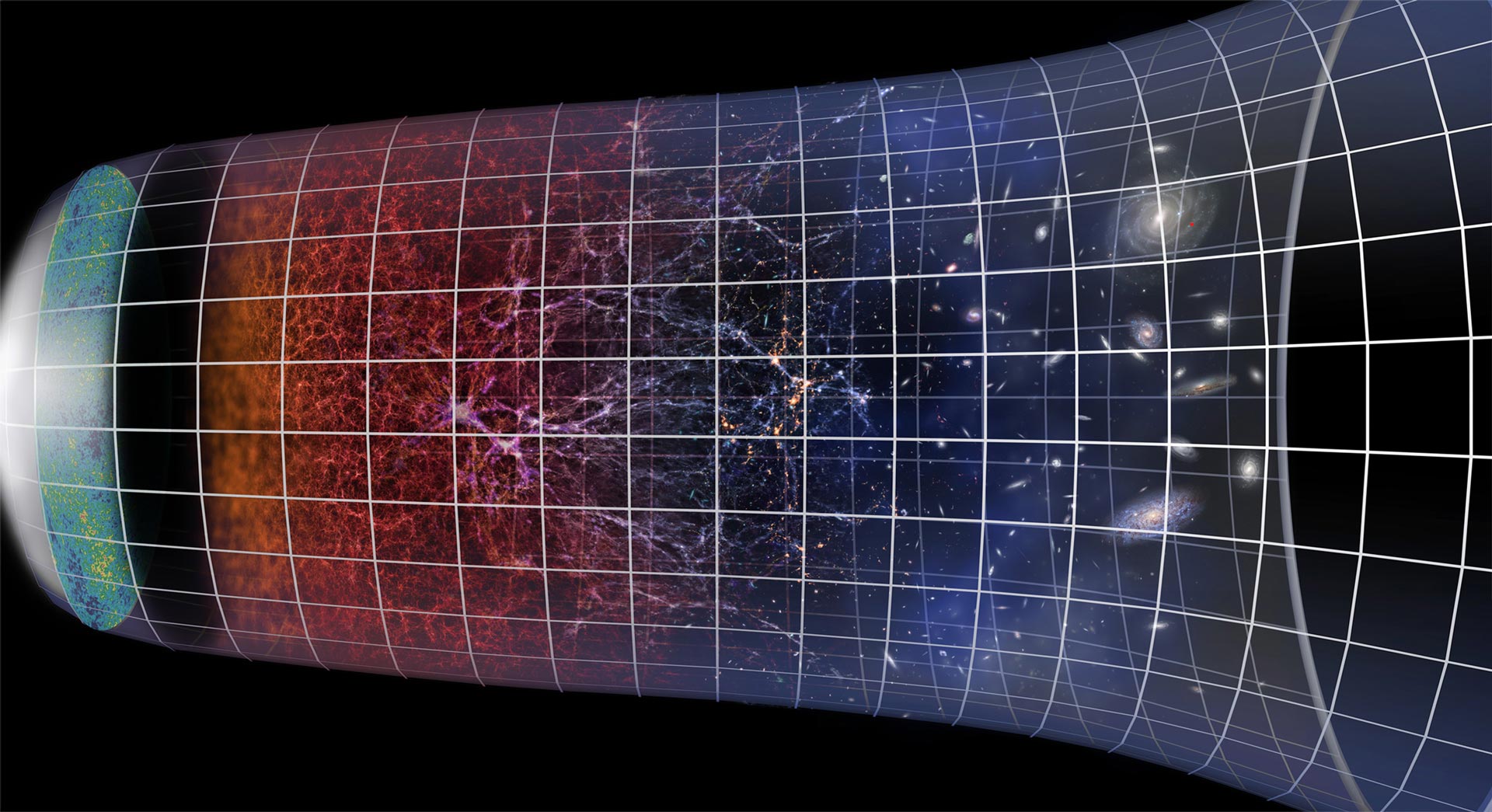
The early universe, known as the Cosmic Dark Ages, was devoid of light sources, consisting of a hot soup of subatomic particles that formed ionized atoms. As it cooled, these atoms became neutral, allowing light to travel freely. This era transitioned to the epoch of reionization, where ultraviolet light ionized these atoms again. The source of this UV light is still under investigation. Advances in technology have enabled astronomers to observe distant stars and early galaxies, yet many mysteries about the early universe remain.
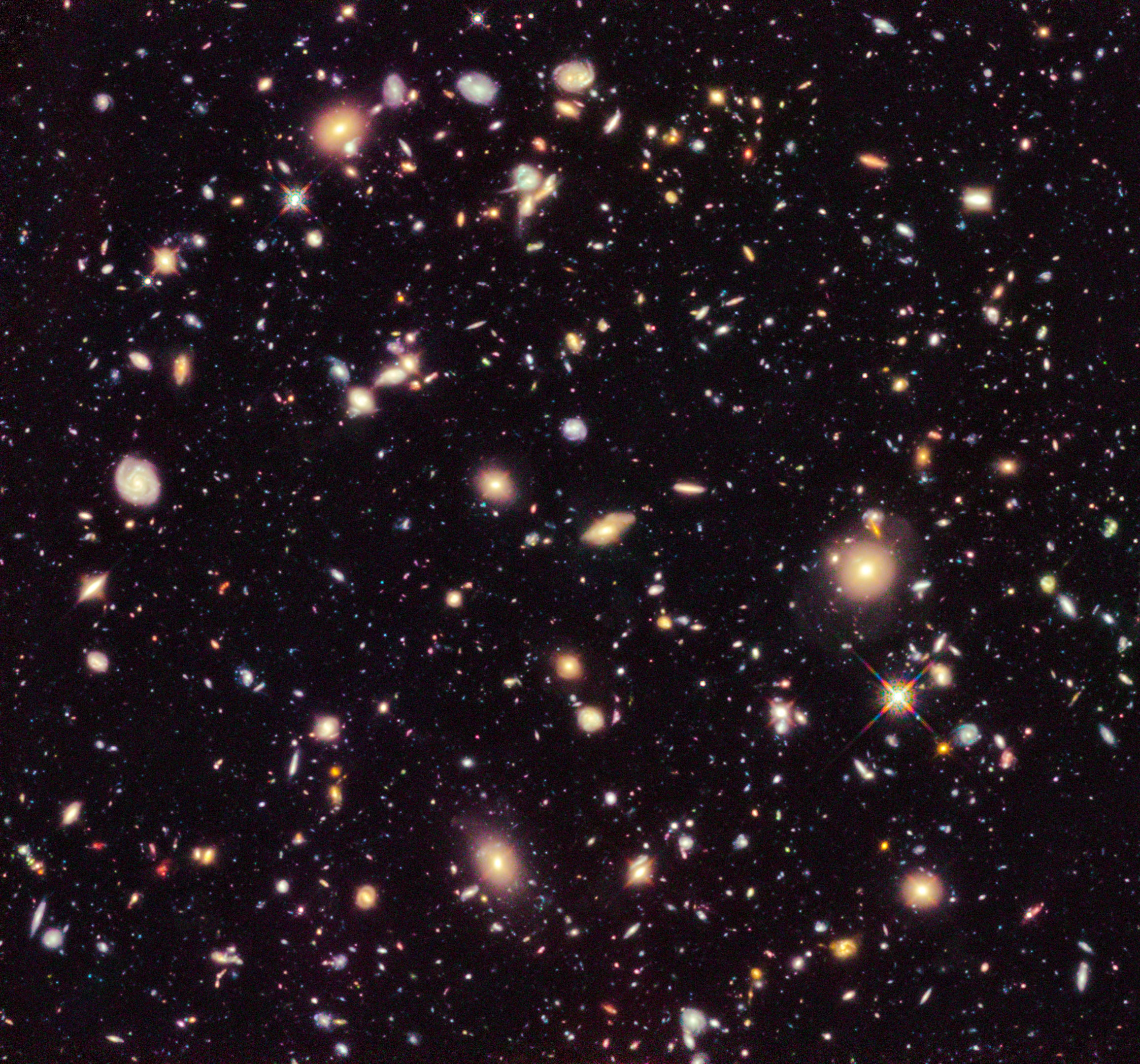
You’ve most likely seen the image below: the famous Hubble Ultra Deep Field, which contains thousands of galaxies whose light has traveled for billions of years before reaching us.
But did you know that the Universe hasn’t always been full of light sources like stars and galaxies? Astronomers call this the Cosmic Dark Ages. Some time in the early Universe, about one billion years after the Big Bang, something switched on the lights and brought the Universe into the era we know today. Let’s find out how this happened!
Let’s Start at the Very Beginning (a Very Good Place To Start)…
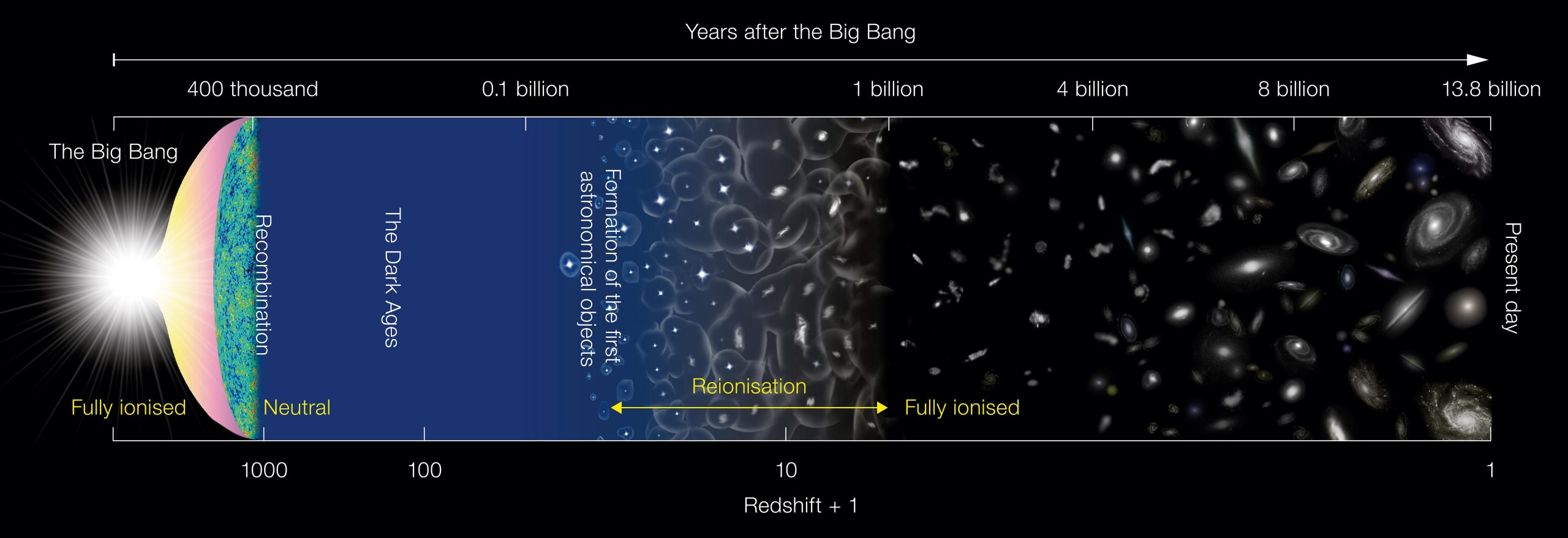
Around 13.8 billion years ago, the Universe sprang into being, and started gradually transforming into the vast cosmos we know today. The Big Bang wasn’t really a “bang,” so to speak – it was more a very rapid expansion from something infinitely small, infinitely hot, and infinitely dense to something marginally less so – which then continued to expand for the rest of time.
Straight after the expansion began, the whole Universe was an extremely hot “soup” of subatomic particles: protons, neutrons and electrons. As it began to cool, the protons and neutrons started grouping together to form hydrogen and helium atoms. These atoms were ionized: the intense heat of the early Universe stripped these atoms of their electrons. At this point, light could not travel through the Universe as it would be deflected by the free electrons.
Once the Universe cooled a little more, electrons were able to join the ionized atoms, creating neutral hydrogen and helium. This process, known by astronomers as recombination, occurred roughly 300,000 years after the Big Bang and made the Universe transparent, because light would no longer be deflected by free electrons.
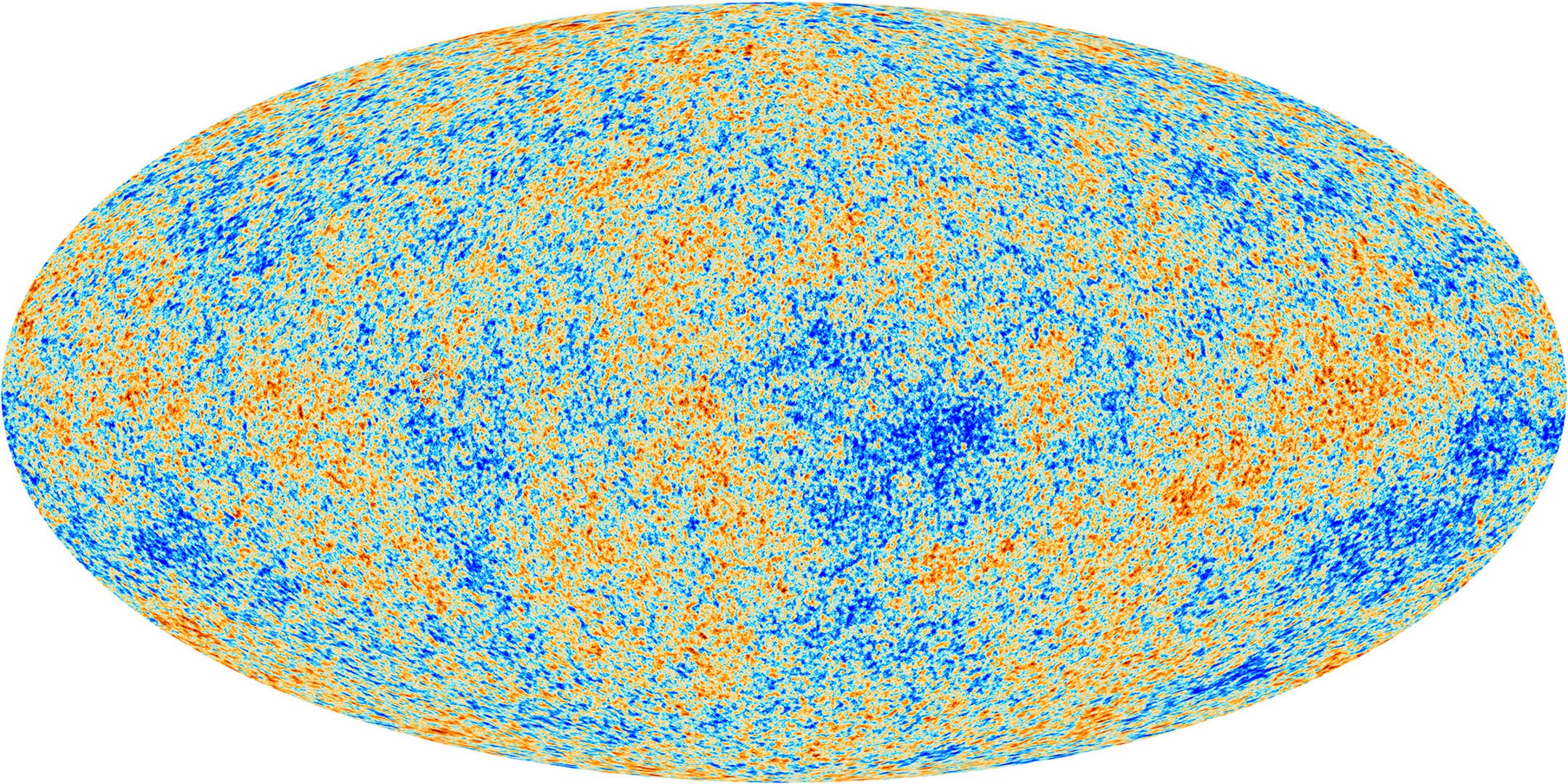
The reason astronomers know about this era is from remnant Cosmic Microwave Background radiation, which is scattered across the cosmos today. This is leftover light from the era of recombination whose wavelength has been stretched by the expansion of the Universe, becoming redshifted. This means that the further this light has traveled, the longer its wavelength has stretched. This remnant light is a sort of footprint of how the Universe looked back then: just a gaseous soup of hydrogen and helium, with gas being more densely packed in some areas than others. But at this point there were still no sources of light like stars, so astronomers refer to this epoch as the Cosmic Dark Ages.
Clearing the Fog
Between 500 million to 1 billion years after the Big Bang, the Universe transformed, clearing the fog of neutral gas. It is thought that a vast amount of ultraviolet (UV) light was able to burn through this fog, stripping electrons from their atoms, and ionizing them. Because of this, astronomers call this time in the early Universe the epoch of reionization, with “bubbles” of ionized gas growing amidst the surrounding neutral gas. It’s not yet known what exactly provided the necessary UV light to reionize the Universe; it could have been stars, early galaxies, or quasars, or even a combination of these.
This video shows a simulation of how reionization may have occurred. The simulation starts with neutral gas, shown in dark tones. The ultraviolet radiation from the first stars strips electrons off these atoms, creating bubbles of ionized gas (shown in blue) that expand as the UV radiation reaches further out. Credit: M. Alvarez, R. Kaehler, and T. Abel
Astronomers have hypothesized that the intense UV radiation from the epoch of reionization was released from the very first stars. They would have formed over millions of years as some areas of the cosmic fog condensed and collapsed under their own gravity.
A star is a very dense form of plasma that fuses together atoms like hydrogen and helium under very intense heat and pressure, forming heavier elements and releasing vast amounts of energy. Once all the fuel has been used up, depending on the size of the star, it will die, releasing a plethora of new elements into the space around it, which will end up in subsequent generations of newer stars.
The very first stars would have been 30 to 300 times bigger than our Sun, and millions of times brighter. As opposed to modern stars, which contain traces of heavy elements, those first stars would have been made of just hydrogen and helium. They would have burnt out only after a few million years and radiated intense UV light, enough to clear the fog in the epoch of reionization. These stars would have ended their lives in gargantuan supernovae explosions, hot enough to create the heaviest elements in the Universe. These explosions would have populated the cosmos with its first heavy elements, which would have then gone on to form more dust, planets and stars.
Up until very, very recently, the existence of extremely massive stars in the early Universe was purely theoretical, simply because peering into space that far back into time was limited by the technology available.
In 2011, research using ESO’s Very Large Telescope (VLT) allowed astronomers to probe into the early Universe, finding early stars and galaxies when the Universe was only 780 million years old. They found that the UV light emitted by some of those galaxies would have represented an important source of energy to reionize the cosmic fog. Another study in 2015 used the VLT and other telescopes to study early galaxies, finding a surprisingly bright galaxy with no traces of elements heavier than helium, just as expected from the first generation of stars.
Then, on the 30th March 2022, astronomers using NASA/ESA’s Hubble Space Telescope were able to capture the most distant star ever seen, from when the Universe was only 7% of its current age, or 4 billion years after the Big Bang. They were able to see this due to an effect called gravitational lensing, where large galaxy clusters can act as a magnifying glass, showing objects at very large distances away. Called Earendal (which means “morning star” in old English), the star is estimated to be at least 50 times the mass of our Sun and millions of times brighter.
Galaxies Far, Far Away
The very first galaxies would have been very different from newer galaxies astronomers observe today. Because of the chaotic nature of the early Universe, galaxy shapes would have been less defined, lacking stable features like bulges (tightly-bound conglomerations of stars towards the centre of the galaxy) and spiral arms (like those in the Milky Way). However, there are still some puzzling things…
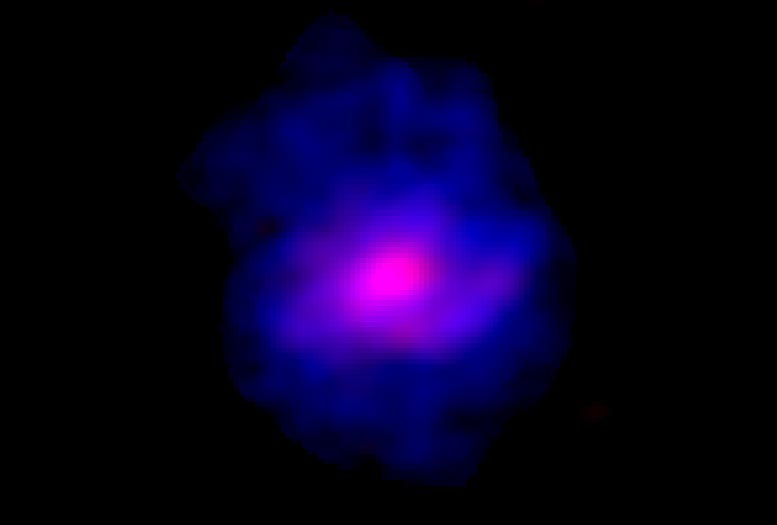
Early galaxies are expected to be mostly populated with lighter elements like hydrogen and helium. However, on some occasions, astronomers have found galaxies from the epoch of reionization that appear much older based on their chemical compositions. For example, in 2015, astronomers using the Atacama Large Millimetre/Submillimetre Array (ALMA), of which ESO is a partner, and ESO’s VLT, discovered a galaxy from when the Universe was around 700 million years old (firmly placing it around the epoch of reionization), and found that it contained gas and dust from much heavier elements. An even more distant galaxy was studied with ALMA in 2017, and was found to be surprisingly dusty. This suggests that perhaps many early supernovae had populated these galaxies with heavy elements very quickly, but astronomers do not know this for sure.
Similarly, last year, astronomers using ALMA found a galaxy that appears much older than expected. We see it when the universe was just 1.2 billion years old, but it already exhibits features like a bulge and a rotating disc, similar to more evolved galaxies like our own Milky Way.
Clearly, there is still much yet to learn about galaxies in the early Universe.
Still a Mystery
While astronomers have been able to piece together a rough timeline and plausible theories about the Universe’s formation, much of it is still a mystery. It is very difficult to piece together an exact timeline of the early Universe. When did reionization actually end? How were the first galaxies assembled together?
To answer these questions, more research and more accurate technology are needed. ESO’s Extremely Large Telescope (ELT), currently under construction in Chile and set to see first light later this decade, will be instrumental in understanding the early Universe.
The ELT will have a 39-meter (128-foot) mirror, bigger than all currently existing optical research telescopes combined, enabling it to collect a huge amount of light. It will allow astronomers to investigate individual stars in more distant galaxies, tracing their history back to the early Universe. Its operation will mark a dramatic increase in astronomy’s capabilities, peering back into the cosmos further and more accurately than ever before.
Let’s just be thankful that the Universe is transparent and full of light, and that, using the newest technology, we are able to peer back to the far reaches of the cosmos.
Biography Naomi Dinmore
Naomi is an intern in Science Journalism at ESO. After receiving a Bachelor’s in Physics and Music from Cardiff University, she then studied for her Master’s in Science Communication at Imperial College London.
Never miss a breakthrough: Join the SciTechDaily newsletter.
Follow us on Google and Google News.
1 Comment
I think someone misread the source text. 4 billion years is much greater than 7% of the universe’s current age of 13.8 billion years. Or have I misread something?