
Close Menu
    Facebook X (Twitter) Instagram
    SciTechDaily
    • Biology
    • Chemistry
    • Earth
    • Health
    • Physics
    • Science
    • Space
    • Technology
    Facebook X (Twitter) Pinterest YouTube RSS
    SciTechDaily
    Home»Technology»LiquiGlide Prevents Waste and Increases Recycling Rates
    Technology

    LiquiGlide Prevents Waste and Increases Recycling Rates

    By Alissa Mallinson, MIT Mechanical EngineeringMay 31, 20121 Comment2 Mins Read
    Facebook Twitter Pinterest Telegram LinkedIn WhatsApp Email Reddit
    Share
    Facebook Twitter LinkedIn Pinterest Telegram Email Reddit
    LiquiGlide Ketchup Bottle
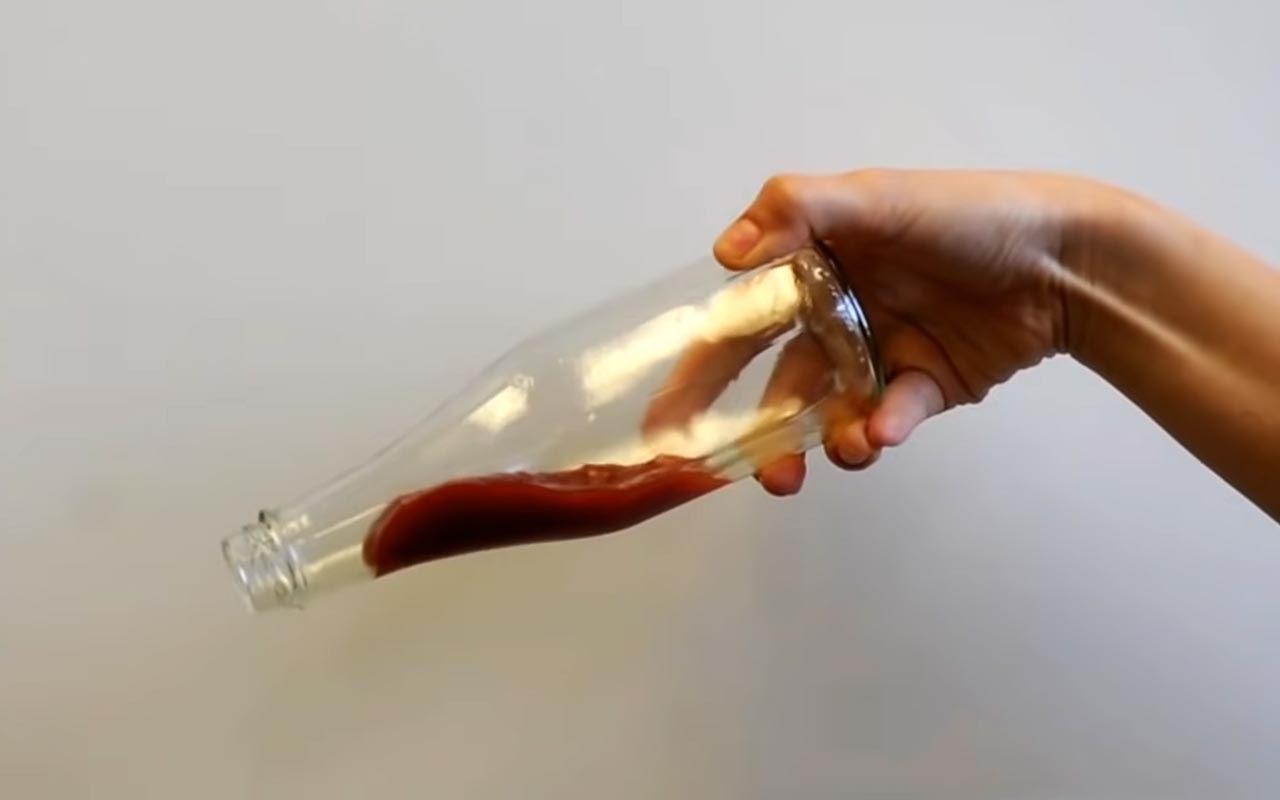
    Ketchup slides out of a bottle that has the food-based, nontoxic LiquiGlide coating on the inside. Credit: Courtesy of the Varanasi Research Group

    For anyone that has suffered through the agonizing task of squeezing out those last few drops from the condiment jar, your troubles may soon be over. LiquiGlide, a nontoxic, nonstick, super slippery coating for the inside of condiment bottles, sends condiments out of their jars with a simple tilt of the hand, preventing waste and increasing recycling rates.

    The Varanasi Research Group, led by Associate Professor Kripa Varanasi, took a break from researching super slippery and super non-wetting coatings for equipment such as steam turbines and airplanes to present its newest invention at this year’s $100K competition: LiquiGlide, a nontoxic, nonstick, super slippery coating for the inside of condiment bottles. Made from food materials, LiquiGlide is easy to apply to food packaging and prevents stubborn condiments from sticking on their way out.

    For food sauce companies — and their customers — easy removal of condiments is a constant challenge. Most people have experienced the frustration that comes with struggling to expel a condiment such as ketchup, mustard, or mayonnaise with furious shaking, messy rummaging or pure brute force. Now, a simple tilt of the hand sends condiments sliding out.

    “Our research group is mainly focused on big issues in energy, water, and transportation,” Varanasi says, “but we found that bottles are no small thing, with the worldwide condiment market comprising about 17 billion bottles.”

    With a market that big, small additional costs such as the 20-cent charge customers pay for the special cap on upside-down bottles can add up to billions of dollars. Just as important, eliminating those special caps can reduce the need for plastic by about 25,000 tons. LiquiGlide can save food by ensuring that none is wasted and increase recycling rates by removing all food remnants.

    The project was named runner-up in the MIT $100K competition, but the team took home the Audience Choice Award — and accompanying $2,000 prize — for the consumer-friendly invention. In the weeks since, the product has garnered national media attention from outlets such as NPR, ABC News, the Chicago Tribune, The Wall Street Journal, and CNN, among many others.

    Along with Varanasi, the LiquiGlide team is J. David Smith, Christopher J. Love, Adam Paxson, Brian Solomon, and Rajeev Dhiman.

    Never miss a breakthrough: Join the SciTechDaily newsletter.
    Follow us on Google and Google News.

    Food Science Green Technology MIT Recycling
    Share. Facebook Twitter Pinterest LinkedIn Email Reddit

    Related Articles

    All-Carbon Photovoltaic Cell to Harness Infrared Light

    Textured Surface Maintains Efficiency and Reduces Thickness of Silicon Solar Cells

    Ceramic Membranes May Reduce CO2 Emissions

    Cost Effective Sensor Measures Fruits’ Ripeness

    Nanotextures Make Anti-Fogging, Self-Cleaning and Glare-Free Glass

    Waste to Energy Technology Commercially Available in the US

    3D Solar Towers, The future of Photovoltaics?

    MIT Researchers Design Inexpensive Liquid Batteries With Distinct Layers

    Researchers Develop IE2 for Analyzing Solar Cell Materials

    1 Comment

    1. Pete on June 20, 2012 1:52 pm

      I’m very sceptical of all the food additives. As an immunologist/allergologist I think all those chemicals will have a definite negative impact on the human genetic makeup in a couple of generations. Many youngsters are hypersensitive to food that was “normal” only 10 years ago like peanuts, lactose, etc.

      Reply
    Leave A Reply Cancel Reply

    • Facebook
    • Twitter
    • Pinterest
    • YouTube

    Don't Miss a Discovery

    Subscribe for the Latest in Science & Tech!

    Trending News

    The Strange “Spacetime Crystal” That Can Suddenly Turn Into a Black Hole

    The Surprising Way Asteroids May Have Helped Life Begin on Earth

    Vast Hidden Structure Discovered Under Miles of Ice in East Antarctica

    A Surprising Discovery Suggests Autism Is Not One Condition

    New Alzheimer’s Discovery Could Change How Scientists Fight the Disease

    Yale Discovery Overturns Long-Held “Evolutionary Dead End” Theory

    UCLA Scientists Uncover a “Hidden Weakness” in Some of the World’s Deadliest Cancers

    Humpback Whale Stuns Scientists With 15,000 Kilometer Journey Across Oceans

    Follow SciTechDaily
    • Facebook
    • Twitter
    • YouTube
    • Pinterest
    • Newsletter
    • RSS
    SciTech News
    • Biology News
    • Chemistry News
    • Earth News
    • Health News
    • Physics News
    • Science News
    • Space News
    • Technology News
    Recent Posts
    • Food Waste Becomes a Powerful Carbon Trap in Climate Breakthrough
    • Battery-Free Artificial Photosynthesis Turns Sunlight, Water, and CO2 Into Fuel
    • How Ancient People Moved a 6-Ton Stone 700 Kilometers to Stonehenge
    • Scientists Finally See How Antibodies Really Attack Viruses
    • The Unexpected Gut Health Risk of Cutting Out Sugar
    Copyright © 1998 - 2026 SciTechDaily. All Rights Reserved.
    • Science News
    • About
    • Contact
    • Editorial Board
    • Privacy Policy
    • Terms of Use

    Type above and press Enter to search. Press Esc to cancel.