
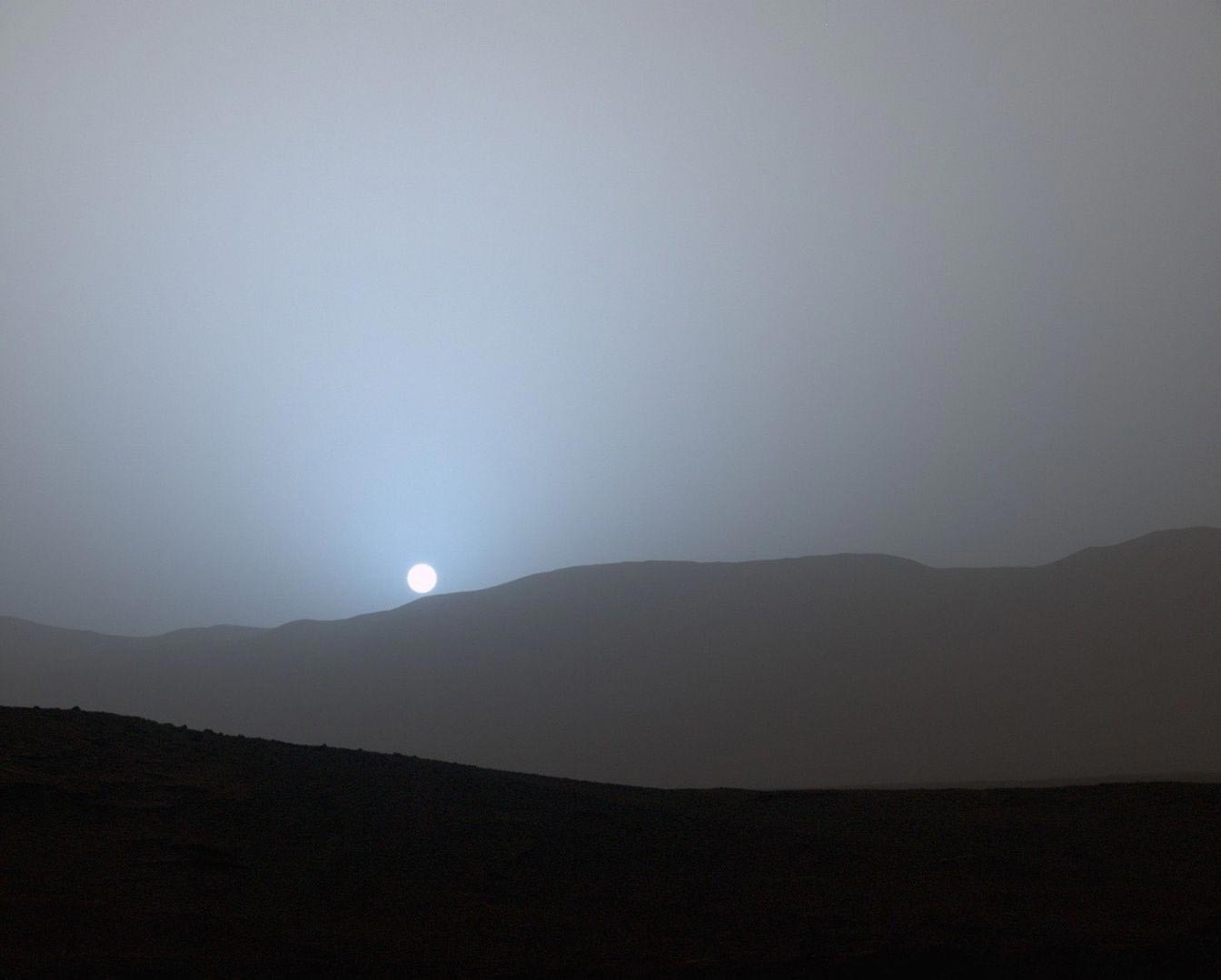
New research shows that Mars’ atmosphere behaves differently from Earth’s, with gravity waves, rather than Rossby waves, playing a dominant role.
This discovery challenges existing models and may lead to more accurate weather predictions for future Mars missions.
Unraveling Martian Air Currents
A new study, including research from the University of Tokyo, has uncovered a key factor in Mars’ atmospheric circulation: gravity waves. These waves play a crucial role in driving air currents across the planet, especially at high altitudes. Using long-term atmospheric data, scientists gained fresh insights into how Mars’ middle atmosphere behaves—revealing fundamental differences from Earth. To analyze these patterns, the study adapted techniques originally developed for studying Earth’s atmosphere, allowing researchers to measure the influence of gravity waves on Martian air circulation.
Mars may be an icy desert, but it remains a hot topic in space exploration. With human missions on the horizon, understanding its atmosphere is critical for future planning. Recent advancements have made it possible to explore Martian weather patterns in unprecedented detail. Many of these discoveries have been made by applying knowledge from Earth’s atmosphere — revealing stark differences that could have major implications for climate modeling and space travel.
Gravity waves are a type of atmospheric wave that form when air is displaced and then restored by gravity. This creates an up-and-down motion, similar to ripples on a pond. They occur when air moves over mountains, thunderstorms, or other disturbances, and they help transport energy and momentum across different layers of the atmosphere. Importantly, gravity waves are not the same as gravitational waves, which are ripples in spacetime caused by massive cosmic events like colliding black holes.
The Influence of Gravity Waves on Mars
“On Earth, large-scale atmospheric waves caused by the planet’s rotation, known as Rossby waves, are the primary influence on the way air circulates in the stratosphere, or the lower part of the middle atmosphere. But our study shows that on Mars, gravity waves (GWs) have a dominant effect at the mid and high latitudes of the middle atmosphere,” said Professor Kaoru Sato from the Department of Earth and Planetary Science. “Rossby waves are large-scale atmospheric waves, or resolved waves, whereas GWs are unresolved waves, meaning they are too fine to be directly measured or modeled and must be estimated by more indirect means.”
Not to be confused with gravitational waves from massive stellar bodies, GWs are an atmospheric phenomenon when a packet of air rises and falls due to variations in buoyancy. That oscillating motion is what gives rise to GWs. Due to the small-scale nature of them and the limitations of observational data, researchers have previously found it challenging to quantify their significance in the Martian atmosphere. So Sato and her team turned to the Ensemble Mars Atmosphere Reanalysis System (EMARS) dataset, produced by a range of space-based observations over many years, to analyze seasonal variations up there.
A Surprising Discovery in Martian Airflow
“We found something interesting, that GWs facilitate the rapid vertical transfer of angular momentum, significantly influencing the meridional, or north-south, in the middle atmosphere circulations on Mars,” said graduate student Anzu Asumi. “It’s interesting because it more closely resembles the behavior seen in Earth’s mesosphere rather than in our stratosphere. This suggests existing Martian atmospheric circulation models may need to be refined to better incorporate these wave effects, potentially improving future climate and weather simulations.”
The research also underscores the importance of planetary comparisons in atmospheric science. Mars’ similarity to Earth in terms of rotational speed and axial tilt makes it an ideal test case for studying planetary weather systems. At the same time, its distinct characteristics, such as a thin carbon dioxide-rich atmosphere and pronounced seasonal variations, offer insights into alien atmospheres. By analyzing these differences, researchers can improve their understanding of fundamental atmospheric dynamics, which may ultimately contribute to better climate models for Earth too.
The Next Frontier: Studying Martian Dust Storms
“Looking ahead, we plan to investigate the impact of Martian dust storms on atmospheric circulation. So far, our analysis has focused on years without major dust storms,” said Sato. “However, these storms dramatically alter atmospheric conditions, and we suspect they may intensify the role of GWs in circulation. Our research lays the groundwork for forecasting Martian weather, which will be essential for ensuring the success of future Mars missions.”
Future studies will examine how these storms lead to significant shifts in global atmospheric patterns. With these advancements, the prospect of accurately predicting atmospheric conditions on Mars moves one step closer to reality. Will you tune into the Martian weather report one day?
Reference: “Climatology of the Residual Mean Circulation of the Martian Atmosphere and Contributions of Resolved and Unresolved Waves Based on a Reanalysis Data Set” by Anzu Asumi, Kaoru Sato, Masashi Kohma and Yoshi-Yuki Hayashi, 6 March 2025, Journal of Geophysical Research: Planets.
DOI: 10.1029/2023JE008137
Never miss a breakthrough: Join the SciTechDaily newsletter.
Follow us on Google and Google News.
1 Comment
Next thing you know, they’re gonna make us care about the climate change on Mars.