
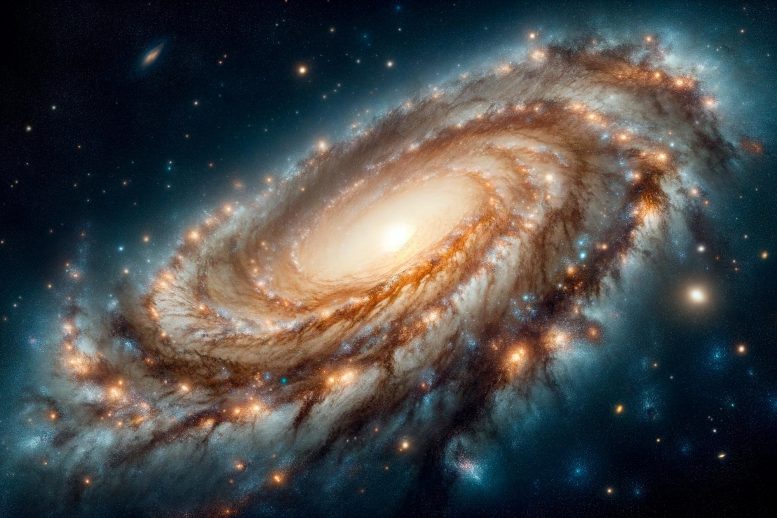
NASA’s Nancy Grace Roman Space Telescope, set for a 2027 launch, aims to revolutionize our understanding of the Milky Way through microlensing, potentially discovering new planets, black holes, and cosmic phenomena.
NASA’s Nancy Grace Roman Space Telescope will provide one of the deepest-ever views into the heart of our Milky Way galaxy. The mission will monitor hundreds of millions of stars in search of tell-tale flickers that betray the presence of planets, distant stars, small icy objects that haunt the outskirts of our solar system, isolated black holes, and more. Roman will likely set a new record for the farthest-known exoplanet, offering a glimpse of a different galactic neighborhood that could be home to worlds quite unlike the more than 5,500 that are currently known.
Watch this video to learn about time-domain astronomy and how time will be a key element in the Nancy Grace Roman Space Telescope’s galactic bulge survey. Credit: NASA’s Goddard Space Flight Center
Revolutionizing Time-Domain Astronomy
Roman’s long-term sky monitoring, which will enable these results, represents a boon to what scientists call time-domain astronomy, which studies how the universe changes over time. Roman will join a growing, international fleet of observatories working together to capture these changes as they unfold. Roman’s Galactic Bulge Time-Domain Survey will focus on the Milky Way, using the telescope’s infrared vision (see video below) to see through clouds of dust that can block our view of the crowded central region of our galaxy.
“Roman will be an incredible discovery machine, pairing a vast view of space with keen vision,” said Julie McEnery, the Roman senior project scientist at NASA’s Goddard Space Flight Center in Greenbelt, Maryland. “Its time-domain surveys will yield a treasure trove of new information about the cosmos.”
NASA’s Nancy Grace Roman Space Telescope will be able to explore even more cosmic questions, thanks to a new near-infrared filter. The upgrade will allow the observatory to see longer wavelengths of light, opening up exciting new opportunities for discoveries from the edge of our solar system to the farthest reaches of space. Credit: NASA’s Goddard Space Flight Center
Microlensing and Its Significance
When Roman launches, expected by May 2027, the mission will scour the center of the Milky Way for microlensing events, which occur when an object such as a star or planet comes into near-perfect alignment with an unrelated background star from our viewpoint. Because anything with mass warps the fabric of space-time, light from the distant star bends around the nearer object as it passes close by. The nearer object therefore acts as a natural magnifying glass, creating a temporary spike in the brightness of the background star’s light. That signal lets astronomers know there’s an intervening object, even if they can’t see it directly.
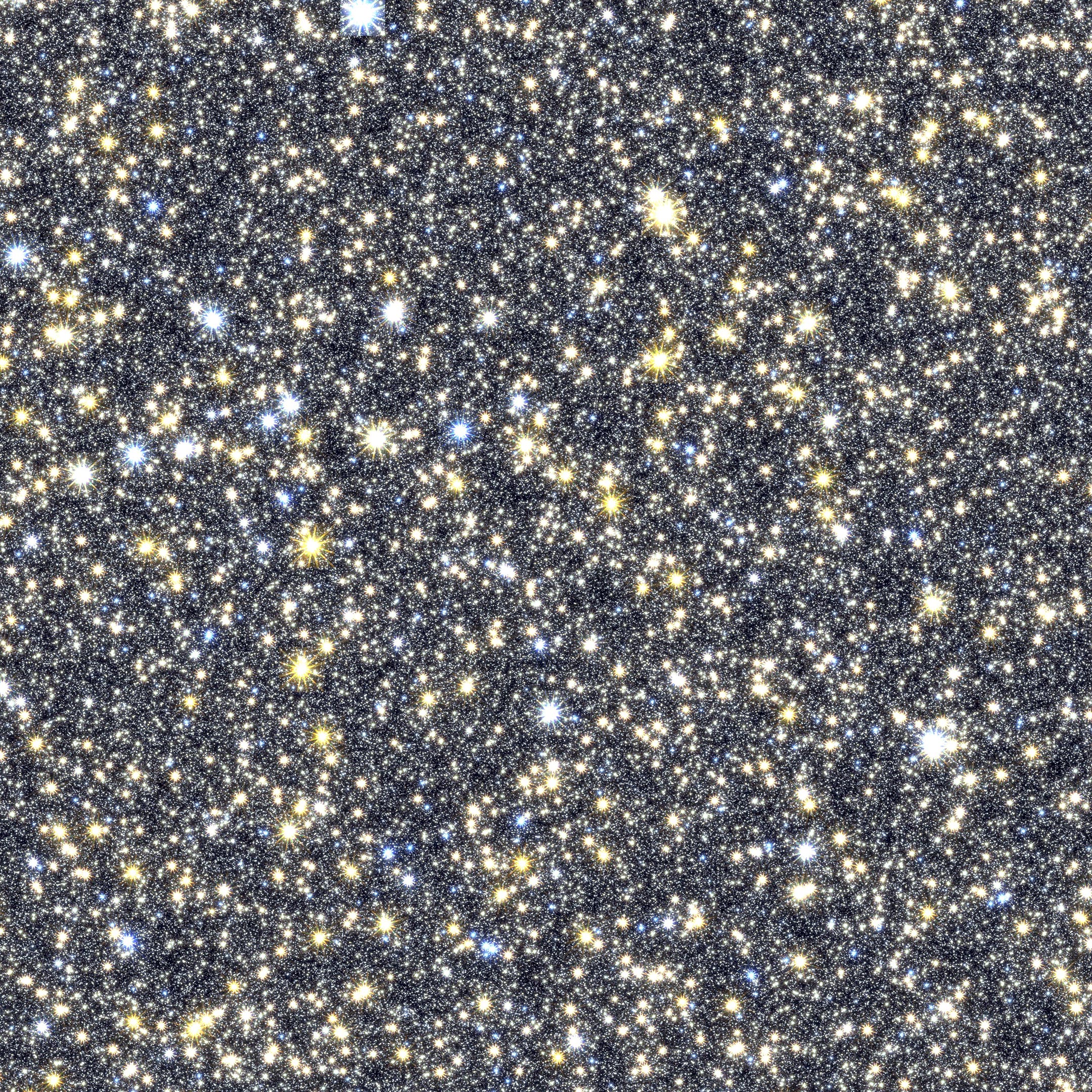
In current plans, the survey will involve taking an image every 15 minutes around the clock for about two months. Astronomers will repeat the process six times over Roman’s five-year primary mission for a combined total of more than a year of observations.
“This will be one of the longest exposures of the sky ever taken,” said Scott Gaudi, an astronomy professor at Ohio State University in Columbus, whose research is helping inform Roman’s survey strategy. “And it will cover territory that is largely uncharted when it comes to planets.”
Discovery Expectations
Astronomers expect the survey to reveal more than a thousand planets orbiting far from their host stars and in systems located farther from Earth than any previous mission has detected. That includes some that could lie within their host star’s habitable zone – the range of orbital distances where liquid water can exist on the surface – and worlds that weigh in at as little as a few times the mass of the Moon.
Roman can even detect “rogue” worlds that don’t orbit a star at all using microlensing. These cosmic castaways may have formed in isolation or been kicked out of their home planetary systems. Studying them offers clues about how planetary systems form and evolve.
Roman’s microlensing observations will also help astronomers explore how common planets are around different types of stars, including binary systems. The mission will estimate how many worlds with two host stars are found in our galaxy by identifying real-life “Tatooine” planets, building on work started by NASA’s Kepler Space Telescope and TESS (the Transiting Exoplanet Survey Satellite).
Some of the objects the survey will identify exist in a cosmic gray area. Known as brown dwarfs, they’re too massive to be characterized as planets, but not quite massive enough to ignite as stars. Studying them will allow astronomers to explore the boundary between planet and star formation.
Roman is also expected to spot more than a thousand neutron stars and hundreds of stellar-mass black holes. These heavyweights form after a massive star exhausts its fuel and collapses. The black holes are nearly impossible to find when they don’t have a visible companion to signal their presence, but Roman will be able to detect them even if unaccompanied because microlensing relies only on an object’s gravity. The mission will also find isolated neutron stars – the leftover cores of stars that weren’t quite massive enough to become black holes.
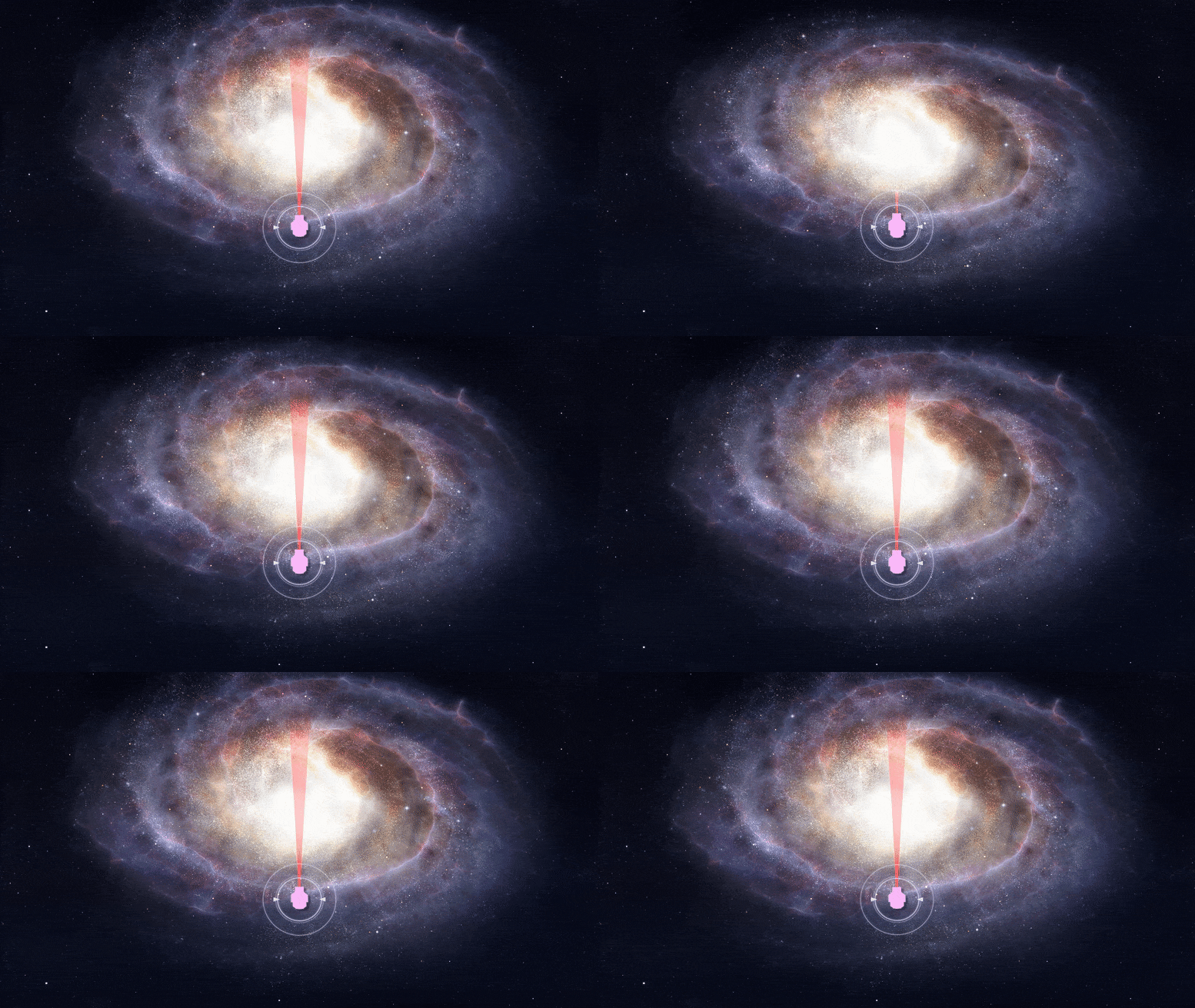
This animation compares signals from two planet detection methods: microlensing (top) and transit (bottom) for both high- and low-mass planets. Microlensing creates spikes in a star’s brightness, while transits have the opposite effect. Since both methods involve tracking the amount of light we receive from stars over time, astronomers will be able to use the same data set for both methods. Credit: NASA’s Goddard Space Flight Center/CI Lab
Cosmic Objects and Stellar Studies
Astronomers will use Roman to find thousands of Kuiper belt objects, which are icy bodies scattered mostly beyond Neptune. The telescope will spot some as small as about six miles across (about 1 percent of Pluto’s diameter), sometimes by seeing them directly from reflected sunlight and others as they block the light of background stars.
A similar type of shadow play will reveal 100,000 transiting planets between Earth and the center of the galaxy. These worlds cross in front of their host star as they orbit and temporarily dim the light we receive from the star. This method will reveal planets orbiting much closer to their host stars than microlensing reveals, and likely some that lie in the habitable zone.
Scientists will also conduct stellar seismology studies on a million giant stars. This will involve analyzing brightness changes caused by sound waves echoing through a star’s gaseous interior to learn about its structure, age, and other properties.
All of these scientific discoveries and more will come from Roman’s Galactic Bulge Time-Domain Survey, which will account for less than a fourth of the observing time in Roman’s five-year primary mission. Its broad view of space will allow astronomers to conduct many of these studies in ways that have never been possible before, giving us a new view of an ever-changing universe.
The Nancy Grace Roman Space Telescope is managed at NASA’s Goddard Space Flight Center in Greenbelt, Maryland, with participation by NASA’s Jet Propulsion Laboratory and Caltech/IPAC in Southern California, the Space Telescope Science Institute in Baltimore, and a science team comprising scientists from various research institutions. The primary industrial partners are Ball Aerospace and Technologies Corporation in Boulder, Colorado; L3Harris Technologies in Melbourne, Florida; and Teledyne Scientific & Imaging in Thousand Oaks, California.
Never miss a breakthrough: Join the SciTechDaily newsletter.
Follow us on Google and Google News.