
Close Menu
    Facebook X (Twitter) Instagram
    SciTechDaily
    • Biology
    • Chemistry
    • Earth
    • Health
    • Physics
    • Science
    • Space
    • Technology
    Facebook X (Twitter) Pinterest YouTube RSS
    SciTechDaily
    Home»Health»Mini-Brains Uncover a Hidden Protein That May Spark Dementia
    Health

    Mini-Brains Uncover a Hidden Protein That May Spark Dementia

    By Ohio State University Wexner Medical CenterApril 9, 20251 Comment4 Mins Read
    Facebook Twitter Pinterest Telegram LinkedIn WhatsApp Email Reddit
    Share
    Facebook Twitter LinkedIn Pinterest Telegram Email Reddit
    Neuroscience Brain Organoid Art Concept
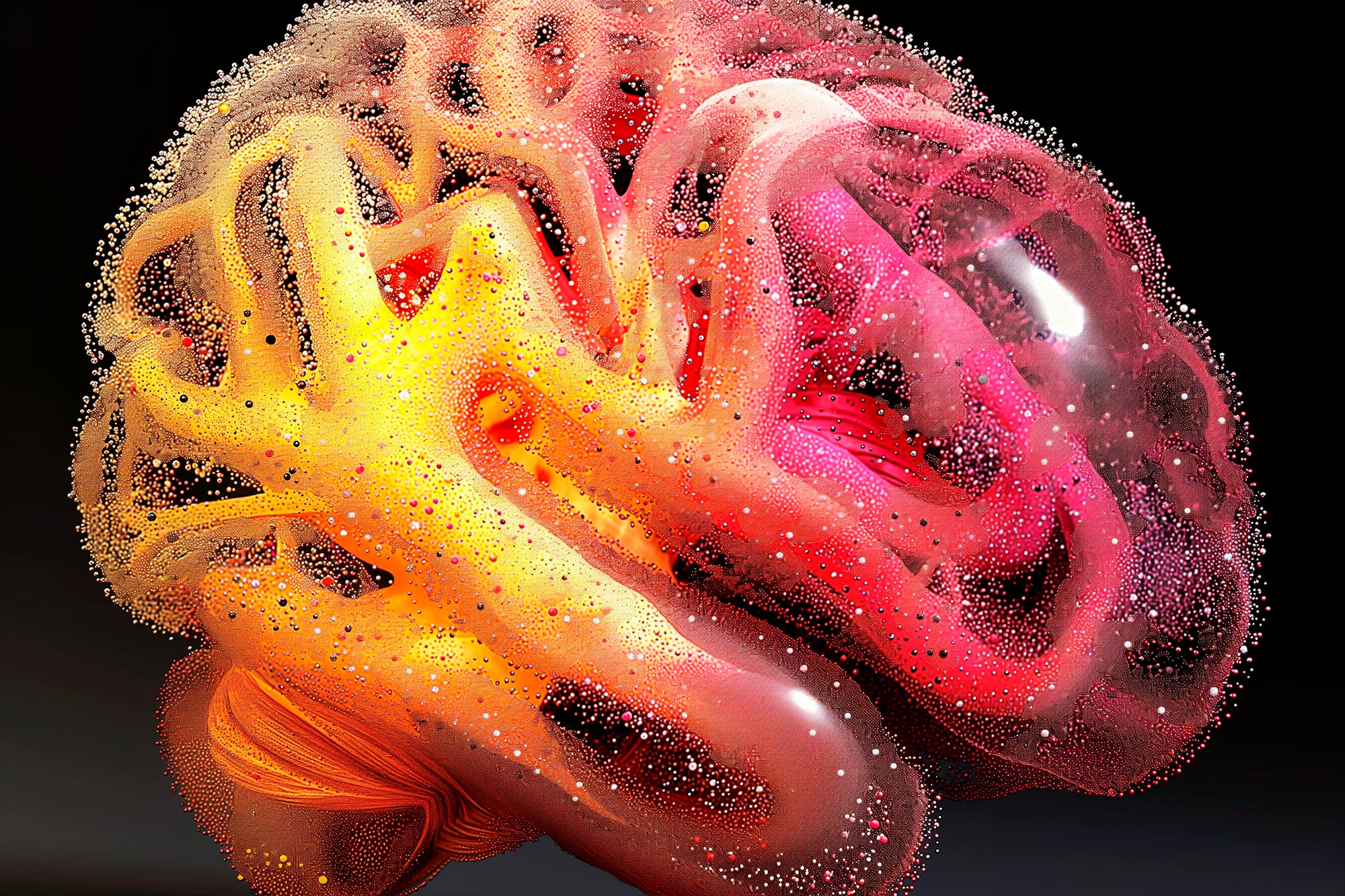
    Researchers used tiny, lab-grown brain models to uncover how a protein called GRAMD1B may be driving dementia. The protein helps regulate cholesterol in brain cells, and when it malfunctions, it could trigger harmful changes linked to Alzheimer’s and FTLD. (Artist’s concept.) Credit: SciTechDaily.com

    Scientists at Ohio State University have made a surprising discovery about how brain cells may contribute to diseases like Alzheimer’s and frontotemporal dementia.

    Using lab-grown “mini-brains” made from human cells, they identified a protein called GRAMD1B that helps manage cholesterol and fat inside brain cells. When this protein is out of balance, it affects important brain processes and may lead to the buildup of toxic proteins linked to dementia. The discovery offers a new clue in understanding what goes wrong in the brain and could lead to better treatments in the future.

    Breakthrough in Neurodegeneration Research

    Researchers at The Ohio State University Wexner Medical Center and College of Medicine have uncovered a previously unknown way that neurons contribute to neurodegeneration. Their findings are based on studies using human neural organoids – lab-grown “mini-brain” models – developed from cells of patients with frontotemporal lobar degeneration (FTLD).

    This newly discovered pathway may open the door to better treatments for FTLD and Alzheimer’s disease, the two most common forms of dementia that cause progressive cognitive decline.

    Mini-Brain Models Reveal Hidden Mechanisms

    To investigate, scientists used advanced techniques to study neurons from both patients and mice. They grew neural organoids containing multiple types of brain cells to closely model human brain function.

    Their research revealed that a protein called GRAMD1B plays a key role in regulating how neurons handle cholesterol and lipid storage. When GRAMD1B levels are disrupted, it alters cholesterol balance, lipid accumulation, and the amount of modified tau – a protein closely linked to several neurodegenerative diseases.

    The study was published today (April 9) in the journal Nature Communications.

    Hongjun Fu
    Study corresponding author Hongjun “Harry” Fu, PhD, assistant professor of neuroscience at The Ohio State University says this discovery could lead to new treatments for FTLD and Alzheimer’s, the two most common forms of dementia that lead to cognitive decline. Credit: The Ohio State University Wexner Medical Center

    Potential for Targeted Therapies

    “Scientists know that GRAMD1B plays a role in other parts of the body like the adrenal gland and intestine but until now the protein has never been studied in the brain. The findings are exciting because by targeting GRAMD1B, we can potentially develop new therapies to help people with FTLD and Alzheimer’s,” said study corresponding author Hongjun “Harry” Fu, PhD, assistant professor of neuroscience at Ohio State.

    Dementia by the Numbers

    About 50,000 to 60,000 Americans live with FTLD. Alzheimer’s disease is the most common cause of dementia. An estimated 6.9 million Americans who are age 65 and older are living with Alzheimer’s dementia today, according to the Alzheimer’s Association’s 2024 Alzheimer’s disease facts and figures report.

    Reference: “GRAMD1B is a regulator of lipid homeostasis, autophagic flux and phosphorylated tau” by Diana Acosta Ingram, Emir Turkes, Tae Yeon Kim, Sheeny Vo, Nicholas Sweeney, Marie-Amandine Bonte, Ryan Rutherford, Dominic L. Julian, Meixia Pan, Jacob Marsh, Andrea R. Argouarch, Min Wu, Douglas W. Scharre, Erica H. Bell, Lawrence S. Honig, Jean Paul Vonsattel, Geidy E. Serrano, Thomas G. Beach, Celeste M. Karch, Aimee W. Kao, Mark E. Hester, Xianlin Han and Hongjun Fu, 9 April 2025, Nature Communications.
    DOI: 10.1038/s41467-025-58585-w

    The work was supported by the BrightFocus Foundation’s Alzheimer’s Disease Research, National Institute on Aging of the National Institutes of Health, The Ohio State University Chronic Brain Injury Discovery Theme pilot grant, and The Ohio State University Neurological Research Institute seed grant.

    Never miss a breakthrough: Join the SciTechDaily newsletter.
    Follow us on Google and Google News.

    Brain Dementia Neuroscience Ohio State University Organoids Popular
    Share. Facebook Twitter Pinterest LinkedIn Email Reddit

    Related Articles

    This Everyday Food Was Linked to Better Brain Health

    Young Blood Shows Powerful Protective Effects Against Alzheimer’s

    The Hidden Belly Fat That Quietly Ages Your Brain

    Tiny Brain Tubes Discovered by Johns Hopkins Could Explain Alzheimer’s

    Breakthrough Vitamin K Compounds May Reverse Alzheimer’s Damage

    Scientists Halt Toxic Brain Protein Behind Parkinson’s in Landmark Study

    Scientists Found a Major Problem With Vitamin B12 Guidelines, and Your Brain Might Be at Risk

    Cough Syrup Slows Brain Damage in Parkinson’s Dementia, Study Finds

    This Tau Brain Scan Could Predict Alzheimer’s Early

    1 Comment

    1. Aminawajid on April 9, 2025 2:44 am

      hi

      Reply
    Leave A Reply Cancel Reply

    • Facebook
    • Twitter
    • Pinterest
    • YouTube

    Don't Miss a Discovery

    Subscribe for the Latest in Science & Tech!

    Trending News

    Largest-Ever Study Finds Medicinal Cannabis Ineffective for Anxiety, Depression, PTSD

    250-Million-Year-Old Egg Solves One of Evolution’s Biggest Mysteries

    Living With Roommates Might Be Changing Your Gut Microbiome Without You Knowing

    Century-Old Cleaning Chemical Linked to 500% Increased Risk of Parkinson’s Disease

    What if Your Memories Never Happened? Physicists Take a New Look at the Boltzmann Brain Paradox

    One of the Universe’s Largest Stars May Be Getting Ready To Explode

    Scientists Discover Enzyme That Could Supercharge Ozempic-Like Weight Loss Drugs

    Popular Sweetener Linked to DNA Damage – “It’s Something You Should Not Be Eating”

    Follow SciTechDaily
    • Facebook
    • Twitter
    • YouTube
    • Pinterest
    • Newsletter
    • RSS
    SciTech News
    • Biology News
    • Chemistry News
    • Earth News
    • Health News
    • Physics News
    • Science News
    • Space News
    • Technology News
    Recent Posts
    • The Surprising Diet Rule That Makes “Good” Parasites Work
    • This Simple Blood Test Could Outperform “Bad Cholesterol” in Preventing Heart Disease
    • Scientists Uncover Potential Brain Risks of Popular Fish Oil Supplements
    • Scientists Prove There Are Just Six Degrees of Separation in a Social Network
    • Bee Bacteria Could Fix a Major Flaw in Plant-Based Milk
    Copyright © 1998 - 2026 SciTechDaily. All Rights Reserved.
    • Science News
    • About
    • Contact
    • Editorial Board
    • Privacy Policy
    • Terms of Use

    Type above and press Enter to search. Press Esc to cancel.