
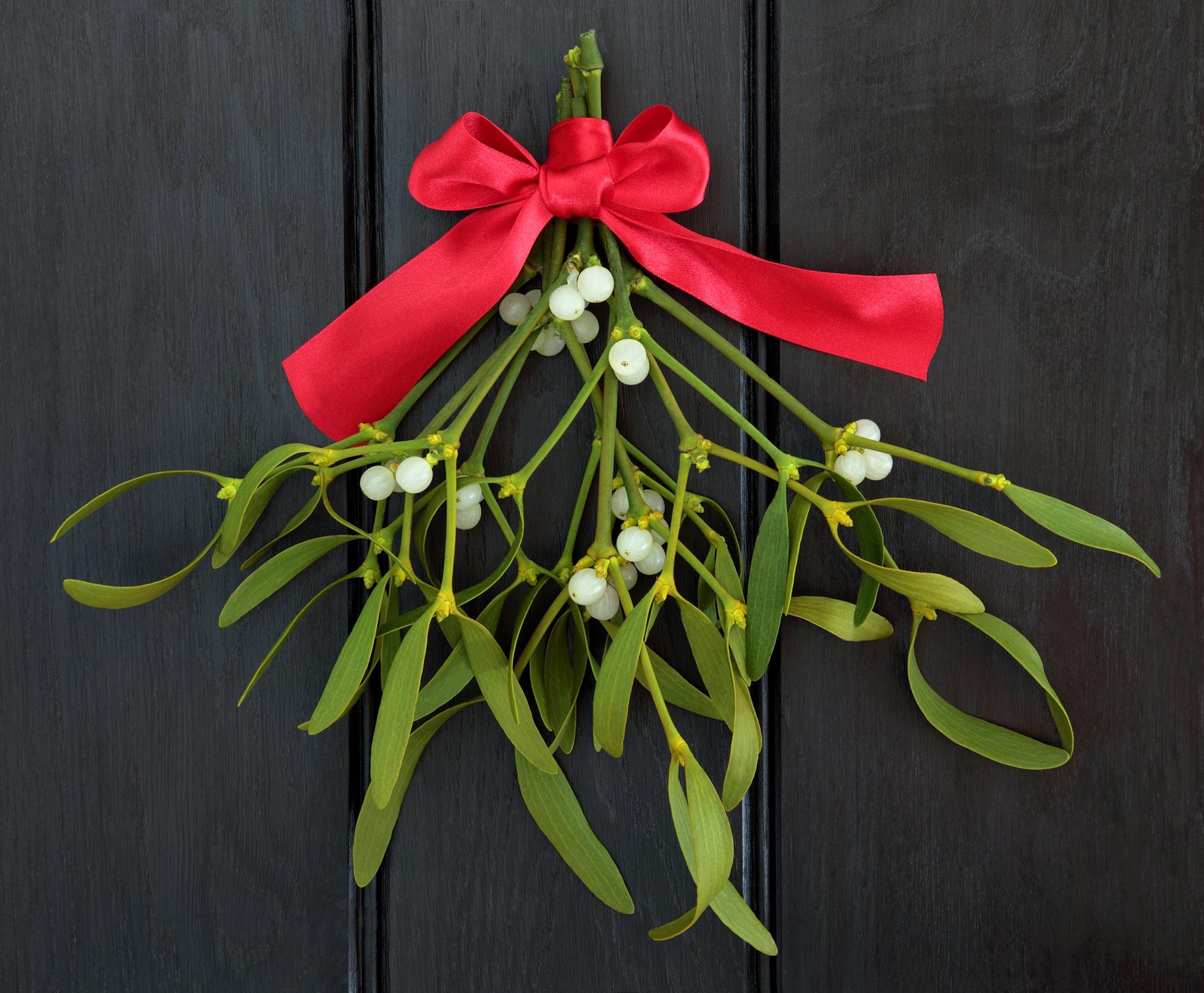
Parasitic yet symbolic, mistletoe nourishes wildlife and holiday traditions alike.
A parasitic plant with potentially poisonous berries might not sound like something that would boost your Christmas decorations to the next level. But, botanically speaking, that’s what mistletoe is.
There are some 1,300 species of this evergreen plant worldwide. They’re all parasitic or semiparasitic, meaning they can survive only on a host plant. Rather than being rooted in the ground, they live on the branches of other trees and shrubs.
Just two types are native to North America. Twelve species of the American mistletoe can be found distributed largely across the southern half of the U.S., mostly affecting deciduous trees in the East as well as some evergreens in the West. Sixteen species of the leafless dwarf mistletoe infect only trees in the pine family and are mostly found along the West Coast.
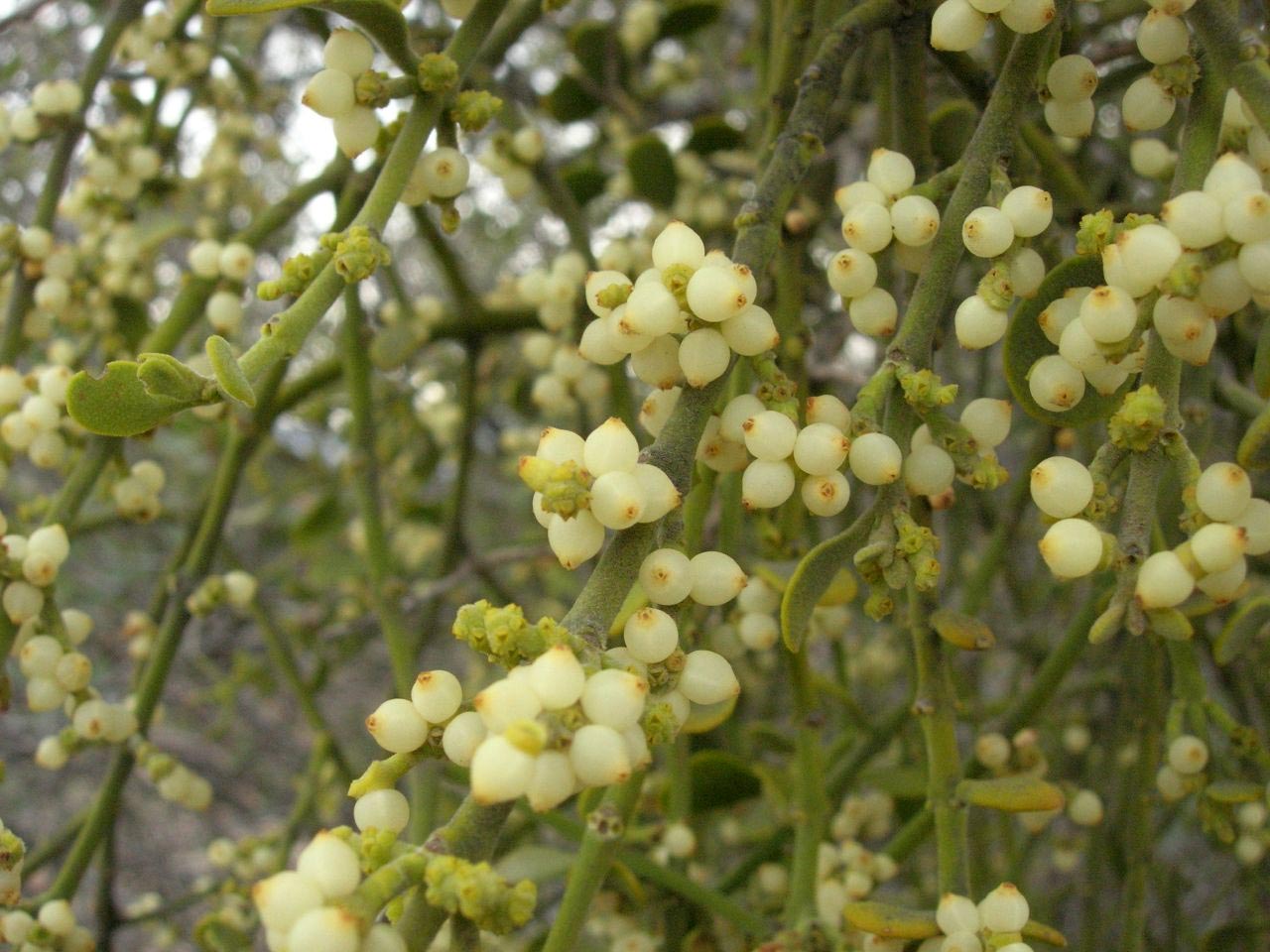
The American mistletoe, the one used at Christmas in the U.S., is in the genus Phoradendron, which means “thief of the tree” in Greek. It has green leaves and is capable of photosynthesis and so produces much of its own food. But American mistletoe also sucks water and other nutrients out of its host plant by sending rootlike structures called haustoria into the vascular tissue just under the bark of branches and twigs. These invading structures can live for many years inside a tree even if the mistletoe plant itself is removed.
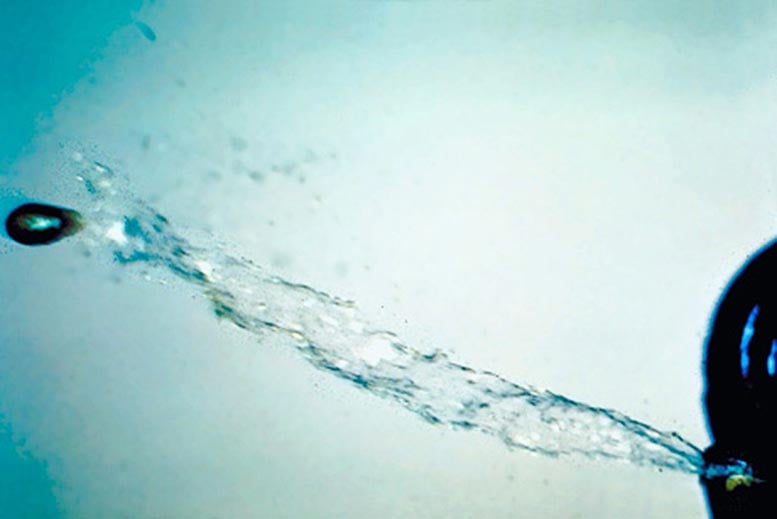
Mistletoes are what botanists call dioecious, meaning these plants have separate male and female versions. The females produce the fruits, called berries, which are generally white, but can be pink or reddish depending on the species. Birds widely distribute the seeds after eating the berries. Seeds of some species can also be shot out of the fruit like a cannonball at up to 60 mph (100 kph) to a distance as far as 50 feet (15 meters). A sticky substance on the seeds helps them attach to any tree they land on until they germinate and begin to grow.
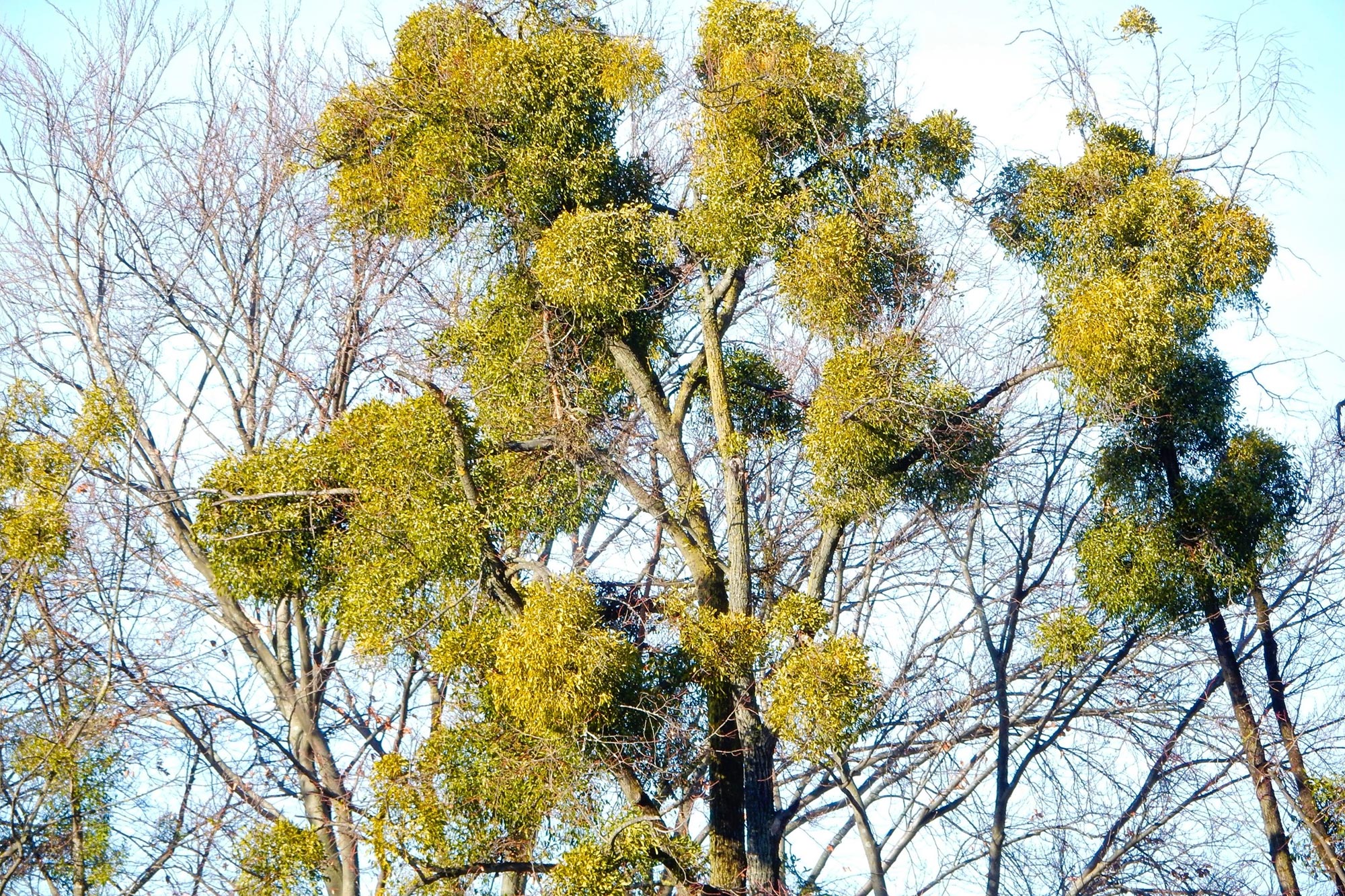
In general, mistletoe won’t kill a tree unless it is heavily infested. Even then the tree doesn’t usually die from the mistletoe; most often death is an indirect effect of attacks from diseases or insects that take advantage of the stressed tree. Mistletoe’s parasitic ways can cause significant economic damage to forests industrially harvested for lumber.
For a homeowner, though, it’s usually not necessary to control mistletoe – which is good, since getting rid of it can be difficult and takes patience and persistence. You can prune it out, being sure to get all those spreading haustoria under the host’s bark, or try chemical controls like the plant growth regulator ethephon.
Traditions and Symbolism
Maybe you’ll want to trim a sprig to decorate with during Christmastime. One of the most common traditions associated with mistletoe, dating back at least to the 1700s, is that anyone lingering beneath it would welcome a holiday kiss. Here in my home state of Oklahoma, mistletoe is our state floral emblem, apparently because it was the only greenery available to put on graves during the particularly hard winter of 1889. In other parts of the world, mistletoe is considered to bestow life and fertility, serve as a peace offering and protect against poison.
About poison: Mistletoe has a reputation as a poisonous plant. While the European species Viscum album is reportedly toxic, American mistletoe is not deadly. Better to keep it away from little kids and pets, though, and if you are concerned, stick with artificial mistletoe for decorative purposes.
Ecological Importance
Mistletoe is an important part of the ecosystem in the places where it grows in North America. Lots of birds rely on mistletoe berries as a food source, as do elk, deer, squirrels, chipmunks and even porcupines, which will also eat the leaves when other fresh foliage is scarce. Tangled clumps of mistletoe, traditionally referred to as witches’ brooms, provide nesting sites for birds, including spotted owls and Cooper’s hawks, and other animals. Three kinds of butterflies in the U.S. are entirely dependent on mistletoes. And it’s also an important nectar and pollen plant for honey bees and other native bees.
So this parasitic plant plays a valuable role in both ecosystems and human traditions. If it grows near you, enjoy it because you probably wouldn’t be able to completely get rid of it anyway. And at Christmastime, it just may come in handy.
Written by David Hillock, Associate Extension Specialist Horticulture & Landscape Architecture, Oklahoma State University.
This article was first published in The Conversation.
Never miss a breakthrough: Join the SciTechDaily newsletter.
Follow us on Google and Google News.