
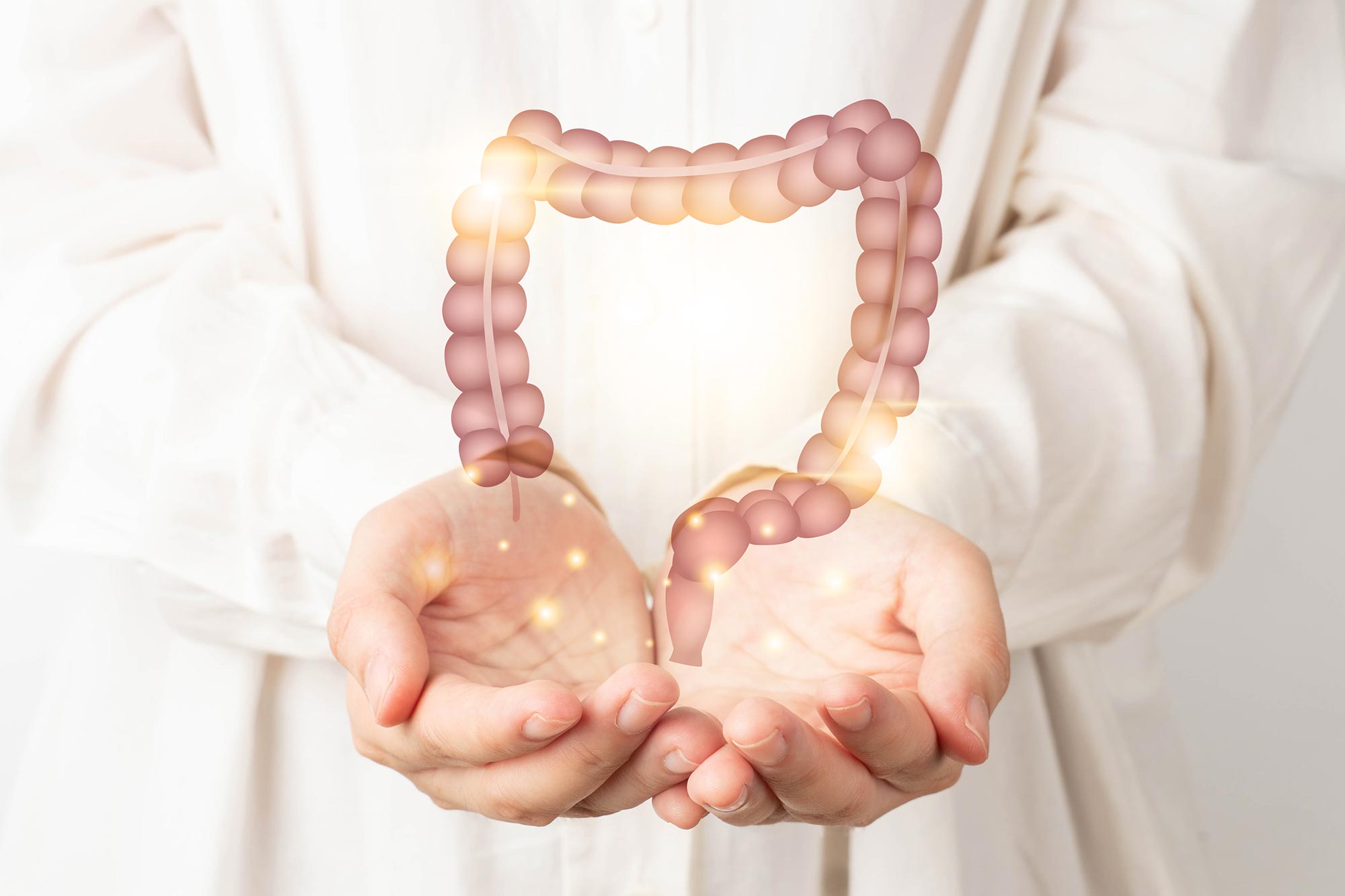
The findings could provide a new approach to repairing tissue damage caused by radiation or chemotherapy treatment.
A new study from MIT has found that consuming foods high in the amino acid cysteine may help restore and rejuvenate the small intestine. The researchers discovered that cysteine activates an immune signaling pathway that enables stem cells to generate new intestinal tissue.
This increased regenerative activity could help repair damage caused by radiation, a common side effect experienced by patients undergoing cancer treatments. The study was performed in mice, but if similar results are observed in humans, increasing cysteine intake through diet or supplements could become a potential way to accelerate tissue healing, according to the research team.
“The study suggests that if we give these patients a cysteine-rich diet or cysteine supplementation, perhaps we can dampen some of the chemotherapy or radiation-induced injury,” says Omer Yilmaz, director of the MIT Stem Cell Initiative, an associate professor of biology at MIT, and a member of MIT’s Koch Institute for Integrative Cancer Research. “The beauty here is we’re not using a synthetic molecule; we’re exploiting a natural dietary compound.”
How cysteine supports stem cell regeneration
Earlier studies have shown that certain types of diets, such as low-calorie regimens, can boost the activity of intestinal stem cells. However, this new work is the first to pinpoint a specific nutrient that directly enhances the regeneration of intestinal cells.
Yilmaz served as the senior author of the study, which was published on October 1, 2025, in Nature. The paper’s lead author is Koch Institute postdoctoral researcher Fangtao Chi.
How cysteine supports stem cell regeneration
It is well known that what we eat has a major influence on health. Diets high in fat are linked to conditions such as obesity, diabetes, and other metabolic disorders, while calorie-restricted diets have been shown to increase lifespan across multiple species. In recent years, Yilmaz’s laboratory has explored how various dietary patterns affect stem cell renewal and discovered that both high-fat diets and brief fasting periods can boost stem cell activity through distinct mechanisms.
“We know that macro diets such as high-sugar diets, high-fat diets, and low-calorie diets have a clear impact on health. But at the granular level, we know much less about how individual nutrients impact stem cell fate decisions, as well as tissue function and overall tissue health,” Yilmaz says.
Cysteine’s role in immune activation
In their new study, the researchers began by feeding mice a diet high in one of 20 different amino acids, the building blocks of proteins. For each group, they measured how the diet affected intestinal stem cell regeneration. Among these amino acids, cysteine had the most dramatic effects on stem cells and progenitor cells (immature cells that differentiate into adult intestinal cells).
Further studies revealed that cysteine initiates a chain of events leading to the activation of a population of immune cells called CD8 T cells. When cells in the lining of the intestine absorb cysteine from digested food, they convert it into CoA, a cofactor that is released into the mucosal lining of the intestine. There, CD8 T cells absorb CoA, which stimulates them to begin proliferating and producing a cytokine called IL-22.
IL-22 is an important player in the regulation of intestinal stem cell regeneration, but until now, it wasn’t known that CD8 T cells can produce it to boost intestinal stem cells. Once activated, those IL-22-releasing T cells are primed to help combat any kind of injury that could occur within the intestinal lining.
“What’s really exciting here is that feeding mice a cysteine-rich diet leads to the expansion of an immune cell population that we typically don’t associate with IL-22 production and the regulation of intestinal stemness,” Yilmaz says. “What happens in a cysteine-rich diet is that the pool of cells that make IL-22 increases, particularly the CD8 T-cell fraction.”
These T cells tend to congregate within the lining of the intestine, so they are already in position when needed. The researchers found that the stimulation of CD8 T cells occurred primarily in the small intestine, not in any other part of the digestive tract, which they believe is because most of the protein that we consume is absorbed by the small intestine.
Repairing intestinal damage
In this study, the researchers showed that regeneration stimulated by a cysteine-rich diet could help to repair radiation damage to the intestinal lining. Also, in work that has not been published yet, they showed that a high-cysteine diet had a regenerative effect following treatment with a chemotherapy drug called 5-fluorouracil. This drug, which is used to treat colon and pancreatic cancers, can also damage the intestinal lining.
Cysteine is found in many high-protein foods, including meat, dairy products, legumes, and nuts. The body can also synthesize its own cysteine, by converting the amino acid methionine to cysteine — a process that takes place in the liver. However, cysteine produced in the liver is distributed through the entire body and doesn’t lead to a buildup in the small intestine the way that consuming cysteine in the diet does.
“With our high-cysteine diet, the gut is the first place that sees a high amount of cysteine,” Chi says.
Cysteine has been previously shown to have antioxidant effects, which are also beneficial, but this study is the first to demonstrate its effect on intestinal stem cell regeneration. The researchers now hope to study whether it may also help other types of stem cells regenerate new tissues. In one ongoing study, they are investigating whether cysteine might stimulate hair follicle regeneration.
They also plan to further investigate some of the other amino acids that appear to influence stem cell regeneration.
“I think we’re going to uncover multiple new mechanisms for how these amino acids regulate cell fate decisions and gut health in the small intestine and colon,” Yilmaz says.
Reference: “Dietary cysteine enhances intestinal stemness via CD8+ T cell-derived IL-22” by Fangtao Chi, Qiming Zhang, Jessica E. S. Shay, Shixun Han, Johanna Ten Hoeve, Yin Yuan, Zhenning Yang, Heaji Shin, Samuel Block, Sumeet Solanki, Yatrik M. Shah, Matthew G. Vander Heiden, Judith Agudo and Ömer H. Yilmaz, 01 October 2025, Nature.
DOI: 10.1038/s41586-025-09589-5
The research was funded, in part, by the National Institutes of Health, the V Foundation, the Kathy and Curt Marble Cancer Research Award, the Koch Institute-Dana-Farber/Harvard Cancer Center Bridge Project, the American Federation for Aging Research, the MIT Stem Cell Initiative, and the Koch Institute Support (core) Grant from the National Cancer Institute.
Never miss a breakthrough: Join the SciTechDaily newsletter.
Follow us on Google and Google News.
2 Comments
Great articles, Dr. Tillie Lee Watson, Doctorate Master of Divinity degree, Class of 2019 Grand Canyon University Theological Seminary in Phoenix Arizona
Can it help with those of us who have an immune disorder called COMMON VARIABLE IMMINUNO DEFICIENCY?