
Close Menu
    Facebook X (Twitter) Instagram
    SciTechDaily
    • Biology
    • Chemistry
    • Earth
    • Health
    • Physics
    • Science
    • Space
    • Technology
    Facebook X (Twitter) Pinterest YouTube RSS
    SciTechDaily
    Home»Space»More Questions Than Answers as NASA Reveals Alien Composition of 2I/Borisov
    Space

    More Questions Than Answers as NASA Reveals Alien Composition of 2I/Borisov

    By NASA's Goddard Space Flight CenterApril 26, 2020No Comments2 Mins Read
    Facebook Twitter Pinterest Telegram LinkedIn WhatsApp Email Reddit
    Share
    Facebook Twitter LinkedIn Pinterest Telegram Email Reddit

    Alien Composition of 2I/Borisov

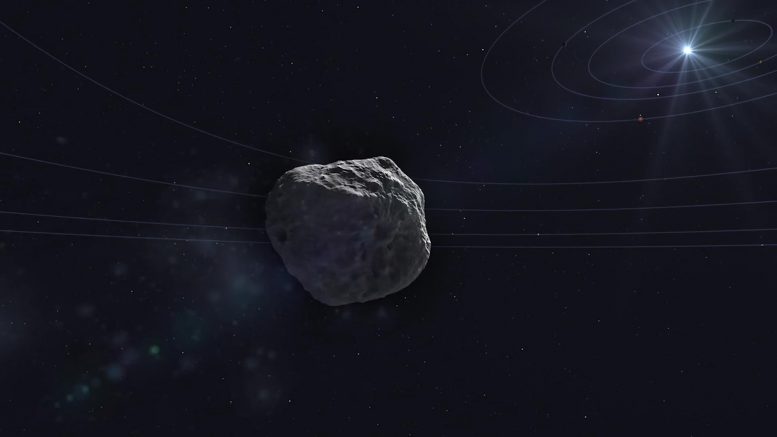
    When amateur astronomer Gennady Borisov discovered an interstellar comet zipping through our solar system on August 30, 2019, scientists promptly turned their telescopes toward it hoping to catch a glimpse of this rare and ephemeral event. After all, no one had ever set eyes on a confirmed comet from a foreign star system, and it was clear from its projected trajectory that the alien visitor, named 2I/Borisov, would soon disappear from the sky forever.

    Before it dimmed from view, a team of international scientists led by Martin Cordiner and Stefanie Milam at NASA’s Goddard Space Flight Center in Greenbelt, Maryland, probed it with the world’s most powerful radio telescope. The comet was near its closest approach to Earth at about 180 million miles, or nearly 300 million kilometers, away.

    When the scientists peeked inside the halo of gas that formed around the comet as it came closer to the Sun and its ices began to vaporize, they detected something peculiar. 2I/Borisov was releasing gas with a greater concentration of carbon monoxide (CO) than anyone had detected in any comet at a similar distance from the Sun (within less than 186 million miles, or 300 million kilometers). 2I/Borisov’s CO concentration was estimated to be between nine and 26 times higher than that of the average solar system comet.

    Until more interstellar comets are observed, this result raises more questions than it answers.

    Read Unusual Secrets Revealed in Analysis of Mysterious Visitor From the Depths of Space for more on this research.

    Reference: “Unusually high CO abundance of the first active interstellar comet” by M. A. Cordiner, S. N. Milam, N. Biver, D. Bockelée-Morvan, N. X. Roth, E. A. Bergin, E. Jehin, A. J. Remijan, S. B. Charnley, M. J. Mumma, J. Boissier, J. Crovisier, L. Paganini, Y.-J. Kuan and D. C. Lis, 20 April 2020, Nature Astronomy.
    DOI: 10.1038/s41550-020-1087-2

    Never miss a breakthrough: Join the SciTechDaily newsletter.
    Follow us on Google and Google News.

    Comet NASA NASA Goddard Space Flight Center Popular
    Share. Facebook Twitter Pinterest LinkedIn Email Reddit

    Related Articles

    NASA’s New Discovery: Earth’s Oceans May Have Cosmic Origins

    SOHO Shatters Records: Solar Observatory Discovers Its 5,000th Comet

    Sodium Surprise: Asteroid’s Comet-Like Tail Is Not Made of Dust

    Hubble Confirms Largest Comet Nucleus Ever Seen – A Staggering 500 Trillion Tons Headed This Way

    NASA’s Solar Terrestrial Relations Observatory Watches Comet ATLAS As Solar Orbiter Crosses Its Tail

    ESA/NASA SOHO Spacecraft Has Discovered Thousands of Comets – What Makes It So Good at It?

    New Comet SWAN Discovered by Solar Observatory Is Visible From Earth Without a Telescope

    Mysterious Visitor From the Depths of Space Swings Past Sun

    First Confirmed Interstellar Comet Observed by Hubble [Video]

    Leave A Reply Cancel Reply

    • Facebook
    • Twitter
    • Pinterest
    • YouTube

    Don't Miss a Discovery

    Subscribe for the Latest in Science & Tech!

    Trending News

    Scientists Discover Cheap, Natural Remedy for High Blood Pressure

    Earth’s Upper Atmosphere Is Cooling Fast and Scientists Finally Know Why

    32,000 Olympic Pools of Magma Nearly Erupted Beneath Atlantic Island

    Exercise Changes the Heart in a Way Researchers Never Expected

    Too Much Sleep May Age Your Body Faster, New Study Warns

    Scientists Uncover Promising New Strategy To Stop Parkinson’s in Its Tracks

    Experts Reveal the Surprising Cancer Link Behind a Common Vitamin

    This Strange “Golden Orb” Found 2 Miles Deep Stumped Scientists for Years

    Follow SciTechDaily
    • Facebook
    • Twitter
    • YouTube
    • Pinterest
    • Newsletter
    • RSS
    SciTech News
    • Biology News
    • Chemistry News
    • Earth News
    • Health News
    • Physics News
    • Science News
    • Space News
    • Technology News
    Recent Posts
    • Canada’s Billion-Year-Old Rocks Could Hold the Future of Clean Energy
    • Climate Change Is Quietly Choking Rivers Across the Planet
    • Scientists Finally Solve the Mystery of “Clockwork” Earthquakes
    • Your Immune System Remembers Obesity for up to a Decade, Study Finds
    • Breakthrough Parkinson’s Drug Targets Disease at Its Genetic Roots
    Copyright © 1998 - 2026 SciTechDaily. All Rights Reserved.
    • Science News
    • About
    • Contact
    • Editorial Board
    • Privacy Policy
    • Terms of Use

    Type above and press Enter to search. Press Esc to cancel.