
Close Menu
    Facebook X (Twitter) Instagram
    SciTechDaily
    • Biology
    • Chemistry
    • Earth
    • Health
    • Physics
    • Science
    • Space
    • Technology
    Facebook X (Twitter) Pinterest YouTube RSS
    SciTechDaily
    Home»Chemistry»MoS2 Reimagined: Scientists Unveil Electronic Secrets
    Chemistry

    MoS2 Reimagined: Scientists Unveil Electronic Secrets

    By Sonal Mistry, Helmholtz-Zentrum BerlinDecember 18, 2023No Comments3 Mins Read
    Facebook Twitter Pinterest Telegram LinkedIn WhatsApp Email Reddit
    Share
    Facebook Twitter LinkedIn Pinterest Telegram Email Reddit
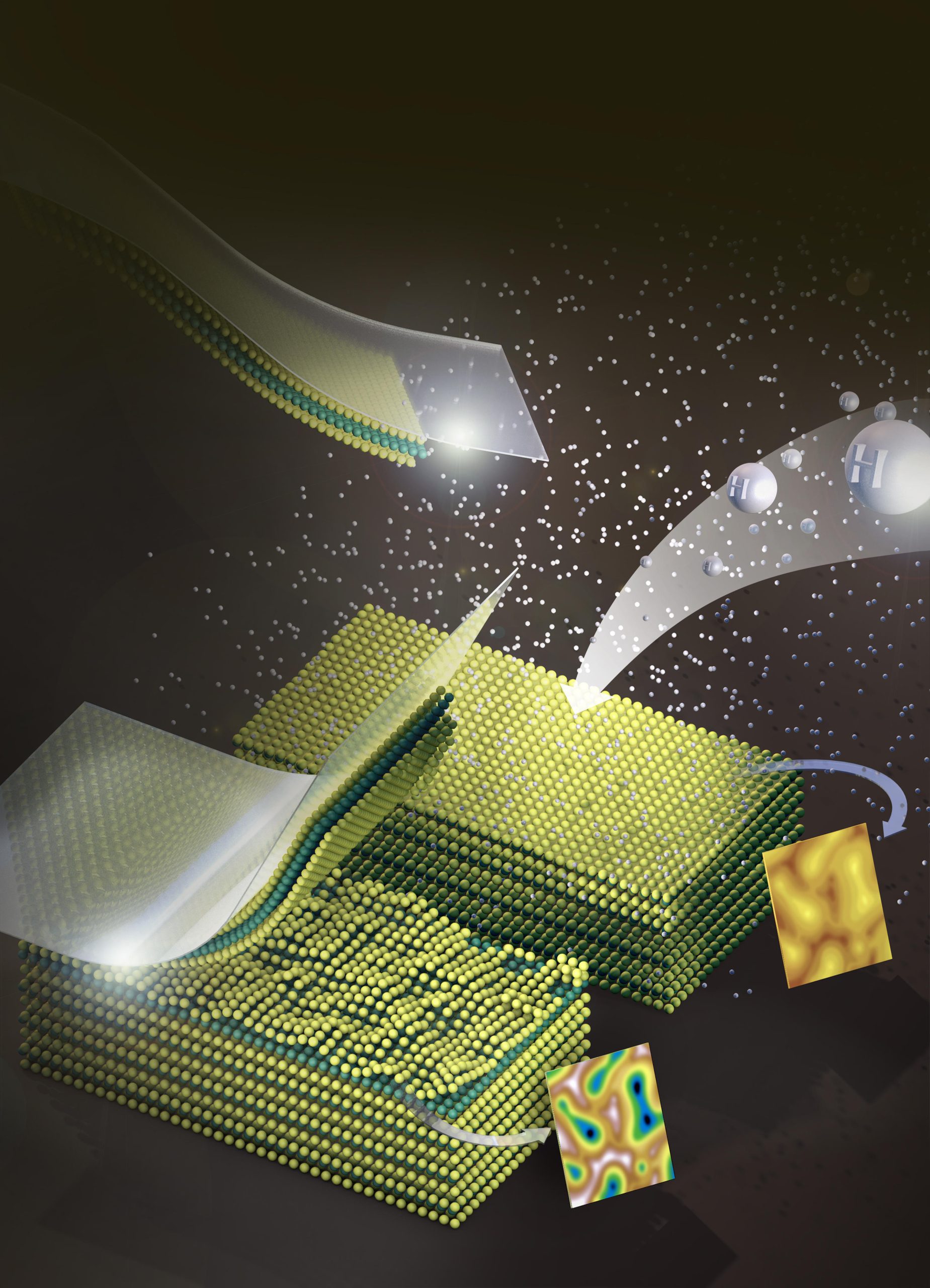
    MoS2 Lattice Structure
    The illustration shows the MoS2 lattice structure (green: Mo, yellow: S). The material after cleaving is shown in the forefront, the surface is jagged, and the measured surface electronic structure is inhomogeneous (coloured map). In the back is the cleaved material after exposure to atomic hydrogen (represented by the white balls). The measured surface electronic structure, shown in the map, is more homogenous. Credit: Martin Künsting / HZB

    Molybdenum disulfide (MoS₂) is an extremely adaptable substance with applications ranging from gas sensing to serving as a photocatalyst in the production of green hydrogen. Typically, the study of a material begins with its bulk crystalline form. However, in the case of MoS₂, the focus has been more on exploring its mono and few-layer nanosheets.

    The few studies conducted thus far show diverse and irreproducible results for the electronic properties of cleaved bulk MoS₂ surfaces, highlighting the need for a more systematic study, which has been done now at the light source BESSY II.

    Systematic Study at BESSY II

    Dr. Erika Giangrisostomi and her team at HZB carried such a systematic study at the LowDosePES end-station of the BESSY II light source. They utilized X-ray photoelectron spectroscopy technique to map the core-level electron energies across extensive surface areas of MoS2 samples.

    Using this method, they were able to monitor the changes in the surface electronic properties after in-situ ultra-high-vacuum cleaving, annealing, and exposure to atomic and molecular hydrogen.

    Key Findings and Implications

    The results from this study point to two main findings. Firstly, the study unambiguously reveals sizeable variations and instabilities in electron energies for the freshly cleaved surfaces, demonstrating how easy it is to come to diverse and irreproducible outcomes.

    Secondly, the study shows that room-temperature atomic hydrogen treatment is remarkably effective in neutralizing the surface electronic inhomogeneity and instability. This is rationalized by the ability of hydrogen atoms to either accept or give away an electron and calls for further characterizations of the functional properties of the hydrogenated material.

    “We hypothesize that atomic hydrogen helps to rearrange sulfur vacancies and excess of sulfur atoms yielding a more ordered structure”. Erika Giangrisostomi says.

    This study marks a fundamental step in the investigation of MoS2. Due to the extensive use of MoS2 in all kinds of applications, the findings of this research have the potential to reach a wide audience in the fields of electronics, photonics, sensors, and catalysis.

    Reference: “Inhomogeneity of Cleaved Bulk MoS2 and Compensation of Its Charge Imbalances by Room-Temperature Hydrogen Treatment” by Erika Giangrisostomi, Ruslan Ovsyannikov, Robert Haverkamp, Nomi L. A. N. Sorgenfrei, Stefan Neppl, Hikmet Sezen, Fredrik O. L. Johansson, Svante Svensson and Alexander Föhlisch, 31 August 2023, Advanced Materials Interfaces.
    DOI: 10.1002/admi.202300392

    Never miss a breakthrough: Join the SciTechDaily newsletter.
    Follow us on Google and Google News.

    Energy Helmholtz Center Berlin Hydrogen Materials Science Photonics
    Share. Facebook Twitter Pinterest LinkedIn Email Reddit

    Related Articles

    Scientists Discover a Cheaper, More Powerful Catalyst for Clean Hydrogen Energy

    Breakthrough Boost for Solar-Powered Fuel Made by Splitting Water

    Clean Energy Technology Revolutionized by “Needle in a Haystack” Discovery

    Energy Industry Game-Changer: Using Rust and Organic Waste to Produce Hydrogen Fuel

    Safe and Environmentally-Friendly Hydrogen Gas On-Demand Could Be on the Horizon

    New Way to Make Hydrogen Energy Out of Water Much More Cheaply

    Innovative Hydrogen Boride Nanosheets: Huge Potential As Hydrogen Carrier

    Using a Functionalized Metal-Organic Framework Compound to Filter Heavy Hydrogen

    A New class of Materials Called Protein Crystalline Frameworks

    Leave A Reply Cancel Reply

    • Facebook
    • Twitter
    • Pinterest
    • YouTube

    Don't Miss a Discovery

    Subscribe for the Latest in Science & Tech!

    Trending News

    Largest-Ever Study Finds Medicinal Cannabis Ineffective for Anxiety, Depression, PTSD

    250-Million-Year-Old Egg Solves One of Evolution’s Biggest Mysteries

    Living With Roommates Might Be Changing Your Gut Microbiome Without You Knowing

    Century-Old Cleaning Chemical Linked to 500% Increased Risk of Parkinson’s Disease

    What if Your Memories Never Happened? Physicists Take a New Look at the Boltzmann Brain Paradox

    One of the Universe’s Largest Stars May Be Getting Ready To Explode

    Scientists Discover Enzyme That Could Supercharge Ozempic-Like Weight Loss Drugs

    Popular Sweetener Linked to DNA Damage – “It’s Something You Should Not Be Eating”

    Follow SciTechDaily
    • Facebook
    • Twitter
    • YouTube
    • Pinterest
    • Newsletter
    • RSS
    SciTech News
    • Biology News
    • Chemistry News
    • Earth News
    • Health News
    • Physics News
    • Science News
    • Space News
    • Technology News
    Recent Posts
    • Scientists Reveal Eating Fruits and Vegetables May Increase Your Risk of Lung Cancer
    • AI Reveals Explosive Growth of Floating Algae Across the World’s Oceans
    • 5.5 Million Bees Discovered Living Beneath a New York Cemetery
    • Scientists Reverse Brain Aging With Simple Nasal Spray
    • The Surprising Diet Rule That Makes “Good” Parasites Work
    Copyright © 1998 - 2026 SciTechDaily. All Rights Reserved.
    • Science News
    • About
    • Contact
    • Editorial Board
    • Privacy Policy
    • Terms of Use

    Type above and press Enter to search. Press Esc to cancel.