
Close Menu
    Facebook X (Twitter) Instagram
    SciTechDaily
    • Biology
    • Chemistry
    • Earth
    • Health
    • Physics
    • Science
    • Space
    • Technology
    Facebook X (Twitter) Pinterest YouTube RSS
    SciTechDaily
    Home»Biology»MRI Uncovers Brain’s Hidden Waste-Removal System, Paving the Way for Alzheimer’s Prevention
    Biology

    MRI Uncovers Brain’s Hidden Waste-Removal System, Paving the Way for Alzheimer’s Prevention

    By Sharon Reynolds, National Institutes of HealthNovember 2, 2024No Comments4 Mins Read
    Facebook Twitter Pinterest Telegram LinkedIn WhatsApp Email Reddit
    Share
    Facebook Twitter LinkedIn Pinterest Telegram Email Reddit
    Neuroscience Mental Health Brain Depression Art Concept Illustration
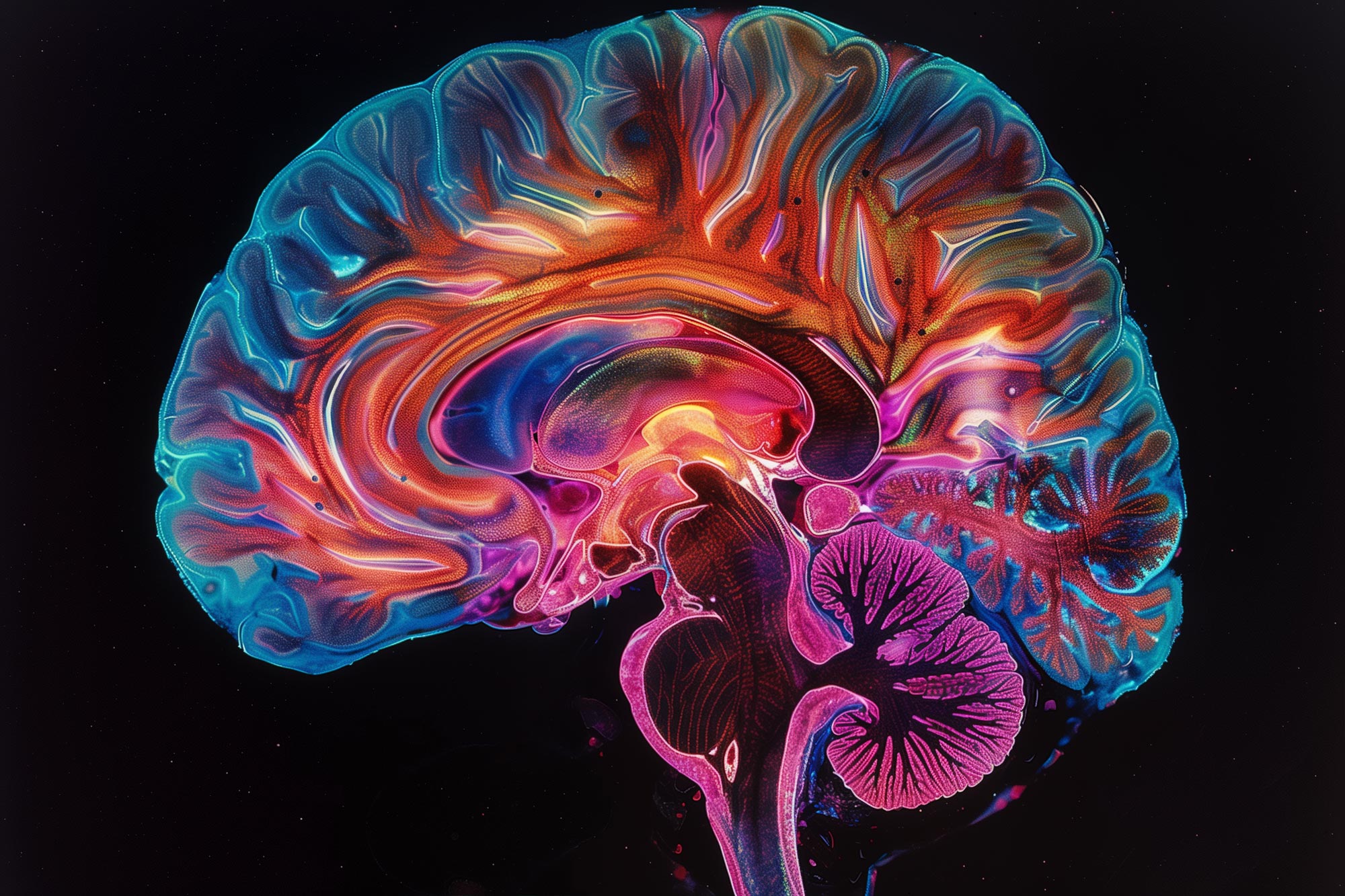
    Researchers have recently confirmed the existence of a glymphatic system in the human brain, similar to what has been observed in mice, using MRI scans to track dye in the cerebrospinal fluid of brain surgery patients. (Artist’s concept.) Credit: SciTechDaily.com

    The human brain’s glymphatic system, instrumental in removing toxins, has been visualized in living people through MRI technology. This breakthrough points to potential preventive measures for Alzheimer’s disease.

    • A study of five volunteers undergoing surgery confirmed the existence of channels that may help drain waste from the brain.
    • The results highlight the importance of ongoing research to boost the functioning of this waste-clearance system, called the glymphatic system.

    The lymphatic system, though less familiar than blood vessels, plays an essential role in keeping us healthy. This network of vessels, spread throughout the body, clears out dead cells and other waste from the bloodstream, while also helping to transport immune cells that fight infections.

    For many years, scientists believed the lymphatic system did not extend to the brain. However, over the past decade or so, researchers have discovered a network of vessels in the brains of mice that contain cerebrospinal fluid. These vessels appear to connect with the lymphatic system, helping to clear toxins from brain tissue.

    Studies indicate that damage to this waste-clearing network in the brain, known as the glymphatic system, due to aging or physical injury, may be linked to the development of Alzheimer’s disease and other cognitive disorders.
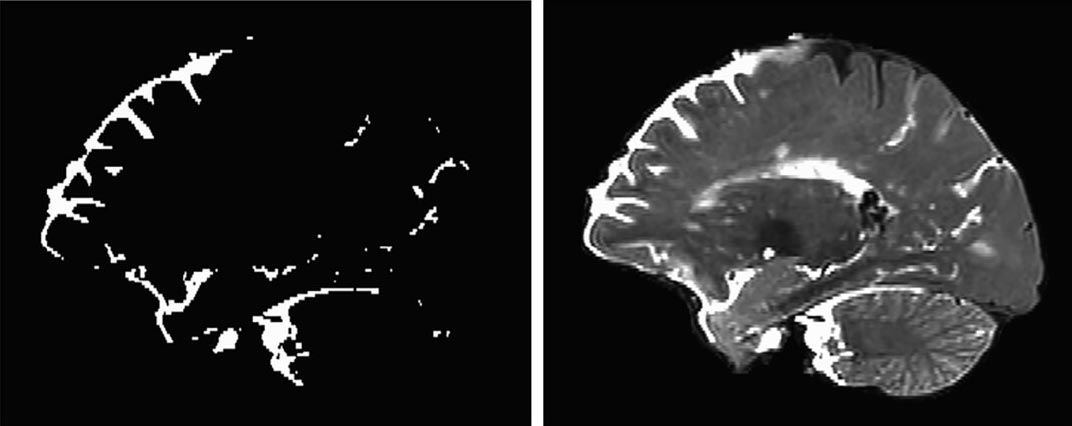
    Perivascular Spaces in Human Brain
    Images showing visualization of perivascular spaces in a human brain. The left image is derived from enhancing the T2/FLAIR image on the right. Credit: Piantino lab, Oregon Health & Science University, PNAS

    Observing the Glymphatic System in Action

    Researchers have observed the real-time workings of the glymphatic system in mice. Studies using human brain samples taken after death found hints of such vessels. But to date, the existence of a functioning glymphatic system hadn’t been confirmed in living people.

    In a new study, funded in part by NIH, researchers led by Dr. Juan Piantino from Oregon Health & Science University recruited five volunteers who needed surgery to remove a brain tumor. During this surgery, the volunteers received an injection of a dye called gadolinium into their cerebrospinal fluid. They then underwent MRI scans to track the passage of dye into the brain. Results from the study were published recently in the Proceedings of the National Academy of Sciences.

    One volunteer underwent MRI using a technology called T2/FLAIR at 12 and 24 hours after surgery, and the other 4 underwent T2/FLAIR imaging at 24 and 48 hours after surgery.

    MRI Imaging Reveals Brain Fluid Channels

    The scans showed cerebrospinal fluid flowing into the brain through distinct channels—along the perivascular spaces, the fluid-filled spaces that run alongside blood vessels in the brain. These findings match earlier imaging results seen in mice. Dye could also be seen moving from these spaces into the functional tissue of the brain. 

    “This shows that cerebrospinal fluid doesn’t just get into the brain randomly, as if you put a sponge in a bucket of water,” Piantino says. “It goes through these channels.”

    Potential Glymphatic System Support Through Sleep

    Other studies have suggested that the glymphatic system may be most active during sleep. These new results support the importance of efforts to boost or repair the glymphatic system, such as improving sleep quality for people at risk for Alzheimer’s disease and other dementias.

    For more on this discovery, see First-Ever Images of Brain’s Secret Cleaning System Unlocks New Hope Against Alzheimer’s.

    Reference: “The perivascular space is a conduit for cerebrospinal fluid flow in humans: A proof-of-principle report” by Erin A. Yamamoto, Jacob H. Bagley, Mathew Geltzeiler, Olabisi R. Sanusi, Aclan Dogan, Jesse J. Liu and Juan Piantino, 7 October 2024, Proceedings of the National Academy of Sciences.
    DOI: 10.1073/pnas.2407246121

    Never miss a breakthrough: Join the SciTechDaily newsletter.
    Follow us on Google and Google News.

    Alzheimer's Disease Brain Dementia National Institutes of Health Neuroscience Sleep Science
    Share. Facebook Twitter Pinterest LinkedIn Email Reddit

    Related Articles

    Don’t Sleep on This: Study Links Sleep Apnea to Smaller Brain Volume

    Scientists Discover a New Daily Rhythm Providing Insight Into How Brain Activity Is Fine-Tuned

    Neuroscientists Discover Brain Mechanism Tied to Age-Related Memory Loss

    MIT Researchers Discover Gene Linked to Cognitive Resilience in the Elderly

    Hit the Sleep “Sweet Spot” To Keep Brain Sharp: Too Little and Too Much Sleep Linked to Cognitive Decline

    National Institutes of Health Small Business Funding Boosts Alzheimer’s Science Advances

    Evidence of Sleep-Dependent Brain Activity in Clearing Toxic Proteins and Preventing Alzheimer’s Disease

    NIH Study Provides an Atlas to Pinpoint Neurons Involved in Neurodegenerative Diseases

    Alzheimer’s Spreads Throughout the Brain by Jumping From Neuron to Neuron

    Leave A Reply Cancel Reply

    • Facebook
    • Twitter
    • Pinterest
    • YouTube

    Don't Miss a Discovery

    Subscribe for the Latest in Science & Tech!

    Trending News

    Millions of People Have Osteopenia Without Realizing It – Here’s What You Need To Know

    Researchers Discover Boosting a Single Protein Helps the Brain Fight Alzheimer’s

    World-First Study Reveals Human Hearts Can Regenerate After a Heart Attack

    Why Your Dreams Feel So Real Sometimes and So Strange Other Times

    This Simple Home Device May Boost Brain Power in Adults Over 40

    Enormous Prehistoric Insects Puzzle Scientists

    Scientists Develop Bioengineered Chewing Gum That Could Help Fight Oral Cancer

    After 37 Years, the World’s Longest-Running Soil Warming Experiment Uncovers a Startling Climate Secret

    Follow SciTechDaily
    • Facebook
    • Twitter
    • YouTube
    • Pinterest
    • Newsletter
    • RSS
    SciTech News
    • Biology News
    • Chemistry News
    • Earth News
    • Health News
    • Physics News
    • Science News
    • Space News
    • Technology News
    Recent Posts
    • Researchers Identify the Most Common Recessive Neurodevelopmental Disorder Ever Discovered
    • This Is What Makes You Irresistible to Mosquitoes
    • Shockingly Powerful Giant Octopuses Ruled the Seas 100 Million Years Ago
    • After 100 Years, Scientists Uncover Hidden Rule Governing Cosmic Rays
    • The Milky Way Has a Hidden Edge and Scientists Finally Mapped It
    Copyright © 1998 - 2026 SciTechDaily. All Rights Reserved.
    • Science News
    • About
    • Contact
    • Editorial Board
    • Privacy Policy
    • Terms of Use

    Type above and press Enter to search. Press Esc to cancel.