
NASA has approved two heliophysics missions to explore the Sun and the system that drives space weather near Earth. Together, NASA’s contribution to the Extreme Ultraviolet High-Throughput Spectroscopic Telescope Epsilon Mission, or EUVST, and the Electrojet Zeeman Imaging Explorer, or EZIE, will help us understand the Sun and Earth as an interconnected system.
Understanding the physics that drives the solar wind and solar explosions – including solar flares and coronal mass ejections – could one day help scientists predict these events, which can impact human technology and explorers in space.
The Japan Aerospace Exploration Agency (JAXA) leads the Extreme Ultraviolet High-Throughput Spectroscopic Telescope (EUVST) Epsilon Mission (Solar-C EUVST Mission), along with other international partners. Targeted for launch in 2026, EUVST is a solar telescope that will study how the solar atmosphere releases solar wind and drives eruptions of solar material. These phenomena propagate out from the Sun and influence the space radiation environment throughout the solar system. NASA’s hardware contributions to the mission include an intensified UV detector and support electronics, spectrograph components, a guide telescope, software, and a slit-jaw imaging system to provide context for the spectrographic measurement. The budget for NASA contributions to EUVST is $55 million. The principal investigator for the NASA contribution to EUVST is Harry Warren at the U.S. Naval Research Laboratory in Washington.
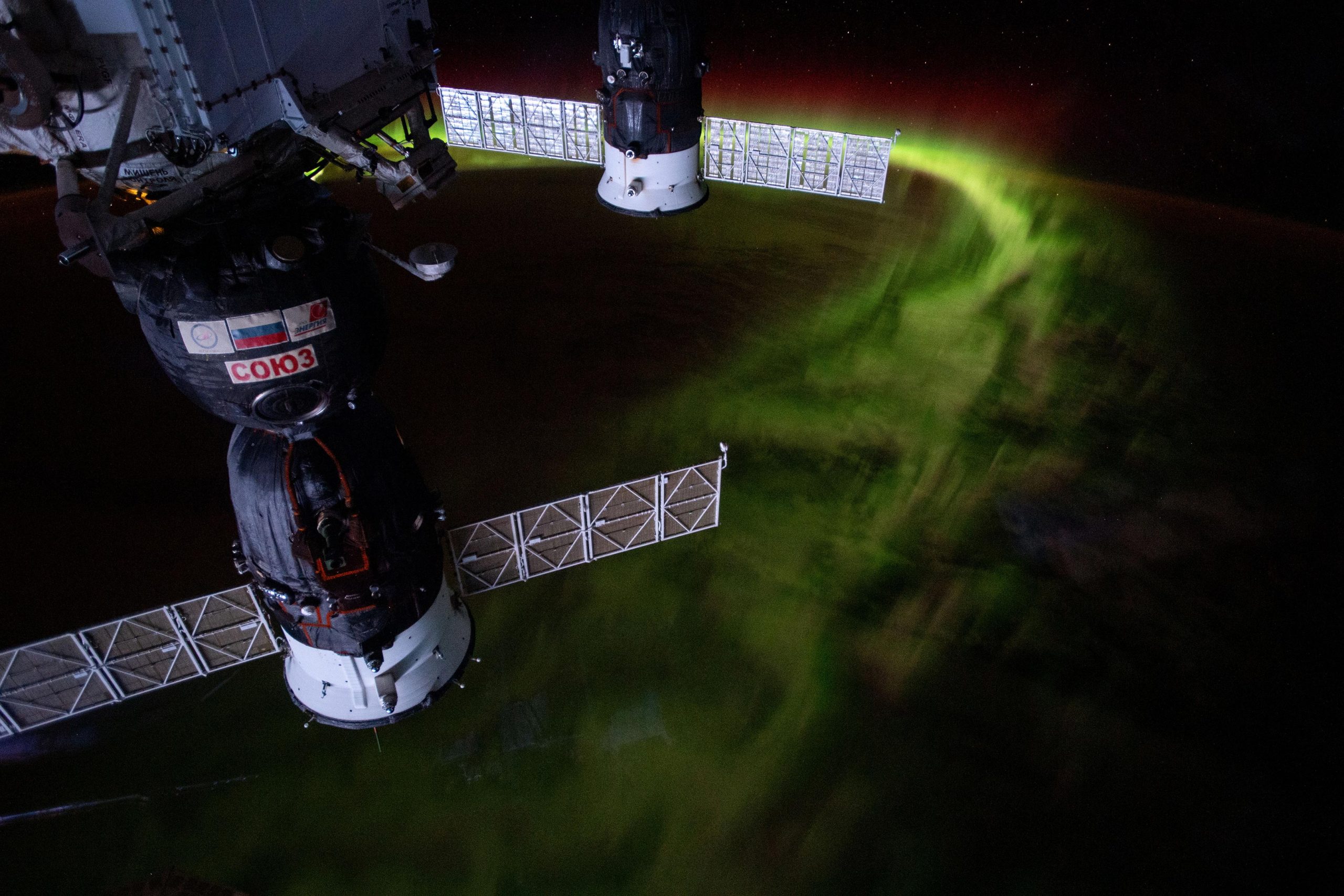
The Electrojet Zeeman Imaging Explorer (EZIE) will study electric currents in Earth’s atmosphere linking aurora to the Earth’s magnetosphere – one piece of Earth’s complicated space weather system, which responds to solar activity and other factors. The Auroral Electrojet (AE) index is a common measure of geomagnetic activity levels, even though the details of the structure of these currents is not understood. EZIE will launch no earlier than June 2024. The total budget for the EZIE mission is $53.3 million. The principal investigator for the mission is Jeng-Hwa (Sam) Yee at the Johns Hopkins University Applied Physics Laboratory in Laurel, Maryland.
“We are very pleased to add these new missions to the growing fleet of satellites that are studying our Sun-Earth system using an amazing array of unprecedented observational tools,” said Thomas Zurbuchen, associate administrator for science at NASA Headquarters in Washington. “In addition to my enthusiasm at selecting a pioneering multi-point observatory focused on the auroral electrojets, I am particularly excited to follow up the success of the Yohkoh and Hinode solar science missions with another international collaboration with JAXA and other European partners on EUVST.”
The EUVST mission addresses the recommendations of a July 2017 final report (pdf) delivered by the multi-agency Next Generation Solar Physics Mission Science Objectives Team. EUVST will take comprehensive UV spectroscopy measurements of the solar atmosphere at the highest level of detail to date, which will allow scientists to tease out how different magnetic and plasma processes drive coronal heating and energy release.
“We’re excited to work with our international partners to answer some of our fundamental questions about the Sun,” said Nicky Fox, Heliophysics Division director at NASA Headquarters in Washington. “EUVST’s observations will complement our current missions to give us new insight into our star.”
EZIE is an investigation comprising a trio of CubeSats that will study the source of and changes in the auroral electrojet, an electric current circling through Earth’s atmosphere around 60-90 miles (97-145 kilometers) above the surface and extending into the Earth’s magnetosphere. The interaction of the magnetosphere and the solar wind compresses the Sun-facing side of the magnetosphere and drags out the night-time side of the magnetosphere into what is called a “magnetotail.” Auroral electrojets are generated by changes in the structure of the magnetotail. The same space weather phenomena that power the beautiful aurora can cause interference with radio and communication signals and utility grids on Earth’s surface, and damage to spacecraft in orbit.
“With these new missions, we’re expanding how we study the Sun, space, and Earth as an interconnected system,” said Peg Luce, deputy director of the Heliophysics Division at NASA Headquarters in Washington. “EZIE’s use of instrument technology proven on Earth science CubeSat missions is just one example of how science and technology development at NASA go hand in hand across disciplines.”
Never miss a breakthrough: Join the SciTechDaily newsletter.
Follow us on Google and Google News.