
Close Menu
    Facebook X (Twitter) Instagram
    SciTechDaily
    • Biology
    • Chemistry
    • Earth
    • Health
    • Physics
    • Science
    • Space
    • Technology
    Facebook X (Twitter) Pinterest YouTube RSS
    SciTechDaily
    Home»Space»NASA’s Parker Solar Probe: The Fastest Spacecraft Ever Just Skimmed the Sun at 430,000 MPH
    Space

    NASA’s Parker Solar Probe: The Fastest Spacecraft Ever Just Skimmed the Sun at 430,000 MPH

    By Mara Johnson-Groh, NASA’s Goddard Space Flight CenterMarch 26, 20251 Comment3 Mins Read
    Facebook Twitter Pinterest Telegram LinkedIn WhatsApp Email Reddit
    Share
    Facebook Twitter LinkedIn Pinterest Telegram Email Reddit
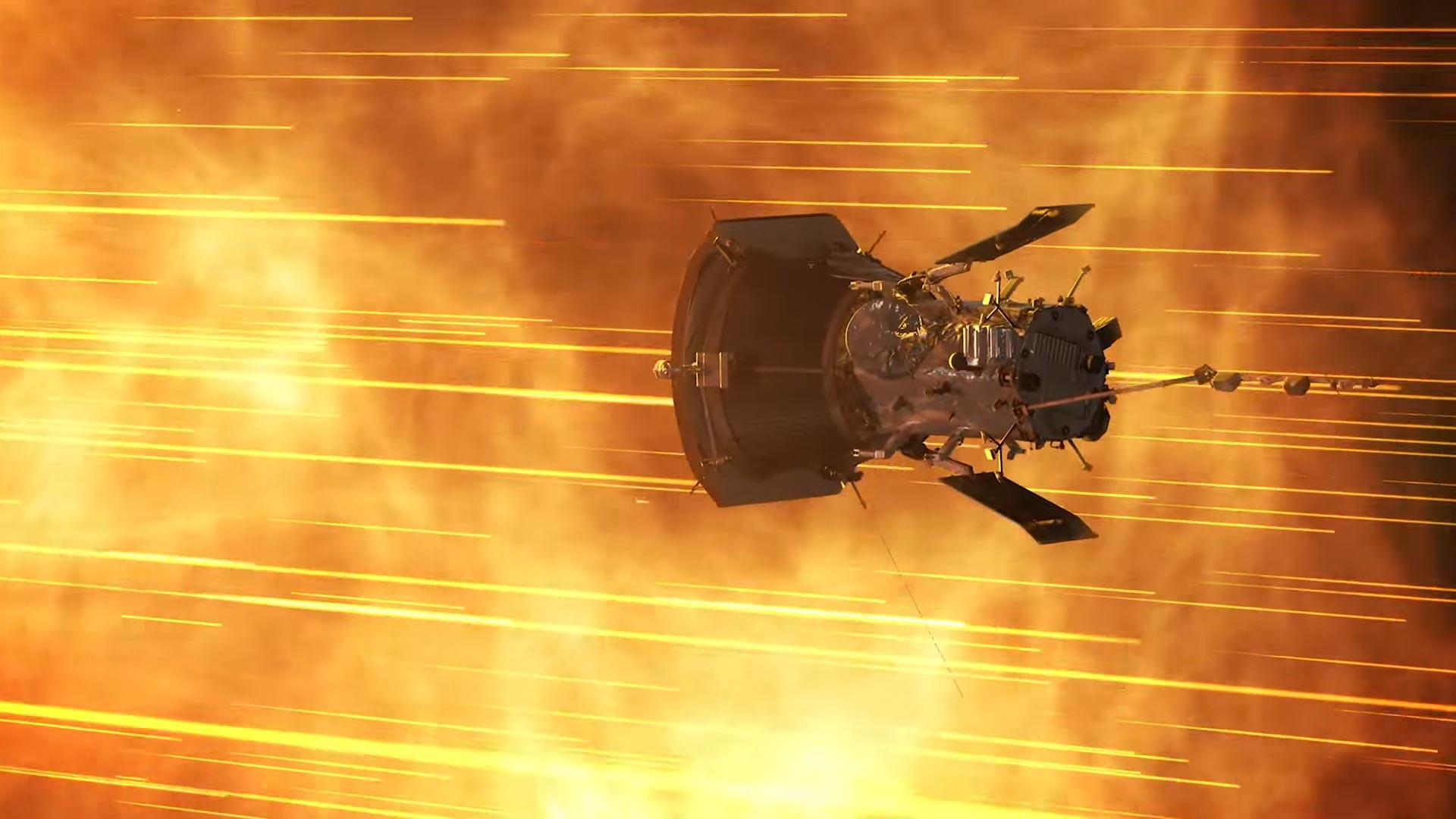
    Parker Solar Probe Close to Sun
    Parker Solar Probe reached record speeds and distance again, flying through the Sun’s outer atmosphere to collect rare solar data. Credit: NASA GSFC/CIL/Brian Monroe

    NASA’s Parker Solar Probe just screamed past the Sun for the 23rd time, once again matching its own records for closest approach and fastest human-made object.

    Zooming through space at 430,000 mph and skimming just 3.8 million miles from the solar surface, the probe is in perfect health and sending back priceless data about our star’s mysterious and powerful behavior.

    Record-Breaking Flyby Near the Sun

    NASA’s Parker Solar Probe made its 23rd close pass by the Sun on March 22, coming within about 3.8 million miles (6.1 million kilometers) of the solar surface, matching its own previous distance record.

    The close approach, called perihelion, occurred at 22:42 UTC (6:42 p.m. EDT). At that moment, the spacecraft was traveling at an incredible speed of 430,000 miles per hour (692,000 kilometers per hour), once again equaling its own speed record. After the flyby, the probe successfully checked in with mission control at the Johns Hopkins Applied Physics Laboratory in Laurel, Maryland, where it was also designed and built, confirming that it was healthy and operating normally.


    Parker Solar Probe’s 23rd orbit included a perihelion that brought the spacecraft within 3.8 million miles of the Sun. Credit: NASA/Johns Hopkins APL/Steve Gribben

    Mission Milestone and Scientific Opportunity

    This perihelion marked the halfway point in the mission’s 23rd solar encounter, which began on March 18 and continues through March 27. It’s the second time the spacecraft has reached this extreme speed and proximity to the Sun, enabling it to gather unprecedented data on the solar wind and related solar activity.
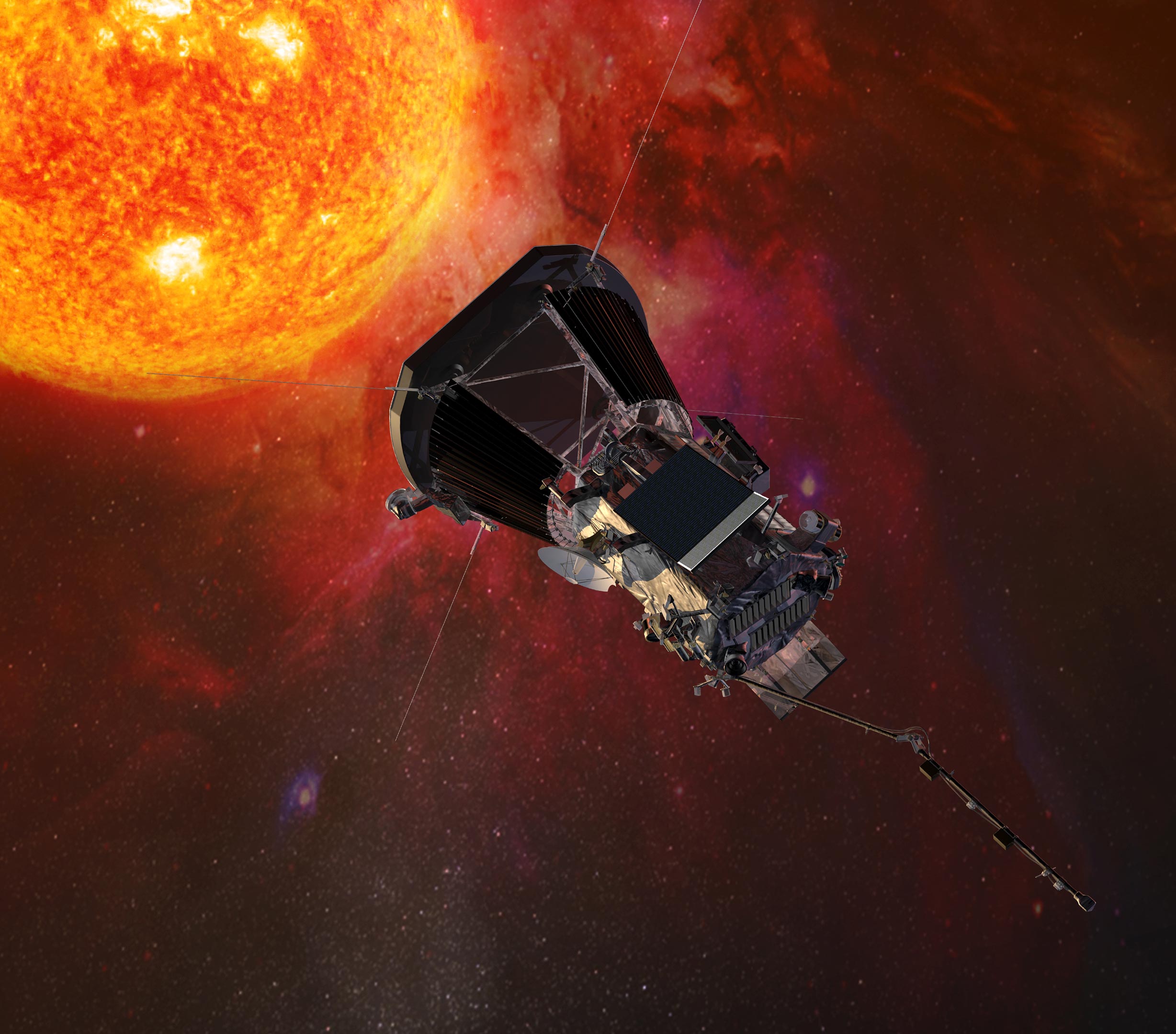
    Parker Solar Probe Spacecraft Approaching Sun
    Illustration of the Parker Solar Probe spacecraft approaching the sun. Credit: Johns Hopkins University Applied Physics Laboratory

    NASA’s Parker Solar Probe is a groundbreaking mission designed to study the Sun up close, traveling closer to its surface than any spacecraft before. Launched in 2018, the probe is on a mission to explore the Sun’s outer atmosphere, or corona, to better understand solar wind, magnetic fields, and space weather that can affect Earth. Built to withstand extreme heat and radiation, the probe uses a specially designed heat shield to survive temperatures of nearly 2,500°F (1,377°C) as it repeatedly dives toward the Sun, reaching speeds over 430,000 miles per hour—making it the fastest human-made object in history.

    Never miss a breakthrough: Join the SciTechDaily newsletter.
    Follow us on Google and Google News.

    NASA NASA Goddard Space Flight Center Parker Solar Probe Sun
    Share. Facebook Twitter Pinterest LinkedIn Email Reddit

    Related Articles

    NASA Just Flew Through the Sun’s Atmosphere – And What It Saw Is Jaw-Dropping

    NASA’s Spacecraft That Touched the Sun Just Won Aerospace’s Biggest Prize

    NASA’s Parker Solar Probe: The Fastest Human-Made Object Just “Touched” the Sun and Shattered Records

    Switchbacks Science: Explaining NASA’s Parker Solar Probe’s Mysterious Magnetic Puzzle

    Celestial Geometry Posed a Special Opportunity During Parker Solar Probe’s 7th Solar Encounter

    A New View of Small Sun Structures Allows NASA to Explore the Solar Wind Like Never Before

    NASA’s Parker Solar Probe Teams Up With Observatories Around Solar System

    Possible Explanation for the Origin of Switchbacks Observed by Parker Solar Probe in the Sun’s Magnetic Field

    5 Astonishing New Discoveries From NASA’s Parker Solar Probe [Video]

    1 Comment

    1. Brett Makoviney on April 19, 2025 4:00 am

      Well outstanding 👏 👌

      Reply
    Leave A Reply Cancel Reply

    • Facebook
    • Twitter
    • Pinterest
    • YouTube

    Don't Miss a Discovery

    Subscribe for the Latest in Science & Tech!

    Trending News

    The Universe Is Expanding Too Fast and Scientists Can’t Explain Why

    “Like Liquid Metal”: Scientists Create Strange Shape-Shifting Material

    Early Warning Signals of Esophageal Cancer May Be Hiding in Plain Sight

    Common Blood Pressure Drug Shows Surprising Power Against Deadly Antibiotic-Resistant Superbug

    Scientists Uncover Dangerous Connection Between Serotonin and Heart Valve Disease

    Scientists Discover a “Protector” Protein That Could Help Reverse Hair Loss

    Bone-Strengthening Discovery Could Reverse Osteoporosis

    Scientists Uncover Hidden Trigger Behind Stem Cell Aging

    Follow SciTechDaily
    • Facebook
    • Twitter
    • YouTube
    • Pinterest
    • Newsletter
    • RSS
    SciTech News
    • Biology News
    • Chemistry News
    • Earth News
    • Health News
    • Physics News
    • Science News
    • Space News
    • Technology News
    Recent Posts
    • 5 Common Myths About Learning a New Language, Debunked
    • The Neanderthal “Love Story” Isn’t What It Seems
    • Scientists Unlock Hidden Secrets of 2,300-Year-Old Mummies Using Cutting-Edge CT Scanner
    • Men vs. Women: Scientists Uncover Dramatic Differences in How the Immune System Ages
    • Eating Chili Peppers Linked to Longer Life
    Copyright © 1998 - 2026 SciTechDaily. All Rights Reserved.
    • Science News
    • About
    • Contact
    • Editorial Board
    • Privacy Policy
    • Terms of Use

    Type above and press Enter to search. Press Esc to cancel.