
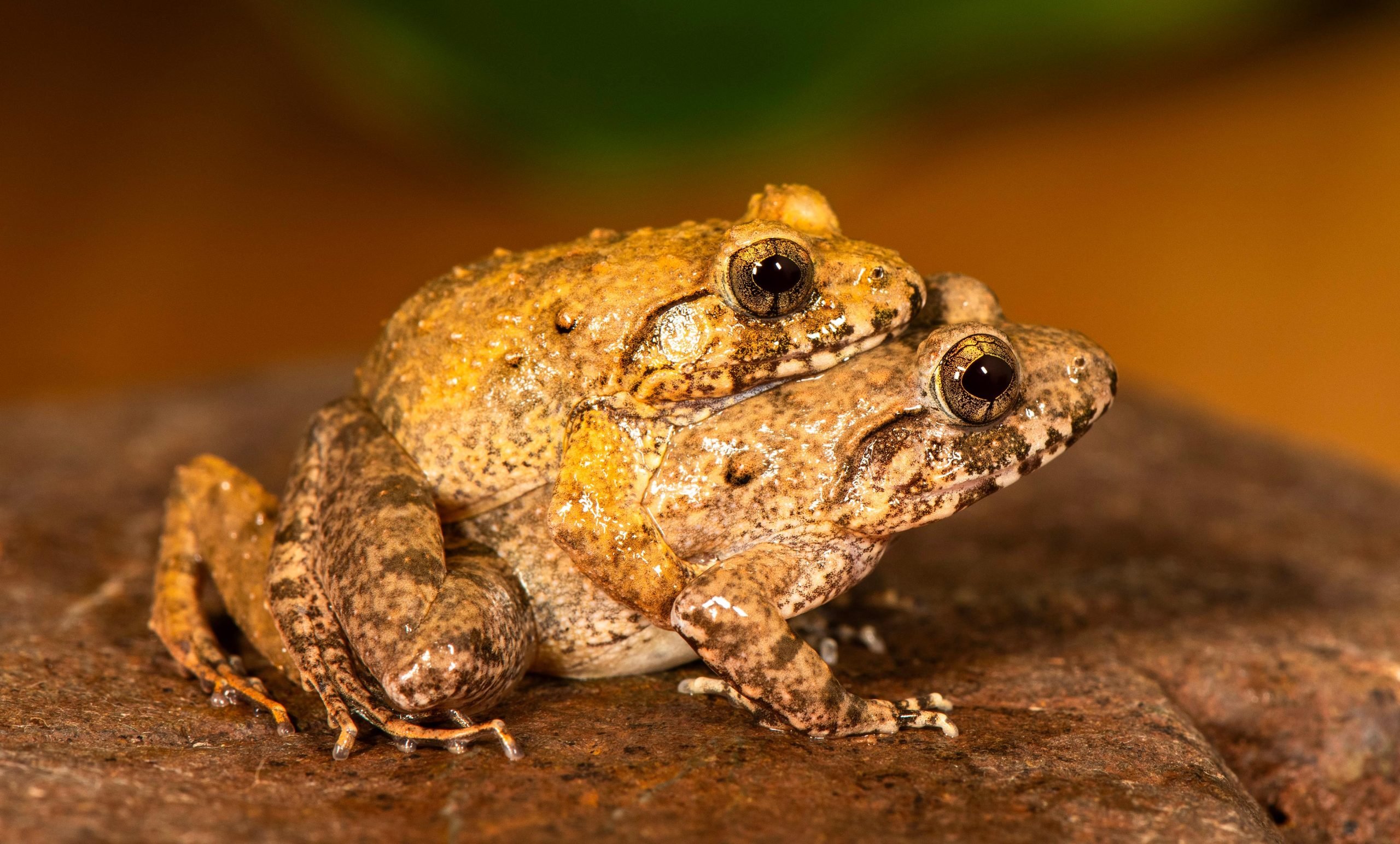
A study reveals unique breeding behaviors in the Andamanese Charles Darwin’s frog, including upside-down egg-laying and intense male competition. The species faces habitat challenges, breeding in unnatural sites like trash, underscoring urgent conservation needs.
Researchers from the University of Delhi and Zoological Survey of India, Harvard University, and the University of Minnesota have discovered a unique breeding behavior in a species of frog endemic to the Andaman Islands of India. In a new study published in the Harvard Museum of Comparative Zoology’s journal Breviora, the scientists describe the frog’s unique combination of reproductive behaviors.
The Andamanese Charles Darwin’s frog, Minervarya charlesdarwini, belongs to the family Dicroglossidae, a large radiation of Asian frogs that comprises over 220 species. Charles Darwin’s frogs naturally breed as well as deposit terrestrial eggs above the water surface on the inner walls of water-filled tree cavities or root buttresses. Hatchlings then drop into the water below and complete their development through a free-swimming tadpole stage.
Distinctive Mating Postures and Reproductive Traits
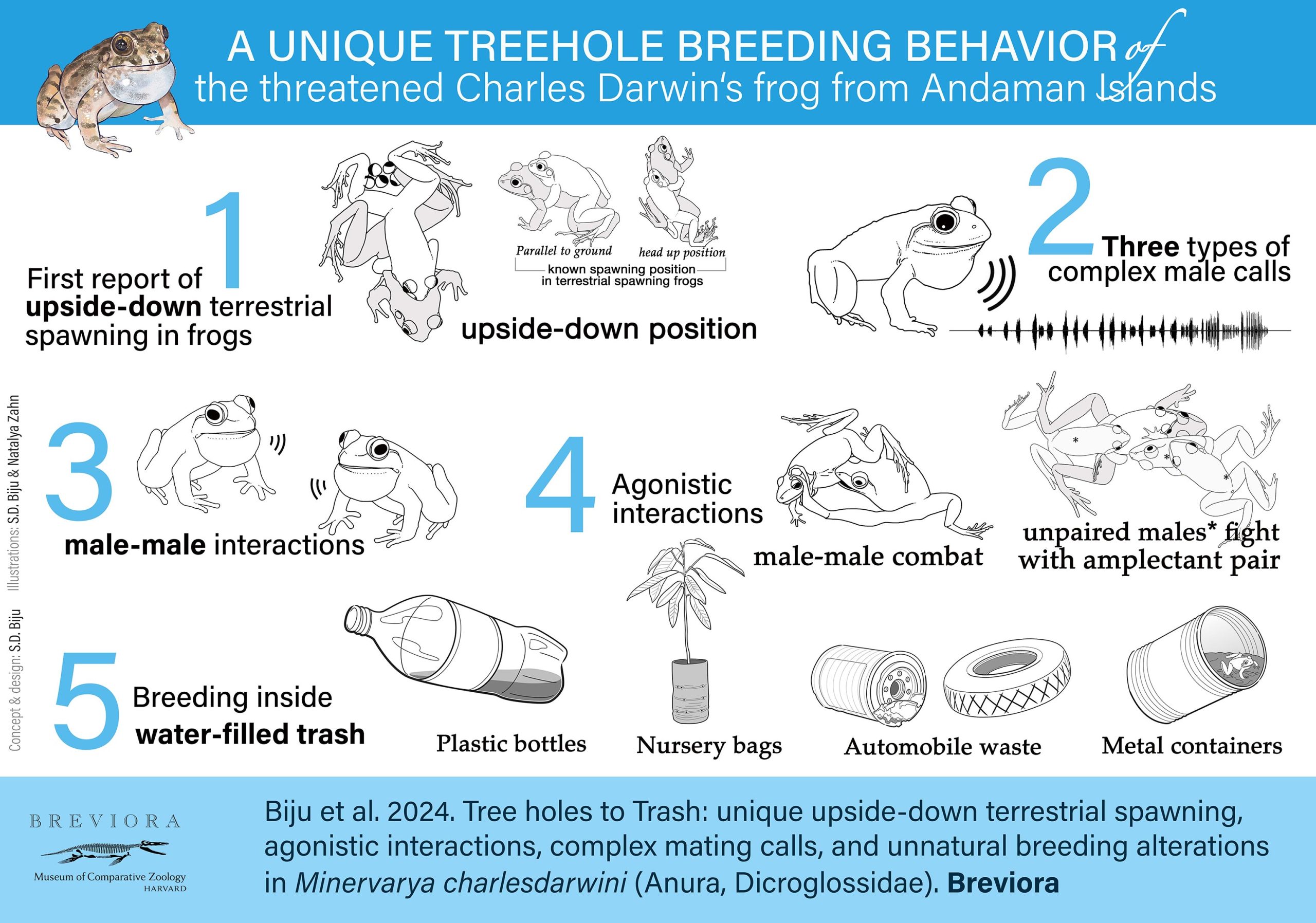
The posture of the mating pair at the time of egg-laying also makes Charles Darwin’s frog unique: the pair orient themselves in a vertical, upside-down posture on the tree cavity walls with their bodies completely out of the water.
“Upside-down spawning is the most remarkable behavior in this frog. No other frog is known to lay terrestrial eggs inside tree holes in an upside-down position. This discovery is fundamental for understanding how the species interacts with its environments and which habitats are essential for its survival. Such specialized traits also yield insights into the evolution of reproductive modes and behaviors among anuran amphibians,” said Professor S. D. Biju of the University of Delhi, who led the study and is currently a Fellow at the Harvard Radcliffe Institute and an associate of Harvard’s Museum of Comparative Zoology.
Aggressive Mating Dynamics and Territorial Fights
The uniqueness of this frog does not end there. Male frogs produce complex advertisement calls comprising three different call types to attract females. They also make an aggressive call. When aggressive vocalizations fail to ward off competing males, physical combat begins. These fights include kicking and boxing using hands and legs, and biting of body parts or even the entire head. Males compete aggressively to mate with females.
If a male successfully mounts a female, nearby unpaired males may physically fight with the amplectant pair. They may even try to insert their head between the bodies of the pair from the back side to separate them. The defending male often kicks the intruding males with his hind legs. Simultaneously, and to avoid attacks, the female climbs the wall of the tree hole with the male on her back. The study suggests that the upside-down spawning behavior in this frog may have evolved as a means of preventing aggressive unpaired males from displacing the amplectant pair from behind and disrupting egg-laying.
“This finding is an example of the remarkable diversity of amphibians and reproductive behaviors that are still unknown to science, especially from unexplored regions in biodiversity hotspots of tropical Asia.” said study co-author Professor James Hanken, Curator of Herpetology at the Museum of Comparative Zoology and Professor of Biology in Harvard’s Department of Organismic and Evolutionary Biology.
Conservation Challenges and Adaptive Behaviors
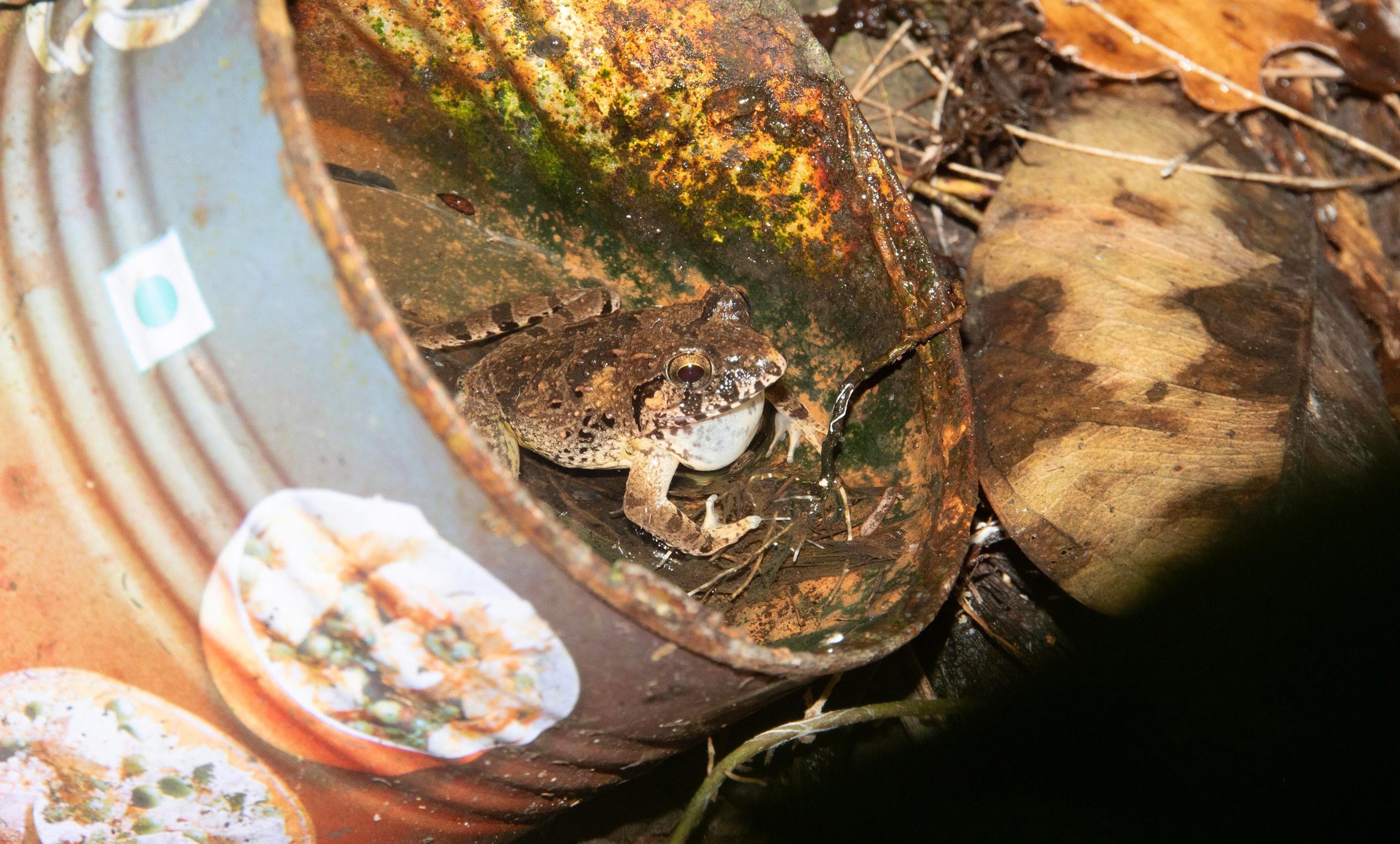
Although Minervarya charlesdarwini appears to be an obligate phytotelm-breeder, the research team frequently observed frogs breeding in unnatural sites in disturbed forests, ranging from artificially watered plastic sapling bags in adjacent plant nurseries to rain-filled, discarded plastic, glass, or metal containers left as trash at the forest edge. The lack of adequate breeding sites due to habitat loss and competition for limited resources may be driving the Charles Darwin’s frog to breed in such unnatural sites. However, this species may not be able to survive in the face of increasing human dominance and rapidly changing landscapes on the small islands where they live.
The study calls for increased attention to the conservation of this endemic and threatened species (currently IUCN Red listed as “Vulnerable”), and to protection of its specialized and vulnerable microhabitats to maintain adequate availability of natural breeding sites.
“The frogs’ use of trash for breeding is both surprising and worrying. We now need to know its causes and long-term consequences, and devise ways to protect the natural breeding sites that are critical for survival of the species,” said Sonali Garg, a Biodiversity Postdoctoral Fellow at Harvard’s Museum of Comparative Zoology, who co-led the study.
Research Methodology
The field-based project was carried out over three years in the remote islands of the Andaman archipelago, which lies in the Bay of Bengal. Researchers spent over 55 nights during the monsoon season to study the secretive reproductive behavior of these tiny frogs.
Reference: “Tree holes to trash: unique upside-drown terrestrial spawning, agonistic interactions, complex mating calls and unnatural breeding alteration in Minervarya charlesdarwini (Anura, Dicroglossidae)” by S. D. Biju, Sonali Garg, G. Gokulakrishnan, Chandrakasan Sivaperuman, RadhaKrishna K. Upadhyaya, Mark A. Bee and James Hanken, 29 July 2024, Breviora.
DOI: 10.3099/0006-9698-577.1.1
Never miss a breakthrough: Join the SciTechDaily newsletter.
Follow us on Google and Google News.