
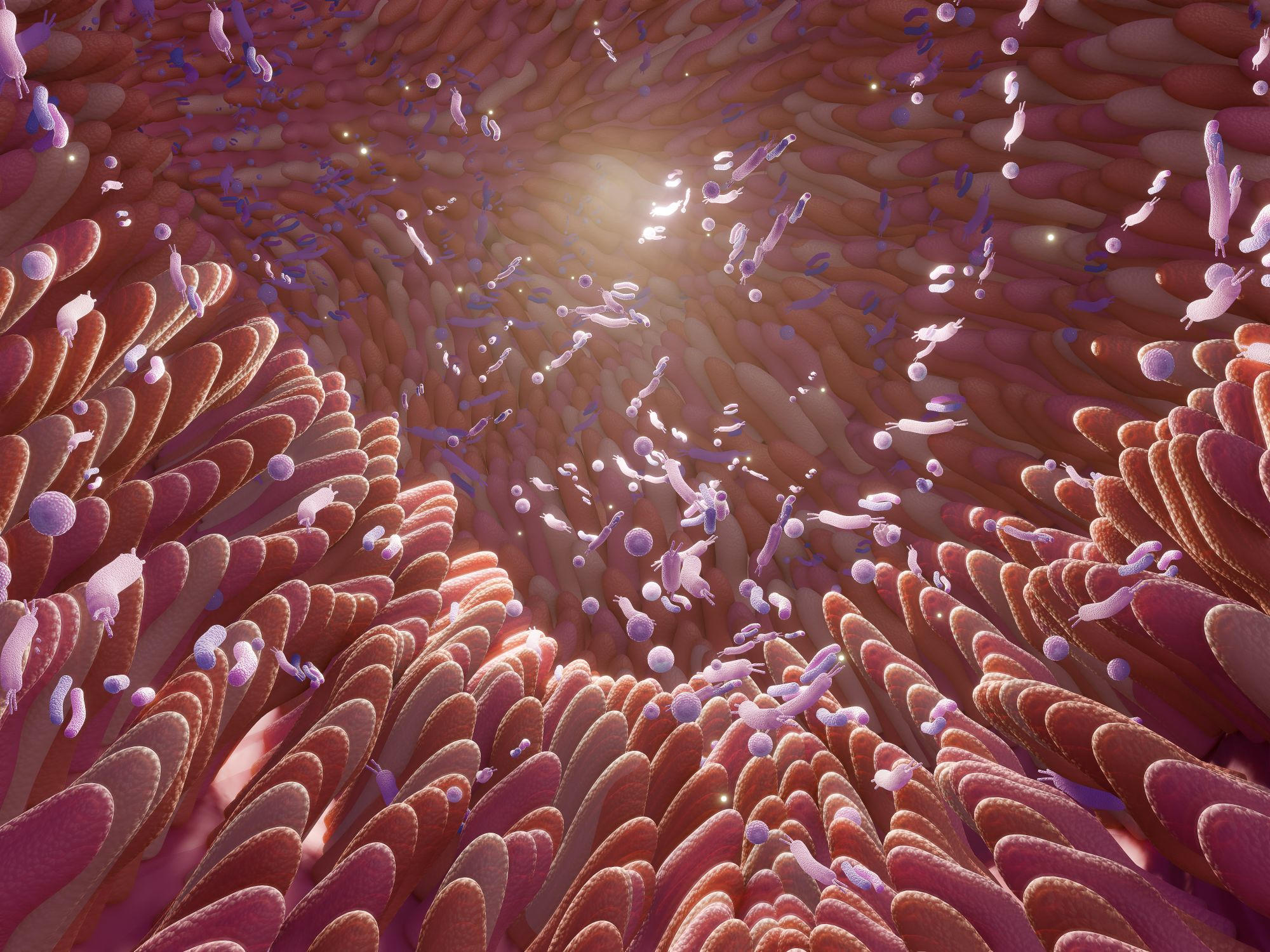
The discovery of a gut-to-brain regulation pathway in flies highlights the potential for certain medications to be further explored as treatments for obesity and diabetes in humans.
Researchers at Brown University have uncovered how a neuropeptide hormone produced in the gut of flies can control their lifespan.
The findings, published in PNAS, have implications for humans, too, the researchers say — especially as new diabetes and obesity medications based on gut hormones in the same family of the fly hormone are becoming more widespread.
For the past two decades, study author Marc Tatar, a professor of biology affiliated with the Center on the Biology of Aging at Brown University, has studied how the hormones insulin and insulin-like growth factors (IGFs) control aging in flies.
“We know that reducing insulin, and reducing IGF signaling, slows aging and extends lifespan in flies,” Tatar said.
Tatar approaches the study of aging from the perspective of ecology and evolutionary biology, one part of the interdisciplinary approach taken by the Center on the Biology of Aging. Researchers in Tatar’s lab have been looking at an insulin-regulatory hormone in flies called neuropeptide F (NPF) that is produced in the gut and secreted into circulation in response to diet.
Mapping NPF’s Pathways and Effects on Lifespan
For the PNAS study, they found a way to use genetic tools to reduce the ability of fly intestines to secrete NPF and therefore reduce insulin secretion. Then they mapped the production of NPF in the flies from the gut to the brain to a pituitary-like tissue, and connected this all back to diet.
They found that suppression of gut NPF extends longevity in flies, as does blocking the NPF receptors in the brain that control another hormone called juvenile hormone. The researchers concluded that gut NPF modulates the aging of flies through the integration of nutrient sensing, insulin signaling, and juvenile hormone production.
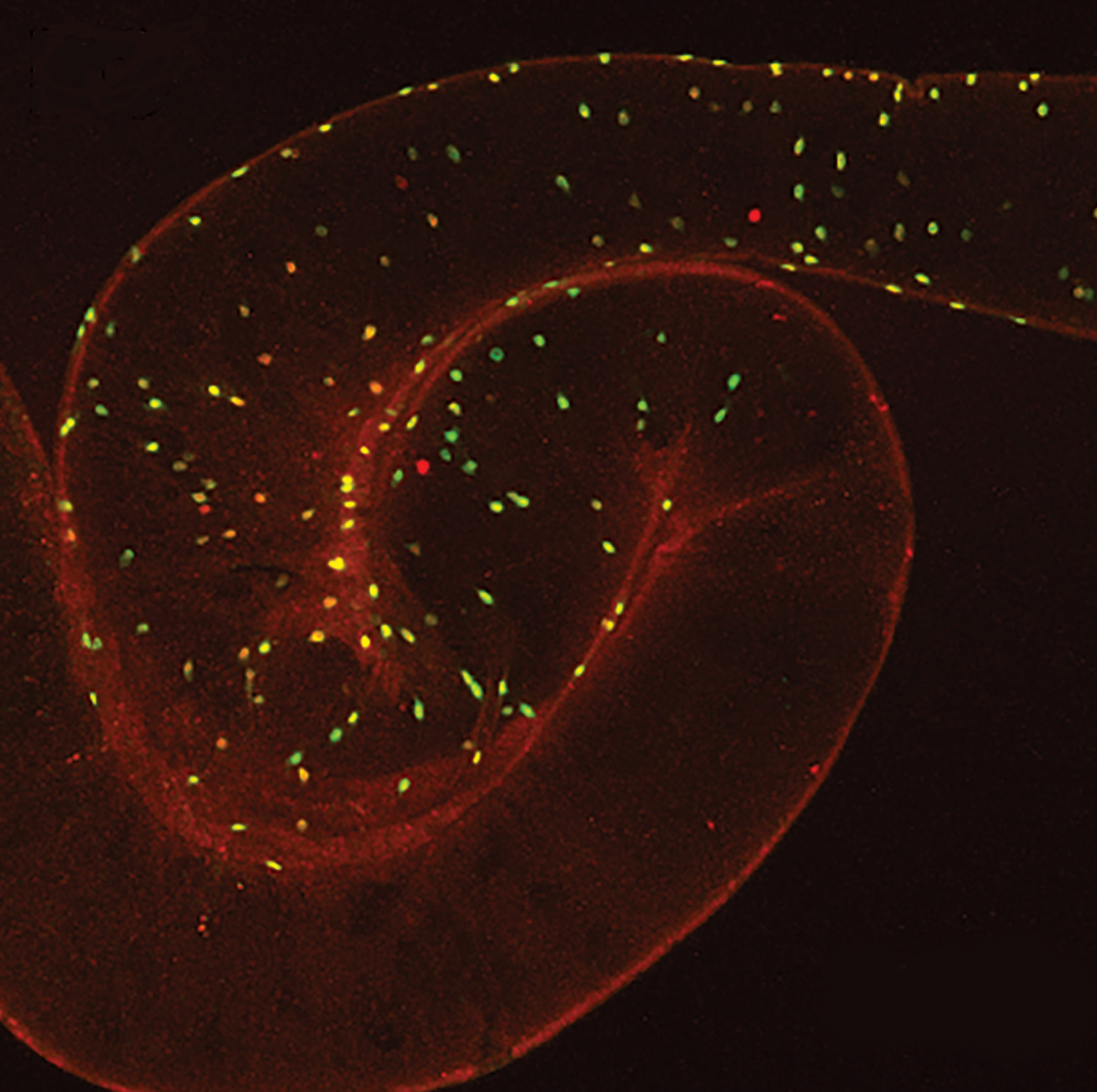
“We showed how all of these things work together to control lifespan,” Tatar said.
The researchers are conducting additional experiments to understand what happens when they increase NPF secretion, and therefore increase insulin, in flies.
“Based on this research reported in PNAS, we suspect that over-production of gut NPF in flies will have a negative effect on aging and decrease lifespan,” Tatar said.
Human Parallels to Fly Hormones and Aging Mechanisms
As small and simple as flies may seem, Tatar said they actually have many of the same genes as humans, and there are analogous hormones in humans that are involved in similar processes and pathways. Understanding aging mechanisms in flies may help explain what’s happening in humans, as well.
Humans don’t make NPF or juvenile hormones. However, humans do make insulin, and they secrete gut hormones that regulate the production of insulin, such as pancreatic polypeptide Y (PPY) and glucagon-like peptide-1 (GLP-1). GLP-1 is in the same family of hormones as NPF — they’re both called incretins because they can increase the secretion of insulin.
There has been an explosion of research on GLP-1 agonists, which mimic the incretin GLP-1 in humans and trigger the release of insulin in the pancreas.
Tatar’s research team concluded that given how insulin-increasing drugs like GLP-1 agonists are used to treat diabetes and obesity, and given what they’ve found about the relationship between insulin and aging in files, it may be time to consider how they could impact human aging.
“The fly is an excellent model for humans, but we need to progress the research from flies to mice and set up studies that look at GLP1-agonists and aging,” Tatar said. “It will take years, but it’s important.”
Reference: “Gut-to-brain regulation of Drosophila aging through neuropeptide F, insulin, and juvenile hormone” by Jiangtian Chen, Marcela Nouzová, Fernando G. Noriega and Marc Tatar, 16 October 2024, Proceedings of the National Academy of Sciences.
DOI: 10.1073/pnas.2411987121
The research was funded by the National Institutes of Health (R01AG059563, R37 AG024360, R21AI167849) and the Czech Science Foundation.
Never miss a breakthrough: Join the SciTechDaily newsletter.
Follow us on Google and Google News.