
When Given the Option, Captive Bears Mimic the Diverse Diets of Their Wild Counterparts
Bears are neither cats nor dogs, and feeding them as such is probably going to make them live shorter lifetimes.
A recent study published in the journal Scientific Reports on the diets of giant pandas and sloth bears provides additional proof that bears are omnivores like humans and need a lot less protein than they are given in zoos.
“Bears are not carnivores in the strictest sense like a cat where they consume a high-protein diet,” said lead author Charles Robbins, a Washington State University wildlife biology professor. “In zoos forever, whether it’s polar bears, brown bears, or sloth bears, the recommendation has been to feed them as if they are high-protein carnivores. When you do that, you kill them slowly.”
In separate tests, scientists fed captive giant pandas and sloth bears an unlimited range of foods to observe their preferences before recording the nutritional profiles of their selections.
Giant Pandas’ Bamboo Preference
To gauge the giant pandas’ preference for bamboo, feeding studies with a pair of the animals were carried out in partnership with scientists from Texas A&M University and the Memphis Zoo. They discovered that giant pandas preferred the higher protein- and carbohydrate-rich bamboo culm found in the woody stalks to the leaves. They sometimes consumed culm almost exclusively; for example, 98% of the time in March. The researchers also examined data from five Chinese zoos that housed giant pandas that had successfully given birth to offspring and discovered that they thrived on a diet heavy in carbohydrates and low in protein.
In sets of feeding trials, six sloth bears at the Cleveland, Little Rock, and San Diego zoos were presented with unlimited avocados, baked yams, whey, and apples. They chose the fat-rich avocados almost exclusively, eating roughly 88% avocadoes to 12% yams – and ignoring the apples altogether. This showed sloth bears preferred a high-fat, low-carbohydrate diet, which may have a similar makeup to their wild diet of termites and ants as well as their eggs and larvae.
Captive Bears’ Diets and Lifespan
It’s also vastly different than the high-carbohydrate diet they are usually fed in captivity. Sloth bears, which are native to India, typically live only around 17 years in U.S. zoos, almost 20 years less than the maximum lifespan achievable in human care. Their most frequent cause of death is liver cancer.
Researchers saw a similar pattern in previous studies of polar bears that showed captive polar bears, who are normally fed a high-protein diet, would mimic the fat-rich diet of wild polar bears if given the option. Polar bears in zoos typically die about 10 years earlier than they should, most often of kidney and liver disease. These two diseases can develop from long-term inflammation of those organs, potentially caused by many years of poorly balanced diets.
The current study, along with previous ones, also shows that when captive bears are given dietary options, they will choose foods that imitate the diets of wild bears.
“There’s certainly this long-standing idea that humans with Ph.D.s know a lot more than a sloth bear or a brown bear,” said Robbins. “All of these bears started evolving about 50 million years ago, and in terms of this aspect of their diet, they know more about it than we do. We’re one of the first to be willing to ask the bears: What do you want to eat? What makes you feel well?”
Bear Evolution and Nutrition
Robbins, the founder of the WSU Bear Center, the only research institution in the U.S. with a captive population of grizzlies, has studied bear nutrition for decades. He and his graduate students first started investigating their misbalanced diets during a study in Alaska, watching grizzlies eat salmon. At the time, the researchers had theorized that the notoriously voracious bears would gorge on salmon, sleep, get up and eat more salmon.
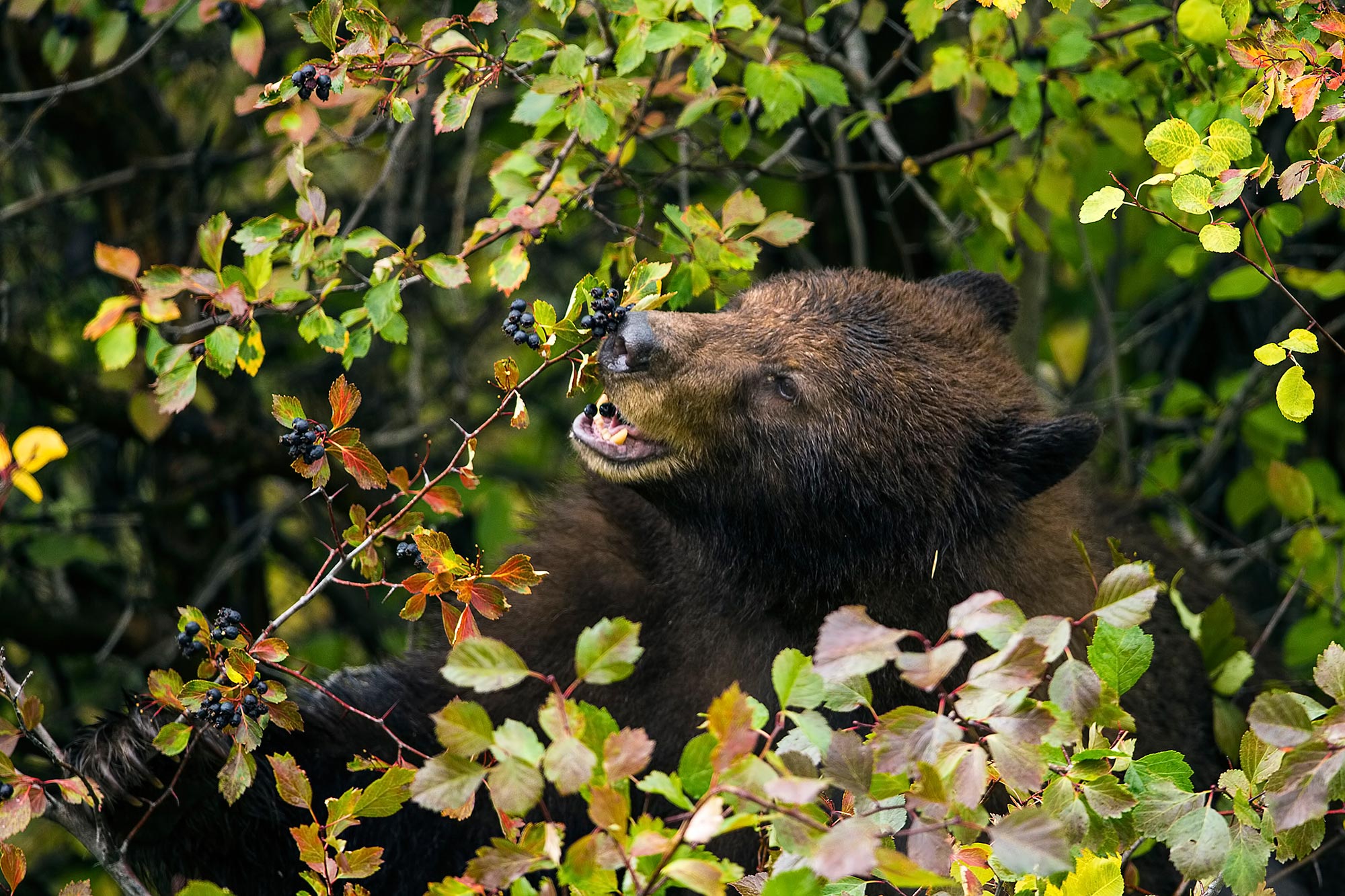
Instead, they saw the bears would eat salmon, but then wander off and spend hours finding and eating small berries. Seeing that, Robbins’ laboratory started investigating the diet of the grizzly bears housed at the Bear Center and found they gained the most weight when fed a combination of protein, fats, and carbohydrates in the combination of salmon and berries.
All eight types of bears, or Ursids, had a carnivore ancestor but have since evolved to eat a wide array of food, which gave them the ability to spread into more areas by not directly competing with resident carnivores.
“It just opens up so many more food resources than just being a straight, high protein carnivore,” Robbins said.
Reference: “Ursids evolved early and continuously to be low-protein macronutrient omnivores” by Charles T. Robbins, Amelia L. Christian, Travis G. Vineyard, Debbie Thompson, Katrina K. Knott, Troy N. Tollefson, Andrea L. Fidgett and Tryon A. Wickersham, 9 September 2022, Scientific Reports.
DOI: 10.1038/s41598-022-19742-z
The study was funded by the U.S. Department of Agriculture.
Never miss a breakthrough: Join the SciTechDaily newsletter.
Follow us on Google and Google News.
1 Comment
It’s surprising to me that we jave had bears in captivity for so long and yet are only now even doing these types of studies. I can’t go to zoos anymore, I just find it sad.