
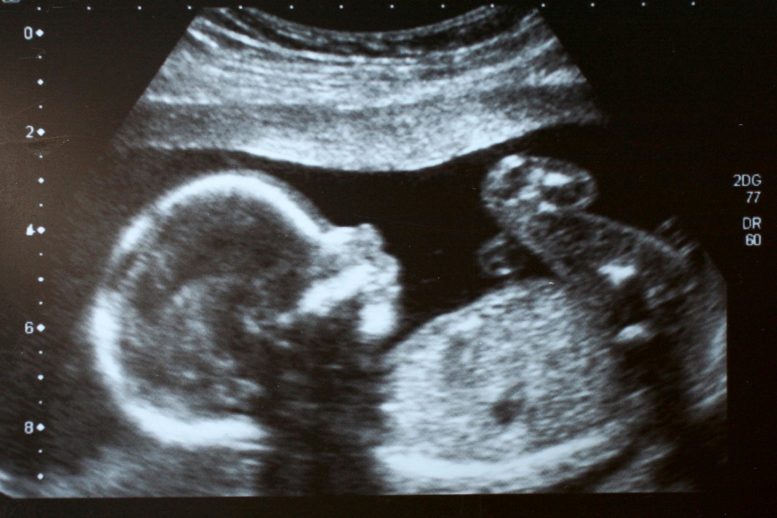
Researchers have discovered that human fetal membranes can self-heal after minor injuries. The protein Connexin 43 was shown to play a key role in coordinating this healing, influencing cell movement and transformation.
Scientists from Queen Mary University of London and UCL have shown that fetal membranes are able to heal after injury in a new study published today (August 18, 2021) in Scientific Reports.
The integrity of the fetal membranes that surround the baby in the womb during pregnancy is vital for normal development. But fetal membranes can become damaged as a result of infection, bleeding, or after fetal surgery and even diagnostic tests during pregnancy, such as amniocentesis, which require doctors to make a hole with a needle in the fetal membrane sac.
Currently there are no clinical approaches available to repair or improve healing in the fetal membranes, and until now it was unclear if small holes in the membranes were able to heal themselves.
The international research team, which also includes scientists and clinicians from Nanyang Technological University, Singapore and University Hospitals Leuven, Belgium, created small defects using a needle in donated human fetal membrane tissue, to mimic damage caused during fetal surgery. A few days after injury, the researchers discovered a population of cells called myofibroblasts (MFs), which play an important role in wound healing, and found that these cells crawled towards the edges of the wound and into the defect site. This cell population produced collagen and started to pull the edges of the wound, contracting the tissues together and repairing the wound.
Connexin 43 in Wound Closure
The findings follow on from the team’s previous work that highlighted the importance of a protein called Connexin 43 (Cx43) in the process of wound healing and repair. Whilst in this study, the researchers show that Cx43 was expressed by two cell populations, amniotic mesenchymal cells (AMCs) and MFs, the localization and levels of Cx43 measured were different. They also found that overexpression of this protein affected the ability of cells to migrate into the defect site and close the wound.
Dr. Tina Chowdhury, Senior Lecturer in Regenerative Medicine at Queen Mary, said: “We have always thought that small diameter wounds created in human fetal membranes rarely heal by themselves but here we show that the tissues have the potential to do this. We found that Cx43 has different effects on cell populations found in the membranes and promotes transformation of AMCs into MFs, triggering them to move, repair, and heal defects in the fetal membranes.”
Clinical Implications for Preterm Birth
The premature rupture of fetal membranes, known as preterm prelabour rupture of the membranes (PPROM), is a major cause of preterm birth accounting for around 40 percent of early infant death. Therefore, the successful repair of fetal membranes could help reduce the risk of birth complications.
Anna David, UCLH Consultant and Professor in Obstetrics and Maternal Fetal Medicine and Director at the UCL Elizabeth Garrett Anderson Institute for Women’s Health and a co-author of the study, said: “Finding that the fetal membranes have this potential to heal is a huge step towards developing treatments for women with PPROM. It holds out hope that we may be able to delay or even prevent preterm birth, which will significantly improve baby outcomes.”
Reference: “Cx43 mediates changes in myofibroblast contraction and collagen release in human amniotic membrane defects after trauma” by Eleni Costa, Babatunde O. Okesola, Christopher Thrasivoulou, David L. Becker, Jan A. Deprest, Anna L. David and Tina T. Chowdhury, 18 August 2021, Scientific Reports.
DOI: 10.1038/s41598-021-94767-4
This research was funded by Great Ormond Street Hospital Children’s Charity (17QMU01), Rosetrees Trust (M808), KU Leuven University Fund, Little Heartbeats and the Prenatal Therapy Fund, University College London Hospital Charity.
Never miss a breakthrough: Join the SciTechDaily newsletter.
Follow us on Google and Google News.