
Close Menu
    Facebook X (Twitter) Instagram
    SciTechDaily
    • Biology
    • Chemistry
    • Earth
    • Health
    • Physics
    • Science
    • Space
    • Technology
    Facebook X (Twitter) Pinterest YouTube RSS
    SciTechDaily
    Home»Space»New Images Reveal More Details on Ceres’ Craters
    Space

    New Images Reveal More Details on Ceres’ Craters

    By Elizabeth Landau, NASA's Jet Propulsion LaboratoryApril 19, 2016No Comments2 Mins Read
    Facebook Twitter Pinterest Telegram LinkedIn WhatsApp Email Reddit
    Share
    Facebook Twitter LinkedIn Pinterest Telegram Email Reddit
    New Ceres Images Show Bright Craters
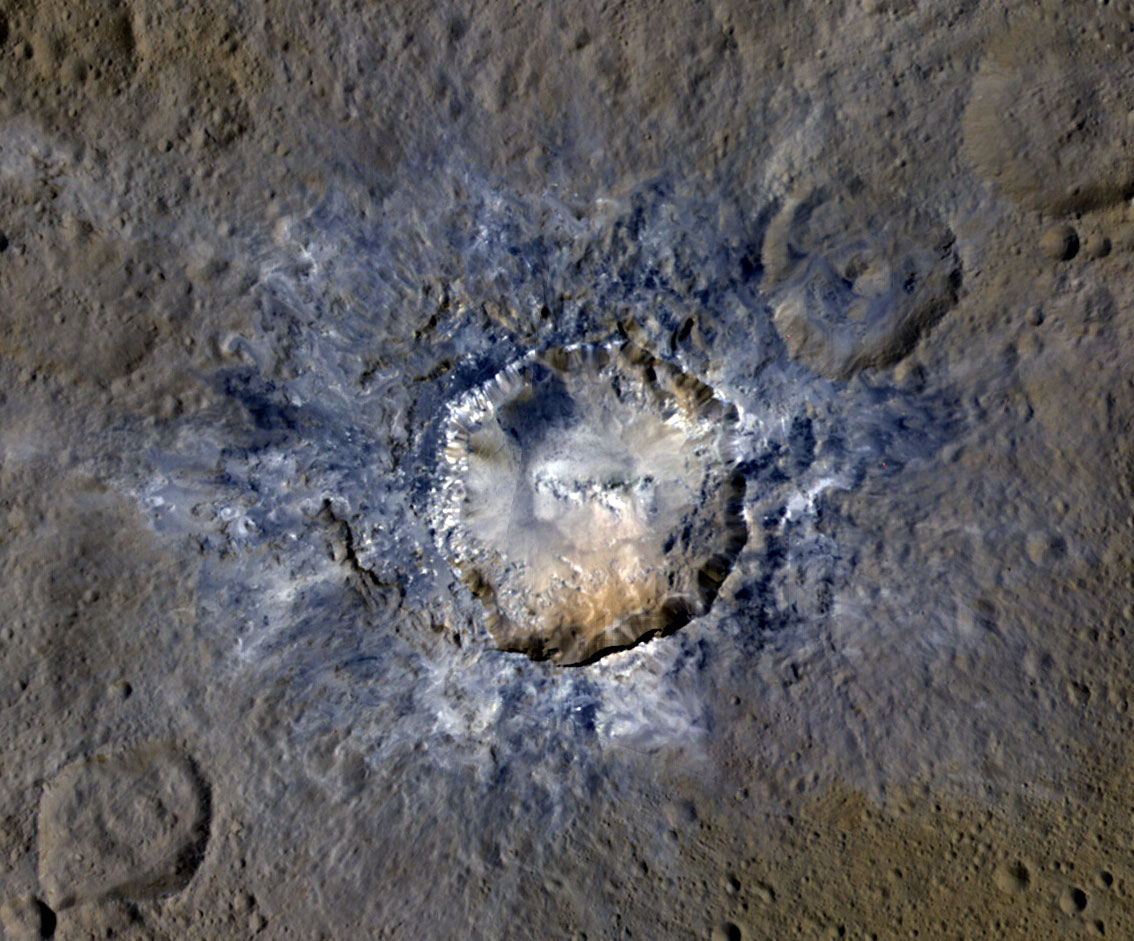
    Ceres’ Haulani Crater, with a diameter of 21 miles (34 kilometers), shows evidence of landslides from its crater rim.

    NASA’s Dawn spacecraft has revealed marvelous sights on dwarf planet Ceres during its first year in orbit, including the mysterious bright spots in Occator Crater.

    Craters with bright material on dwarf planet Ceres shine in new images from NASA’s Dawn mission.

    In its lowest-altitude mapping orbit, at a distance of 240 miles (385 kilometers) from Ceres, Dawn has provided scientists with spectacular views of the dwarf planet.

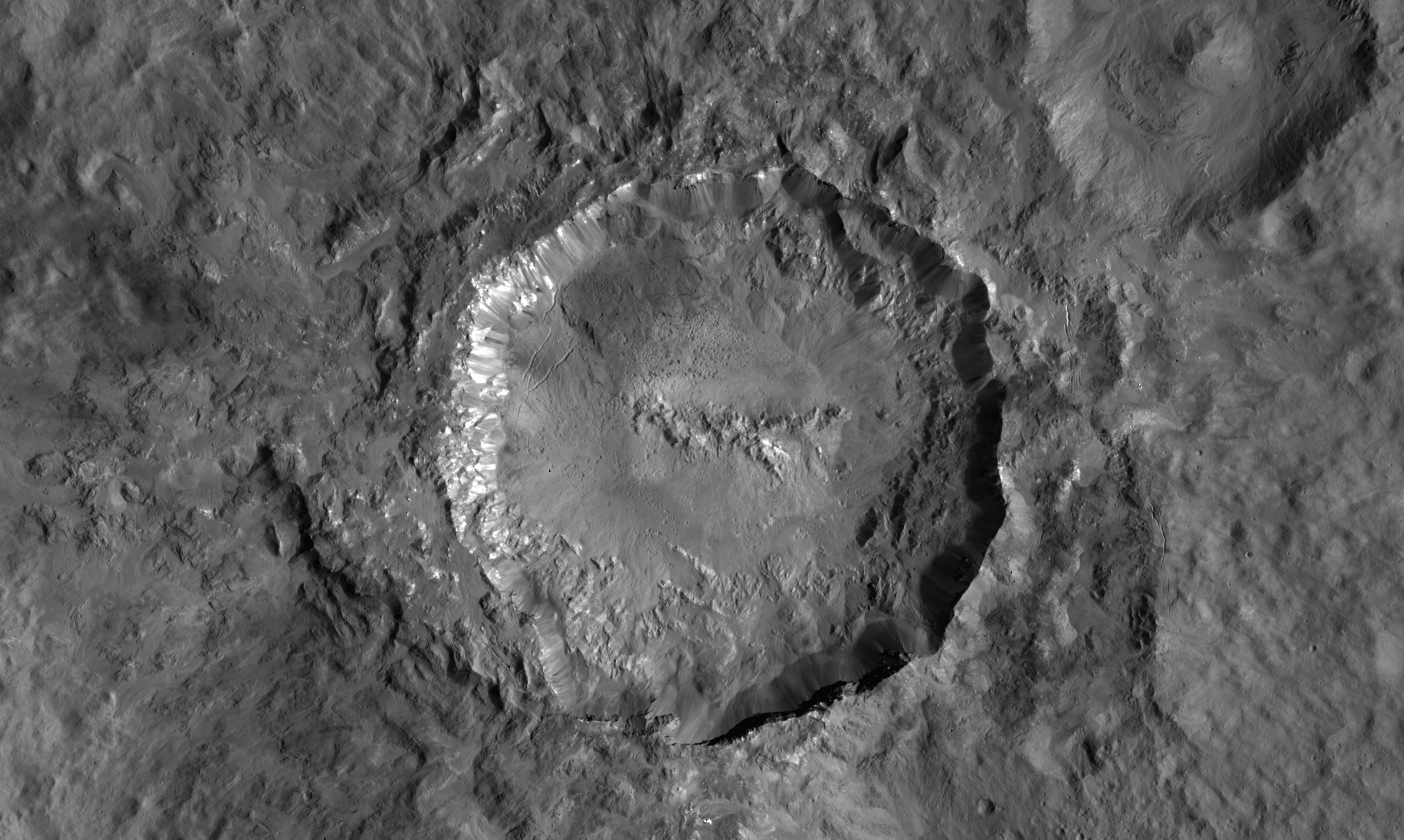
    Haulani Crater, with a diameter of 21 miles (34 kilometers), shows evidence of landslides from its crater rim. Smooth material and a central ridge stand out on its floor. An enhanced false-color view allows scientists to gain insight into materials and how they relate to surface morphology. This image shows rays of bluish-ejected material. The color blue in such views has been associated with young features on Ceres.
    Haulani Crater on Ceres
    NASA’s Dawn spacecraft took images of Haulani Crater at a distance of 240 miles (385 kilometers) from the surface of Ceres.
    Oxo Crater on Ceres
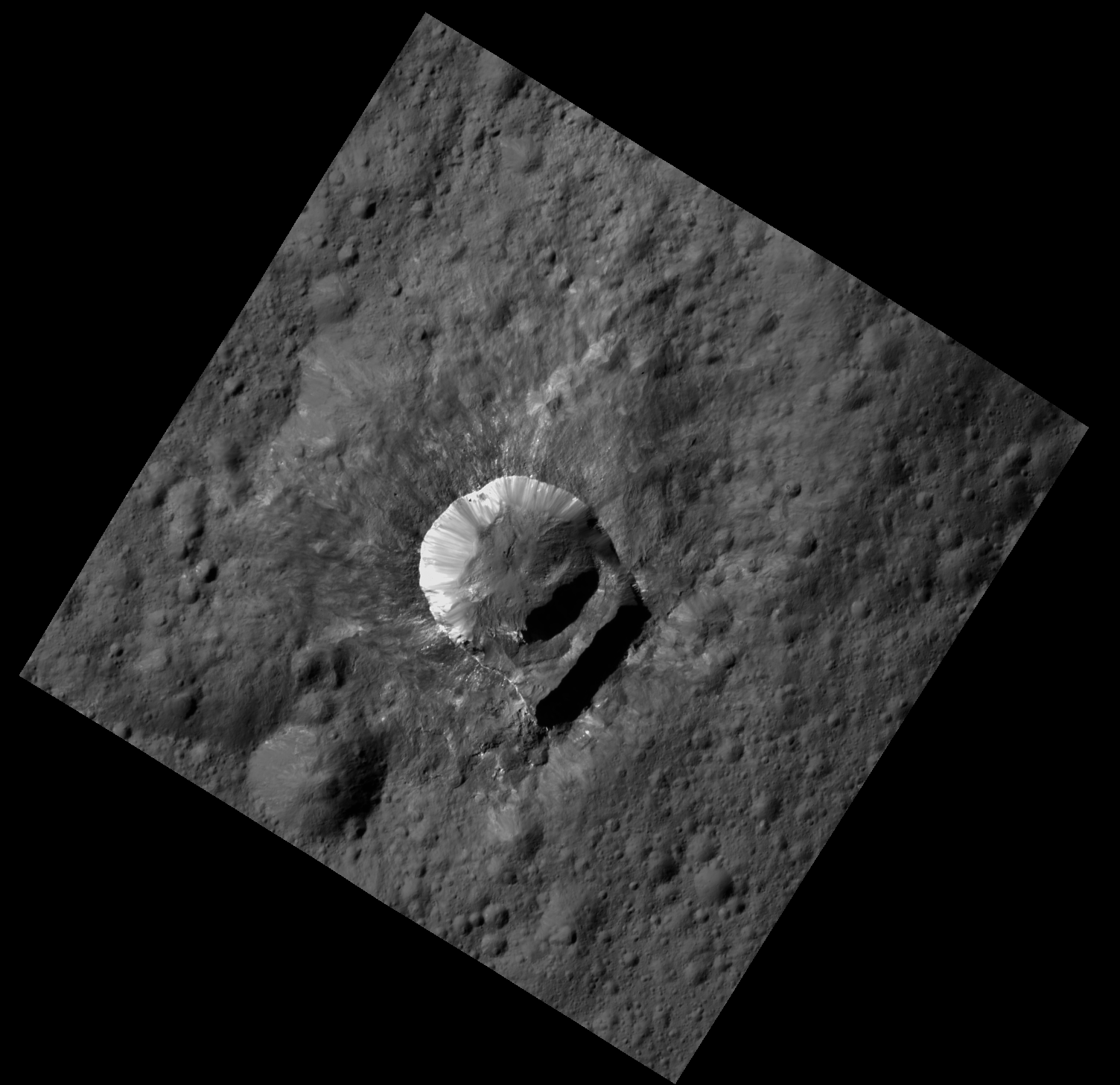
    Oxo Crater is unique because of the relatively large “slump” in its crater rim.

    “Haulani perfectly displays the properties we would expect from a fresh impact into the surface of Ceres. The crater floor is largely free of impacts, and it contrasts sharply in color from older parts of the surface,” said Martin Hoffmann, co-investigator on the Dawn framing camera team, based at the Max Planck Institute for Solar System Research, Göttingen, Germany.

    The crater’s polygonal nature (meaning it resembles a shape made of straight lines) is noteworthy because most craters seen on other planetary bodies, including Earth, are nearly circular. The straight edges of some Cerean craters, including Haulani, result from pre-existing stress patterns and faults beneath the surface.

    A hidden treasure on Ceres is the 6-mile-wide (10-kilometer-wide) Oxo Crater, which is the second-brightest feature on Ceres (only Occator’s central area is brighter). Oxo lies near the 0 degree meridian that defines the edge of many Ceres maps, making this small feature easy to overlook. Oxo is also unique because of the relatively large “slump” in its crater rim, where a mass of material has dropped below the surface. Dawn science team members are also examining the signatures of minerals on the crater floor, which appear different than elsewhere on Ceres.

    “Little Oxo may be poised to make a big contribution to understanding the upper crust of Ceres,” said Chris Russell, principal investigator of the mission, based at the University of California, Los Angeles.


    Never miss a breakthrough: Join the SciTechDaily newsletter.
    Follow us on Google and Google News.

    Astronomy Ceres Dawn Spacecraft NASA Planetary Science Popular
    Share. Facebook Twitter Pinterest LinkedIn Email Reddit

    Related Articles

    NASA’s Dawn Spacecraft Maps Ceres Craters Where Ice Can Accumulate

    What’s Creating Those Unusual Bright Spots on Ceres? Dawn Heads Toward Low-Altitude Mapping Orbit

    Dawn Spacecraft Reveals New Maps and Insights about Ceres

    New Up-Close View of the Bright Spots on Ceres

    NASA’s Dawn Reveals Topography of Dwarf Planet Ceres

    Ceres Spots Remain a Mystery in Latest Dawn Images

    Dawn Spacecraft Shows Crater Shapes on Ceres’ Surface

    NASA’s Dawn Captures Sharper Images of Ceres

    NASA’s Dawn Mission Reveals Hydrated Minerals on Vesta

    Leave A Reply Cancel Reply

    • Facebook
    • Twitter
    • Pinterest
    • YouTube

    Don't Miss a Discovery

    Subscribe for the Latest in Science & Tech!

    Trending News

    The Universe Is Expanding Too Fast and Scientists Can’t Explain Why

    “Like Liquid Metal”: Scientists Create Strange Shape-Shifting Material

    Early Warning Signals of Esophageal Cancer May Be Hiding in Plain Sight

    Common Blood Pressure Drug Shows Surprising Power Against Deadly Antibiotic-Resistant Superbug

    Scientists Uncover Dangerous Connection Between Serotonin and Heart Valve Disease

    Scientists Discover a “Protector” Protein That Could Help Reverse Hair Loss

    Bone-Strengthening Discovery Could Reverse Osteoporosis

    Scientists Uncover Hidden Trigger Behind Stem Cell Aging

    Follow SciTechDaily
    • Facebook
    • Twitter
    • YouTube
    • Pinterest
    • Newsletter
    • RSS
    SciTech News
    • Biology News
    • Chemistry News
    • Earth News
    • Health News
    • Physics News
    • Science News
    • Space News
    • Technology News
    Recent Posts
    • A Common Diabetes Drug May Hold the Key to Stopping HIV From Coming Back
    • Ancient “Syphilis-Like” Disease in Vietnam Challenges Key Scientific Assumptions
    • Drinking Alcohol To Cope in Your 20s Could Damage Your Brain for Life
    • Scientists Crack Alfalfa’s Chromosome Mystery After Decades of Debate
    • Ancient Ant-Plant Alliance Collapses As Predatory Wasps Move In
    Copyright © 1998 - 2026 SciTechDaily. All Rights Reserved.
    • Science News
    • About
    • Contact
    • Editorial Board
    • Privacy Policy
    • Terms of Use

    Type above and press Enter to search. Press Esc to cancel.