
Close Menu
    Facebook X (Twitter) Instagram
    SciTechDaily
    • Biology
    • Chemistry
    • Earth
    • Health
    • Physics
    • Science
    • Space
    • Technology
    Facebook X (Twitter) Pinterest YouTube RSS
    SciTechDaily
    Home»Technology»New Magnetic Nanomaterial Developed for Counterfeit Money Prevention
    Technology

    New Magnetic Nanomaterial Developed for Counterfeit Money Prevention

    By National University of Science and Technology MISISJune 8, 20211 Comment3 Mins Read
    Facebook Twitter Pinterest Telegram LinkedIn WhatsApp Email Reddit
    Share
    Facebook Twitter LinkedIn Pinterest Telegram Email Reddit
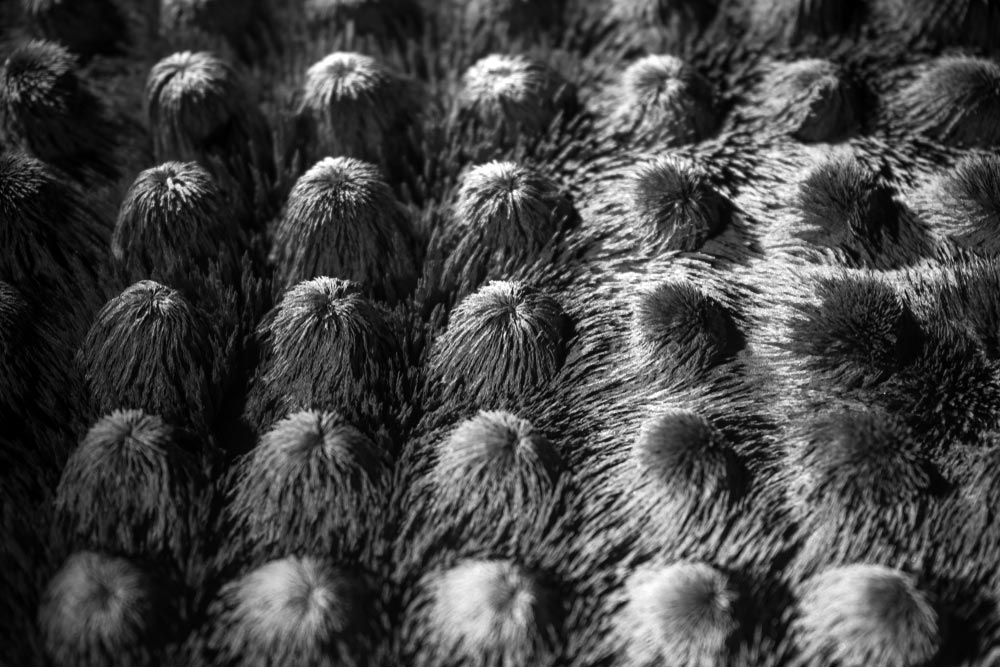
    Magnetic Concept
    Researchers developed a tunable magnetic nanocomposite of iron, cobalt, and nickel, with potential applications in protecting money and securities from counterfeiting.

    A new magnetic nanocomposite may boost EMI shielding and help prevent counterfeiting.

    An international research team led by NUST MISIS has developed a new iron-cobalt-nickel nanocomposite with tunable magnetic properties. The nanocomposite could be used to protect money and securities from counterfeiting.

    Presently, research on magnetic nanomaterials with controlled magnetic characteristics is one of the most promising fields. Due to their small size, as well as their excellent magnetic and electric properties these materials have a broad range of potential applications from mobile devices to space technologies.

    The new iron-cobalt-nickel nanocomposite was obtained by chemical precipitation, followed by a reduction process.

    Yuri Konyukhov and Nguyen Tien Hiep
    Yuri Konyukhov, Deputy Head of the Department of Functional Nanosystems and High-Temperature Materials at NUST MISIS and Nguyen Tien Hiep, postgraduate student at NUST MISIS. Credit: Sergey Gnuskov, NUST MISIS

    “This method is simple and, most importantly, it allows the properties of the product to be controlled at each stage of its production, and chemically pure nanopowders to be produced with a given composition, shape, and dispersion,” noted Yuri Konyukhov, Deputy Head of the Department of Functional Nanosystems and High-Temperature Materials at NUST MISIS.

    Konyukhov also stressed that the new composite was observed to possess high value of coercivity, which makes the technology applicable e.g. to magnetic rubbers and different magnetically coupled devices. Another potential application is protecting money and securities from counterfeiting.

    Nguyen Tien Hiep
    Nguyen Tien Hiep, postgraduate student at NUST MISIS. Credit: Sergey Gnuskov, NUST MISIS

    “The efforts of the scientific community have been recently focused on protecting humans and electronic devices from electromagnetic radiation. The development of thin, flexible, and relatively transparent metal-polymer composites for EMI shielding is a promising research direction. The use of the new nanocomposite with controlled magnetic properties as the magnetic filler could lead to a breakthrough in EMI protection,” added Yuri Konyukhov.

    Yuri Konyukhov
    Yuri Konyukhov, Deputy Head of the Department of Functional Nanosystems and High-Temperature Materials at NUST MISIS. Credit: Sergey Gnuskov, NUST MISIS

    Reference: “Impact of Iron on the Fe–Co–Ni Ternary Nanocomposites Structural and Magnetic Features Obtained via Chemical Precipitation Followed by Reduction Process for Various Magnetically Coupled Devices Applications” by Tien Hiep Nguyen, Gopalu Karunakaran, Yu.V. Konyukhov, Nguyen Van Minh, D.Yu. Karpenkov and I.N. Burmistrov, 29 January 2021, Nanomaterials.
    DOI: 10.3390/nano11020341

    Never miss a breakthrough: Join the SciTechDaily newsletter.
    Follow us on Google and Google News.

    Electrical Engineering Nanomaterials Nanotechnology National University of Science and Technology
    Share. Facebook Twitter Pinterest LinkedIn Email Reddit

    Related Articles

    Innovative New Magneto-Electric Transistor Could Cut 5% From World’s Digital Energy Budget

    Ion bombardment Model Could Lead to New Technologies

    Balancing Between Life and Research

    Automated System Has Promising Uses in Battery and Fuel Cell Production

    Exploring Graphene-Based THz Devices

    Graphene Center Laboratory is State of the Art “Nano-Factory”

    Nanosponges May Help With Environmental Cleanup

    Analyzing the Environmental Costs and Impacts of Technology

    Nanoparticles in 3-D Atomic-Scale Resolution

    1 Comment

    1. Rebecca Parkers on September 17, 2021 8:49 am

      link

      Reply
    Leave A Reply Cancel Reply

    • Facebook
    • Twitter
    • Pinterest
    • YouTube

    Don't Miss a Discovery

    Subscribe for the Latest in Science & Tech!

    Trending News

    The Universe Is Expanding Too Fast and Scientists Can’t Explain Why

    “Like Liquid Metal”: Scientists Create Strange Shape-Shifting Material

    Early Warning Signals of Esophageal Cancer May Be Hiding in Plain Sight

    Common Blood Pressure Drug Shows Surprising Power Against Deadly Antibiotic-Resistant Superbug

    Scientists Uncover Dangerous Connection Between Serotonin and Heart Valve Disease

    Scientists Discover a “Protector” Protein That Could Help Reverse Hair Loss

    Bone-Strengthening Discovery Could Reverse Osteoporosis

    Scientists Uncover Hidden Trigger Behind Stem Cell Aging

    Follow SciTechDaily
    • Facebook
    • Twitter
    • YouTube
    • Pinterest
    • Newsletter
    • RSS
    SciTech News
    • Biology News
    • Chemistry News
    • Earth News
    • Health News
    • Physics News
    • Science News
    • Space News
    • Technology News
    Recent Posts
    • Drinking Alcohol To Cope in Your 20s Could Damage Your Brain for Life
    • Scientists Crack Alfalfa’s Chromosome Mystery After Decades of Debate
    • Ancient Ant-Plant Alliance Collapses As Predatory Wasps Move In
    • Scientists Discover Tiny New Spider That Hunts Prey 6x Its Size
    • Natural Component From Licorice Shows Promise for Treating Inflammatory Bowel Disease
    Copyright © 1998 - 2026 SciTechDaily. All Rights Reserved.
    • Science News
    • About
    • Contact
    • Editorial Board
    • Privacy Policy
    • Terms of Use

    Type above and press Enter to search. Press Esc to cancel.