

Quantum computers just got cooler—literally—thanks to a smart amplifier that slashes heat without sacrificing speed.
Quantum computers have the potential to tackle problems far beyond the reach of today’s most powerful machines, opening doors in drug discovery, cybersecurity, artificial intelligence, and logistics. Now, researchers at Chalmers University of Technology in Sweden have made a breakthrough that brings us closer to that future. They’ve developed an ultra-efficient amplifier that only switches on when it’s time to read data from qubits—the heart of a quantum computer. Thanks to its smart, pulse-based design, the amplifier uses just a tenth of the power required by current top-tier models. This dramatic energy savings helps preserve the delicate quantum states of qubits, paving the way for larger, more powerful quantum systems with greater stability and speed.
Quantum Superposition: Power Beyond Binary
Conventional computers speak in simple bits that can be only 1 or 0. Quantum computers play a richer song: their quantum bits, or qubits, can hold 1 and 0 at the same time and every blend in between. With just 20 qubits a quantum machine can juggle more than a million possible states at once. This ability, called superposition, lets quantum hardware attack puzzles far too tangled for today’s supercomputers.
The Delicate Role of Amplifiers in Quantum Computing
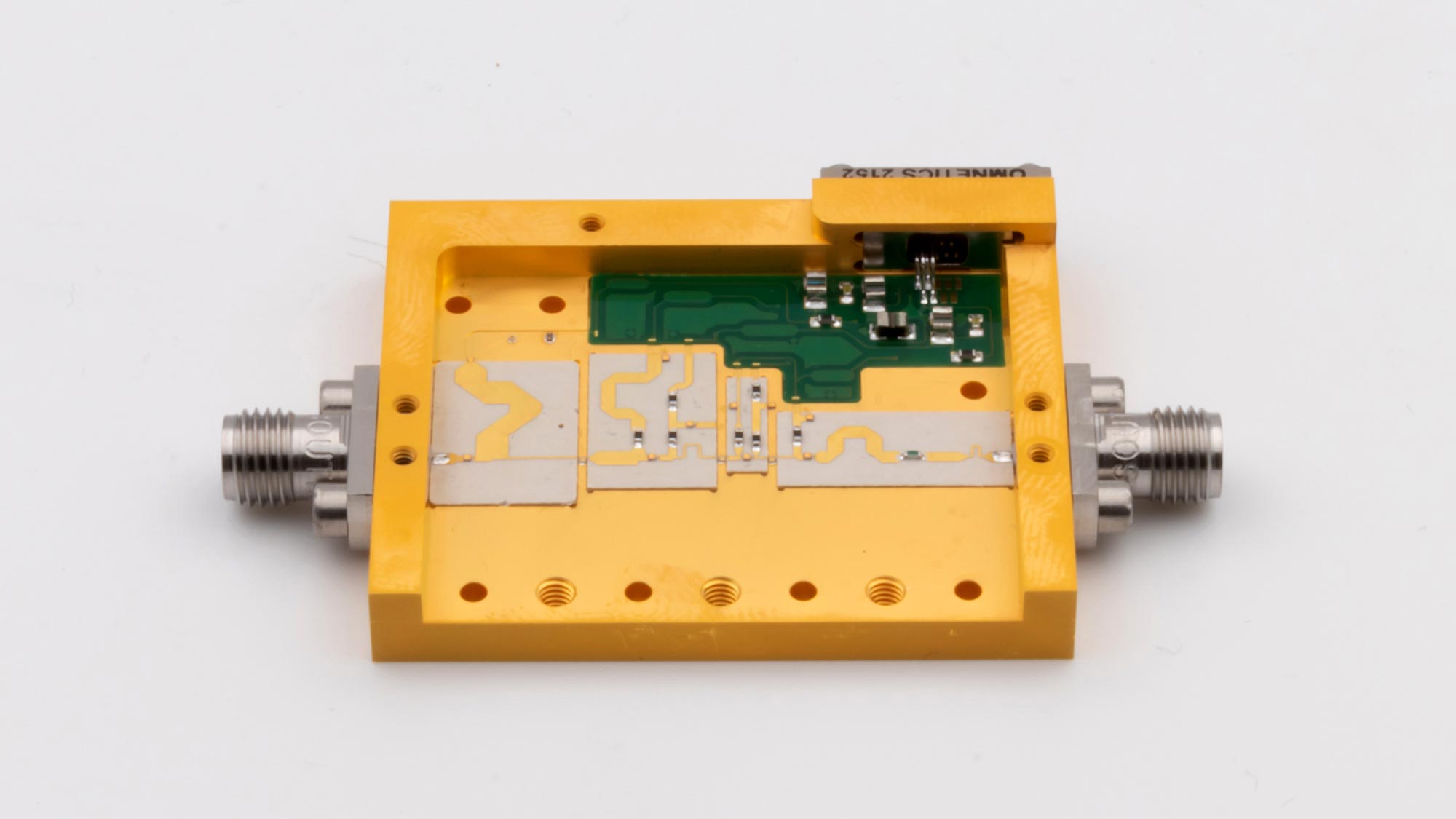
Reading those fragile qubit states is tricky. Scientists rely on ultra-sensitive microwave amplifiers to lift faint signals into something a processor can use. The catch is heat. Even tiny temperature bumps or stray electromagnetic noise can shake a qubit out of its delicate state in a process known as decoherence, wiping out the data. Because existing amplifiers run continuously and burn power, they add to the problem.
Engineers at Chalmers University of Technology in Sweden have unveiled an amplifier that tackles this head-on. It stays off until the instant a qubit signal arrives, then wakes up to do its job and powers back down. Careful transistor design and pulse-based control cut energy use to just one-tenth of today’s best devices while keeping top-tier sensitivity.

Breakthrough: Energy-Efficient Amplifier Achieved
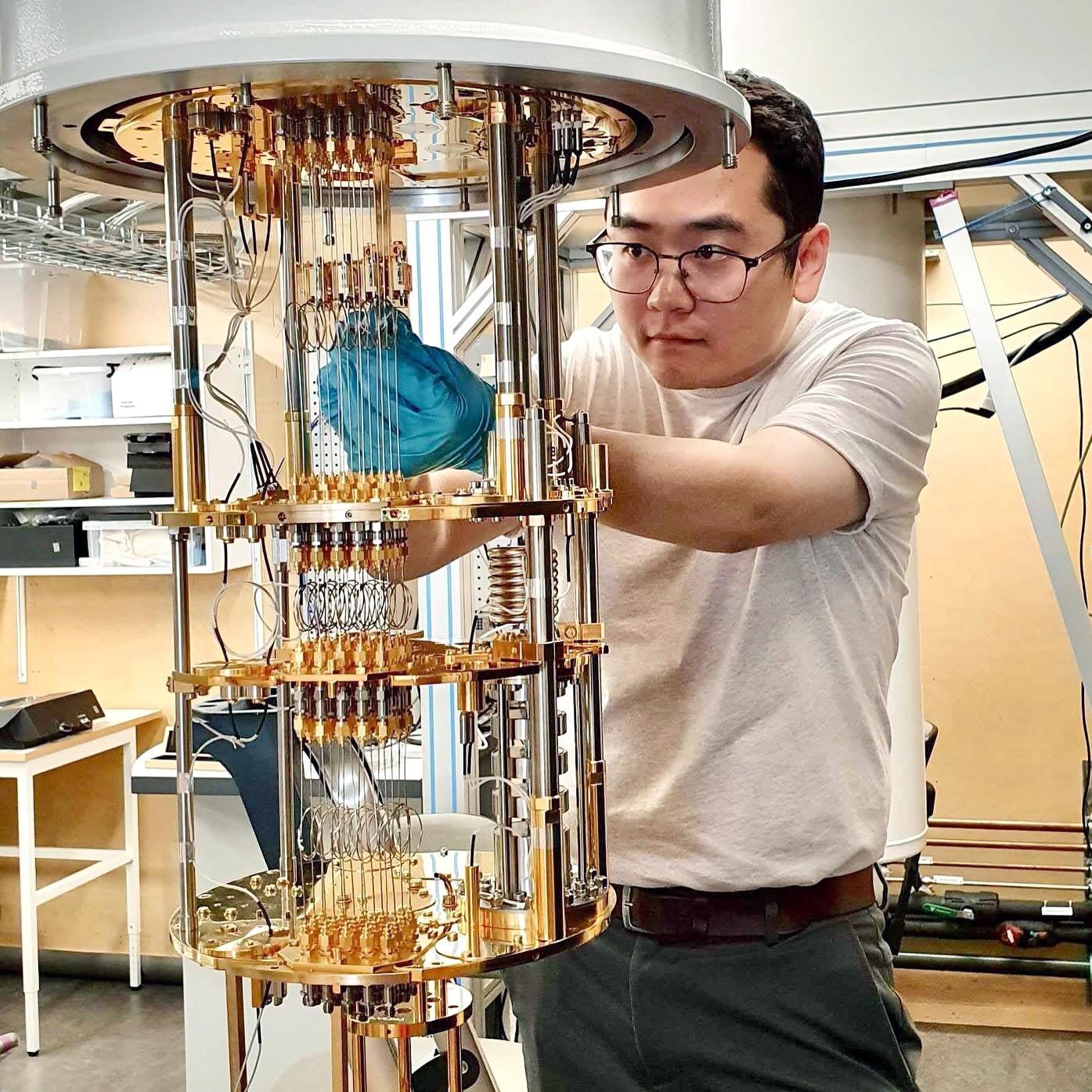
“This is the most sensitive amplifier that can be built today using transistors. We’ve now managed to reduce its power consumption to just one-tenth of that required by today’s best amplifiers – without compromising performance. We hope and believe that this breakthrough will enable more accurate readout of qubits in the future,” says Yin Zeng, a doctoral student in terahertz and millimetre wave technology at Chalmers, and the first author of the study published in the journal IEEE Transactions on Microwave Theory and Techniques.
This advance could be significant in scaling up quantum computers to accommodate significantly more qubits than today. Chalmers has been actively engaged in this field for many years through a national research programme, the Wallenberg Center for Quantum Technology. As the number of qubits increases, so does the computer’s computational power and capacity to handle highly complex calculations. However, larger quantum systems also require more amplifiers, leading to greater overall power consumption, which can lead to decoherence of the qubits.
“This study offers a solution in future upscaling of quantum computers where the heat generated by these qubit amplifiers poses a major limiting factor,” says Jan Grahn, professor of microwave electronics at Chalmers and Yin Zeng’s principal supervisor.
Smarter, Cooler, Faster: A Pulse-Operated Solution
Unlike other low-noise amplifiers, the new amplifier developed by the Chalmers researchers is pulse-operated, meaning that it is activated only when needed for qubit amplification rather than being always switched on.
“This is the first demonstration of low-noise semiconductor amplifiers for quantum readout in pulsed operation that does not affect performance and with drastically reduced power consumption compared to the current state of the art,” says Jan Grahn.
Since quantum information is transmitted in pulses, one of the key challenges was to ensure that the amplifier was activated rapidly enough to keep pace with the qubit readout. The Chalmers team addressed this by designing a smart amplifier using an algorithm that improves the operation of the amplifier. To validate their approach, they also developed a novel technique for measuring the noise and amplification of a pulse-operated low-noise microwave amplifier.
Genetic Programming Enhances Speed and Precision
“We used genetic programming to enable smart control of the amplifier. As a result, it responded much faster to the incoming qubit pulse, in just 35 nanoseconds,” says Yin Zeng.
Reference: “Pulsed HEMT LNA Operation for Qubit Readout” by Yin Zeng, Jörgen Stenarson, Peter Sobis and Jan Grahn, 17 April 2025, IEEE Transactions on Microwave Theory and Techniques.
DOI: 10.1109/TMTT.2025.3556982
The article is authored by Yin Zeng and Jan Grahn, both active at the Terahertz and Millimeter Wave Technology Laboratory at the Department of Microtechnology and Nanoscience at Chalmers University of Technology, and by Jörgen Stenarson and Peter Sobis, both active at Low Noise Factory AB.
The amplifier has been developed using the Kollberg Laboratory at Chalmers University of Technology and at Low Noise Factory AB in Gothenburg, Sweden.
The research project is funded by the Chalmers Centre for Wireless Infrastructure Technology (WiTECH) and by the Vinnova program Smarter electronic systems.
Never miss a breakthrough: Join the SciTechDaily newsletter.
Follow us on Google and Google News.