
Close Menu
    Facebook X (Twitter) Instagram
    SciTechDaily
    • Biology
    • Chemistry
    • Earth
    • Health
    • Physics
    • Science
    • Space
    • Technology
    Facebook X (Twitter) Pinterest YouTube RSS
    SciTechDaily
    Home»Technology»New Research Gives Further Insight Into Graphene-Based Electronics
    Technology

    New Research Gives Further Insight Into Graphene-Based Electronics

    By Canadian Light SourceAugust 15, 2014No Comments3 Mins Read
    Facebook Twitter Pinterest Telegram LinkedIn WhatsApp Email Reddit
    Share
    Facebook Twitter LinkedIn Pinterest Telegram Email Reddit
    New Research Gives Further Insight Into Graphene Based Devices
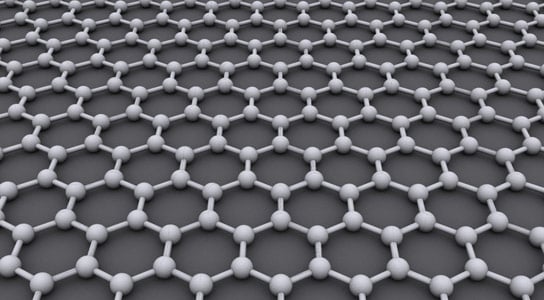
    Graphene has garnered significant attention and is globally sought after for its potential applications in areas such as optoelectronics and nanophotonics. Credit: AlexanderAlUS

    New research from the Canadian Light Source gives further insight into graphene-based devices like foldable tablets, wrap-around TVs, and the next generation of electronics.

    Saskatoon – Imagine a tablet device as thin as a piece of paper, folded conveniently in your pocket. Or a 3D TV that wraps around the walls of an entire room in your home. With applications that are nothing short of science fiction, it is no wonder that graphene-based research continues to fascinate scientists.

    Graphene is a single-layer sheet of carbon atoms arranged in a honeycomb lattice that is incredibly strong (about 100 times stronger than steel), low weight, and conducts heat and electricity with great efficiency. Graphene was first made in 2004 by Andre Geim and Kostya Novoselov at the University of Manchester – a discovery that earned the two physicists a Nobel Prize in 2010.

    Using a number of experimental facilities at the Canadian Light Source, a group of scientists successfully measured the smallest optical density of single-layer graphene so far, giving further insight into the design and fabrication of graphene-based nanodevices, which can potentially enable the future electronic gadgets.

    “Nanomaterials, in general, are extremely interesting,” said Dr. Swathi Iyer, a postdoctoral fellow at the CLS. “Graphene has drawn great attention and there is global interest in exploring its use in various applications, including optoelectronic and nanophotonics. The idea of flexible electronic devices has always fascinated me. Graphene would be ideal for such futuristic devices.”

    According to Iyer, it was critical to understand the intrinsic property of the graphene, especially where the material folds or cracks.

    Iyer and her colleagues wanted to understand the changes at the extremely tiny micro and nanoscale, so they used state-of-the-art techniques to study the structural and electronic properties of freestanding graphene.

    The group fabricated a large-area, freestanding, single-layer graphene-gold hybrid structure using the micro fabrication facility at the CLS. Gold-decorated, single-layer graphene was created and extensively tested, which provided important insights into the electronic activity of this novel hybrid nanostructure.

    Using the synchrotron, they identified two distinct activities in the graphene-gold nanostructure: experimental evidence for the localized graphene–gold interaction at the nanoscale, and the smallest optical density for the single layer graphene measured thus far were experimentally confirmed for the first time.

    “We believe that our findings on these hybrid nanostructures can pave the way for future fabrication of graphene-based devices with unique configurations, and enhanced properties for a wide range of applications,” said Iyer.

    Reference: “Large-Area, Freestanding, Single-Layer Graphene–Gold: A Hybrid Plasmonic Nanostructure” by Ganjigunte R. Swathi Iyer, Jian Wang, Garth Wells, Srinivasan Guruvenket, Scott Payne, Michael Bradley and Ferenc Borondics, 26 May 2014, ACS Nano.
    DOI: 10.1021/nn501864h


    Never miss a breakthrough: Join the SciTechDaily newsletter.
    Follow us on Google and Google News.

    Canadian Light Source Graphene Nanoscience Nanotechnology
    Share. Facebook Twitter Pinterest LinkedIn Email Reddit

    Related Articles

    MIT Researchers Create Perfect Nanoscrolls from Graphene Oxide

    Scientists Develop Graphene Composite to Simplify Ice Removal

    Hybrid Boron Nitride Nanostructures Will Keep Small Electronics Cool

    Graphene Layer Quadruples Rate of Condensation Heat Transfer

    New High Speed Roll-to-Roll Manufacturing Process for Graphene

    Crumpled Graphene Forms Stretchable Supercapacitors to Power Flexible Electronic Devices

    Researchers Successfully Synthesize 2D Material Germanene

    Triangular Layers of Tungsten Disulfide May Have Applications in Optical Technology

    “Closed-Edge Graphene Nanoribbons”

    Leave A Reply Cancel Reply

    • Facebook
    • Twitter
    • Pinterest
    • YouTube

    Don't Miss a Discovery

    Subscribe for the Latest in Science & Tech!

    Trending News

    Millions Take These IBS Drugs, But a New Study Finds Serious Risks

    Scientists Unlock Hidden Secrets of 2,300-Year-Old Mummies Using Cutting-Edge CT Scanner

    Bread Might Be Making You Gain Weight Even Without Eating More Calories

    Scientists Discover Massive Magma Reservoir Beneath Tuscany

    Europe’s Most Active Volcano Just Got Stranger – Here’s Why Scientists Are Rethinking It

    Alzheimer’s Symptoms May Start Outside the Brain, Study Finds

    Millions Take This Popular Supplement – Scientists Discover a Concerning Link to Heart Failure

    The Universe Is Expanding Too Fast and Scientists Can’t Explain Why

    Follow SciTechDaily
    • Facebook
    • Twitter
    • YouTube
    • Pinterest
    • Newsletter
    • RSS
    SciTech News
    • Biology News
    • Chemistry News
    • Earth News
    • Health News
    • Physics News
    • Science News
    • Space News
    • Technology News
    Recent Posts
    • Doctors Surprised by the Power of a Simple Drug Against Colon Cancer
    • Why Popular Diabetes Drugs Like Ozempic Don’t Work for Everyone: The “Genetic Glitch”
    • Scientists Create Improved Insulin Cells That Reverse Diabetes in Mice
    • Scientists Stunned After Finding Plant Thought Extinct for 60 Years
    • A Common Diabetes Drug May Hold the Key to Stopping HIV From Coming Back
    Copyright © 1998 - 2026 SciTechDaily. All Rights Reserved.
    • Science News
    • About
    • Contact
    • Editorial Board
    • Privacy Policy
    • Terms of Use

    Type above and press Enter to search. Press Esc to cancel.