
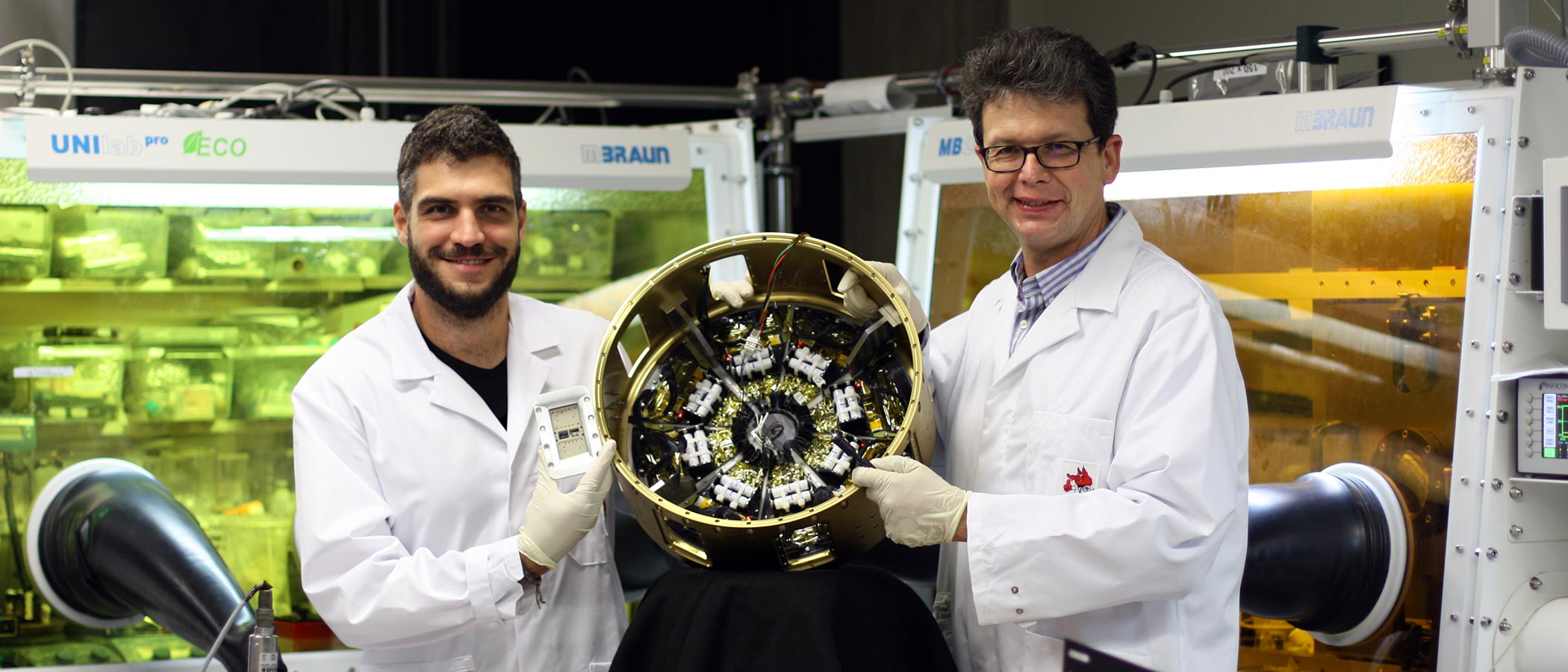
Almost all satellites are powered by solar cells – but solar cells are heavy. While conventional high-performance cells reach up to three watts of electricity per gram, perovskite and organic hybrid cells could provide up to ten times that amount. A research team from the Technical University of Munich (TUM) and the German Aerospace Center (DLR) has now tested this type of cell in space for the first time.
Perovskite and organic solar cells are promising options for future generations of solar cells. Over recent years, their efficiency has rapidly caught up with that of conventional silicon-based cells.“The best perovskite solar cells currently achieve efficiency levels of 25 percent,” says Peter Müller-Buschbaum, Professor of Functional Materials at the TUM Department of Physics. “These thin solar cells, less than one micrometer thick, applied to ultra-thin, flexible synthetic sheet, are extremely lightweight. They can therefore produce nearly 30 watts per gram.”
Manufacture at room temperature
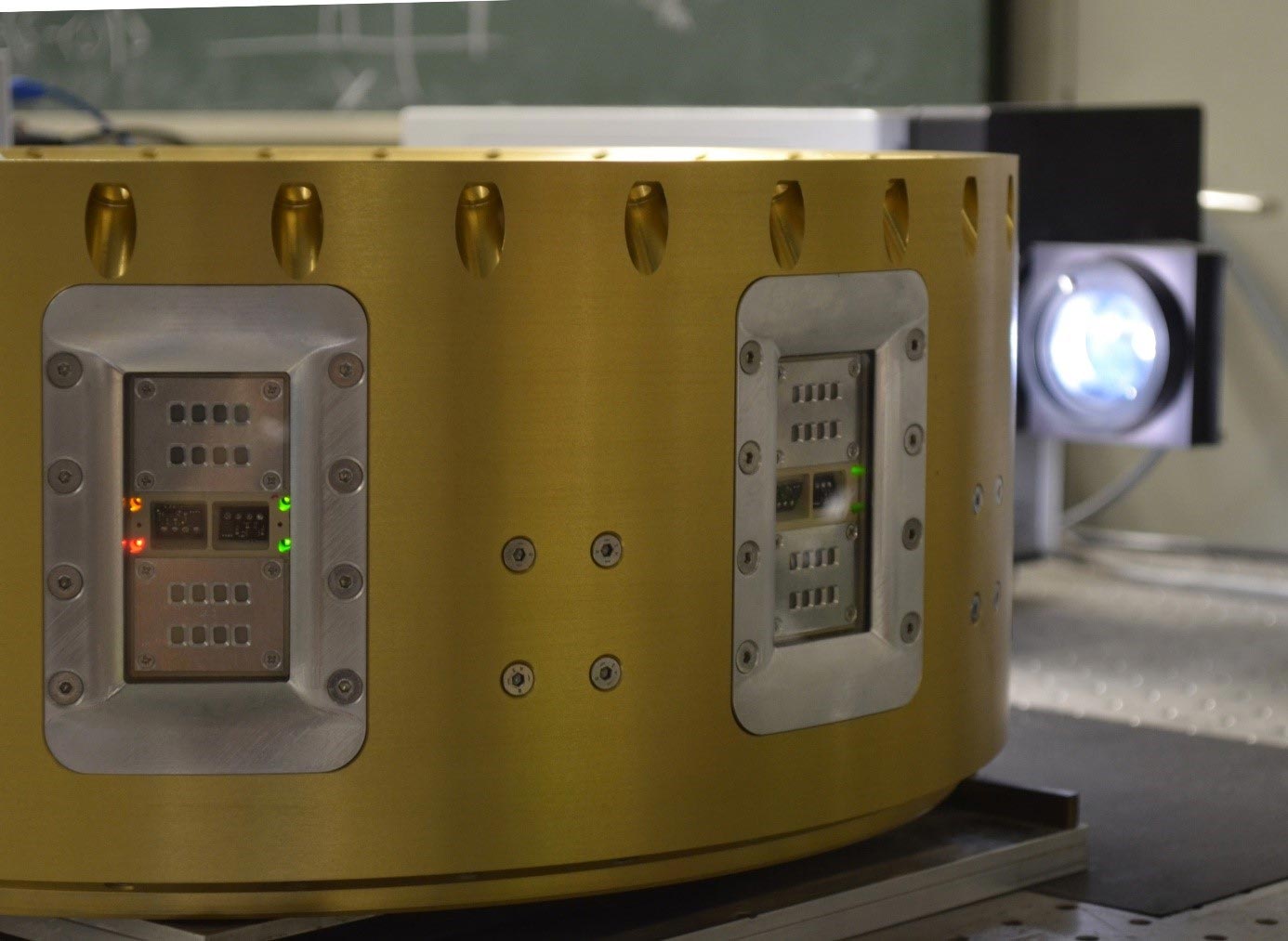
This is only possible thanks to a decisive advantage of the new solar cells: Production of silicon solar cells requires very high temperatures and elaborate processes. Perovskite cells and organic semiconductors, on the other hand, can be manufactured at room temperature from solution.
“These organic solutions are very easy to process,” explains the lead author Lennart Reb. “Thus the technologies open up new fields of application in which conventional solar cells were simply too unwieldy or too heavy – and that also applies far beyond the aerospace sector.”
Test flight into space
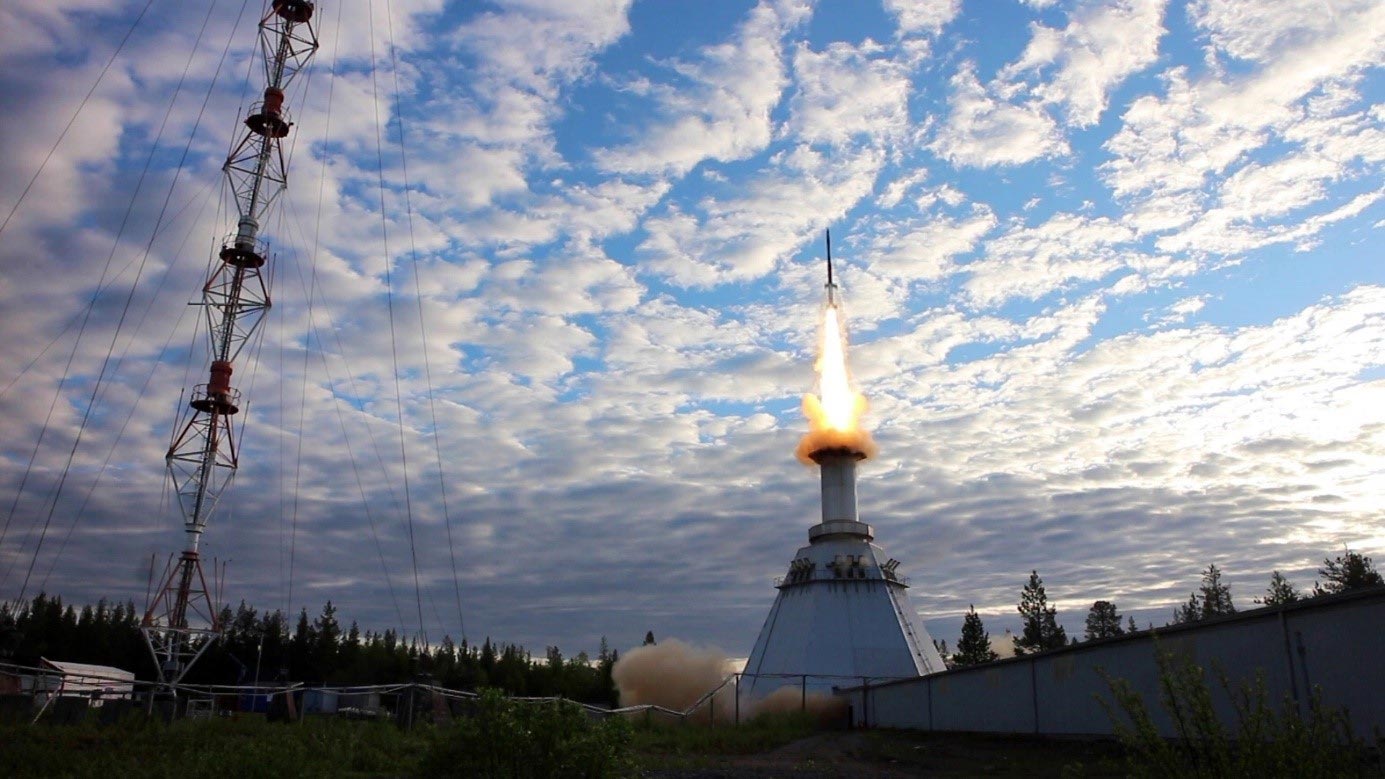
Two different types of organic and perovskite solar cells were tested in space for the first time on a research flight as part of the MAPHEUS 8 program at the European Space and Sounding Rocket Range in Kiruna, Sweden. The rocket reached a height of nearly 240 kilometers.
“Our MAPHEUS program allows us rapidly to implement experiments in a zero-gravity environment, offering exciting research findings,” says Professor Andreas Meyer, co-author and Head of the DLR Institute of Materials Physics in Space. “This time it went particularly quick: it took us less than a year to progress from the initial idea to the maiden flight of the solar cells as part of the MAPHEUS 8 program.”
Power generation under exeptional conditions
“Electrical measurements during the flight and the evaluation after recovery of the rocket showed that perovskite and organic solar cells can achieve their potential in terms of expected performance in orbit height,” reports Professor Müller-Buschbaum. “Our measurements are therefore of great scientific value.”
The solar cells also generated electrical energy under diffuse incidence of light. “Cells turned away from the sunlight, which received only sparse lighting exclusively from the earth during the flight, still supplied electricity,” says Reb.
Due to their much thinner thickness, the new solar cells could therefore also be used in much dimmer light, for example on missions to the outer solar system on which the sun is too weak for conventional space solar cells.
According to DLR material scientist Andreas Meyer, “it would not be the first time that innovations are first established as space technologies but go on to be used around the world in other sectors. One reason for this is probably the very strict requirements that space places on all technical components.”
Read Perovskite and Organic Solar Cells Rocketed Into Space for the First Time for more on this research.
Reference: “Perovskite and Organic Solar Cells on a Rocket Flight” by Lennart K. Reb, Michael Böhmer, Benjamin Predeschly, Sebastian Grott, Christian L. Weindl, Goran I. Ivandekic, Renjun Guo, Christoph Dreißigacker, Roman Gernhäuser, Andreas Meyer and Peter Müller-Buschbaum, 12 August 2020, Joule.
DOI: 10.1016/j.joule.2020.07.004
The research project received funding from the DFG German research association as part of the e-conversion cluster of excellence, from the Alberta / Technical University of Munich International Graduate School for Functional Hybrid Materials (ATUMS), and as part of the Solar Technologies Go Hybrid (SolTech) Bavarian Research Association TUM.solar project.
Never miss a breakthrough: Join the SciTechDaily newsletter.
Follow us on Google and Google News.
2 Comments
EXCELent
Prof. Dr. Peter Müller-Buschbaum is on the right, not the left…