
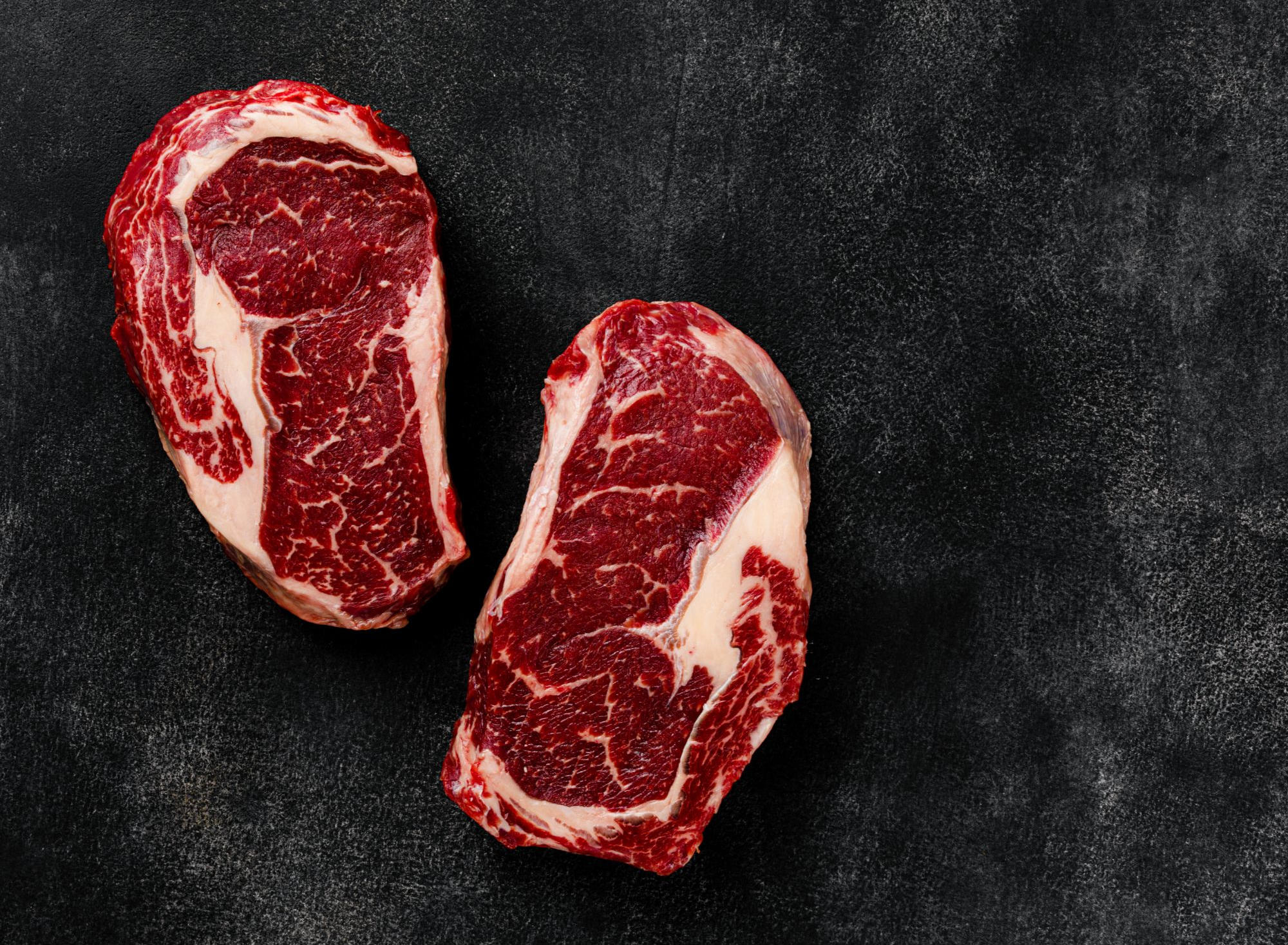
A new study reveals the connection between dietary iron and cancer progression, paving the way for targeted therapies in Singapore and beyond.
Scientists from the Agency for Science, Technology and Research (A*STAR), in collaboration with the National Cancer Centre Singapore (NCCS), have identified a key mechanism linking excessive red meat consumption to an increased risk of colorectal cancer. Their findings open new possibilities for therapies targeting telomerase, an enzyme involved in cancer progression.
Colorectal cancer, which affects the colon or rectum, is the third most common cancer worldwide and the second leading cause of cancer-related deaths in Singapore. While both genetic and lifestyle factors, including diet, are known to play a role, the precise link between red meat consumption and cancer development has remained unclear—until now.
Published in Cancer Discovery, the study reveals that iron from red meat reactivates telomerase, an enzyme that extends the ends of DNA chromosomes, fueling colorectal cancer progression. This discovery provides critical insight into how dietary choices influence cancer risk and potential strategies for intervention.
Promising New Therapeutic Approach
The study also identified a promising new treatment approach. The research team found that a small molecule, SP2509, can block the reactivation of telomerase in cancer cells by inhibiting iron’s interaction with the enzyme. In laboratory tests using cancer cell lines, SP2509 not only halted telomerase reactivation but also reduced tumor growth, presenting a new strategy for combating colorectal cancer.
Scientists from A*STAR Institute for Molecular and Cell Biology (IMCB) led the cross-disciplinary team that included scientists from A*STAR Genome Institute of Singapore (GIS), as well as clinicians from Singapore General Hospital (SGH) and NCCS.
“Understanding the role of iron in telomerase activation opens up new avenues for addressing colorectal cancer,” said Professor Vinay Tergaonkar, Distinguished Principal Investigator at A*STAR IMCB. “Our future research will focus on refining therapeutic strategies that target this mechanism, with the hope of developing more effective treatments for patients, particularly those with high iron levels. We are excited about the potential of small molecules like SP2509 to revolutionize cancer care and improve outcomes for patients globally.”
Research Insights and Methodology
To uncover how high iron levels contribute to colorectal cancer progression, the team studied samples from colorectal cancer patients, using a combination of human colorectal cancer cell lines and advanced laboratory models. By collaborating with clinicians from NCCS, they demonstrated that iron interacts with an iron-sensing protein called Pirin, leading to the reactivation of telomerase in cancer cells—a key factor in their unchecked growth.
Further chemical screens on human colorectal cell lines identified the small molecule SP2509, which competes with iron for binding to Pirin, effectively inhibiting telomerase reactivation. These findings not only offer a novel treatment approach but also provide valuable insight into the molecular pathways linking high intake of iron-rich red meats to colorectal cancer. Colo-SCRIPT, the national research program that aims to harness insights on distinct colorectal cancer subtypes to reduce cancer incidence and enhance patient outcomes, will leverage these findings under the program’s theme to establish the role of environmental, metabolic, and microbial risk factors enabling disease progression.
“Through Colo-SCRIPT, we will continue to investigate the role of iron and other risk factors and their influence on how colorectal cancer develops. Findings provide valuable insights into how they drive different subtypes of colorectal cancer and can allow us to identify novel methods to prevent and treat the disease,” said Associate Professor Iain Tan, Senior Consultant in the Division of Medical Oncology, NCCS.
Reference: “Iron-(Fe3+)-Dependent Reactivation of Telomerase Drives Colorectal Cancers” by Raghuvaran Shanmugam, Prativa Majee, Wei Shi, Mert B. Ozturk, Thamil S. Vaiyapuri, Khaireen Idzham, Anandhkumar Raju, Seung H. Shin, Kerem Fidan, Joo-Leng Low, Joelle Y.H. Chua, Yap C. Kong, Ong Y. Qi, Emile Tan, Aik Y. Chok, Isaac Seow-En, Ian Wee, Dominique C. Macalinao, Dawn Q. Chong, Hong Y. Chang, Fiona Lee, Wei Q. Leow, Maki Murata-Hori, Zhang Xiaoqian, Chia Shumei, Chris S.H. Tan, Ramanuj Dasgupta, Iain B. Tan and Vinay Tergaonkar, 4 October 2024, Cancer Discovery.
DOI: 10.1158/2159-8290.CD-23-1379
Never miss a breakthrough: Join the SciTechDaily newsletter.
Follow us on Google and Google News.
14 Comments
Some of these statements about different foods like red meat consumption link to cancer are not backed up by real study results. There are people like me who became anemic for lack proper diet & was told by my Doctor to eat red meat regularly.
THAT HAS NOTHING TO DO WITH THE FACT RED MEAT IS ASSOCIATED WITH CANCER RISK.
Lying scumbags. Red meat is the healthiest food on the planet!
Fe3+ in red meat (and in the body) is storage iron… ferritin and hemosiderin. This iron is in mineral form…ferrihydrite. It has to be solubilized and reduced for use in the body. I wonder if these research people know that.
These articles are honestly getting comical now.Im sure it has nothing to do with the millions of people losing weight and ditching pharmapoison with ketogenic and carnivore diets.The powers that be are terrified.
In vitro
So does this mean I should stop taking or reduce the amount of the iron supplement prescribed by my doctor? I became anemic during radiation treatments for prostate cancer.
Of course not.
I’m glad people are seeing through this BS!
Cancers are exploding, thanks to the cov-id vacc-ine. People were stupid enough to believe their governments, and now turbo cancers, and myocarditis are a result. They are trying to tell us what we can eat with scare tactics. Don’t believe anything you read on the news or media. Also repent if you took the cov-id vacc-ine because it’s the mark of the beast…just so you know
They used people who already had cancer as the control group. Let’s study the cells of healthy people before drawing such broad conclusions..
Your statement is not a fact, that’s the problem. It is an opinion that was repeated so many times that people forget to question it.
I was trying to reply to the red meat = cancer comment, but my message didn’t link to it as I hoped.
Anyway, telomere length decreases as you age (or wear out), and finding ways to reverse this should be considered good
One more site to block on my google feed.
Lol so the research article says that Fe 3+ is the form of iron that’s the culprit and then tries so hard to blame red meat but red meat heme iron is fe 2+. You know what form of iron is fe 3+? Non heme plant iron found in vegetables and fortified grains.