
Close Menu
    Facebook X (Twitter) Instagram
    SciTechDaily
    • Biology
    • Chemistry
    • Earth
    • Health
    • Physics
    • Science
    • Space
    • Technology
    Facebook X (Twitter) Pinterest YouTube RSS
    SciTechDaily
    Home»Space»NuSTAR and ESO Composite Image of the Sculptor Galaxy
    Space

    NuSTAR and ESO Composite Image of the Sculptor Galaxy

    By NASASeptember 3, 2013No Comments2 Mins Read
    Facebook Twitter Pinterest Telegram LinkedIn WhatsApp Email Reddit
    Share
    Facebook Twitter LinkedIn Pinterest Telegram Email Reddit
    NuSTAR Views the Sculptor Galaxy
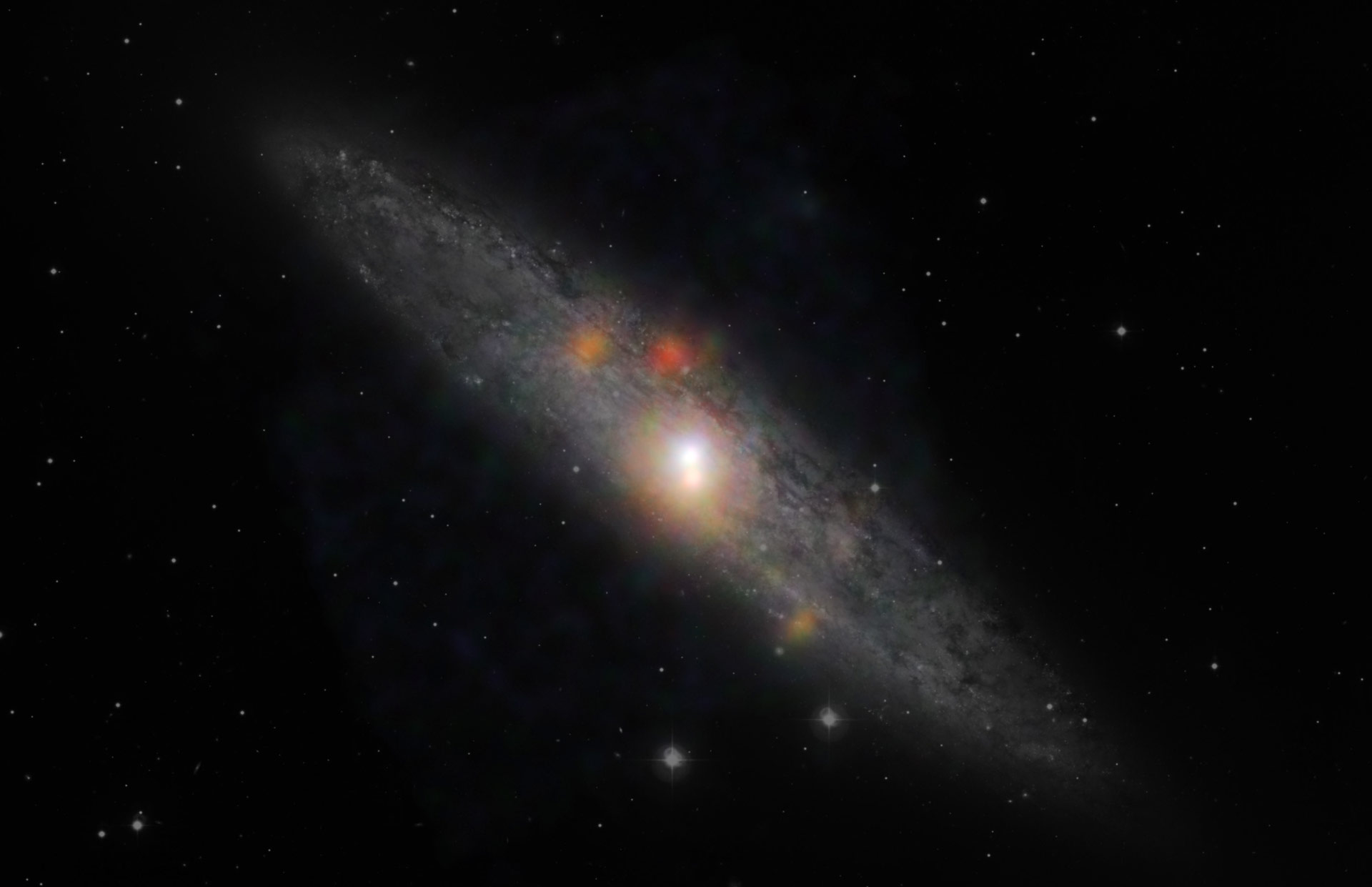
    This composite image from NASA’s NuSTAR and the European Southern Observatory shows the Sculptor galaxy, also known as NGC 253. In this image, red shows low-energy X-ray radiation (3 to 7 kiloelectron volts), green is medium energy (7 to 10 kiloelectron volts), and blue is high energy (10 to 20 kiloelectron volts). Credit: NASA/JPL-Caltech/JHU

    This composite image from NASA’s NuSTAR and the European Southern Observatory shows the Sculptor galaxy, also known as NGC 253.

    The Sculptor galaxy is seen in a new light, in this composite image from NASA’s Nuclear Spectroscopic Telescope Array (NuSTAR) and the European Southern Observatory in Chile. Visible data from the European Space Observatory show the backbone of the galaxy made up of stars, while NuSTAR data, which appear as colored blobs, show high-energy X-rays. The NuSTAR observations are the sharpest ever taken of this galaxy in high-energy X-rays.

    The findings, when combined with those from NASA’s Chandra X-ray Observatory, suggest that the supermassive black hole at the center of the Sculptor galaxy, also known as NGC 253, has dozed off, or gone inactive, sometime in the past decade. Future observations from both telescopes should help address this mystery.

    The NuSTAR data also reveals a flaring source of high-energy X-rays, called an ultraluminous X-ray source, or ULX. This object, which appears as a blue spot near the hotter, central region of the galaxy, is either a black hole or a dense, dead star, called a neutron star, feeding off a partner star. The flare is thought to be the result of a change in the object’s feeding patterns.

    The other orange and reddish points are likely additional X-ray-generating pairs of stars located throughout the galaxy.

    In this image, red shows low-energy X-ray radiation (3 to 7 kiloelectron volts), green is medium energy (7 to 10 kiloelectron volts), and blue is high energy (10 to 20 kiloelectron volts).

    Never miss a breakthrough: Join the SciTechDaily newsletter.
    Follow us on Google and Google News.

    Astronomy Chandra X-ray Observatory European Southern Observatory NuSTAR
    Share. Facebook Twitter Pinterest LinkedIn Email Reddit

    Related Articles

    Chandra Reveals 25 Bright Point-Like X-Ray Sources in Arp 299

    NASA’s NuSTAR Telescope Shows Merging Galaxies Have Enshrouded Black Holes

    Chandra Discovers a Star in the Closest Known Orbit Around a Black Hole

    NASA’s NuSTAR Reveals New Clues to ‘Chameleon Supernova’

    Astronomers Solve the Mystery of a Rare Change in the Behavior of a Supermassive Black Hole

    NASA Telescopes Reveal That Sagittarius A* May Be Producing Neutrinos

    Chandra Views Glowing Gas in the Milky Way, NGC 3576

    Data Reveals Dormant Black Hole Amidst Stellar Chaos

    Spacecraft to Explore Supermassive Black Holes at Center of Galaxies

    Leave A Reply Cancel Reply

    • Facebook
    • Twitter
    • Pinterest
    • YouTube

    Don't Miss a Discovery

    Subscribe for the Latest in Science & Tech!

    Trending News

    Scientists Uncover Potential Brain Risks of Popular Fish Oil Supplements

    Scientists Discover a Surprising Way To Make Bread Healthier and More Nutritious

    After 60 Years, Scientists Uncover Unexpected Brain Effects of Popular Diabetes Drug Metformin

    New Research Uncovers Hidden Side Effects of Popular Weight-Loss Drugs

    Scientists Rethink Extreme Warming After Surprising Ocean Discovery

    Landmark Study Links Never Marrying to Significantly Higher Cancer Risk

    Researchers Discover Unknown Beetle Species Just Steps From Their Lab

    Largest-Ever Study Finds Medicinal Cannabis Ineffective for Anxiety, Depression, PTSD

    Follow SciTechDaily
    • Facebook
    • Twitter
    • YouTube
    • Pinterest
    • Newsletter
    • RSS
    SciTech News
    • Biology News
    • Chemistry News
    • Earth News
    • Health News
    • Physics News
    • Science News
    • Space News
    • Technology News
    Recent Posts
    • Scientists Discover Hidden Pathway Inside Catalysts That Defies Decades of Assumptions
    • Scientists Finally Crack Decades-Old Mystery of “Breathing” Lasers
    • “Like Liquid Metal”: Scientists Create Strange Shape-Shifting Material
    • Early Warning Signals of Esophageal Cancer May Be Hiding in Plain Sight
    • Researchers Have Discovered a THC-Free Cannabis Compound That May Replace Opioids
    Copyright © 1998 - 2026 SciTechDaily. All Rights Reserved.
    • Science News
    • About
    • Contact
    • Editorial Board
    • Privacy Policy
    • Terms of Use

    Type above and press Enter to search. Press Esc to cancel.