
Close Menu
    Facebook X (Twitter) Instagram
    SciTechDaily
    • Biology
    • Chemistry
    • Earth
    • Health
    • Physics
    • Science
    • Space
    • Technology
    Facebook X (Twitter) Pinterest YouTube RSS
    SciTechDaily
    Home»Earth»“Point of No Return” – Amazon Rainforest Could Be Gone Within 50 Years
    Earth

    “Point of No Return” – Amazon Rainforest Could Be Gone Within 50 Years

    By Bangor UniversityMarch 10, 20201 Comment3 Mins Read
    Facebook Twitter Pinterest Telegram LinkedIn WhatsApp Email Reddit
    Share
    Facebook Twitter LinkedIn Pinterest Telegram Email Reddit
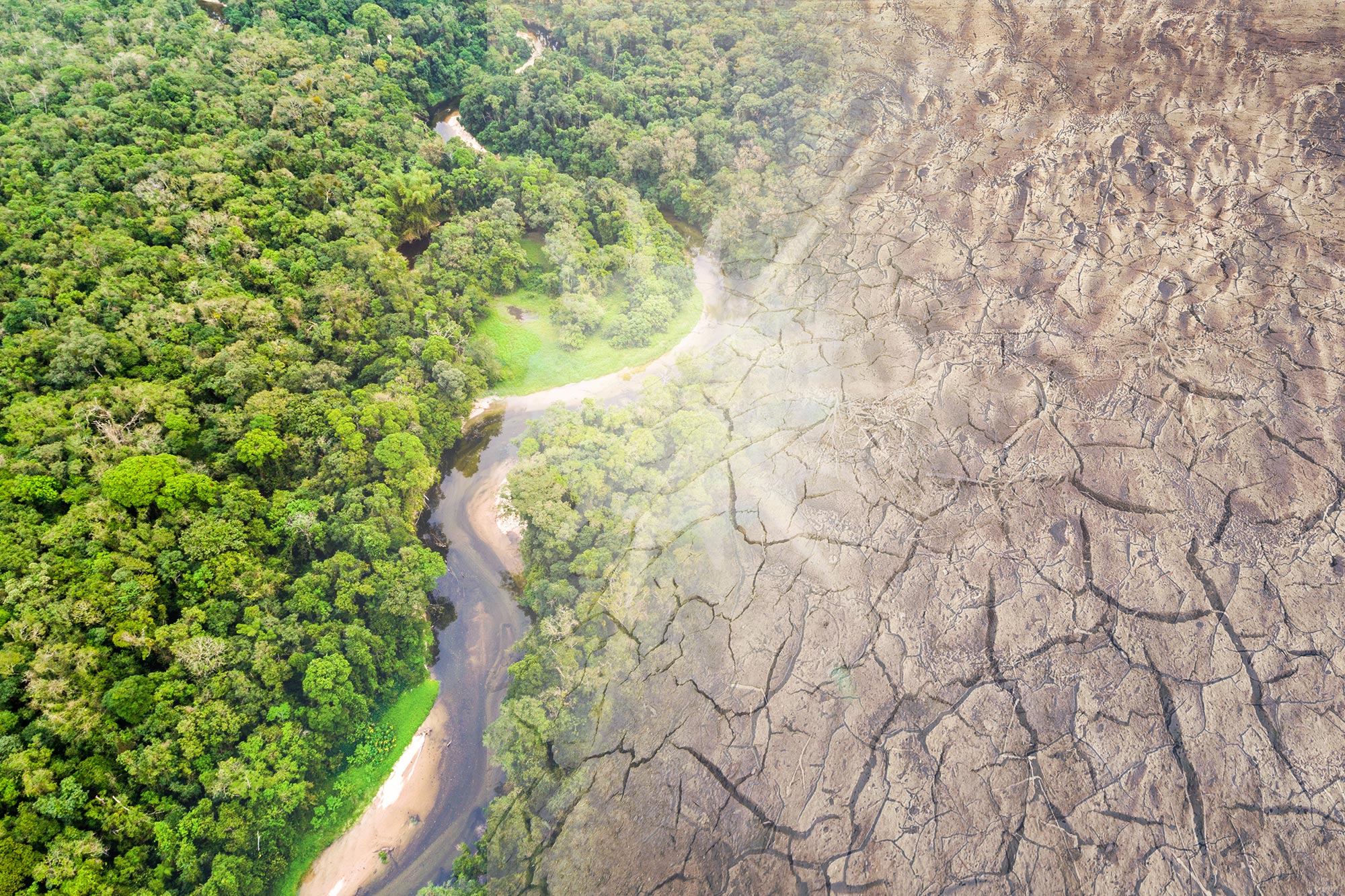
    Amazon Rainforest Disappearing
    According to calculations based on real-world data, large ecosystems, such as the Amazon rainforest, will collapse and disappear alarmingly quickly, once a crucial tipping point is reached.

    Large ecosystems, such as the Amazon rainforest, will collapse and disappear alarmingly quickly, once a crucial tipping point is reached, according to calculations based on real-world data.

    Writing in Nature Communications today (March 10, 2020), researchers from Bangor University, Southampton University and The School of Oriental & African Studies, University of London, reveal the speed at which ecosystems of different sizes will disappear, once they have reached a point beyond which they collapse — transforming into an alternative ecosystem.

    For example, once the ‘point of no return’ is reached, the iconic Amazon rainforest could shift to a savannah-type ecosystem with a mix of trees and grass within 50 years, according to the work.

    Some scientists argue that many ecosystems are currently teetering on the edge of this precipice, with the fires and destruction both in the Amazon and in Australia.

    “Unfortunately, what our paper reveals is that humanity needs to prepare for changes far sooner than expected,” says joint lead author Dr. Simon Willcock of Bangor University’s School of Natural Sciences.

    “These rapid changes to the world’s largest and most iconic ecosystems would impact the benefits which they provide us with, including everything from food and materials, to the oxygen and water we need for life.”

    What can be done to slow these collapses?

    Ecosystems made up of a number of interacting species, rather than those dominated by one single species, maybe more stable and take longer to shift to alternative ecosystem states. These provide opportunities to mitigate or manage the worst effects, say the authors. For example, elephants are termed a ‘keystone’ species as they have a disproportionately large impact on the landscape — pushing over trees, but also dispersing seeds over large distances. The authors state that the loss of keystone species, such as this, would lead to a rapid and dramatic change in the landscape within our lifetime.

    “This is yet another strong argument to avoid degrading our planet’s ecosystems; we need to do more to conserve biodiversity,” says Dr. Gregory Cooper, School of Oriental & African Studies, University of London.

    Prof John Dearing from Geography and Environment at Southampton University says:

    “We intuitively knew that big systems would collapse more slowly than small ones — due to the time it takes for impacts to diffuse across large distances. But what was unexpected was the finding that big systems collapse much faster than you might expect — even the largest on Earth only taking possibly a few decades.”

    Reference: “Regime shifts occur disproportionately faster in larger ecosystems” by Gregory S. Cooper, Simon Willcock and John A. Dearing, 10 March 2020, Nature Communications.
    DOI: 10.1038/s41467-020-15029-x

    Never miss a breakthrough: Join the SciTechDaily newsletter.
    Follow us on Google and Google News.

    Amazon Climate Change Environment Rainforest
    Share. Facebook Twitter Pinterest LinkedIn Email Reddit

    Related Articles

    Into the Unknown: NASA’s GEDI Space Laser Provides Answers to Rainforest Canopy Mystery

    How Temperate Rainforests Can Effectively Aid the Fight Against Climate Change

    Illegal Gold Mining in Peruvian Amazon Turns Pristine Rainforests Into Heavily Polluted Mercury Sinks

    Big Differences Exposed Among Amazonian Countries in Their Rates of Forest Recovery As Well as Deforestation

    High Risk of Extreme Drought: Unchecked Climate Change Will Cause Severe Drying of the Amazon Rainforest

    Scientists Unravel How and Why Amazon Trees Die & Why Tree Mortality Is Increasing

    Amazon’s Burning Crisis: Deforestation and Number of Fires Show 2019 Not a ‘Normal’ Year

    Amazon Area Twice the Size of California Still Suffering From the Effects of a Megadrought

    Data Shows 2010 Amazon Megadrought Caused Serious Devastation

    1 Comment

    1. ROMEL BEZERRA on March 10, 2020 12:35 pm

      It is obvious that the so called scientists quoted on this article have a biased agenda. I wonder if any of them has ever travelled to the Amazon… Your organization should refrain of publishing alarmists news without any scientific basis.

      Reply
    Leave A Reply Cancel Reply

    • Facebook
    • Twitter
    • Pinterest
    • YouTube

    Don't Miss a Discovery

    Subscribe for the Latest in Science & Tech!

    Trending News

    Scientists Recreate a Nuclear Fireball and Uncover Fallout’s Hidden Chemistry

    These Tiny Gut Particles Could Be Accelerating Aging Throughout the Body

    Doctors Changed One Thing and Weight Gain Stopped

    Magnetic Fields May Solve a Longstanding Binary Star Mystery

    The Probiotic Breakthrough for Natural Anxiety Relief and Better Mental Health

    Animal vs. Plant Protein: Scientists Found a Surprising Nutritional Difference

    According to Scientists, This Simple Dietary Change Is Linked to Lower Depression Scores

    Researchers Discover a Hidden Vitamin D Problem That Persists Year-Round

    Follow SciTechDaily
    • Facebook
    • Twitter
    • YouTube
    • Pinterest
    • Newsletter
    • RSS
    SciTech News
    • Biology News
    • Chemistry News
    • Earth News
    • Health News
    • Physics News
    • Science News
    • Space News
    • Technology News
    Recent Posts
    • Scientists Recommend Doing This To Reduce Anxiety During Pregnancy
    • Scientists Reveal What Happened When 12 People Were Trapped Together in Antarctica for 10 Months
    • Buried for 1.7 Billion Years: These Ancient Fossils May Rewrite the Story of Complex Life
    • NASA Spots Giant Ocean Swell Signaling a Potential El Niño Comeback
    • The “Impossible” Earthquake Beneath Utah Was Real After All
    Copyright © 1998 - 2026 SciTechDaily. All Rights Reserved.
    • Science News
    • About
    • Contact
    • Editorial Board
    • Privacy Policy
    • Terms of Use

    Type above and press Enter to search. Press Esc to cancel.