
A New Eagle and Vulture Have Been Discovered in Fossil Deposits
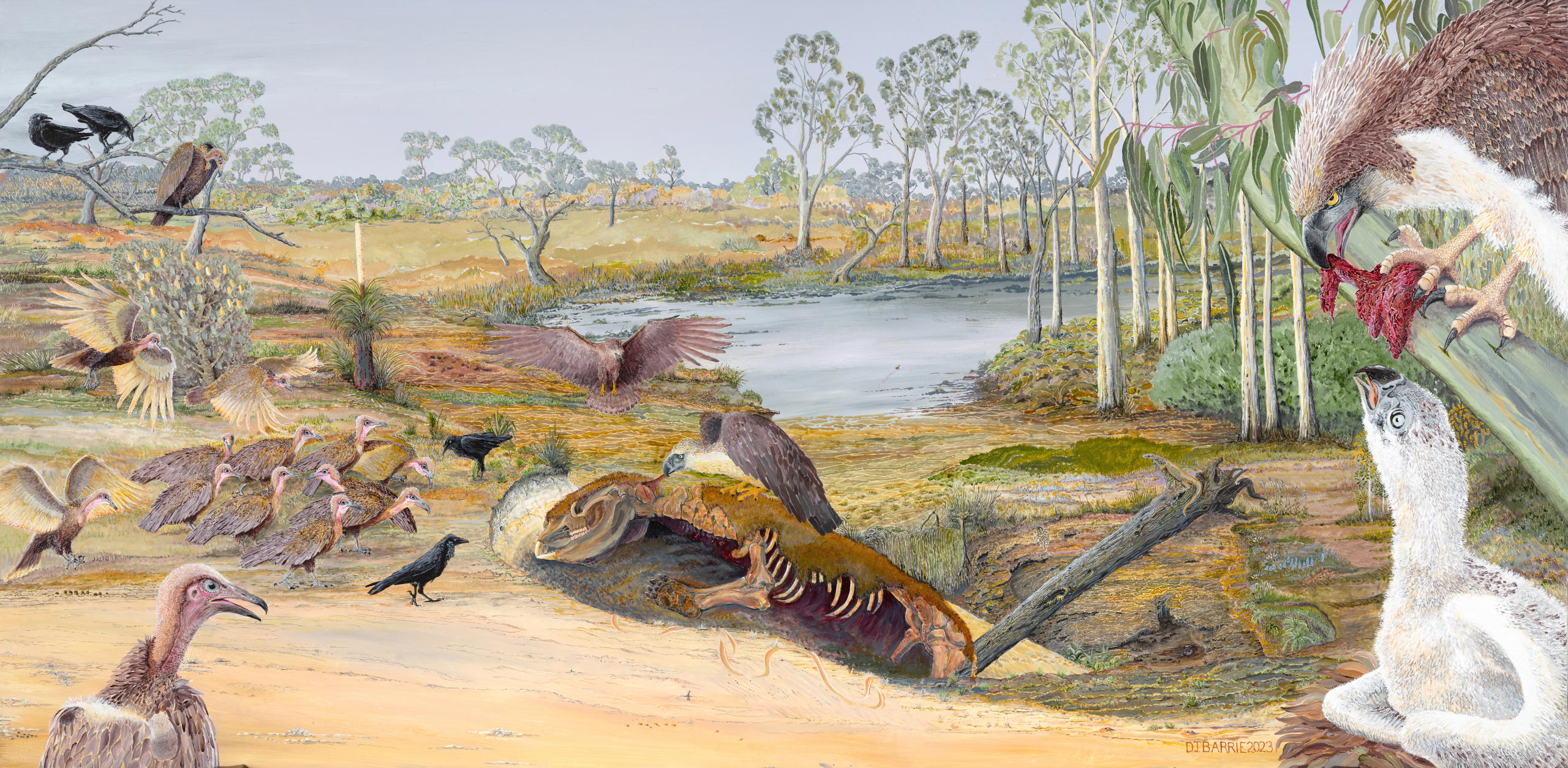
Australia’s only vulture, and a fearsome extinct eagle, are among the earliest recorded birds of prey from the Pleistocene period more than 50,000 years ago – and now Flinders University researchers are bringing them to life again.
Along with new scientific information published in Alcheringa: An Australasian Journal of Palaeontology, a bold new pictorial reconstruction of a newly named eagle and the only known Australian vulture will be unveiled at the World Heritage-listed Naracoorte Caves in South Australia’s Limestone Coast this month.
Research on Extinct Megafauna and Birds
“Imagine these majestic birds competing for food in landscapes across southern Australia ruled by megafauna such as the giant wombat-like Diprotodon optatum and the ‘marsupial lion’ Thylacoleo carnifex,” says Dr Ellen Mather, from the Flinders University Palaeontology lab.
The project follows the Flinders team’s extended work on now-extinct megafauna – including the largest eagle that ever flew in Australia, recently named Dynatoaetus gaffae, by Dr Mather, Associate Professor Trevor Worthy, Dr. Aaron Camens, and others.
Discovery of New Eagle Species and Australian Vulture
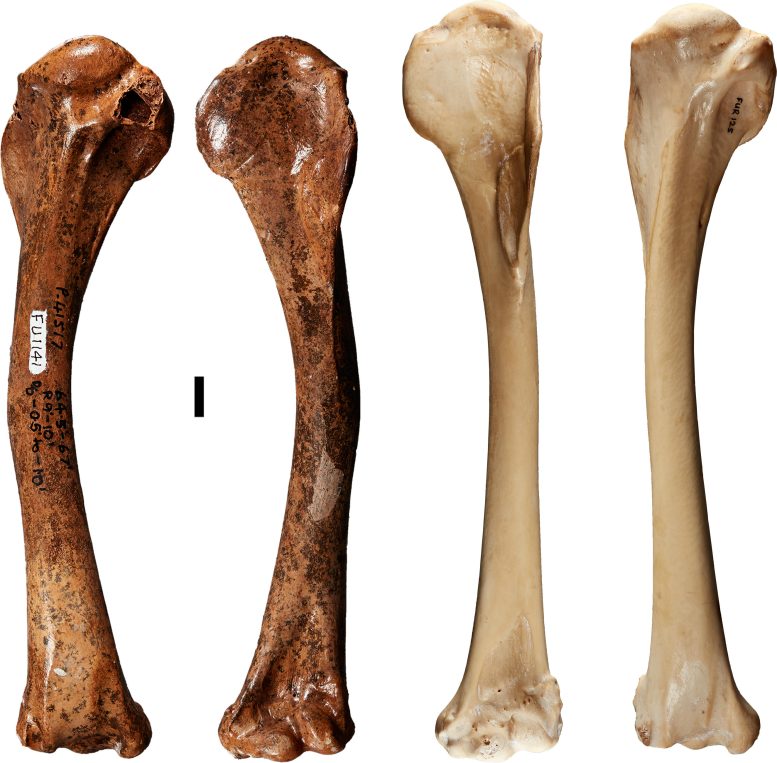
In their latest paper, Dr. Mather and Associate Professor Worthy join fellow Flinders paleontologists Dr. Diane Fusco, Professor Mike Lee (Flinders and SA Museum), and Dr John Hellstrom (University of Melbourne), in publishing details of the second largest eagle, aptly called Dynatoaetus pachyosteus, described exclusively from fossil bones found in the Victoria Cave at the Naracoorte Caves.
“This new eagle species, Dynatoaetus pachyosteus, would have been similar in wingspan to a wedge-tailed eagle, now Australia’s largest living eagle of prey, but its bones seem much more robust – especially its leg bones, suggesting it was even more powerful and heavily built,” says Dr Mather.
“This genus (Dynatoaetus) was endemic to Australia, meaning it was found nowhere else in the world.
“Now we have found two species and know this genus is not particularly closely related to any eagles outside Australia, we suggest that this group of raptors must have been in Australia for quite some time, rather than being a relatively recent arrival.”
“However, our analyses suggest they may be related to the large Crested Serpent Eagle and Philippine Eagle, top predators in the tropical jungles Southeast Asia and New Guinea.”
Analyses of Vulture and Eagle Species
The team also first described the Australian vulture (Cryptogyps lacertosus), a bird the size of a modern-day wedge-tailed eagle from bones including an almost complete pair of wings from a single individual previously recovered from an underwater cave, known as the Green Waterhole or Fossil Cave, near Mount Gambier.
In the latest article, the Flinders University team connected these SA remains to bones they studied from a Nullarbor cave in Western Australia – suggesting Cryptogyps was more a primitive vulture than previously thought.
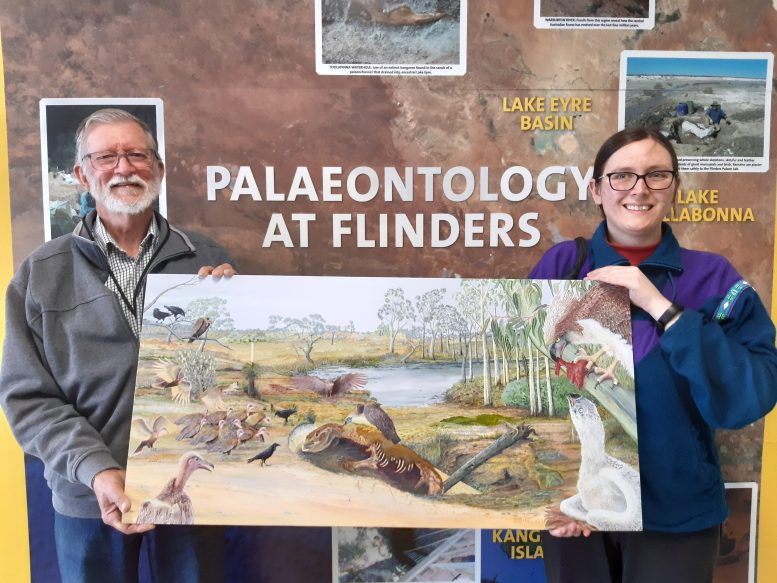
The artwork of these extinct Australian birds of prey, done by local South Australian artist and natural historian John Barrie, will be put on display at the Naracoorte Fossil Centre.
Implications and Findings
“Most vultures in the Aegypiinae (Old World vultures related to the Griffon Vulture) subfamily have extremely light wing bones filled with air cavities, thought to help with long periods of soaring flight,” says Dr Mather. “But Cryptogyps seems to have lacked this adaptation.”
This could indicate that Cryptogyps was not as efficient a soarer compared to its living relatives.
Both species of Dynatoaetus were found in Victoria Fossil Cave deposits and so lived in the area between 500,000 and 200,000 years ago.
Eagle fossils are rare, so precisely when these birds went extinct is unknown. However, the researchers were able to place a date on the fossil vulture from Green Waterhole Cave.
Co-author Dr Hellstrom led uranium-series dating of the calcite rafts (calcite crystals that form on the surface of still water in caves) that the fossils were buried in suggesting that Cryptogyps lacertosus was alive around 60,000 years ago. This means it had survived right up to Australia’s megafaunal mass extinction.
It is quite likely that the extinction of the large marsupials played a key role in the demise of Cryptogyps, and possibly the giant eagles as well, says Dr Mather.
“Whatever caused the extinction of at least the vulture and two other eagles, the result is that Australia has only one largish raptor in its inland fauna today. This is unusual in the world, as most continents have several eagles and vultures.
“We now know that extinction not only removed large groups from the mammal fauna but that absence of vultures is a recent loss and that Australia had two other eagles – both able to take rather larger prey than the wedge-tailed eagle.”
Reference: “Pleistocene raptors from cave deposits of South Australia, with a description of a new species of Dynatoaetus (Accipitridae: Aves): morphology, systematics and palaeoecological implications” by Ellen K. Mather, Michael S. Y. Lee, Diana A Fusco, John Hellstrom and Trevor H. Worthy, 2023, Alcheringa: An Australasian Journal of Palaeontology.
DOI: 10.1080/03115518.2023.2268780
Never miss a breakthrough: Join the SciTechDaily newsletter.
Follow us on Google and Google News.
2 Comments
I only had time to read the headline. Hopefully the limestone caves can be blocked in time, and any giant birds of prey destroyed which were reborn and rose again before they predate on Australians.
You mean “read the lede.” Ready, fire, aim.