

Groundbreaking research reveals that psychedelic compounds may enhance cognitive agility, offering new potential for treating neuropsychiatric disorders.
In a groundbreaking study, researchers at the University of Michigan have found that a single dose of a psychedelic compound can significantly enhance cognitive flexibility, the brain’s ability to adjust to new information and changing circumstances, for several weeks. This discovery could lead to transformative treatments for conditions such as depression, PTSD, and neurodegenerative diseases.
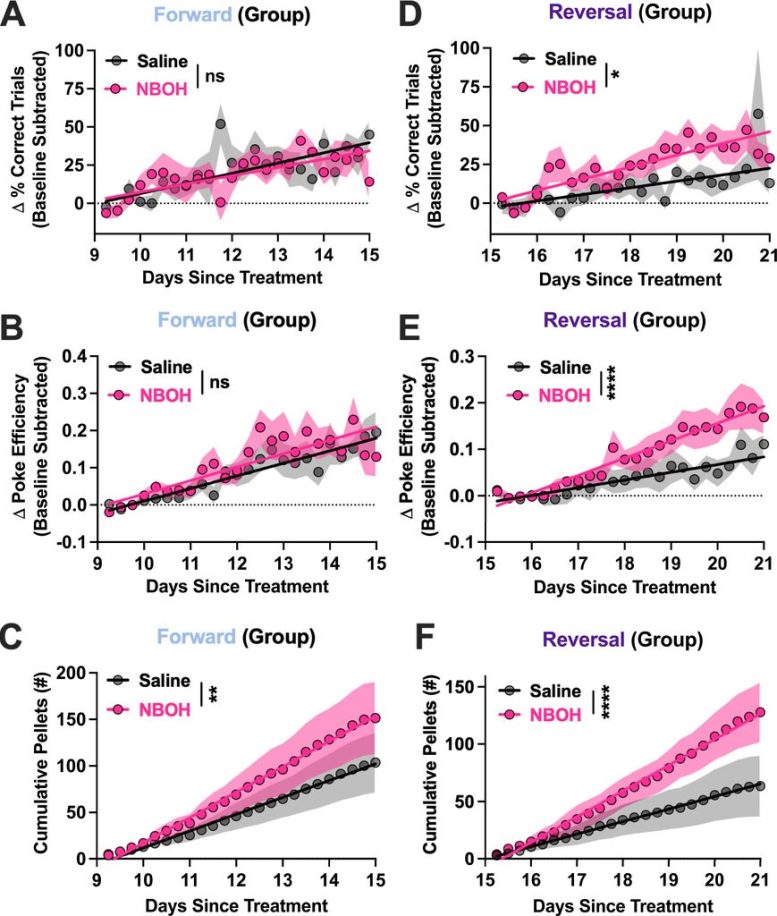
Published in the journal Psychedelics, the study reports that mice given a single dose of 25CN-NBOH, a selective serotonin 2A receptor agonist, performed significantly better on reversal learning tasks than control animals, even when tested two to three weeks after treatment.
Key Findings
“What makes this discovery particularly significant is the sustained duration of cognitive benefits following just one psychedelic dose,” said Professor Omar J. Ahmed, the study’s senior and corresponding author from the University of Michigan’s Department of Psychology. “We observed enhanced learning adaptability that persisted for weeks, suggesting these compounds may induce lasting and behaviorally meaningful neuroplasticity changes in the prefrontal cortex.”
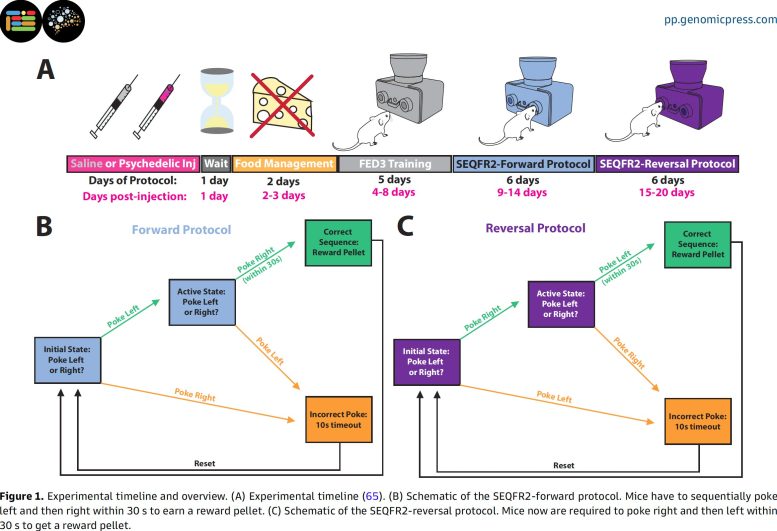
Using an innovative automated sequential learning paradigm, researchers evaluated how well mice could adapt to rule reversals, a common method for testing cognitive flexibility. Mice treated with the psychedelic compound outperformed those given a saline solution, showing greater adaptability, improved task efficiency, a higher percentage of correct responses, and more rewards earned during the reversal phase.
Implications for Brain Science
The results complement existing cellular research showing psychedelic-induced structural remodeling in the prefrontal cortex but uniquely demonstrate sustained cognitive benefits persisting long after the immediate effects of the drug have dissipated.
As interest in psychedelic medicine continues to grow, this research raises intriguing questions about how psychedelics might reshape neural pathways governing flexible thinking. Could these compounds potentially reopen critical periods of brain plasticity? What molecular mechanisms underlie these long-lasting cognitive improvements? How might the timing and frequency of administration affect long-term neuroplasticity?
“The current study focused on the long-term effects of a single psychedelic dose. A key question is what happens with two, three, or even twenty doses taken over several months. Is every additional dose increasingly beneficial for flexible learning or is there a plateau effect or even a negative effect of too many doses? These are important questions to answer next in the quest to make psychedelic medicine more rational and mechanistic,” according to Dr. Ahmed.
Sex Differences and Clinical Potential
Importantly, the study found that both male and female mice showed significant improvements in cognitive flexibility, suggesting the potential broad applicability of psychedelic therapy across biological sexes.
“The most striking aspect of our findings is that these cognitive benefits were measured 15-20 days after a single psychedelic administration,” notes Elizabeth J. Brouns, first author of the study. “This suggests that a single dose of a psychedelic isn’t just temporarily altering perception, but potentially inducing lasting beneficial changes in brain function.”
Methodological Advances
The study’s automated behavioral task represents a significant methodological advance for evaluating flexible learning, enabling researchers to efficiently evaluate cognitive flexibility in future investigations of psychedelic compounds. This high-throughput approach could accelerate the development of targeted psychedelic therapies for specific cognitive deficits.
Reference: “Single-dose psychedelic enhances cognitive flexibility and reversal learning in mice weeks after administration” by Elizabeth J. Brouns, Tyler G. Ekins and Omar J. Ahmed, 22 April 2025, Psychedelics.
DOI: 10.61373/pp025r.0002
Funding: National Institute of Mental Health, National Institute of Neurological Disorders and Stroke, National Institute on Drug Abuse, University of Michigan
Never miss a breakthrough: Join the SciTechDaily newsletter.
Follow us on Google and Google News.
3 Comments
“These are important questions to answer next in the quest to make psychedelic medicine more rational and mechanistic”. Psychedelic medicine!
This cruel study on mice caused them to “trip” for, well, nobody knows except the mice, but their brains were affected for weeks. “The most striking aspect of our findings is that these cognitive benefits were measured 15-20 days after a single psychedelic administration,” notes Elizabeth J. Brouns, first author of the study. “This suggests that a single dose of a psychedelic isn’t just temporarily altering perception, but potentially inducing lasting beneficial changes in brain function.” Beneficial changes? How about anxiety, fear, and who knows what else a tripping mouse feels?
“Is every additional dose increasingly beneficial for flexible learning or is there a plateau effect or even a negative effect of too many doses?” Poor mice are going to be overdosed with this stuff. Nice researchers.
Bottom line: psychopathic researchers who like to make mice “trip” on hallucinogens want more money to trip more mice. Of course, they can ask some old Hippies to try this instead of mice. At least they can tell you about their trip.
See my article, Of Mice and Men: The Problems with Studying Mice to Learn about Men.
https://www.academia.edu/127948044/Of_Mice_and_Men_The_Problems_with_Studying_Mice_to_Learn_about_Men
I thought this has been clearly demonstrated for decades by artists, musicians, and actors who get high off shrooms, lsd, etc and create such cool stuff!
Timothy Leary was right after all.