
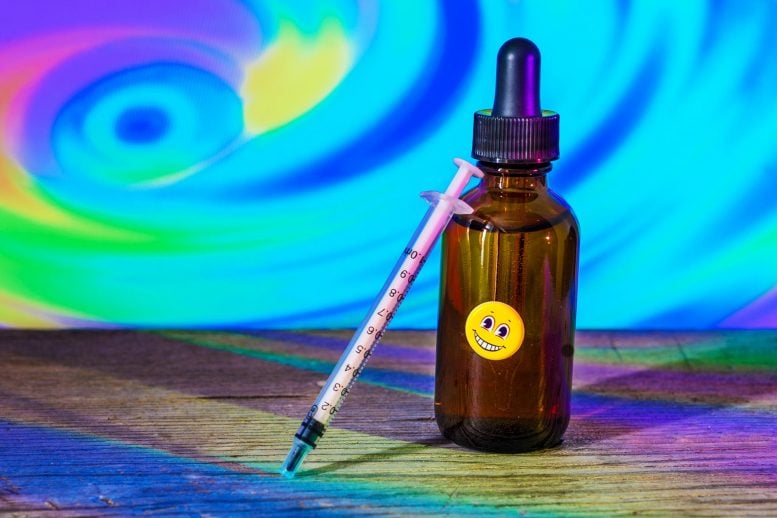
Using advanced epigenomic analysis, researchers showed how psychedelics may produce long-lasting effects, offering hope for mental health treatment.
The National Alliance of Mental Health estimates that one in five American adults will suffer from a mental illness at some point in their lives. Treatment is available, but conventional therapies might have side effects and take time to start working.
A Virginia Tech researcher has joined a resurgence in study on a class of medications that have been long outlawed but may be effective in treating a number of mental illnesses. In mice, these treatments produced outcomes that lasted for weeks or months after just one dose.
Chang Lu, the Fred W. Bull Professor of Chemical Engineering at the College of Engineering, is assisting his Virginia Commonwealth University colleagues in their investigation of the epigenomic impacts of psychedelics by using a method that his team created in 2015.
Their research sheds light on how psychedelic drugs like psilocybin, mescaline, LSD, and analogous chemicals may alleviate signs of addiction, anxiety, sadness, and PTSD. The meds have fewer negative effects and seem to operate more quickly and last longer than other therapies.
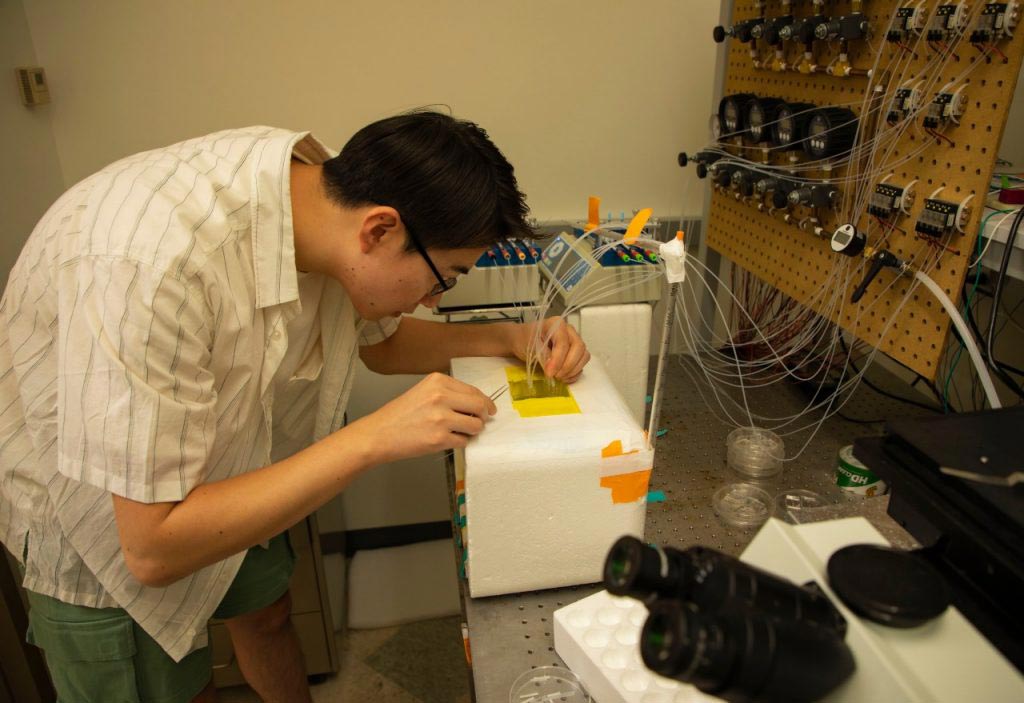
Peering Into the Brain’s “Black Box”
Lu’s genomic analysis was crucial to the effort. His method enables scientists to analyze tissue samples with just a few hundred to thousands of cells and make relevant conclusions. Lu’s method permits the investigations utilizing just a tiny amount of material from a specific region of a mouse brain, whereas older procedures require much larger sample sizes.
It’s also crucial to consider how psychedelics affect the tissues of the brain.
According to Lu, scientists can use the chemicals in human clinical studies while collecting blood and urine samples and analyzing subjects’ behavior. “But the thing is, the behavioral data will tell you the result, but it doesn’t tell you why it works in a certain way,” he said.
However, studying molecular alterations in animal models, such as the brains of mice, enables researchers to peek inside what Lu refers to as the “black box” of neuroscience and comprehend the biological mechanisms at play. Although mouse brains and human brains are considerably different from one another, Lu said that there are enough similarities between the two to allow for meaningful comparisons.
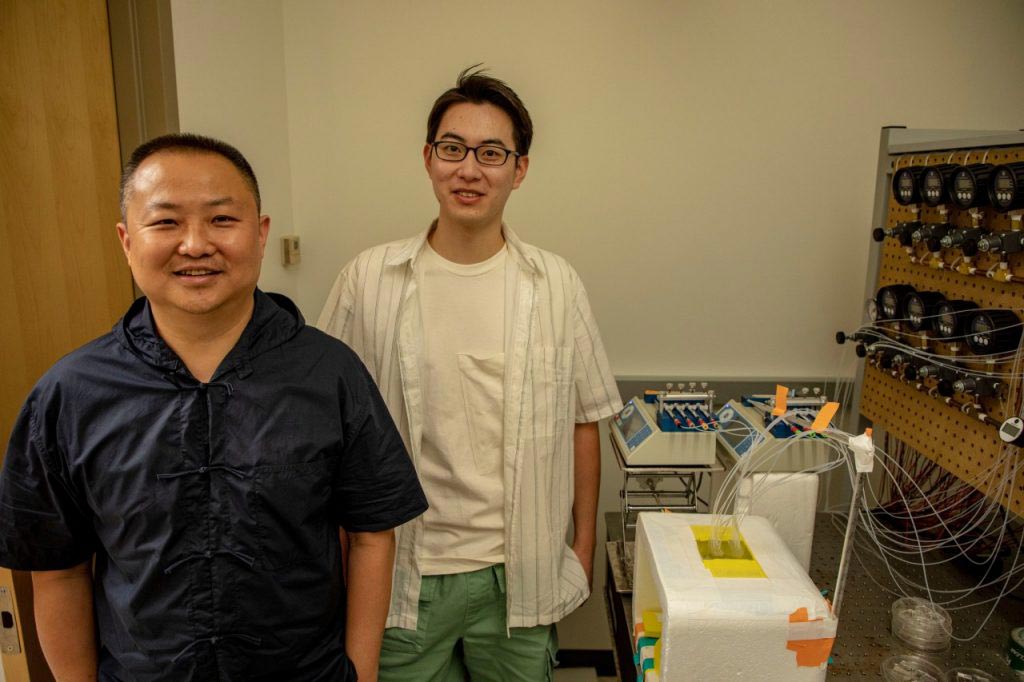
Javier González-Maeso, a pharmacologist at VCU, has dedicated his life to researching psychedelics, which were outlawed after their use for recreational purposes gained popularity in the 1960s. Regulators have, however, started to permit the medications’ research to move forward recently.
González-Maeso claimed that studies by other researchers, focusing mainly on psilocybin, a compound present in more than 200 species of mushrooms, had showed promise for the treatment of significant depression and anxiety disorders. He said that they have “profound affects on perception.” But I was curious about how these medications truly affected mice’s behavior.
He collaborated with Lu to investigate the genetic causes of those impacts.
In the joint Virginia Tech – VCU study, González-Maeso’s team used 2,5-dimethoxy-4-iodoamphetamine, or DOI, a drug similar to LSD, administering it to mice that had been trained to fear certain triggers. Lu’s lab then analyzed brain samples for changes in the epigenome and the gene expression. They discovered that the epigenomic variations were generally more long-lasting than the changes in gene expression, thus more likely to link with the long-term effects of a psychedelic.
Long-Lasting Effects Beyond the Drug’s Presence
After one dose of DOI, the mice that had reacted to fear triggers no longer responded to them with anxious behaviors. Their brains also showed effects, even after the substance was no longer detectable in the tissues, Lu said. The findings were published in the October issue of Cell Reports.
It’s a hopeful development for those who suffer from mental illness and the people who love them. In fact, it wasn’t just the science that drew Lu to the project.
For him, it’s also personal.
“My older brother has had schizophrenia for the last 30 years, basically. So I’ve always been intrigued by mental health,” Lu said. “And then once I found that our approach can be applied to look at processes like that — that’s why I decided to do research in the field of brain neuroscience.”
González-Maeso said research on psychedelics is still in its early stages, and there’s much work to be done before treatments derived from them could be widely available.
Reference: “Prolonged epigenomic and synaptic plasticity alterations following single exposure to a psychedelic in mice” by Mario de la Fuente Revenga, Bohan Zhu, Christopher A. Guevara, Lynette B. Naler, Justin M. Saunders, Zirui Zhou, Rudy Toneatti, Salvador Sierra, Jennifer T. Wolstenholme, Patrick M. Beardsley, George W. Huntley and Chang Lu, 19 October 2021, Cell Reports.
DOI: 10.1016/j.celrep.2021.109836
Never miss a breakthrough: Join the SciTechDaily newsletter.
Follow us on Google and Google News.