
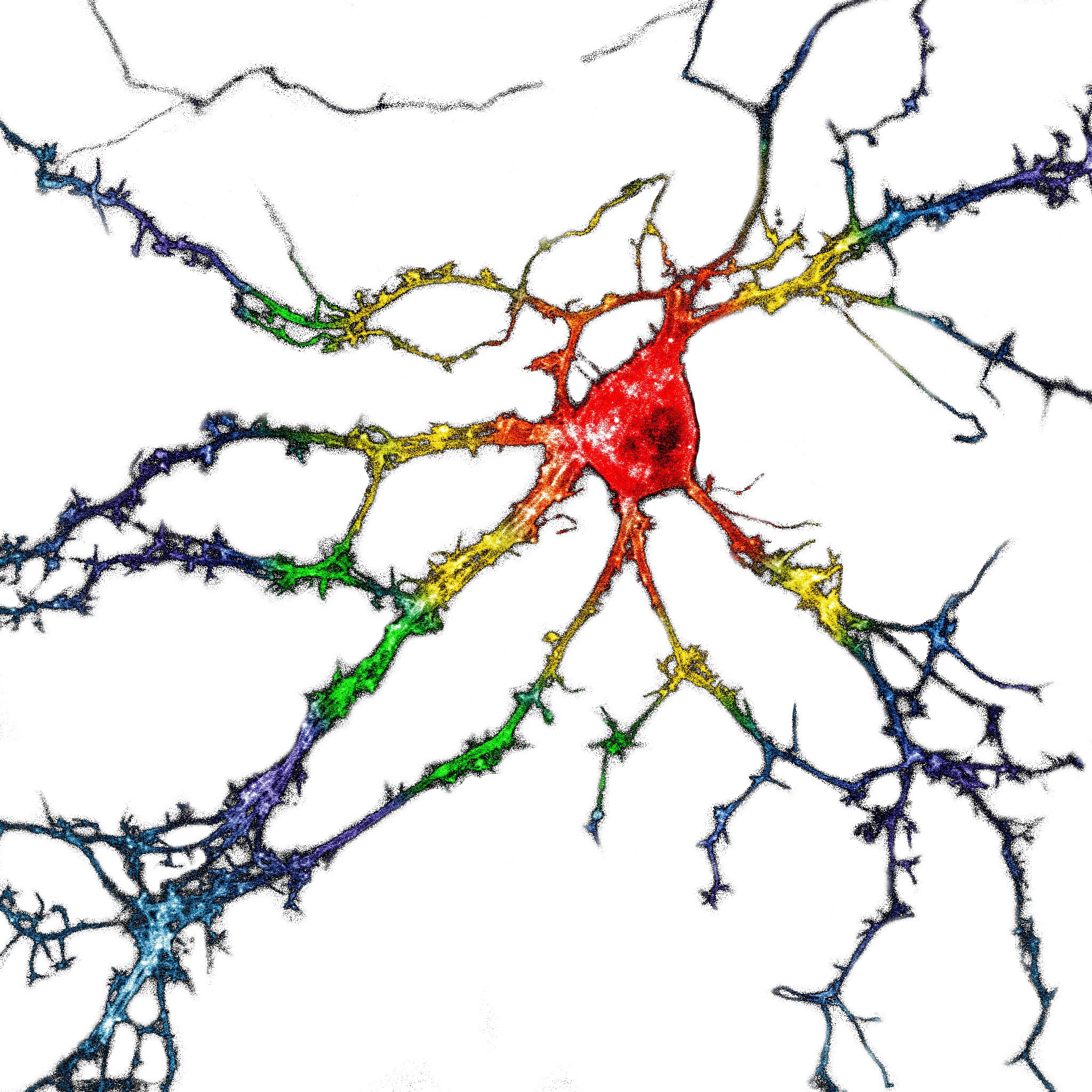
PsychLight reveals how drugs affect the brain’s serotonin receptors, guiding the search for non-hallucinogenic mental health treatments.
A genetically encoded sensor to detect hallucinogenic compounds has been developed by researchers at the University of California, Davis. Named psychLight, the sensor could be used in discovering new treatments for mental illness, in neuroscience research and to detect drugs of abuse. The work is published today (April 28, 2021) in the journal Cell.
Compounds related to psychedelic drugs such as LSD and dimethyltryptamine (DMT) show great promise for treating disorders such as depression, post-traumatic stress disorder, and substance use disorder. These drugs are called psychoplastogens because of their ability to rapidly alter brain connections. But drugs that can cause hallucinations require very careful use and monitoring of patients.
Currently, the most effective way to test an experimental drug to see if it causes hallucinations is the “head twitch” assay in rodents.
“Scientific studies on psychedelic drugs have been conducted since the 1940s, but we still don’t have an effective cellular assay for them,” said David Olson, assistant professor in the Department of Chemistry, College of Letters and Science at UC Davis and a co-author on the paper.
The work grew out of the collaboration between graduate students working with Lin Tian, associate professor at the UC Davis School of Medicine, and Olson’s laboratory.
“This collaboration was really driven by graduate students,” Tian said.
Tian’s lab develops fluorescent indicators for neural chemicals in the brain such as serotonin and dopamine. These neuromodulators allow the brain to react quickly to changing conditions, Tian said. Like neuromodulators, both psychedelic drugs and those used to treat mental illness either mimic or block the action of these neuromodulators, thus can have profound impacts on brain function.
Measuring Chemicals in the Brain
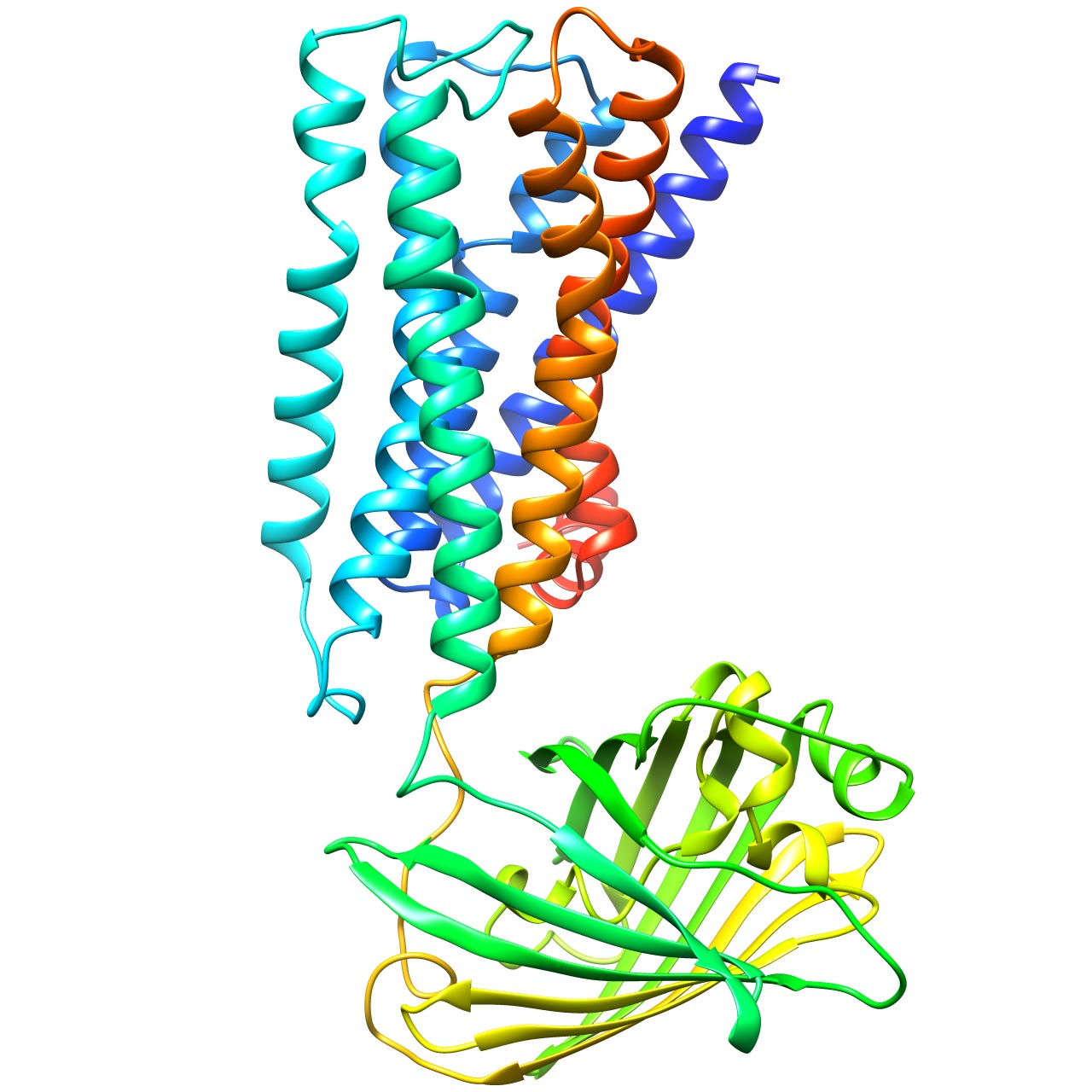
The psychLight biosensor is based on the serotonin 2A receptor (HT2AR). Within the brain, serotonin released from neurons and picked up by serotonin receptors on other neurons acts to regulate mood. Both psychedelic drugs and drugs used to treat psychiatric disorders act through the serotonin 2A receptor.
Jason (Chunyang) Dong, a graduate student in Tian’s lab in the Department of Biochemistry and Molecular Biology, worked with graduate students Calvin Ly and Lee Dunlap in Olson’s lab to engineer a modified version of the HT2A receptor with a fluorescent component. When psychLight binds to serotonin or a hallucinogenic ligand it changes its conformation, causing the fluorescence to increase. Non-hallucinogenic ligands can also bind to psychLight but lead to a different fluorescence profile.
Researchers can use psychLight to see how naturally occurring neuromodulators like serotonin, or hallucinogenic drugs, act on different parts of the brain. They could also use it to screen candidate drugs for those which activate the HT2A receptor and could cause hallucinations. When psychLight is expressed in cells and those cell cultures are exposed to a hallucinogenic drug, they light up.
The sensor can be used to look for pharmaceutical potential without the side effect of hallucinations, Tian said.
High-Throughput Screening
The researchers set up a high-throughput system to use cells expressing psychLight to screen compounds for hallucinogenic activity and for binding of the HT2A receptor. Using this, they showed that a previously untested compound, AAZ-A-154, activates the receptor but is not hallucinogenic. Subsequent tests in animal models confirmed that AAZ-A-154 shows promise as an antidepressant.
Seven Biosciences, a company founded by Tian and former graduate student Grace Mizuno, is working with UC Davis InnovationAccess to license the psychLight technology and develop it for commercial use. Delix Therapeutics, founded by Olson, is developing AAZ-A-154 and hopes to apply the psychLight assay to search for new pharmaceutical drugs.
For more on this research, read Scientists Discover a Psychedelic-Like Drug Without the Hallucinogenic Side Effects.
Reference: “Psychedelic-inspired drug discovery using an engineered biosensor” by Chunyang Dong, Calvin Ly, Lee E. Dunlap, Maxemiliano V. Vargas, Junqing Sun, In-Wook Hwang, Arya Azinfar, Won Chan Oh, William C. Wetsel, David E. Olson and Lin Tian, 28 April 2021, Cell.
DOI: 10.1016/j.cell.2021.03.043
Additional authors on the Cell paper are: Maxemiliano Vargas, Junqing Sun, and Arya Azinfar at UC Davis; Won Chan Oh and In-Wook Wang at University of Colorado; and William Wetsel at Duke University. The work was supported by grants from the National Institutes of Health, a Hellman Fellowship, and the UC Davis STAIR grant program.
Never miss a breakthrough: Join the SciTechDaily newsletter.
Follow us on Google and Google News.