
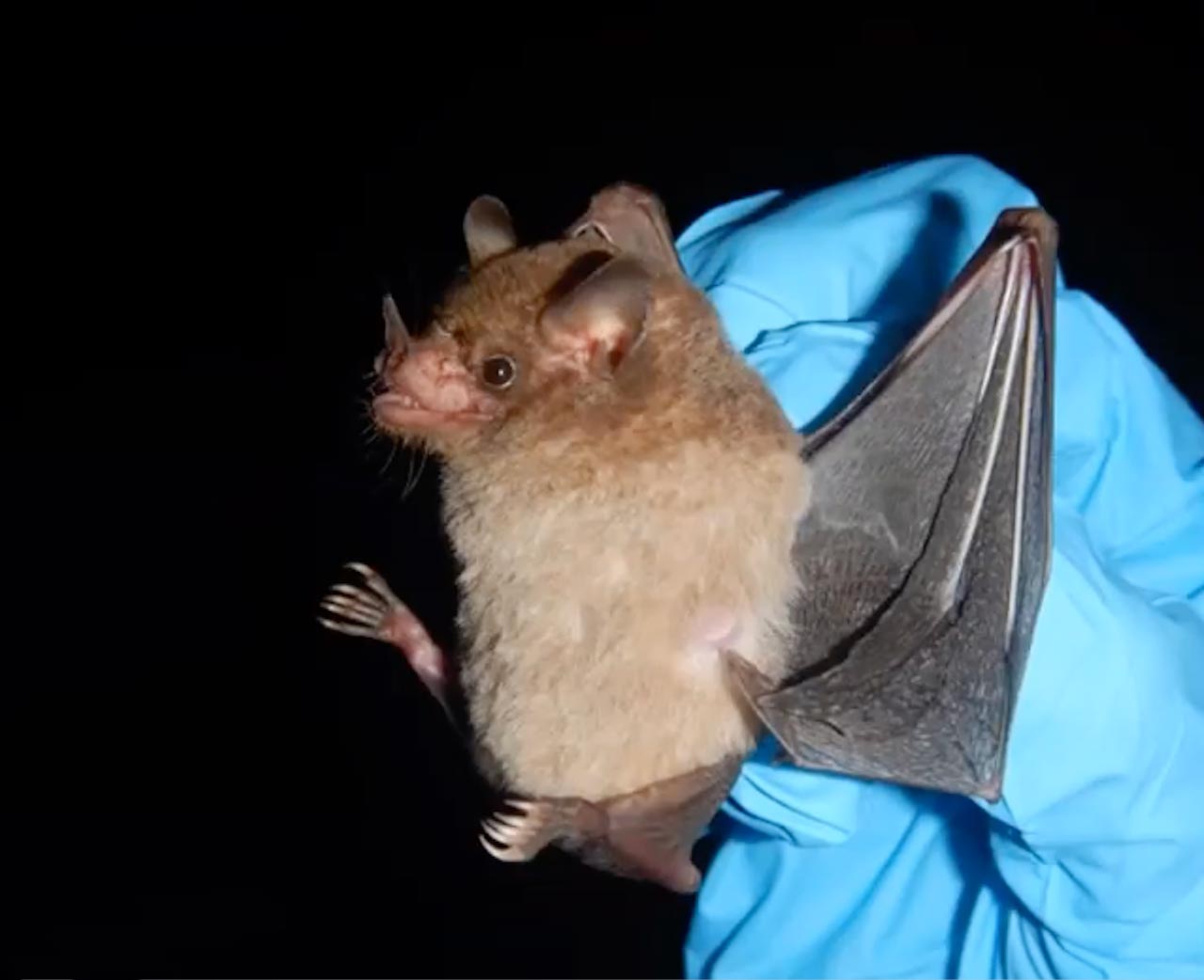
Researchers recorded the highest natural blood sugar levels ever observed in a mammal, now they hope it could help them better understand diabetes.
A recent study highlights how Neotropical leaf-nosed bats manage exceptionally high blood sugar levels through unique evolutionary adaptations across various species. This research could provide new directions for treating human metabolic disorders.
Evolutionary Insights From Bats on Blood Sugar Management
Humans must regulate blood sugar concentrations to stay healthy and to fuel our cells. Too little or too much can cause serious health complications, and high blood sugar is a hallmark of the metabolic condition, diabetes. New research from the Stowers Institute for Medical Research may enable potential solutions to metabolic disease by turning to evolution and to bats.
Published today (August 28, 2024) in Nature Ecology and Evolution, the study led by co-first authors Postdoctoral Research Associate Jasmin Camacho, Ph.D., and former Stowers researcher Andrea Bernal-Rivera from the lab of Stowers Associate Investigator Nicolas Rohner, Ph.D., reports the highest naturally occurring blood sugar concentrations in mammals ever observed, a finding that suggests bats have evolved strategies to survive, and even thrive, with this extreme trait.
The new study reports the highest naturally occurring blood sugar concentrations in mammals ever observed, a finding that suggests bats have evolved strategies to survive, and even thrive, with this extreme trait. Credit: Stowers Institute for Medical Research
Unique Dietary Adaptations in Neotropical Leaf-Nosed Bats
“Our study reports blood sugar levels that are the highest we have ever seen in nature—what would be lethal, coma-inducing levels for mammals, but not for bats,” said Camacho. “We are seeing a new trait we didn’t know was possible.”
Thirty million years ago, the Neotropical leaf-nosed bat survived solely on insects. Since then, these bats have diversified into many different species by changing what they eat. From insects, different lineages now specialize on diets ranging from fruits, nectar, meat, and everything in between—even just blood.
“Looking to animals that have existed for millions of years allows us to start to catalog changes that have happened over evolution,” said Camacho. “What makes Neotropical leaf-nosed bats so unique to study is that this group is comprised of many different species with very diverse diets, making it feasible to find answers about how diet evolves. The hope is that we can extend this understanding to other mammals, including humans, where there may be ways to learn how to better protect our own health.”
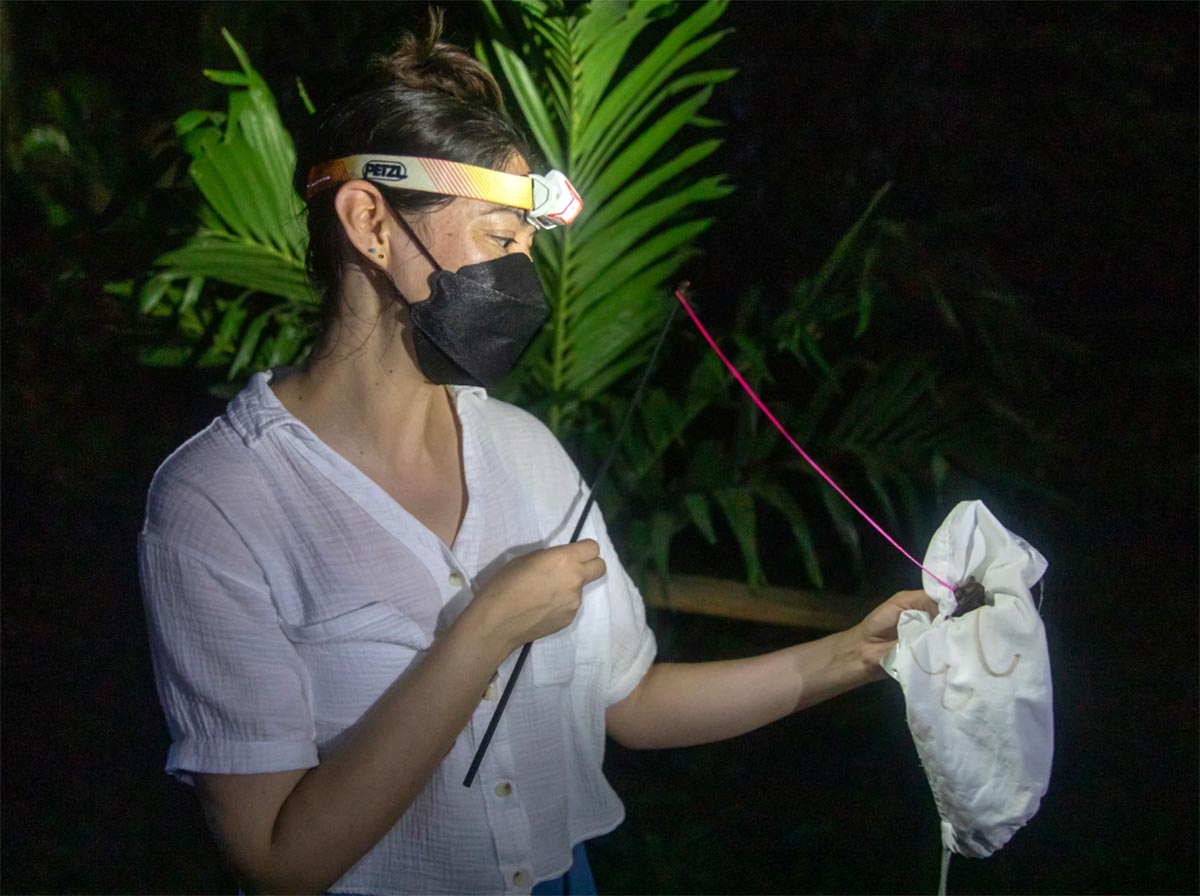
Field Research on Bat Glucose Tolerance
To uncover how bats diversified their diets, the team traveled to the jungles of Central America, South America, and the Caribbean to conduct fieldwork over several years. These catch-and-release expeditions were focused on performing glucose tolerance tests—measuring the concentration of sugar in blood—on nearly 200 wild-caught bats across 29 species after a single feeding of one of three types of sugars associated with diets of insects, fruits, or nectar.
“We saw various ways sugar is assimilated—absorbed, stored, and used in the body—and how this process has become specialized due to different diets,” said Bernal-Rivera.
Implications for Human Metabolic Research
The mechanism for maintaining blood sugar levels within a narrow, healthy range is called glucose homeostasis, which is typically regulated by the hormone insulin and is what goes awry in diabetes. Different species of leaf-nosed bats reveal a spectrum of adaptations to glucose homeostasis, ranging from changes in intestinal anatomy to genetic alterations for proteins that transport sugar from blood to cells.
“Fruit bats have honed their insulin signaling pathway to lower blood sugar,” said Camacho. “On the other extreme, nectar bats can tolerate high blood glucose levels, similar to what is observed in people with unregulated diabetes. They have evolved a different mechanism, and it does not seem to depend on insulin.”
Although precisely how nectar bats are managing glucose is still under investigation, the researchers found potential clues for alternative metabolic strategies for glucose regulation. Bats with sugar-rich diets were observed to have longer portions of their intestines and to have intestinal cells with greater surface areas for absorbing nutrients from food, compared to bats with other diets. In addition, nectar bats, unique from fruit bats, have a continual expression of a gene responsible for sugar transport, a trait also observed in a species of hummingbird.
“This study establishes extremely important resources for the field,” said Nadav Ahituv, Ph.D., a bioengineering and genetics professor at the University of California, San Francisco. “It provides not only metabolic characteristics of various bat species with different diets, but also their intestinal morphology, and candidate genomic regions and protein structural differences that could be driving dietary adaptations.”
“The datasets will fuel future research that aims to differentiate mammalian dietary differences and could progress the development of novel therapeutics for a variety of metabolic diseases in humans,” said Ahituv.
Reference: “Sugar assimilation underlying dietary evolution of Neotropical bats” by Jasmin Camacho, Andrea Bernal-Rivera, Valentina Peña, Pedro Morales-Sosa, Sofia M. C. Robb, Jonathon Russell, Kexi Yi, Yongfu Wang, Dai Tsuchiya, Oscar E. Murillo-García and Nicolas Rohner, 28 August 2024, Nature Ecology & Evolution.
DOI: 10.1038/s41559-024-02485-7
Additional authors include Valentina Peña, Sofia Robb, Ph.D., Jonathon Russell, Kexi Yi, Ph.D., Yongfu Wang, Ph.D., Dai Tsuchiya, Ph.D., and Oscar Murillo-García, Ph.D.
This work was supported by the National Science Foundation’s Postdoctoral Research Fellowships in Biology (award: 2109717), the Burroughs Wellcome Fund Postdoctoral Diversity Enrichment Program (award: G-1022339), the Howard Hughes Medical Institute Hanna H. Gray Fellows Program (award: GT15991), and by institutional support from the Stowers Institute for Medical Research. A portion of fieldwork performed for this study was supported by Contribución a la conservación del Bosque seco Tropical del Valle del Cauca (CVC permit: 1122) from the Institute for Research and Preservation of the Cultural and Natural Heritage of Valle del Cauca.
Never miss a breakthrough: Join the SciTechDaily newsletter.
Follow us on Google and Google News.
1 Comment
Torturing bats takes a special kind of researcher. They say this is “catch and release”, but they also say they have looked at intestines and other structures, which is catch and kill.
And for what? Any strategies bats have evolved to use have nothing to do with human diabetes or sugar management. ““The datasets will fuel future research that aims to differentiate mammalian dietary differences and could progress the development of novel therapeutics for a variety of metabolic diseases in humans,” said Ahituv.” Nonsense! This is animal abuse, pure and simple.
I have graduate training in biochemistry, medicine, and anthropology. My undergrad degree is in biology (B.S.), but I’ve come to deeply dislike biologists. They are not about appreciating and respecting nature. They are about dissecting and genetically modifying and vivisecting animals. To study life they destroy it. Nobody who loves and respects animals can be a biologist, unless they are only observing behavior in the wild. Animal research masquerading as a potential boon for human science is a fundamental flaw in medicine. See my article, Animal Research: The Rot at the Core of Medicine. https://www.academia.edu/123055005/Animal_Research_The_Rot_at_the_Core_of_Medicine