
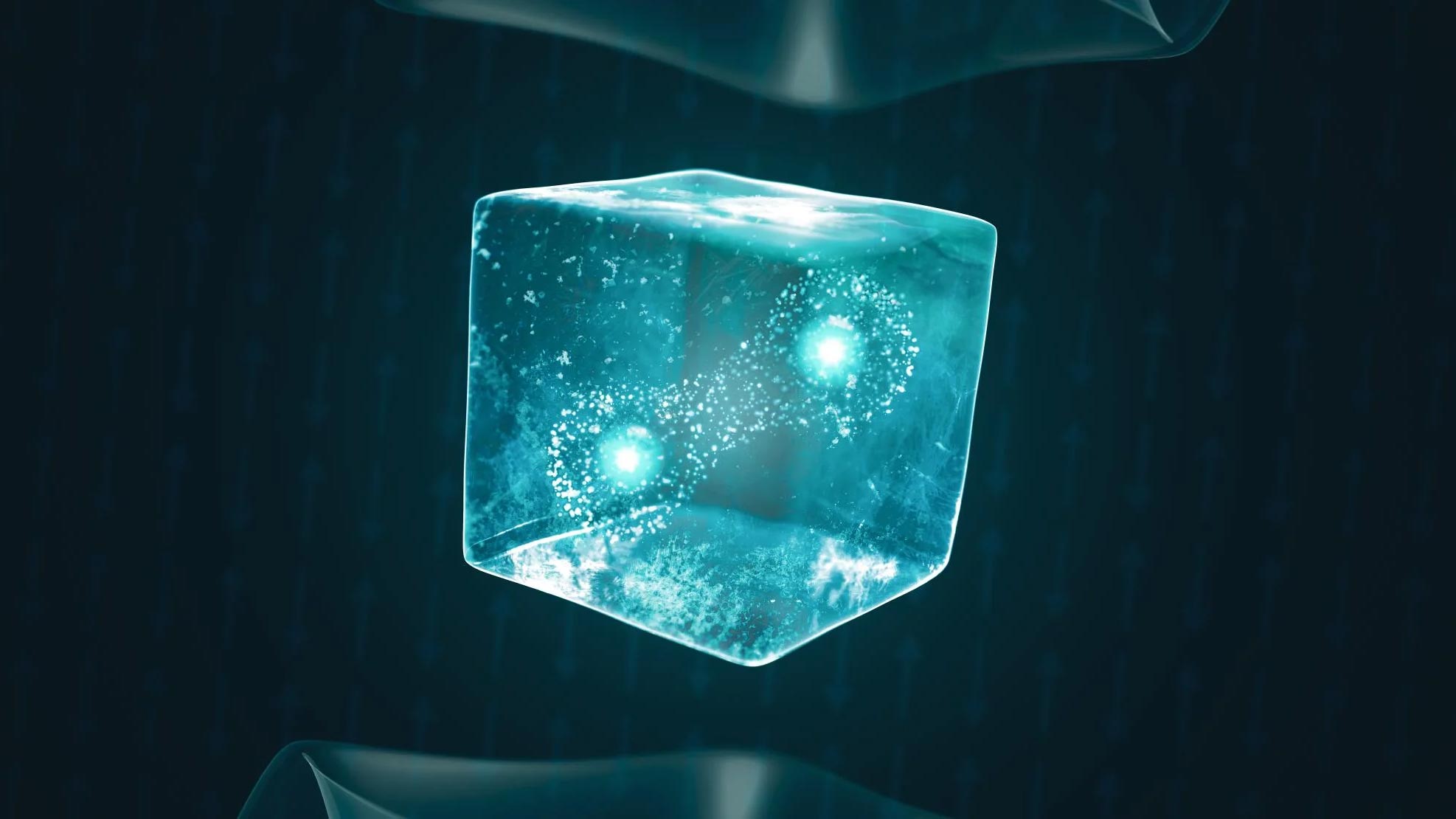
Superconductors, known for enabling lossless electrical conductivity and even magnetic levitation, typically function only at extremely low temperatures. Recent research has identified electron pairing, a core superconductor behavior, in materials at higher-than-expected temperatures, such as an antiferromagnetic insulator.
This discovery by SLAC and Stanford researchers could lead to new ways to develop superconductors that operate closer to room temperature, potentially revolutionizing technology in many fields including quantum computing and transportation.
Exploring the Enigma of Superconductors
For the past century since their discovery, superconductors and their mysterious atomic properties have left researchers in awe. These special materials allow electricity to flow through them without any energy loss. They even allow trains to levitate.
But superconductors typically only work at extremely cold temperatures. When these materials are heated, they become ordinary conductors, which allow electricity to flow but with some energy lost, or insulators, which don’t conduct electricity at all.
Researchers have been hard at work looking for superconductor materials that can perform their magic at higher temperatures – perhaps even room temperature someday. Finding or building such a material could change modern technology, from computers and cell phones to the electric grid and transportation. Furthermore, the unique quantum state of superconductors also makes them excellent building blocks for quantum computers.
Breakthrough Discoveries at SLAC
Now, researchers have observed that a necessary characteristic of a superconductor – called electron pairing – occurs at much higher temperatures than previously thought, and in a material where one least expects it – an antiferromagnetic insulator. Although the material did not have zero resistance, this finding suggests researchers might be able to find ways to engineer similar materials into superconductors that operate at higher temperatures. The research team from SLAC National Accelerator Laboratory, Stanford University, and other institutions published their results on August 15 in the journal Science.
“The electron pairs are telling us that they are ready to be superconducting, but something is stopping them,” said Ke-Jun Xu, a Stanford graduate student in applied physics and paper co-author. “If we can find a new method to synchronize the pairs, we could apply that to possibly building higher temperature superconductors.”
Syncing Electrons for Superconductivity
Over the past 100 years, researchers have learned a lot about how exactly superconductors work. We know, for instance, that for a material to superconduct, electrons have to pair off, and these pairs must be coherent – i.e., their movements must be synchronized. If electrons are paired but incoherent, the material might end up being an insulator.
In superconductors, the electrons act like two reticent people at a dance party. At first, neither person wants to dance with the other. But then the DJ plays a song that both people like, allowing them to relax. They notice one another enjoying the song and become attracted from afar – they have paired but have not yet become coherent.
Then the DJ plays a new song, one that both people absolutely love. Suddenly, the two people pair and start to dance. Soon everyone at the dance party follows their lead: They all come together and start dancing to the same new tune. At this point, the party becomes coherent; it is in a superconducting state.
In the new study, the researchers observed electrons in a middle stage, where the electrons had locked eyes, but were not getting up to dance.

Cuprates Acting Oddly
Not long after superconductors were first discovered, researchers found that the thing that got electrons paired up and dancing was vibrations in the underlying material itself. This kind of electron pairing happens in a class of materials known as conventional superconductors, which are well understood, said Zhi-Xun Shen, a Stanford professor and investigator with the Stanford Institute for Materials and Energy Sciences (SIMES) at SLAC who supervised the research. Conventional superconductors work at temperatures typically close to absolute zero, below 25 Kelvin, in ambient pressure.
Unconventional superconductors – such as the copper oxide material, or cuprate, in the current study – work at significantly higher temperatures, sometimes up to 130 Kelvin. In cuprates, it is widely believed something beyond lattice vibrations helps pair up electrons. Although researchers aren’t sure exactly what’s behind it, the leading candidate is fluctuating electron spins, which cause the electrons to pair and dance with a higher angular momentum. This phenomenon is known as a wave channel – and early indications of such a novel state were seen in an experiment at SSRL about three decades ago. Understanding what drives electron pairing in cuprates could help design superconductors that work at higher temperatures.
In this project, scientists chose a cuprate family that had not been studied in depth because its maximum superconducting temperature was relatively low – 25 Kelvin – compared to other cuprates. Even worse, most members of this family are good insulators. To see the atomic details of the cuprate, researchers shined ultraviolet light onto material samples, which eject electrons from the material. When the electrons are bound, they are slightly more resistant to being ejected, resulting in an “energy gap.” This energy gap persists up to 150 Kelvin, suggesting that electrons are paired at much higher temperatures than the zero resistance state at about 25 Kelvin. The most unusual finding of this study is that the pairing is the strongest in the most insulating samples.
The cuprate in the study might not be the material to reach superconductivity at room temperature, around 300 Kelvin, Shen said. “But maybe in another superconductor material family, we can use this knowledge for hints to get closer to room temperature,” he said.
“Our findings open a potentially rich new path forward,” Shen said. “We plan to study this pairing gap in the future to help engineer superconductors using new methods. On the one hand, we plan to use similar experimental approaches at SSRL to gain further insight into this incoherent pairing state. On the other hand, we want to find ways to manipulate these materials to perhaps coerce these incoherent pairs into synchronization.”
Reference: “Anomalous normal-state gap in an electron-doped cuprate” by Ke-Jun Xu, Junfeng He, Su-Di Chen, Yu He, Sebastien N. Abadi, Costel R. Rotundu, Young S. Lee, Dong-Hui Lu, Qinda Guo, Oscar Tjernberg, Thomas P. Devereaux, Dung-Hai Lee, Makoto Hashimoto and Zhi-Xun Shen, 15 August 2024, Science.
DOI: 10.1126/science.adk4792
This project was supported in part by the DOE’s Office of Science. SSRL is a DOE Office of Science user facility.
Never miss a breakthrough: Join the SciTechDaily newsletter.
Follow us on Google and Google News.
1 Comment
Quantum Leap in Superconductivity As Electrons Pair at Higher Temperatures.
VERY GOOD.
Please ask researchers to think deeply:
1. What is electrons?
2. What is quantum?
3. What is the difference between electrons and quantum?
Scientific research guided by correct theories can help humanity avoid detours, failures, and pomposity. Please witness the exemplary collaboration between theoretical physicists and experimentalists (https://scitechdaily.com/microscope-spacecrafts-most-precise-test-of-key-component-of-the-theory-of-general-relativity/#comment-854286). Some people in contemporary physics has always lived in a self righteous children’s story world. Whose values have been overturned by such a comical and ridiculous reality? CP violation opened the dirtiest and ugliest era in the history of physics.
Space has physical properties of zero viscosity and absolute incompressibility. Zero viscosity and absolute incompressibility are physical characteristics of ideal fluids. The space with ideal fluid physical characteristics forms vortices via topological phase transitions, which is not difficult to understand mathematically. Once the topological vortex is formed, it occupies space and maintains its presence in time. This is the transition from chaos to order via two bidirectional coupled continuous chaotic systems.
Symmetry of topological vortex can be used to explore particle behavior under spatial, temporal, and quantum number reversals, involving quantum gravity, discrete and continuous changes. It underpins the consistency of natural laws and experiment reproducibility.
The perpetually swirling topological vortices defy traditional physics’ expectations potentially unveiling new particles and forces, and can have an heavily influencing to traditional physics theories.