
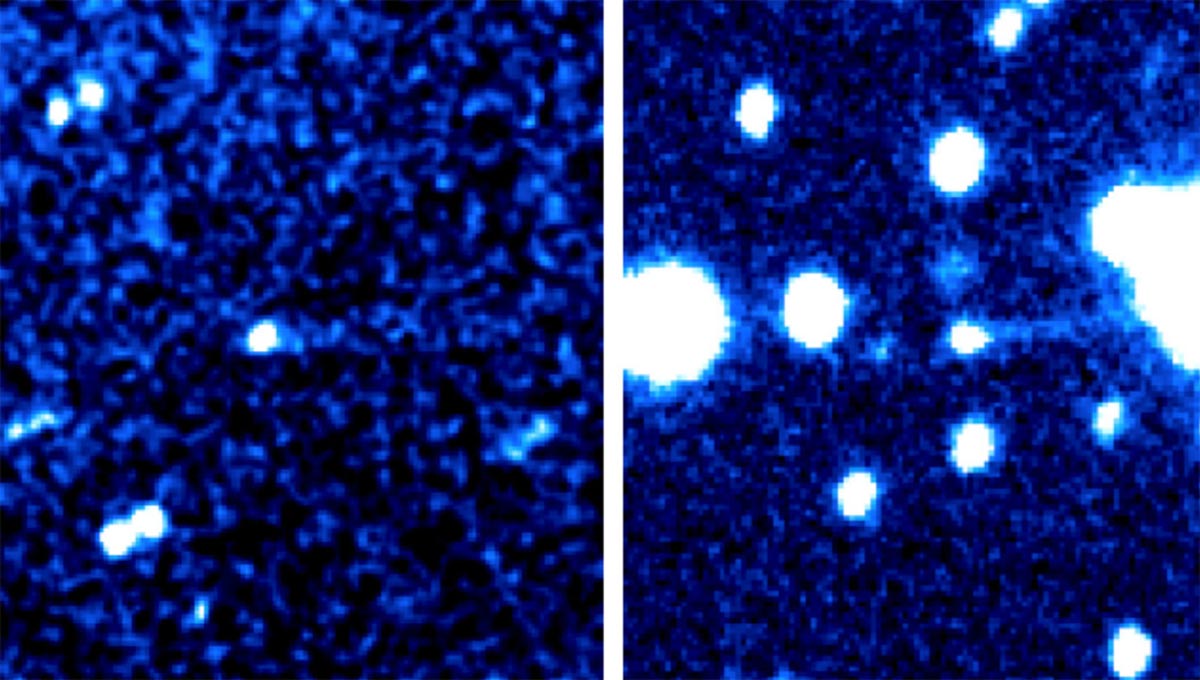
A celestial object found in 2021 within the asteroid belt was confirmed as a main-belt comet, distinguished by its icy composition and comet-like behaviors when near the Sun.
Researchers emphasize the significance of these findings for understanding ice distribution in the inner Solar System.
Discovery of a New Main-Belt Comet
In 2021, scientists discovered a mysterious object in the main asteroid belt. It has now been identified as a main-belt comet by Henry Hsieh of the Planetary Science Institute, Scott Sheppard of the Carnegie Institution for Science, and Audrey Thirouin of Lowell Observatory.
Main-belt comets are icy objects located in the asteroid belt between Mars and Jupiter, a surprising location since icy bodies are typically found in the cold outer regions of the Solar System. These comets display characteristic features such as tails extending from the Sun or fuzzy clouds caused by the Sun’s heat vaporizing their ice. The first main-belt comets were identified in 2006 by Hsieh and his doctoral advisor, David Jewitt, at the University of Hawaii.
Characteristics and Observation Techniques
Main-belt comets belong to a broader group of Solar System objects called active asteroids, which resemble comets but follow asteroid-like orbits in the warmer inner Solar System. Active asteroids include not only objects with comet-like behavior caused by vaporized ice but also those whose dust clouds and tails result from impacts or rapid rotation. Although main-belt comets and active asteroids remain relatively rare, scientists are discovering them more frequently as observation techniques improve.
Hsieh and his colleagues observed active asteroid 456P/PANSTARRS twice using the Magellan Baade Telescope and Lowell Discovery Telescope in October 2024 to establish its status as the 14th confirmed main-belt comet. They published their findings in Research Notes of the American Astronomical Society.
Defining Comet-Like Activity
“This object is not just an asteroid that experienced a one-off event that caused it to show activity one time, but is an inherently active, icy body similar to other comets from the outer Solar System,” Hsieh said.
If 456P/PANSTARRS’s activity were due to something other than ice vaporization, then its tail would be expected to appear only once randomly, and not repeatedly appear when it was close to the Sun. An icy object, on the other hand, heats up every time it approaches the Sun, and the vaporized ice drags dust out along with it. When the object moves farther from the Sun and cools, the activity stops.
Importance of Continued Research
Observations of repeated dust ejection activity during close approaches to the Sun are currently considered the best and most reliable way to identify main-belt comets.
“There are still very few confirmed main-belt comets known,” Hsieh said. “We want to build up the population so we can get a clearer idea of what their broader properties are – such as their sizes, activity duration, and distribution within the asteroid belt, for example – so that they can be better used to trace ice in the Solar System in general.”
Reference: “Confirmation of Recurrent Activity of Main-Belt Comet 456P/PANSTARRS (P/2021 L4)” by Henry H. Hsieh, Scott S. Sheppard and Audrey Thirouin, 12 November 2024, Research Notes of the AAS.
DOI: 10.3847/2515-5172/ad90a6
The PSI portion of this research was funded by NASA grant 80NSSC19K0869.
Never miss a breakthrough: Join the SciTechDaily newsletter.
Follow us on Google and Google News.