
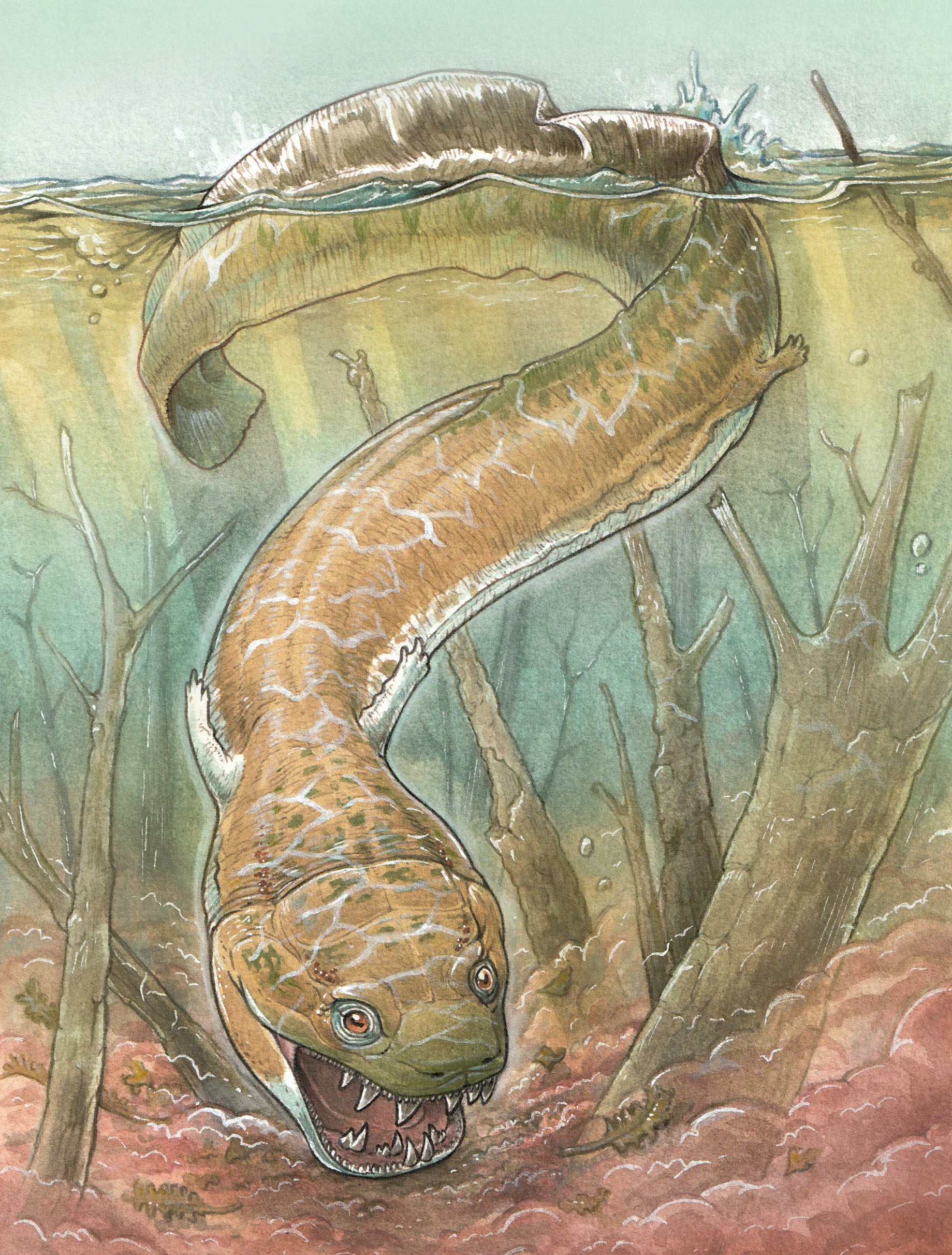
The fossil of Gaiasia jennyae, a large prehistoric predator with a unique skull shape, was discovered in Namibia. It reveals significant details about the ecosystems near the poles 300 million years ago, showing how this species thrived in a cold swamp environment.
Researchers have discovered the fossil of a giant, swamp-dwelling predator that existed forty million years before the first dinosaurs evolved. Named Gaiasia jennyae, this creature had a two-foot-long skull, interlocking jaws, and a distinctive toilet-seat-shaped head.
“Gaiasia jennyae was considerably larger than a person, and it probably hung out near the bottom of swamps and lakes. It’s got a big, flat, toilet seat-shaped head, which allows it to open its mouth and suck in prey. It has these huge fangs, the whole front of the mouth is just giant teeth,” says Jason Pardo, an NSF postdoctoral fellow at the Field Museum in Chicago, and co-lead author of the Nature paper describing the fossil. “It’s a big predator, but potentially also a relatively slow ambush predator.”
Discovering a Prehistoric Predator
The fossil is named for the Gai-as Formation in Namibia where it was found, and for Jenny Clack, a paleontologist who specialized in the evolution of early tetrapods — the four-limbed vertebrates that evolved from lobe-finned fishes and gave rise to amphibians, reptiles, birds, and mammals.
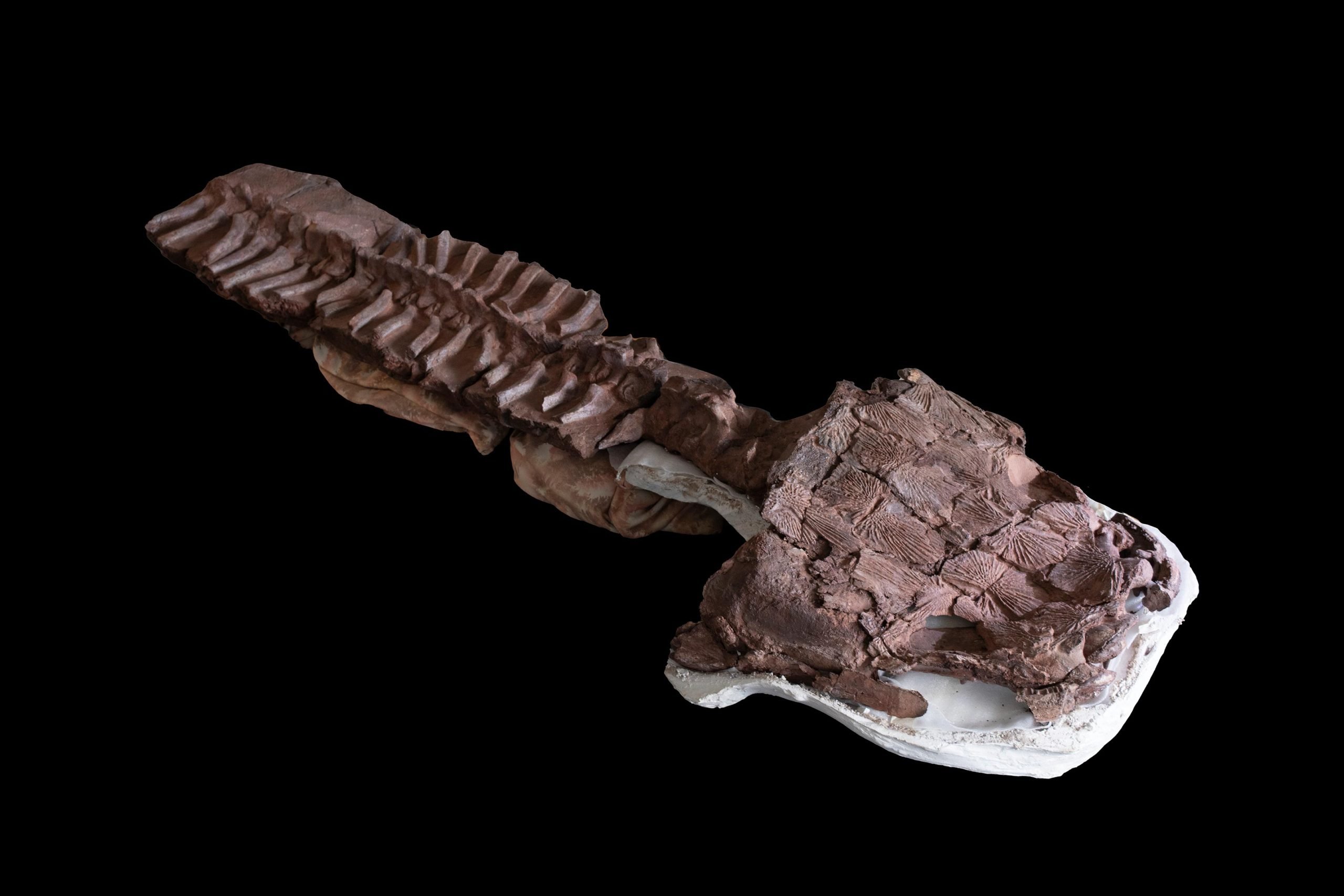
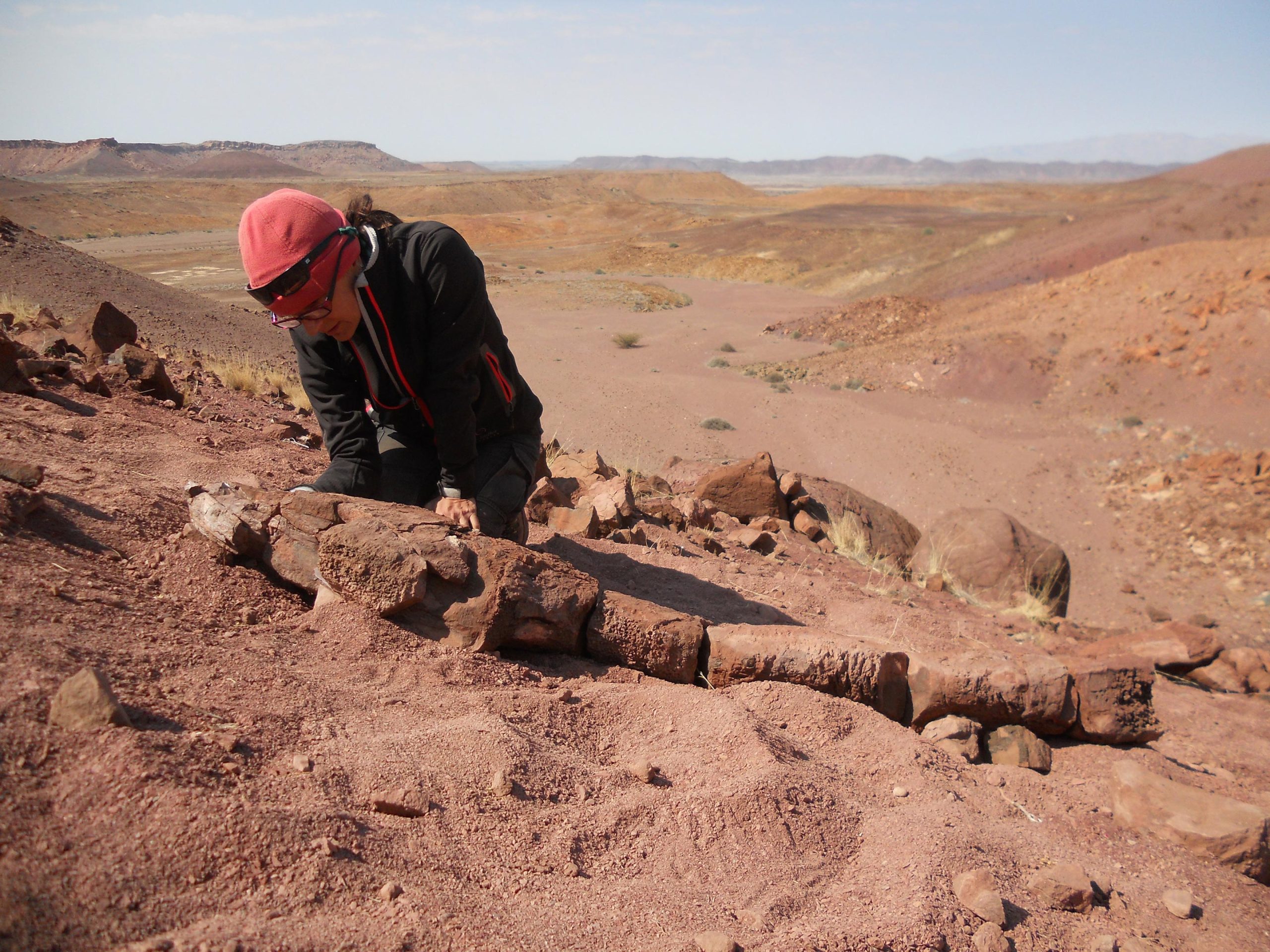
Pardo’s co-lead author, Claudia Marsicano of the University of Buenos Aires, and her colleagues found the fossil. “When we found this enormous specimen just lying on the outcrop as a giant concretion, it was really shocking. I knew just from seeing it that it was something completely different. We were all very excited,” said Marsicano. “After examining the skull, the structure of the front of the skull caught my attention. It was the only clearly visible part at that time, and it showed very unusually interlocking large fangs, creating a unique bite for early tetrapods.”
Unveiling the Ancient Ecosystem
The team unearthed several specimens, including one with a well-preserved, articulated skull and spine. “We had some really fantastic material, including a complete skull, that we could then use to compare with other animals from this age and get a sense of what this animal was and what makes it unique,” says Pardo. It turns out, there’s a lot about the creature that makes it special.
Today, Namibia is just north of South Africa but was even further south 300 million years ago. It was near the 60th parallel, almost even with the northernmost point of Antarctica today. At that time, the Earth was nearing the end of an ice age. The swampy land near the equator was drying up and becoming more forested, but closer to the poles, the swamps remained, potentially alongside patches of ice and glaciers.
Insights From an Ancient World
In the warmer, drier parts of the world, animals were evolving to new forms. Early four-legged vertebrates, called stem tetrapods, branched out and split into lineages that would one day become mammals, reptiles, and amphibians. But on the fringes, in places like what’s now Namibia, more ancient forms remained.
“Gaiasia is a stem tetrapod — it’s a holdover from that earlier group, before they evolved and split into the groups that would become mammals and birds and reptiles and amphibians, which are called crown tetrapods,” says Pardo. “It’s really, really surprising that Gaiasia is so archaic. It was related to organisms that went extinct probably 40 million years prior.”
What’s more, for an oddball holdover from an even more ancient time, Gaiasia seemed to be doing pretty well for itself. “There are some other more archaic animals still hanging on 300 million years ago, but they were rare, they were small, and they were doing their own thing,” says Pardo. “Gaiasia is big, and it is abundant, and it seems to be the primary predator in its ecosystem.”
While Gaiasia jennyae is just one species, it yields big-picture information for paleontologists studying how the world was changing during the Permian period. “It tells us that what was happening in the far south was very different from what was happening at the Equator. And that’s really important because there were a lot of groups of animals that appeared at this time that we don’t really know where they came from,” says Pardo. “The fact that we found Gaiasia in the far south tells us that there was a flourishing ecosystem that could support these very large predators. The more we look, we might find more answers about these major animal groups that we care about, like the ancestors of mammals and modern reptiles.”
Reference: “Giant stem tetrapod was apex predator in Gondwanan late Palaeozoic ice age” by Claudia A. Marsicano, Jason D. Pardo, Roger M. H. Smith, Adriana C. Mancuso, Leandro C. Gaetano and Helke Mocke, 3 July 2024, Nature.
DOI: 10.1038/s41586-024-07572-0
Never miss a breakthrough: Join the SciTechDaily newsletter.
Follow us on Google and Google News.