
Genetics toolkit targets less researched Culex mosquitoes, which transmit West Nile virus and avian malaria.
Since the onset of the CRISPR genetic editing revolution, scientists have been working to leverage the technology in the development of gene drives that target pathogen-spreading mosquitoes such as Anopheles and Aedes species, which spread malaria, dengue, and other life-threatening diseases.
Much less genetic engineering has been devoted to Culex genus mosquitoes, which spread devastating afflictions stemming from West Nile virus—the leading cause of mosquito-borne disease in the continental United States—as well as other viruses such as the Japanese encephalitis virus (JEV) and the pathogen causing avian malaria, a threat to Hawaiian birds.
University of California San Diego scientists have now developed several genetic editing tools that help pave the way to an eventual gene drive designed to stop Culex mosquitoes from spreading disease. Gene drives are designed to spread modified genes, in this case those that disable the ability to transmit pathogens, throughout the targeted wild population.
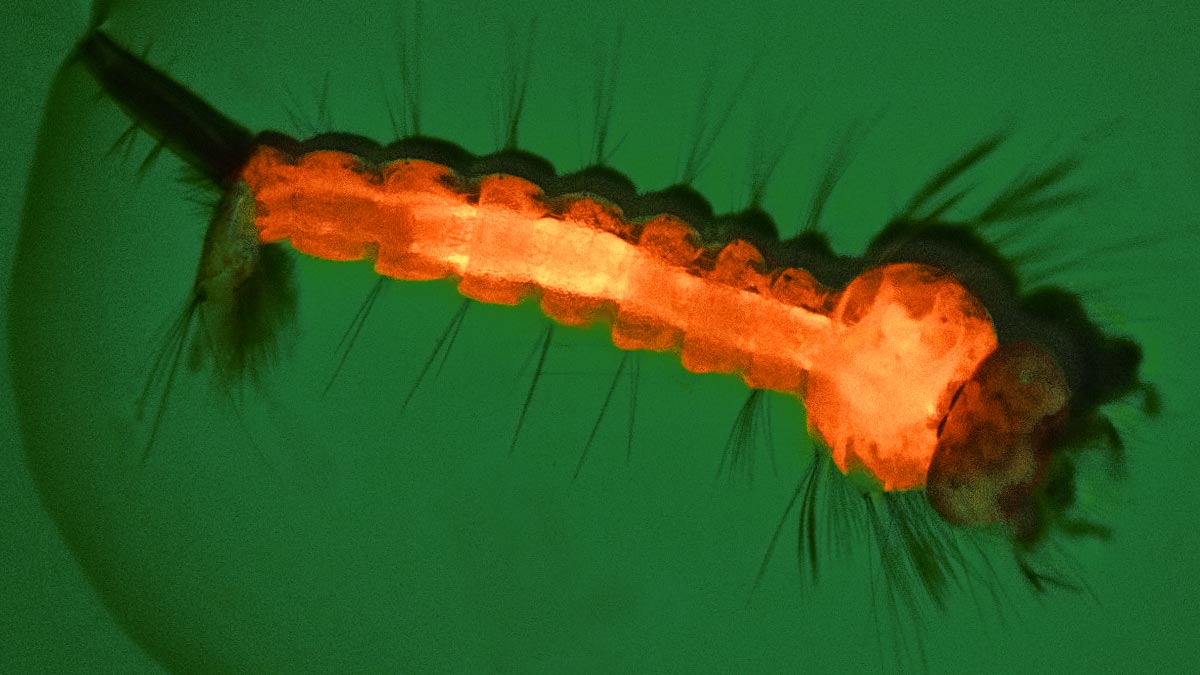
Larvae of the vasa-Cas9 Culex quinquefasciatus mosquito line, which was generated as part of a new genetic toolkit designed to help stop mosquito disease transmission. Credit: Gantz Lab, UC San Diego
Tools Tailored to Culex Genome
As detailed in the journal Nature Communications, Xuechun Feng, Valentino Gantz and their colleagues at Harvard Medical School and National Emerging Infectious Diseases Laboratories developed a Cas9/guide-RNA expression “toolkit” designed for Culex mosquitoes. Since such little attention in genetic engineering has been devoted to Culex mosquitoes, the researchers were required to develop their toolkit from scratch, starting with a careful examination of the Culex genome.
“My coauthors and I believe that our work will be impactful for scientists working on the biology of the Culex disease vector since new genetic tools are deeply needed in this field,” said Gantz, an assistant research scientist in the Division of Biological Sciences at UC San Diego. “We also believe the scientific community beyond the gene drive field will welcome these findings since they could be of broad interest.”
While Culex mosquitoes are less problematic in the United States, they are much more of a health risk in Africa and Asia, where they transmit the worm-causing filariasis, a disease that can lead to a chronic debilitating condition known as elephantiasis.

Potential Broader Use in Insect Gene Editing
The researchers also demonstrated that their tools could work in other insects.
“These modified gRNAs can increase gene drive performance in the fruit fly and could potentially offer better alternatives for future gene drive and gene-editing products in other species,” said Gantz.
Gantz and his colleagues have now tested their new tools to ensure proper genetic expression of the CRISPR components and are now poised to apply them to a gene drive in Culex mosquitoes. Such a gene drive construct could be used to halt pathogen transmission by Culex mosquitoes, or alternatively employed to suppress the mosquito population to prevent biting.
Reference: “Optimized CRISPR tools and site-directed transgenesis towards gene drive development in Culex quinquefasciatus mosquitoes” by Xuechun Feng, Víctor López Del Amo, Enzo Mameli, Megan Lee, Alena L. Bishop, Norbert Perrimon and Valentino M. Gantz, 20 May 2021 Nature Communications.
DOI: 10.1038/s41467-021-23239-0
Co-authors of the paper include: Xuechun Feng, Víctor López Del Amo, Enzo Mameli, Megan Lee, Alena Bishop, Norbert Perrimon and Valentino Gantz.
Funding for the research was provided by UC San Diego’s Division of Biological Sciences, the Office of the Director of the National Institutes of Health (DP5OD023098), a gift from the Tata Trusts of India to TIGS-UC San Diego and a National Institutes of Health–National Institute of General Medical Sciences grant (P41GM132087).
Note: Gantz has equity interest in two companies he co-founded: Synbal Inc. and Agragene, Inc., which may potentially benefit from the research results. He serves on the board of directors and scientific advisory board for both companies.
Never miss a breakthrough: Join the SciTechDaily newsletter.
Follow us on Google and Google News.
4 Comments
Why cant they ever take care of themselves in Africa? It’s been millenia!
Seriously ? You can’t be asking this question!
Take a look at the history of colonialism and it’s aftermath in Africa and it’s not hard to see why they still struggle. Then factor in the cold war in which various African States were used as pawns to spread influence,ideology and devastating wars for generations.This did not happen millenia ago,it began less than 500 years ago,and continues to this day in the form of foreign corporations exploiting resources like oil and minerals, often manipulating internal politics to put leaders in power who are willing to do anything to help them.
Okay … Exists atmosfera on Marte ? How fly this Helicopter ? If the helicopter fly , exists atmosfera and human body can live without any scouting uniform . Just i want to know how this drone , helicopter , fly without Atmosfere