
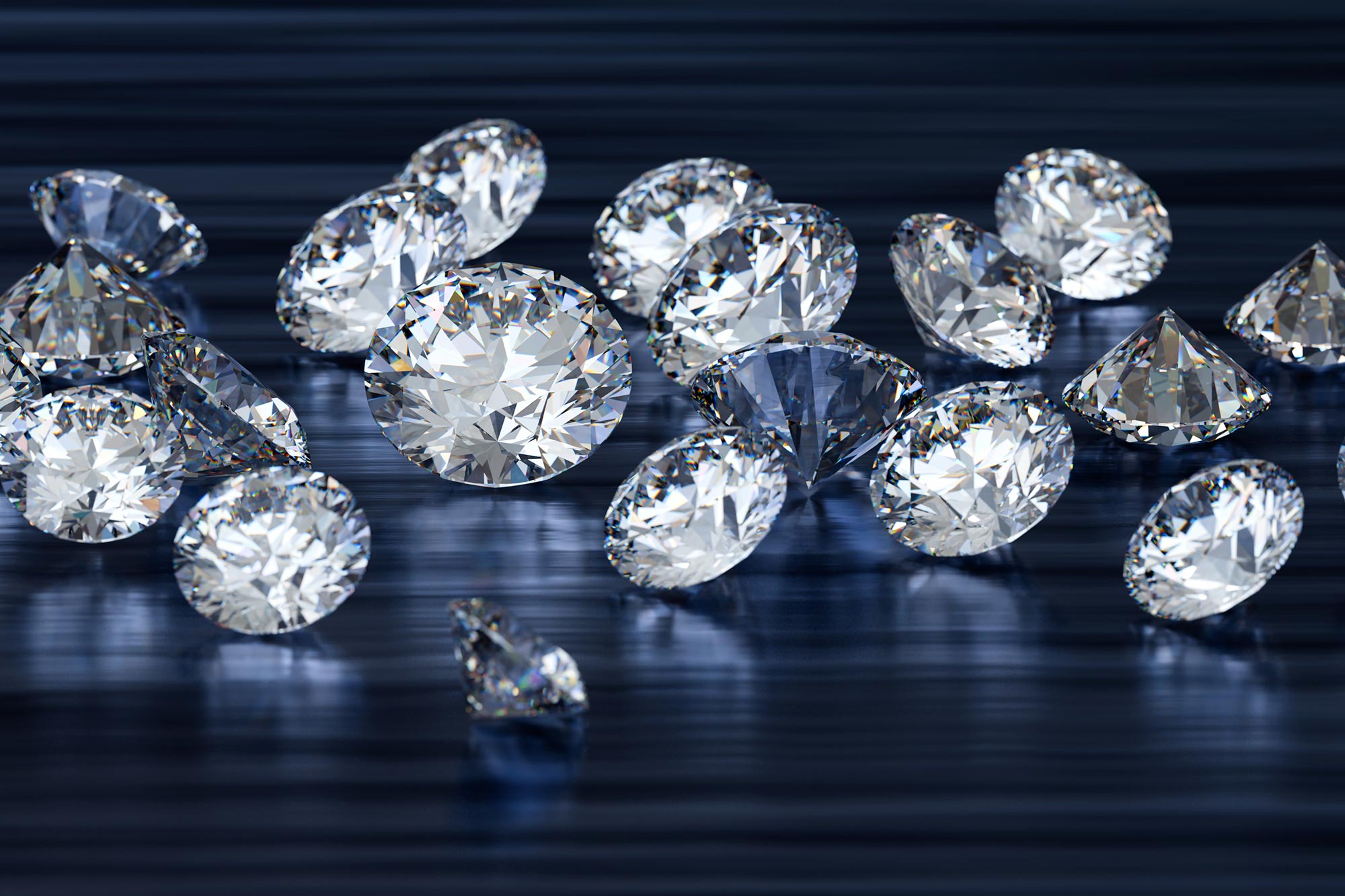
Researchers at HKU have devised a rapid, scalable method to produce ultrathin diamond membranes, unlocking applications in electronics, photonics, and quantum devices. This innovation overcomes traditional fabrication challenges, leveraging diamonds’ exceptional properties for next-generation technologies.
A research team led by Professor Zhiqin Chu, Associate Professor in Electrical & Electronic Engineering, and Professor Yuan Lin, Professor in Mechanical Engineering at the University of Hong Kong (HKU), has developed a revolutionary method for producing ultrathin and ultra-flexible diamond membranes. Their work is a collaboration with Professor Kwai Hei Li of the Southern University of Science and Technology and Professor Qi Wang from the Dongguan Institute of Opto-Electronics at Peking University.
These diamond membranes are uniquely compatible with current semiconductor manufacturing processes, enabling their integration into a wide range of applications, including electronic, photonic, mechanical, acoustic, and quantum devices.
The team’s innovative edge-exposed exfoliation method allows for the rapid, scalable production of free-standing diamond membranes. This technique surpasses traditional methods, which are typically expensive, time-consuming, and limited in size. Notably, the new process can produce a two-inch diamond wafer in just 10 seconds, setting a new benchmark for efficiency and scalability in the field.
Vision for Industrial Applications
These ultra-flat diamond surfaces, essential for high-precision micromanufacturing, along with the flexibility of the membranes, open up new possibilities for next-generation flexible and wearable electronic and photonic devices. The research team envisions significant industrial applications in electronics, photonics, mechanics, thermics, acoustics, and quantum technologies.
“We hope to promote the usage of the high-figure-of-merit diamond membrane in various fields, and to commercialize this cutting-edge technology and deliver premium diamond membranes, setting a new standard in the semiconductor industry. We are eager to collaborate with academic and industry partners to bring this revolutionary product to market and accelerate the arrival of the diamond era,” concluded Professor Chu.
Diamonds, renowned globally as valuable gemstones, possess exceptional versatility in various scientific and engineering applications. They are the hardest natural material, boasting unparalleled thermal conductivity at room temperature, extremely high carrier mobility, dielectric breakdown strength, an ultrawide bandgap, and optical transparency spanning from the infrared to the deep-ultraviolet spectrum. These remarkable properties make diamonds ideal for fabricating advanced high-power, high-frequency electronic devices, photonic devices, and heat spreaders to cool high-power-density electronic components, such as those in processors, semiconductor lasers, and electric vehicles. However, the inert nature and rigid crystal structure of diamonds pose significant challenges in fabrication and mass production, particularly for ultrathin and freestanding diamond membranes, thereby restricting their widespread usage.
Reference: “Scalable production of ultraflat and ultraflexible diamond membrane” by Jixiang Jing, Fuqiang Sun, Zhongqiang Wang, Linjie Ma, Yumeng Luo, Zhiyuan Du, Tianyu Zhang, Yicheng Wang, Feng Xu, Tongtong Zhang, Changsheng Chen, Xuhang Ma, Yang He, Ye Zhu, Huarui Sun, Xinqiang Wang, Yan Zhou, James Kit Hon Tsoi, Jörg Wrachtrup, Ngai Wong, Can Li, Dong-Keun Ki, Qi Wang, Kwai Hei Li, Yuan Lin and Zhiqin Chu, 18 December 2024, Nature.
DOI: 10.1038/s41586-024-08218-x
Never miss a breakthrough: Join the SciTechDaily newsletter.
Follow us on Google and Google News.
4 Comments
Well?? How us it done?
“How is it done?”
It’s behind a paywall.
Flexible ‘diamond’ (cpu) heatsinks, when?