
Close Menu
    Facebook X (Twitter) Instagram
    SciTechDaily
    • Biology
    • Chemistry
    • Earth
    • Health
    • Physics
    • Science
    • Space
    • Technology
    Facebook X (Twitter) Pinterest YouTube RSS
    SciTechDaily
    Home»Biology»Researchers Find Clues to Preventing Weight Gain
    Biology

    Researchers Find Clues to Preventing Weight Gain

    By Karen N. Peart, Yale UniversityAugust 5, 2014No Comments3 Mins Read
    Facebook Twitter Pinterest Telegram LinkedIn WhatsApp Email Reddit
    Share
    Facebook Twitter LinkedIn Pinterest Telegram Email Reddit
    Researchers Find Clues to Preventing Weight Gain
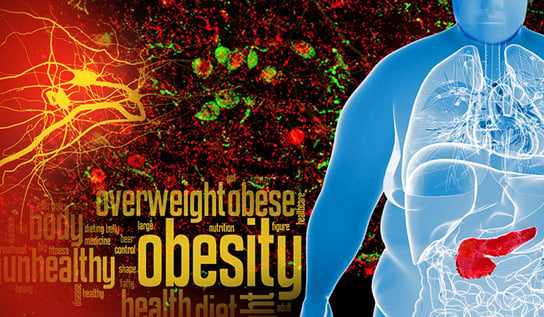
    Blocking the PPARgamma nuclear receptor in a limited number of brain cells in mice reduced their food intake and made them resistant to high-fat diets. Credit: Patrick Lynch

    A new study from Yale University shows that when the researchers blocked the effects of the nuclear receptor PPARgamma in a small number of brain cells in mice, the animals ate less and became resistant to a high-fat diet.

    Preventing weight gain, obesity, and ultimately diabetes could be as simple as keeping a nuclear receptor from being activated in a small part of the brain, according to a new study by Yale School of Medicine researchers.

    Published in the August 1 issue of The Journal of Clinical Investigation (JCI), the study showed that when the researchers blocked the effects of the nuclear receptor PPARgamma in a small number of brain cells in mice, the animals ate less and became resistant to a high-fat diet.

    “These animals ate fat and sugar, and did not gain weight, while their control littermates did,” said lead author Sabrina Diano, professor in the Department of Obstetrics, Gynecology & Reproductive Sciences at Yale School of Medicine. “We showed that the PPARgamma receptor in neurons that produce POMC could control responses to a high-fat diet without resulting in obesity.”

    POMC neurons are found in the hypothalamus and regulate food intake. They are the neurons that when activated make you feel full and curb appetite. PPARgamma regulates the activation of these neurons.

    Diano and her team studied transgenic mice that were genetically engineered to delete the PPARgamma receptor from POMC neurons. They wanted to see if they could prevent the obesity associated with a high-fat, high-sugar diet.

    “When we blocked PPARgamma in these hypothalamic cells, we found an increased level of free radical formation in POMC neurons, and they were more active,” said Diano, who is also a professor of comparative medicine and neurobiology at Yale and director of the Reproductive Neurosciences Group.

    The findings also have key implications for diabetes. PPARgamma is a target of thiazolidinedione (TZD), a class of drugs used to treat type 2 diabetes. They lower blood-glucose levels, however, patients gain weight on these medications.

    “Our study suggests that the increased weight gain in diabetic patients treated with TZD could be due to the effect of this drug in the brain, therefore, targeting peripheral PPARgamma to treat type 2 diabetes should be done by developing TZD compounds that can’t penetrate the brain,” said Diano. “We could keep the benefits of TZD without the side effects of weight gain. Our next steps in this research are to test this theory in diabetes mouse models.”

    Other Yale authors on the study included Lihong Long, Chitoku Toda, Jin Kwon Jeong, and Tamas Horvath.

    The study was funded by the National Institutes of Health (RO1DK097566).

    Reference: “PPARγ ablation sensitizes proopiomelanocortin neurons to leptin during high-fat feeding” by Lihong Long, Chitoku Toda, Jing Kwon Jeong, Tamas L. Horvath and Sabrina Diano, 1 August 2014, Journal of Clinical Investigation.
    DOI: 10.1172/JCI76220


    Never miss a breakthrough: Join the SciTechDaily newsletter.
    Follow us on Google and Google News.

    Gynecology Neuroscience Obstetrics Yale University
    Share. Facebook Twitter Pinterest LinkedIn Email Reddit

    Related Articles

    Researchers Discover Autism Risk in Abnormal Placentas

    Discovery Could Lead to New Treatments for Lung Disorders in Premature Babies

    Suppressing NgR1 Returns Brain to Adolescent Levels of Plasticity

    Early Treatment Triggers Significant Improvements in Children With Autism

    Neurologists Repair Neurons Associated With Traumatic Nerve Injury Pain

    GATA1 Plays a Role in the Loss of Connections Between Neurons and in Symptoms of Depression

    New Research on the Relationship of Obesity and Increased Drive of the Reward Circuitry

    Evolutionary Changes Surrounding the NOS1 Gene

    Stem Cells Discovered in Ovaries May Yield More Eggs

    Leave A Reply Cancel Reply

    • Facebook
    • Twitter
    • Pinterest
    • YouTube

    Don't Miss a Discovery

    Subscribe for the Latest in Science & Tech!

    Trending News

    Scientists Just Discovered a Hidden Freshwater World Beneath the Great Salt Lake

    Why Your Daily Shower Could Be Worsening the Water Crisis

    Scientists Discover New “Magic Mushroom” Species That Rewrites Evolutionary History

    Mystery Deepens: Astrophysicists Say Dark Matter May Not Be One Thing

    Your BMI Might Be Wrong: Study Finds Millions Are Misclassified

    A Simple Blood Test Could Predict Dementia Risk 25 Years Early

    3.5-Billion-Year-Old Rocks Rewrite the Story of Plate Tectonics

    Why Aging Lungs Turn Mild Infections Into Life-Threatening Illness

    Follow SciTechDaily
    • Facebook
    • Twitter
    • YouTube
    • Pinterest
    • Newsletter
    • RSS
    SciTech News
    • Biology News
    • Chemistry News
    • Earth News
    • Health News
    • Physics News
    • Science News
    • Space News
    • Technology News
    Recent Posts
    • This Alga Rewrites the Rules of Photosynthesis To Survive in the Dark
    • Are Humans Naturally Violent? Scientists Challenge Long-Held Assumptions
    • Scientists Say This Popular Food Could Help Your Body Get Rid of Microplastics
    • Scientists Build Five-in-One “Super Molecule” for Next-Gen Electronics
    • Physicists Discover Magnetic Mechanism That Challenges a 300-Year-Old Law of Friction
    Copyright © 1998 - 2026 SciTechDaily. All Rights Reserved.
    • Science News
    • About
    • Contact
    • Editorial Board
    • Privacy Policy
    • Terms of Use

    Type above and press Enter to search. Press Esc to cancel.