

Unusually fast-moving gas clouds near a nearby galaxy suggest they may have come from outside the galaxy.
Scientists have identified high-velocity gas clouds in the nearby spiral galaxy M83, moving at speeds that differ markedly from the galaxy’s normal rotational motion. These unusual velocities suggest that the clouds may have originated from beyond the galaxy itself. The discovery provides valuable clues about how galaxies might gather external gas to maintain star formation over extremely long timescales. It also offers potential insight into the evolutionary history and future of galaxies like our own Milky Way.
Maki Nagata, a graduate student and astronomer at the University of Tokyo’s Institute of Astronomy, and her colleagues set out to address a fundamental question in astronomy: “How do galaxies manage to sustain star formation for billions of years?”
The question arises because, based on estimates, galaxies like the Milky Way should exhaust their star-forming material in about a billion years. Yet star formation continues. This led the team to hypothesize that galaxies must be receiving a steady supply of external matter, prompting them to search for its source.
High-velocity clouds may originate beyond galaxies
“Gas clouds are a common feature of galaxies. Some are classed as high-velocity clouds (HVCs) and we suspected these might account for some of this galactic feeding material,” said Nagata. “What makes HVCs special is that their speed and direction don’t correspond to the general speed of rotation or the orientation of a typical spiral galaxy. This alone doesn’t necessarily mean they come from outside the host galaxy, though one scenario is that they start as material ejected by supernova, exploding stars. But we thought with the right analysis and reasoning, we could tell if at least some HVCs were from outside the galaxy.”
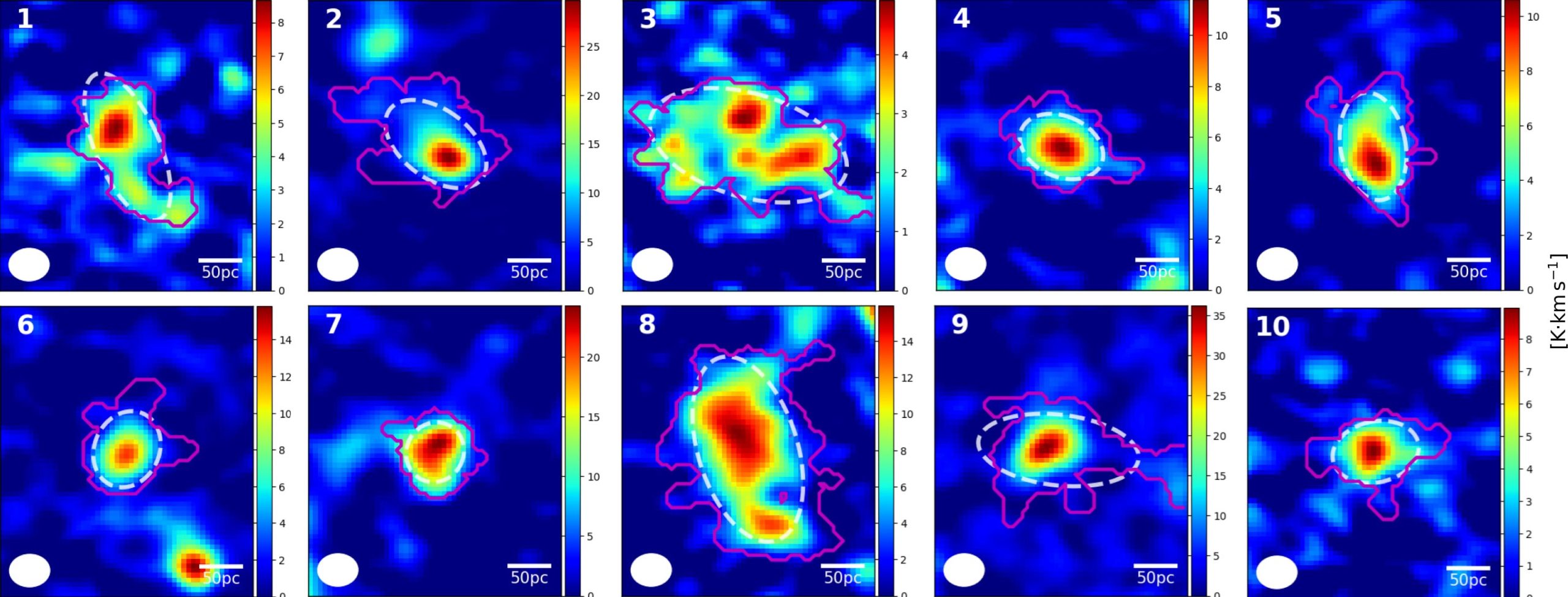
One of the main challenges in the study was detecting and confirming the presence of multiple gas clouds, including high-velocity clouds (HVCs). The researchers had to adjust their detection methods with precision, ensuring that true signals could be separated from background noise without overlooking real cloud features. HVCs were identified as clouds moving at least 50 kilometers per second faster or slower than the galaxy’s rotating disk.
Out of the 10 clouds that fit this definition, only one aligned with a known supernova remnant. The other nine showed no connection to supernova activity or similar internal sources. Moreover, their kinetic energies were higher than what would be expected from supernova-driven gas, suggesting these clouds likely originated outside the galaxy and are now falling into it.
Implications for galaxy growth and evolution
“Our results show that galaxies are not isolated but constantly interact with their surroundings. The discovery of HVCs falling into M83 suggests that galaxies can grow by accreting gas from the space around them, possibly from smaller neighboring galaxies or the intergalactic medium,” said Nagata. “While HVCs are typically low-density atomic hydrogen gas, something that surprised us in this study was that the clouds were found to be compact and made of dense molecular gas, exactly the type of gas that forms new stars. This suggests that the inflowing material may be directly connected to future star formation.”
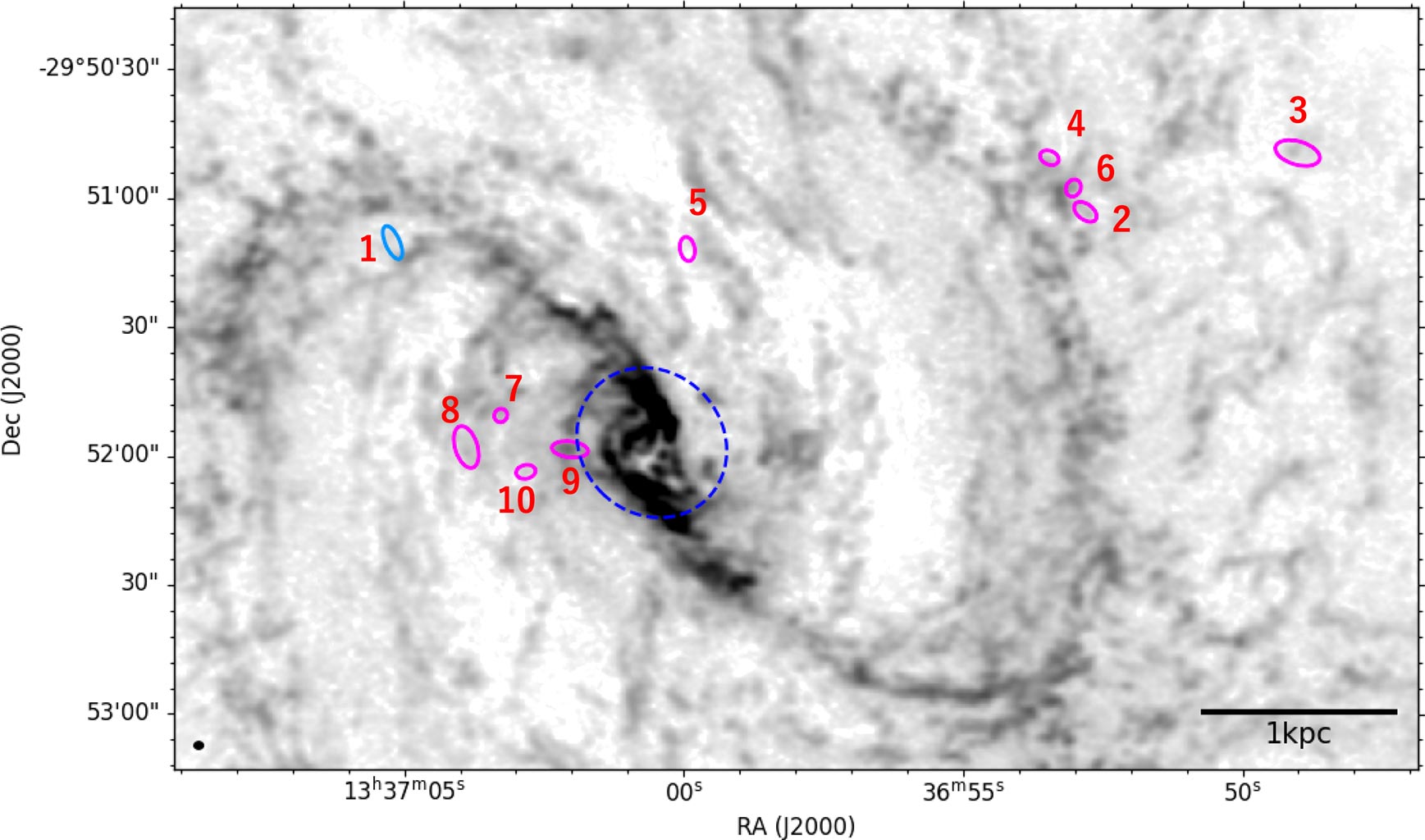
As M83 is similar to the Milky Way, studying how HVCs influence star formation could tell us about our own distant past or far future. However, although HVCs were first discovered in the Milky Way, it’s hard to measure key properties about them for long-term projections, such as their distances, masses, and motions. This is because we are inside our own galaxy; hence, why a nearby galaxy was chosen instead.
“Our next steps include investigating how these molecular HVCs formed and whether they were once atomic gas,” said Nagata. “By examining their relationship to other gas structures, such as neutral atomic hydrogen. We will also explore whether these inflowing clouds could trigger new star formation when they collide with the galaxy’s disk. This would finally help answer the outstanding question we asked ourselves before.”
Reference: “High-velocity Molecular Clouds in M83” by Maki Nagata, Fumi Egusa, Fumiya Maeda, Kazuki Tokuda, Kotaro Kohno, Kana Morokuma-Matsui and Jin Koda, 30 June 2025, The Astrophysical Journal.
DOI: 10.3847/1538-4357/addab7
Funding: This work was partly supported by JSPS KAKENHI grants JP23K13142, 20H00172, JP23K20035 and JP24H00004. NSF grants AST-2006600 and AST-2406608. NAOJ ALMA Scientific Research grant 2022-22B. ALMA Japan Research Grant of NAOJ ALMA Project, NAOJ-ALMA-355.
Never miss a breakthrough: Join the SciTechDaily newsletter.
Follow us on Google and Google News.