
Close Menu
    Facebook X (Twitter) Instagram
    SciTechDaily
    • Biology
    • Chemistry
    • Earth
    • Health
    • Physics
    • Science
    • Space
    • Technology
    Facebook X (Twitter) Pinterest YouTube RSS
    SciTechDaily
    Home»Health»Researchers Uncover Hidden Risk in Popular Summer Skincare Combo
    Health

    Researchers Uncover Hidden Risk in Popular Summer Skincare Combo

    By CNRSMarch 24, 20251 Comment3 Mins Read
    Facebook Twitter Pinterest Telegram LinkedIn WhatsApp Email Reddit
    Share
    Facebook Twitter LinkedIn Pinterest Telegram Email Reddit
    Sunscreen Lotion Bottle
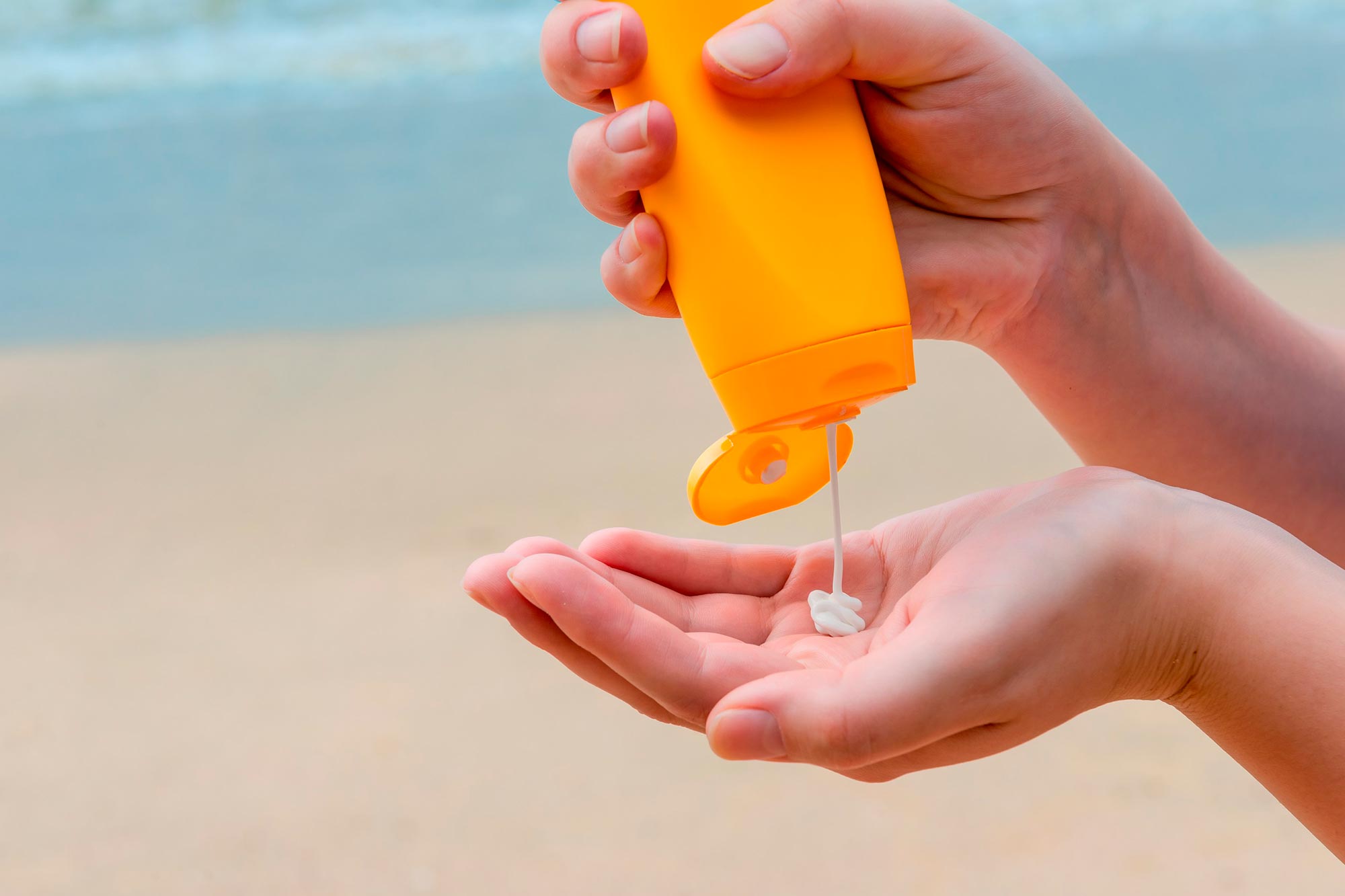
    A groundbreaking CNRS study reveals that mixing sunscreen with a commonly used insect repellent reduces UV protection, raising concerns as many people use both products simultaneously during outdoor activities. Using preserved skin biopsies and AI analysis, researchers found that this mixture weakens the skin’s defense against UV rays, calling for further studies on similar product combinations.

    Mixing sunscreen with insect repellent may lower UV protection, according to a CNRS study using AI and skin biopsies.

    Researchers from the CNRS have conducted a groundbreaking study on the combined use of sunscreen and one of France’s top-selling insect repellents. Their findings reveal that mixing the two products leads to a reduction in UV protection after application.

    As tiger mosquitoes continue to spread across many countries, it’s become increasingly common for people to apply both products together during outdoor activities to guard against sun exposure and insect bites. This is the first scientific study to examine the effects of this combination. The research was recently published in the journal Parasites & Vectors.

    Realistic Skin Testing and Advanced Imaging

    In order to reproduce the real conditions to which the human epidermis is subjected as faithfully as possible, scientists have used skin biopsies. Optimally preserved ex vivo, these samples were subjected to artificial and natural UV rays emitted by the Sun, after application of sunscreen and repellent.
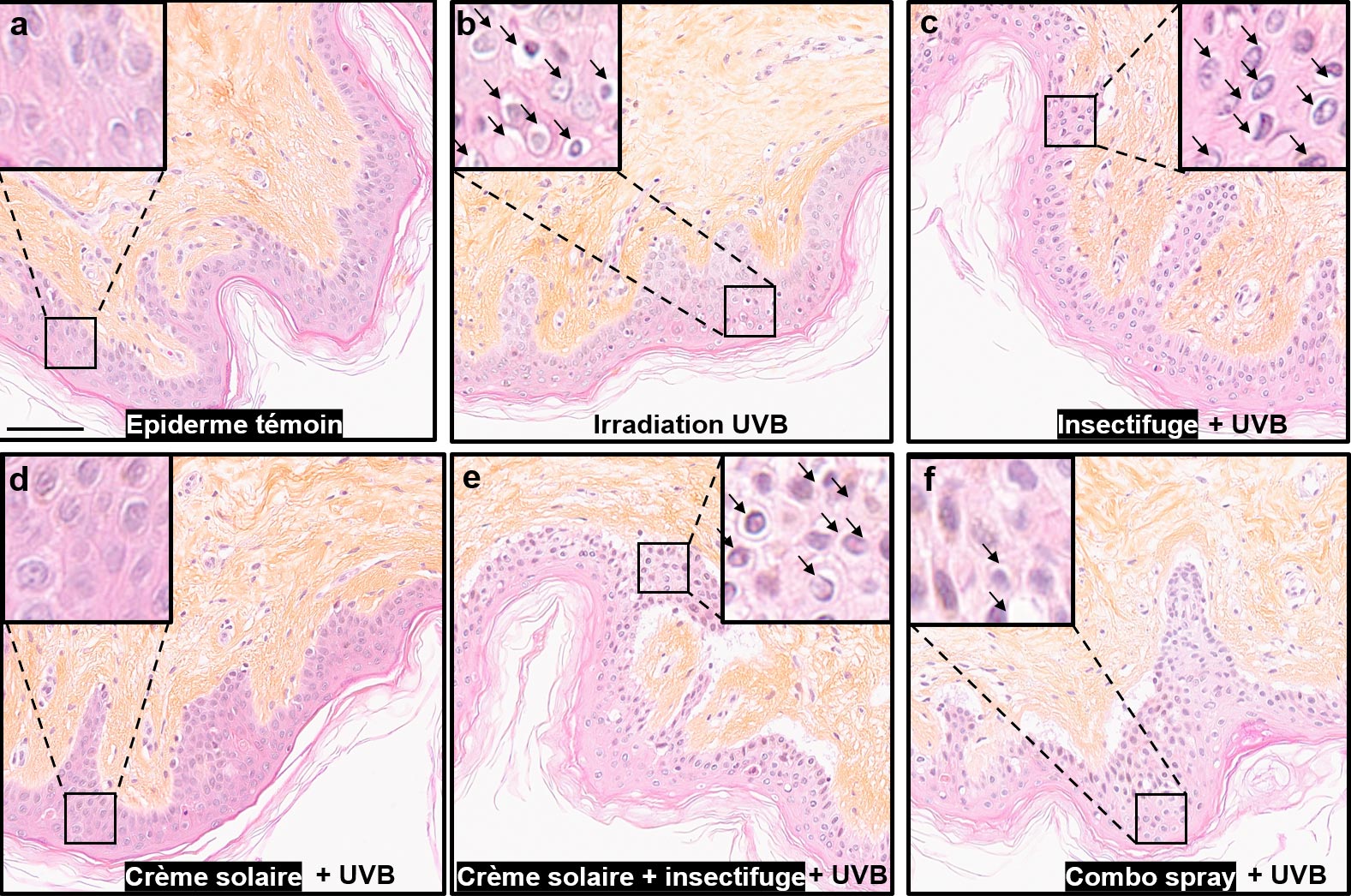
    Histometric Analysis of UVB Irradiated Human Skin Biopsies After Application of Sunscreen and Insect Repellent
    Histometric analysis of UVB-irradiated human skin biopsies after application of sunscreen and/or insect repellent or “combo” product. Skin samples (from the same donor) were treated with a sunscreen containing UV filters (panels d and e), or (panels c and e) a mosquito repellent containing the synthetic active ingredient IR3535, or a commercial preparation composed of a natural insect repellent and a sunscreen (f) (“combo spray”). Except in the control condition (panel a), skin biopsies were previously exposed to UVB irradiation under controlled conditions (300 mJ/cm2). Histological sections stained with saffron hematoxylin-eosin. Scale bar: 50 µM. Inset details show areas of interest with haloed nuclei (reflecting cellular damage) indicated by arrows. Credit: Sophie Charrasse

    Thanks to a new computer tool developed by one of the partner companies of this study, they were analyzed in the form of thin slices corresponding to the different layers of the skin. This software, a deep-learning artificial intelligence system, made it possible to measure the stress response of skin cells to the radiation.

    Findings and Future Research

    The analysis of these data points to a decrease in UV protection in the case of a mixture of sunscreen and insect repellent. For “mixed” products, presenting themselves as carrying both protections at the same time, the data obtained are less categorical.

    Further studies are needed to consolidate and extend these initial results. Many other product mixtures, including cosmetics, have never been studied as such. This new analytical method, combining the use of biopsies (more reliable than tests on in vitro cultured cells) and artificial intelligence, would now allow the examination of their effects on human health.

    Reference: “Computational histology reveals that concomitant application of insect repellent with sunscreen impairs UV protection in an ex vivo human skin model” by Sophie Charrasse, Titouan Poquillon, Charlotte Saint-Omer, Audrey Schunemann, Mylène Weill, Victor Racine and Abdel Aouacheria, 4 March 2025, Parasites & Vectors.
    DOI: 10.1186/s13071-025-06712-3

    Never miss a breakthrough: Join the SciTechDaily newsletter.
    Follow us on Google and Google News.

    CNRS Public Health Skin Sunscreen
    Share. Facebook Twitter Pinterest LinkedIn Email Reddit

    Related Articles

    The Truth About Collagen Supplements: Scientists Reveal What Actually Works

    Study Finds Top TikTok Skincare Routines May Be Dangerous for Young Skin

    Skin Cancer Prevention: The 5 Simple Steps That Could Save Your Life

    Alarming Study: Popular Skin Care Products Could Be Exposing Your Children to Endocrine-Disrupting Chemicals

    Tanning’s Hidden Cost: Sun Exposure Can Disrupt Skin’s Microbiome

    Brighter Skin at What Cost? Skin-Lightening Could Be Risking Your Health

    Suffering Skin Damage From Face Masks? Expert Offers Remedies

    Resveratrol Inhibits the Growth of Bacteria that Causes Acne

    New Coronavirus Could Infect Millions During Hajj in Saudi Arabia

    1 Comment

    1. Tamira Houston on April 5, 2025 8:52 am

      Thanks for the SPECIAL INSTRUCTIONS and helpful information GOD BLESS YOU FOR WRITING AND SHARING THIS INFORMATION 🙏

      Reply
    Leave A Reply Cancel Reply

    • Facebook
    • Twitter
    • Pinterest
    • YouTube

    Don't Miss a Discovery

    Subscribe for the Latest in Science & Tech!

    Trending News

    Millions Take These IBS Drugs, But a New Study Finds Serious Risks

    Scientists Unlock Hidden Secrets of 2,300-Year-Old Mummies Using Cutting-Edge CT Scanner

    Bread Might Be Making You Gain Weight Even Without Eating More Calories

    Scientists Discover Massive Magma Reservoir Beneath Tuscany

    Europe’s Most Active Volcano Just Got Stranger – Here’s Why Scientists Are Rethinking It

    Alzheimer’s Symptoms May Start Outside the Brain, Study Finds

    Millions Take This Popular Supplement – Scientists Discover a Concerning Link to Heart Failure

    The Universe Is Expanding Too Fast and Scientists Can’t Explain Why

    Follow SciTechDaily
    • Facebook
    • Twitter
    • YouTube
    • Pinterest
    • Newsletter
    • RSS
    SciTech News
    • Biology News
    • Chemistry News
    • Earth News
    • Health News
    • Physics News
    • Science News
    • Space News
    • Technology News
    Recent Posts
    • U.S. Waste Holds $5.7 Billion Worth of Crop Nutrients
    • Scientists Say a Hidden Structure May Exist Inside Earth’s Core
    • Doctors Surprised by the Power of a Simple Drug Against Colon Cancer
    • Why Popular Diabetes Drugs Like Ozempic Don’t Work for Everyone: The “Genetic Glitch”
    • Scientists Create Improved Insulin Cells That Reverse Diabetes in Mice
    Copyright © 1998 - 2026 SciTechDaily. All Rights Reserved.
    • Science News
    • About
    • Contact
    • Editorial Board
    • Privacy Policy
    • Terms of Use

    Type above and press Enter to search. Press Esc to cancel.