
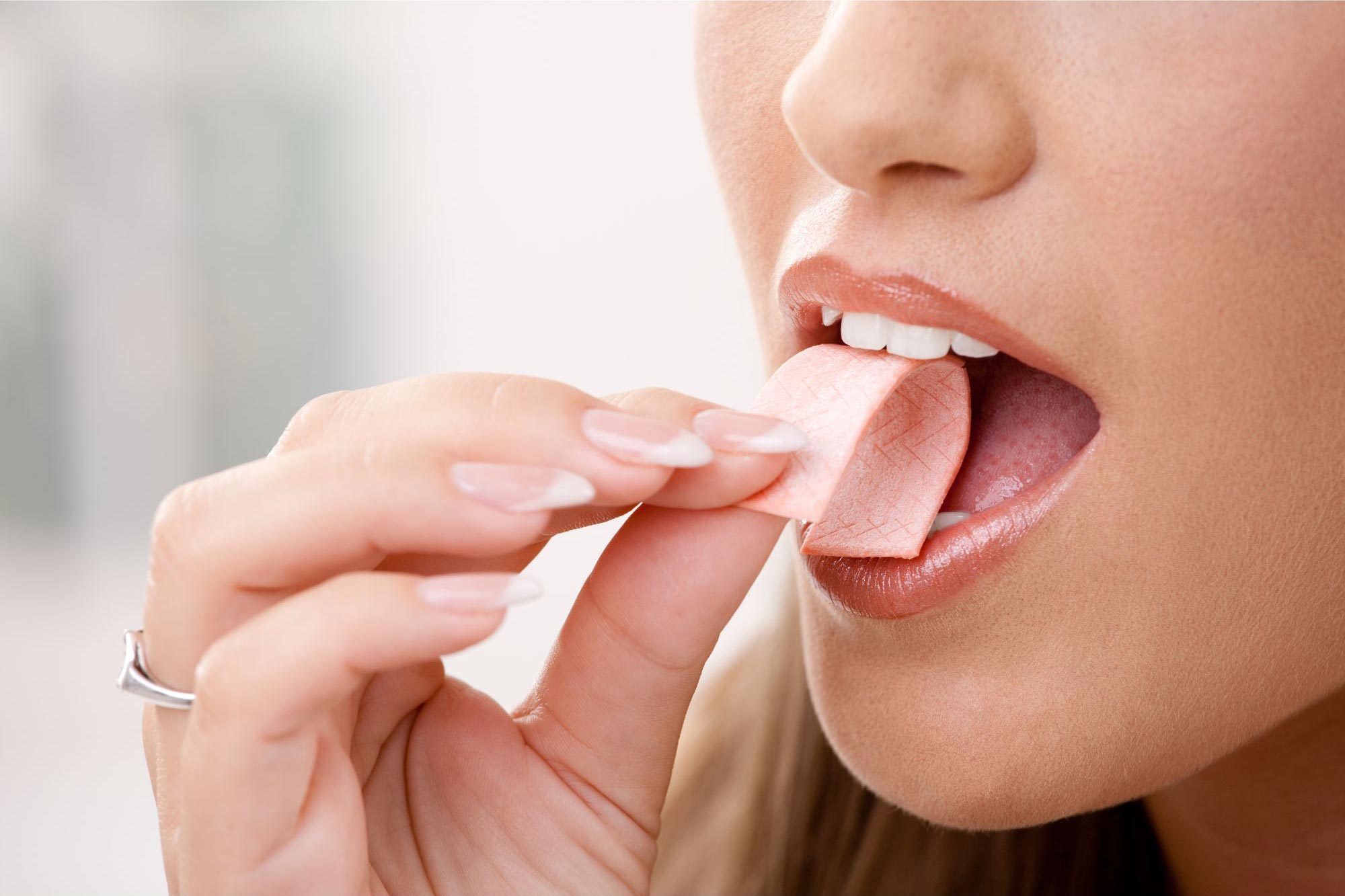
Chewing gum can release thousands of microplastics into saliva. Scientists say more research is needed but suggest chewing fewer pieces to reduce exposure.
Plastic is everywhere, and many everyday products, such as cutting boards, clothes, and cleaning sponges, can expose people to tiny micrometer-wide particles called microplastics. Now, chewing gum may also be added to the list. In a pilot study, researchers found that chewing gum can release hundreds to thousands of microplastics per piece into saliva, potentially leading to ingestion.
The researchers recently presented their findings at the spring meeting of the American Chemical Society (ACS).
“Our goal is not to alarm anybody,” says Sanjay Mohanty, the project’s principal investigator and an engineering professor at the University of California, Los Angeles (UCLA). “Scientists don’t know if microplastics are unsafe to us or not. There are no human trials. But we know we are exposed to plastics in everyday life, and that’s what we wanted to examine here.”
Animal research and studies using human cells suggest that microplastics may be harmful. While we await more definitive conclusions from the scientific community, individuals can take practical steps to limit their exposure.
Microplastics in Daily Life—and in Gum
Scientists estimate that humans consume tens of thousands of microplastics (between 1 micrometer- and 5 millimeters-wide) every year through foods, drinks, plastic packaging, coatings, and production or manufacturing processes. Yet, chewing gum as a potential source of microplastics hasn’t been widely studied, despite the candy’s worldwide popularity. So, Mohanty and a graduate student in his lab, Lisa Lowe, wanted to identify how many microplastics a person could potentially ingest from chewing natural and synthetic gums.
Chewing gums are made from a rubbery base, sweetener, flavorings, and other ingredients. Natural gum products use a plant-based polymer, such as chicle or other tree sap, to achieve the right chewiness, while other products use synthetic rubber bases from petroleum-based polymers.
“Our initial hypothesis was that the synthetic gums would have a lot more microplastics because the base is a type of plastic,” says Lowe, who started the project as an undergraduate intern at UCLA and the presenter of this research.
Testing the Gums: Natural vs. Synthetic
The researchers tested five brands of synthetic gum and five brands of natural gum, all of which are commercially available. Mohanty says they wanted to reduce the human factor of varied chewing patterns and saliva, so they had seven pieces from each brand all chewed by one person.
In the lab, the person chewed the piece of gum for 4 minutes, producing samples of saliva every 30 seconds, then a final mouth rinse with clean water, all of which got combined into a single sample. In another experiment, saliva samples were collected periodically over 20 minutes to look at the release rate of microplastics from each piece of gum. Then, the researchers measured the number of microplastics present in each saliva sample. Plastic particles were either stained red and counted under a microscope or analyzed by Fourier-transform infrared spectroscopy, which also provided the polymer composition.
Lowe measured an average of 100 microplastics released per gram of gum, though some individual gum pieces released as many as 600 microplastics per gram. A typical piece of gum weighs between 2 and 6 grams, meaning a large piece of gum could release up to 3,000 plastic particles. If the average person chews 160 to 180 small sticks of gum per year, the researchers estimated that could result in the ingestion of around 30,000 microplastics. If the average person consumes tens of thousands of microplastics per year, gum chewing could greatly increase the ingested amount.
“Surprisingly, both synthetic and natural gums had similar amounts of microplastics released when we chewed them,” says Lowe. And they also contained the same polymers: polyolefins, polyethylene terephthalates, polyacrylamides, and polystyrenes. The most abundant polymers for both types of gum were polyolefins, a group of plastics that includes polyethylene and polypropylene.
Chewing Time and Particle Release
Most of the microplastics detached from gum within the first 2 minutes of chewing. But Mohanty says they weren’t released because of enzymes in saliva breaking them down. Rather, the act of chewing is abrasive enough to make pieces flake off. And after 8 minutes of chewing, 94% of the plastic particles collected during the tests had been released. Therefore, Lowe suggests that if people want to reduce their potential exposure to microplastics from gum, they chew one piece longer instead of popping in a new one.
The study was limited to identifying microplastics 20-micrometer-wide or larger because of the instruments and techniques used. It’s likely, Mohanty says, that smaller plastic particles were not detected in saliva and that additional research is needed to assess the potential release of nano-sized plastics from chewing gum.
“The plastic released into saliva is a small fraction of the plastic that’s in the gum,” concludes Mohanty. “So, be mindful about the environment and don’t just throw it outside or stick it to a gum wall.” If used gum isn’t properly thrown away, it’s another source of plastic pollution to the environment, too.
Meeting: ACS Spring 2025
The research was funded by UCLA and the University of Hawaii Maximizing Access to Research Careers program, which is funded by the National Institutes of Health and the California Protection Council.
The study’s experimental approach was approved by the Internal Review Board at UCLA.
Never miss a breakthrough: Join the SciTechDaily newsletter.
Follow us on Google and Google News.
2 Comments
How is it that natural gum releases as much microplastics as synthetic gum? How does natural gum get plastics in it?
This microplastics scaremongering had been going on for quite a while now, but it’s silly when you think about it. We’ve been exposed to plastics for over a century now, and we’ve been, on average, living longer and healthier than ever before in the history. And I’m not knocking the terrible impact plastics has had on the environment, but how come it has suddenly come to be a health hazard, too?