
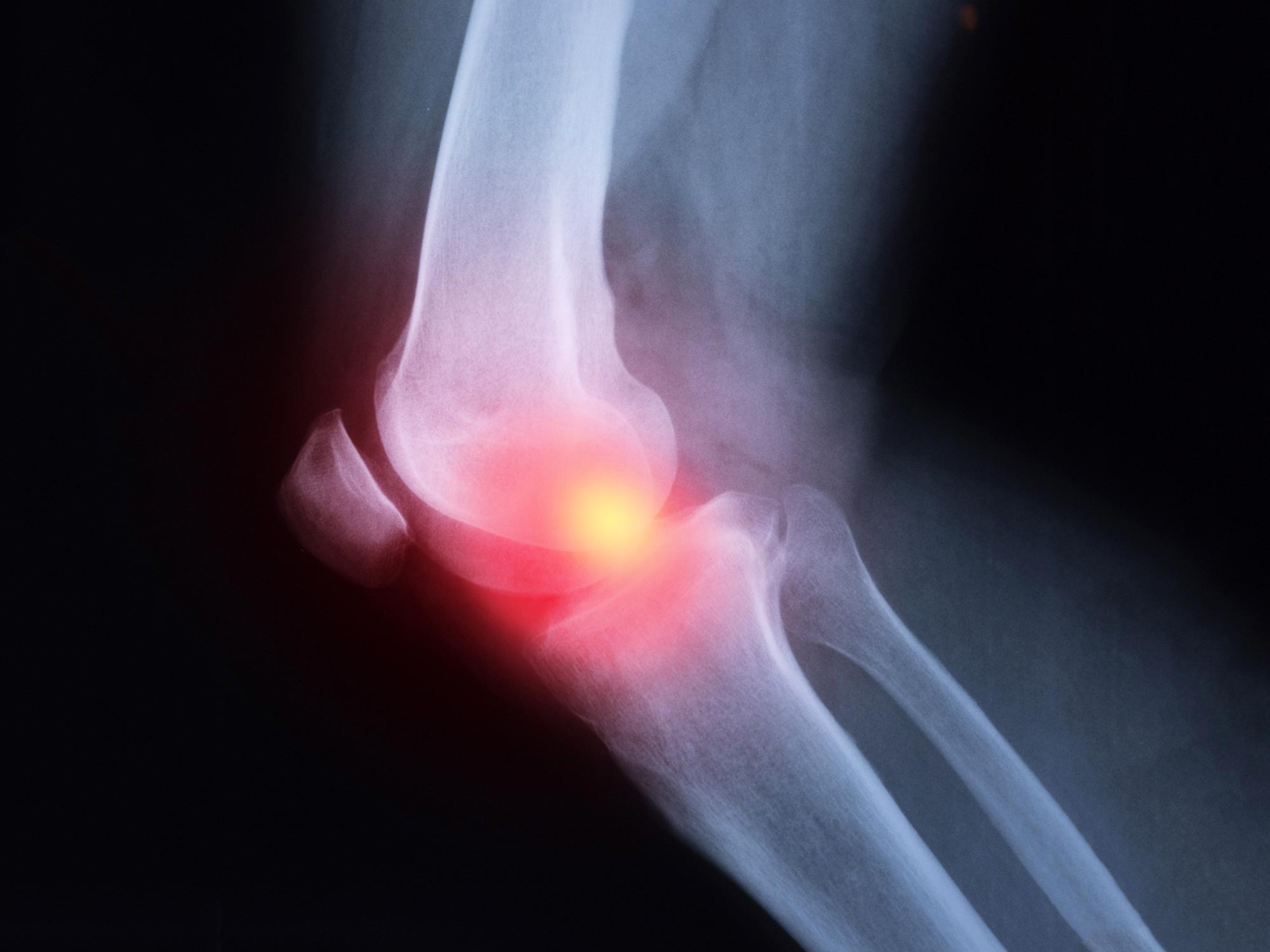
Genicular artery embolization (GAE) is a minimally invasive procedure shown to relieve knee osteoarthritis pain, improve quality of life, and potentially delay the need for surgery.
A study presented at the annual meeting of the Radiological Society of North America (RSNA) suggests that a minimally invasive procedure can offer substantial relief from knee pain and may help delay or prevent the need for knee replacement surgery in individuals with osteoarthritis.
“This study addresses osteoarthritis, which is a significant public health issue and the leading cause of chronic pain and disability worldwide,” said the study’s lead author, Florian Nima Fleckenstein, M.D., interventional radiologist at Charité – University Hospital Berlin in Germany. “With millions of people affected by knee osteoarthritis, particularly in aging populations, finding effective, minimally invasive treatments is critical.”
Osteoarthritis, a chronic, degenerative, and progressive condition, is the most common cause of chronic joint disorders. According to the World Health Organization, knee osteoarthritis affects over 365 million adults worldwide.
Most available therapies, such as pain medication and steroid injections, only mask the symptoms of osteoarthritis. They don’t slow the progression of the disease. As osteoarthritis worsens and conservative treatments become ineffective, many people turn to joint replacement surgery.
The Promise of Genicular Artery Embolization (GAE)
Genicular artery embolization (GAE) is an innovative minimally invasive therapy for patients with symptomatic knee osteoarthritis. The genicular arteries have several branches that form a network around the knee joint. These vessels are altered in patients suffering from osteoarthritis. In GAE, an interventional radiologist injects small particles into selected branches that correspond to the site of knee pain to block blood flow to that area. Embolization of the abnormal blood vessels helps to disrupt the cycle of inflammation, cartilage destruction and sensory nerve growth that characterizes osteoarthritis.
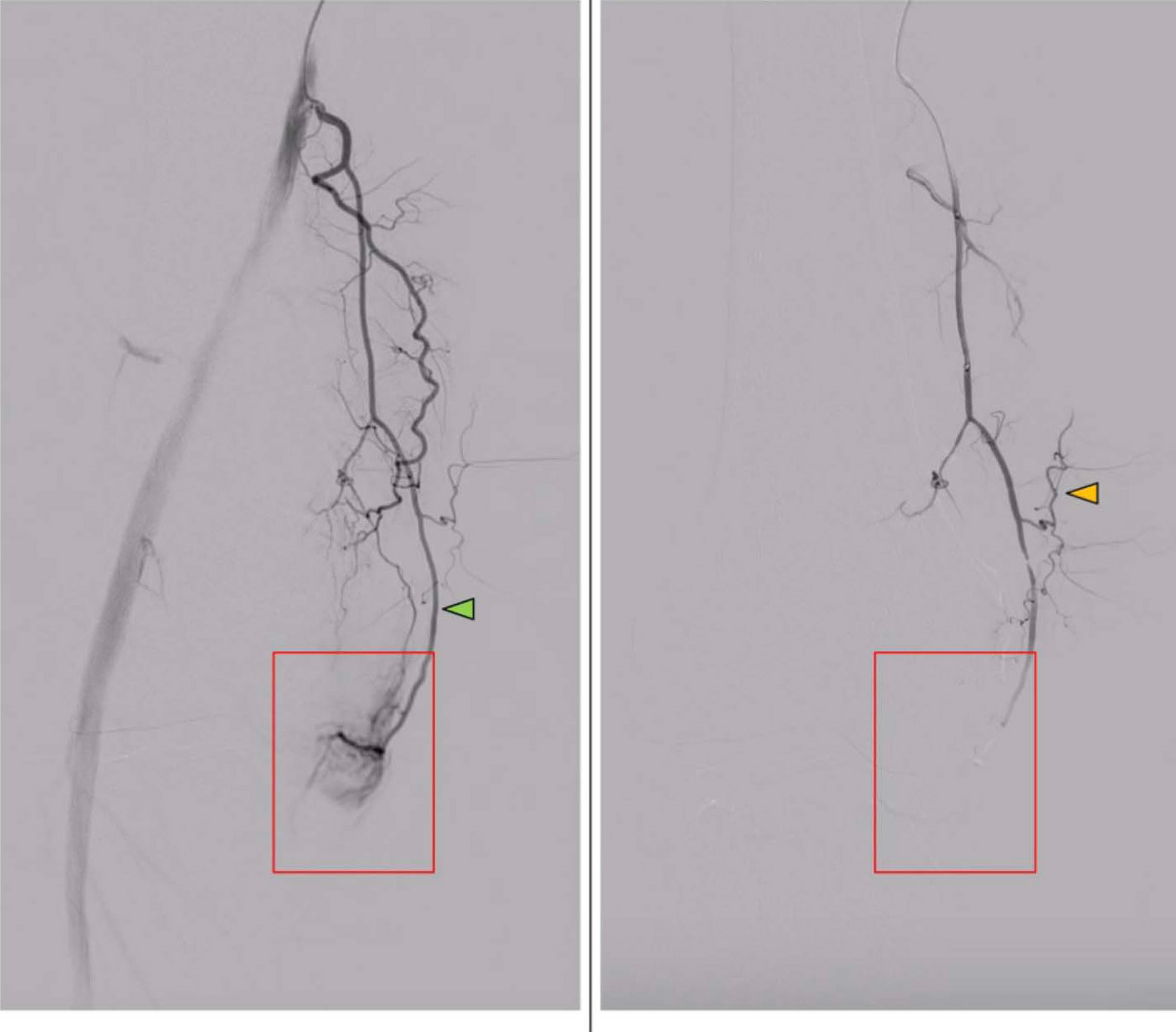
For the study, Dr. Fleckenstein and colleagues conducted a retrospective analysis of 403 cases of patients (aged 40 to 90) with moderate to severe knee osteoarthritis that didn’t respond to conservative treatments. All patients underwent GAE at the Charité – University Hospital Berlin. The study was designed to evaluate both the safety and efficacy of GAE across a broad spectrum of osteoarthritis severities. The effectiveness of the procedure was measured using the Visual Analog Scale and the Knee Injury and Osteoarthritis Outcome Score. These standardized scores, which measure pain and quality of life, were recorded at baseline and during follow-up visits at six weeks, three months, six months, and one-year post-procedure.
Technical success was achieved in 100% of procedures. Temporary slight skin discoloration and mild knee pain immediately after the procedure were noted in 18% of all cases. No severe complications were reported. The quality-of-life index and pain score improved by 87% and 71%, respectively, at one-year follow-up.
GAE’s Impact and Potential
The findings show that GAE is a safe and effective treatment option across all severity grades of knee osteoarthritis, including advanced cases where other treatments have very limited efficacy.
“Our study found that GAE can effectively reduce knee pain and improve quality of life early after the treatment, with these benefits being maintained over the long term, especially for people who haven’t had success with other treatments like physical therapy or pain medications,” Dr. Fleckenstein said. “This could potentially offer a new lease on life for many patients who suffer from debilitating pain and mobility issues, caused by osteoarthritis.”
However, the study also showed that GAE is particularly effective in the early stages of knee osteoarthritis. This indicates that early intervention could potentially delay or even prevent disease progression, reducing the need for more invasive treatments, such as surgery.
The researchers hope that by demonstrating the procedure’s success in a large and diverse patient population, the study could influence medical practice and policy, encouraging broader adoption of GAE in clinical settings worldwide.
“GAE has the potential to reduce the need for more invasive surgeries, lower health care costs, and significantly improve the quality of life for countless individuals suffering from knee osteoarthritis,” Dr. Fleckenstein said.
He and his team plan to continue their research on degenerative joint disorders to provide patients with new options in the field of interventional radiology.
Meeting: 110th Scientific Assembly and Annual Meeting of the Radiological Society of North America
Co-authors are Timo Alexander Auer, M.D., Bernd Hamm, M.D., Bernhard Gebauer, M.D., and Federico Collettini, M.D. This study was awarded the RSNA Trainee Research Prize.
Never miss a breakthrough: Join the SciTechDaily newsletter.
Follow us on Google and Google News.