
Close Menu
    Facebook X (Twitter) Instagram
    SciTechDaily
    • Biology
    • Chemistry
    • Earth
    • Health
    • Physics
    • Science
    • Space
    • Technology
    Facebook X (Twitter) Pinterest YouTube RSS
    SciTechDaily
    Home»Earth»Rewriting Earth’s History: 3.5 Billion-Year-Old Meteorite Crater Discovered in Australia
    Earth

    Rewriting Earth’s History: 3.5 Billion-Year-Old Meteorite Crater Discovered in Australia

    By Curtin UniversityMarch 14, 20255 Comments3 Mins Read
    Facebook Twitter Pinterest Telegram LinkedIn WhatsApp Email Reddit
    Share
    Facebook Twitter LinkedIn Pinterest Telegram Email Reddit
    Giant Crater Earth Art Concept
    Scientists found Earth’s oldest impact crater, 3.5 billion years old, in Western Australia. (Artist’s concept.) Credit: SciTechDaily.com

    Researchers have discovered a 3.5-billion-year-old meteorite impact crater in Western Australia, providing new insights into Earth’s early history, crust formation, and the origins of life.

    Researchers from Curtin University have identified the world’s oldest known meteorite impact crater, a finding that could reshape our understanding of Earth’s formation and the origins of life.

    A team from Curtin’s School of Earth and Planetary Sciences and the Geological Survey of Western Australia (GSWA) examined rock layers in the North Pole Dome, a region within Western Australia’s Pilbara Craton. Their analysis revealed evidence of a massive meteorite impact dating back 3.5 billion years.

    Co-lead researcher Professor Tim Johnson from Curtin University emphasized that this discovery challenges long-held assumptions about Earth’s early history.

    “Before our discovery, the oldest impact crater was 2.2 billion years old, so this is by far the oldest known crater ever found on Earth,” Professor Johnson said.

    Researchers discovered the crater thanks to ‘shatter cones’, distinctive rock formations only formed under the intense pressure of a meteorite strike.
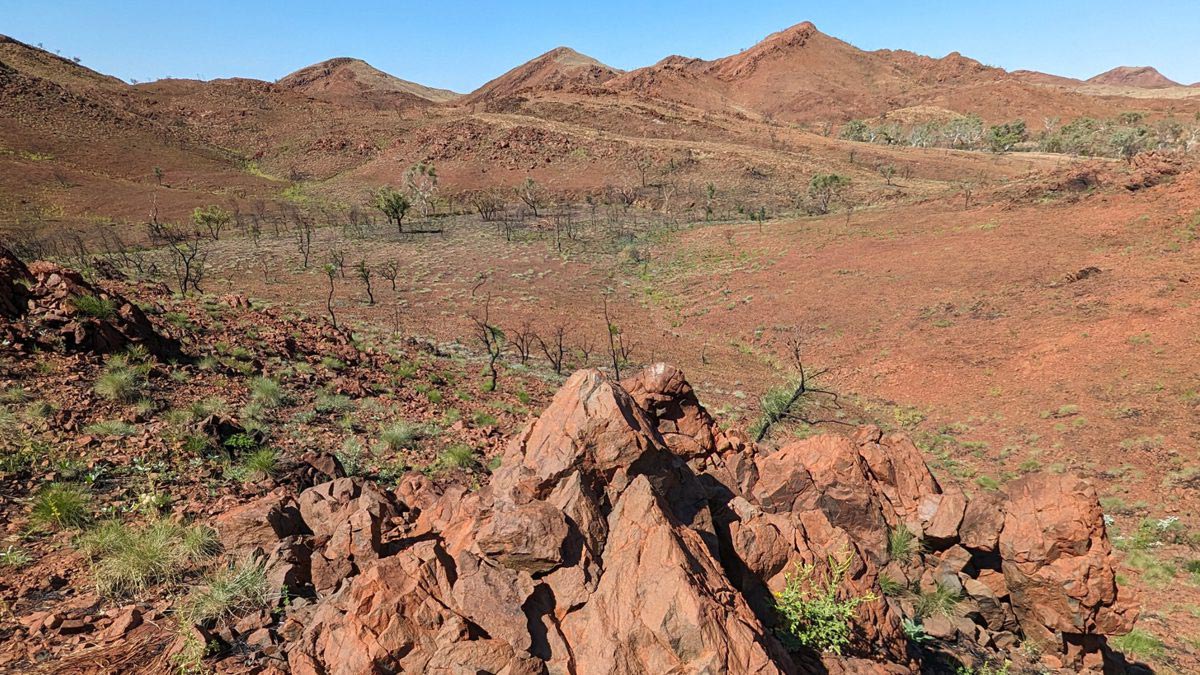
    Large Conical Shatter Cones Within the Pilbara Craton, Western Australia,
    Large conical shatter cones within the Pilbara Craton, Western Australia, provide visible proof of a meteorite impact 3.5 billion years ago. Credit: Chris Kirkland, Curtin University

    A Massive Impact Event

    The shatter cones at the site, about 40 kilometers west of Marble Bar in WA’s Pilbara region, were formed when a meteorite slammed into the area at more than 36,000km/h.

    This would have been a major planetary event, resulting in a crater more than 100km wide that would have sent debris flying across the globe.

    “We know large impacts were common in the early solar system from looking at the Moon,” Professor Johnson said.

    “Until now, the absence of any truly ancient craters means they are largely ignored by geologists.

    “This study provides a crucial piece of the puzzle of Earth’s impact history and suggests there may be many other ancient craters that could be discovered over time.”

    Implications for Earth’s Early Environment

    Co-lead author Professor Chris Kirkland, also from Curtin’s School of Earth and Planetary Sciences, said the discovery shed new light on how meteorites shaped Earth’s early environment.

    “Uncovering this impact and finding more from the same time period could explain a lot about how life may have got started, as impact craters created environments friendly to microbial life such as hot water pools,” Professor Kirkland said.

    “It also radically refines our understanding of crust formation: the tremendous amount of energy from this impact could have played a role in shaping early Earth’s crust by pushing one part of the Earth’s crust under another, or by forcing magma to rise from deep within the Earth’s mantle toward the surface.

    “It may have even contributed to the formation of cratons, which are large, stable landmasses that became the foundation of continents.”

    Reference: “A Paleoarchaean impact crater in the Pilbara Craton, Western Australia” by Christopher L. Kirkland, Tim E. Johnson, Jonas Kaempf, Bruno V. Ribeiro, Andreas Zametzer, R. Hugh Smithies and Brad McDonald, 6 March 2025, Nature Communications.
    DOI: 10.1038/s41467-025-57558-3

    Never miss a breakthrough: Join the SciTechDaily newsletter.
    Follow us on Google and Google News.

    Curtin University Geology Meteorites Planetary Science Popular
    Share. Facebook Twitter Pinterest LinkedIn Email Reddit

    Related Articles

    6.3 Million Years Ago, Something Slammed Into Brazil – Now Scientists Have the Proof

    New Evidence That Giant Asteroid Impacts Created the Continents

    “Invisible” Gold – Scientists Discover “Fool’s Gold” Is Not So Foolish After All

    Micrometeorites: More Than 5,000 Tons of Extraterrestrial Dust Falls to Earth Each Year

    World’s Longest Erupting Supervolcanoes Fueled by Magma “Conveyor Belt”

    The Craters on Earth: New Atlas Presents and Explains the Impact Sites of Meteorites and Asteroids Worldwide

    Unknown Explanation? Perplexing Discovery Could Rewrite Earth’s History

    Martian Meteorites Yield Clues to the Planet’s Early Atmosphere

    Study Reveals Ancient Impact of Massive Asteroid

    5 Comments

    1. John Bayer on March 14, 2025 7:38 pm

      The illustration obviously depicts a crater which appears to be less than 100km wide. Is this just another artist’s conception? Such a feature would be difficult to hide.

      Reply
      • Clyde Spencer on March 15, 2025 11:43 am

        The shatter cone photograph shows a background different from the lede ‘artist’s conception.’

        Reply
    2. [email protected] on March 15, 2025 7:00 pm

      Note that the caption mentions “artists concept”.

      Reply
    3. Lood Oliver on March 16, 2025 10:36 am

      The Vredefort impact crater is 300 billion years old.

      Reply
      • Tristram Carlyon on March 16, 2025 3:51 pm

        Begging your pardon, Lood, but 21.74 times the age of the known Universe? P’r’aps your comment is a typo?

        Reply
    Leave A Reply Cancel Reply

    • Facebook
    • Twitter
    • Pinterest
    • YouTube

    Don't Miss a Discovery

    Subscribe for the Latest in Science & Tech!

    Trending News

    Breakthrough Bowel Cancer Trial Leaves Patients Cancer-Free for Nearly 3 Years

    Natural Compound Shows Powerful Potential Against Rheumatoid Arthritis

    100,000-Year-Old Neanderthal Fossils in Poland Reveal Unexpected Genetic Connections

    Simple “Gut Reset” May Prevent Weight Gain After Ozempic or Wegovy

    2.8 Days to Disaster: Scientists Warn Low Earth Orbit Could Suddenly Collapse

    Common Food Compound Shows Surprising Power Against Superbugs

    5 Simple Ways To Remember More and Forget Less

    The Atomic Gap That Could Cost the Semiconductor Industry Billions

    Follow SciTechDaily
    • Facebook
    • Twitter
    • YouTube
    • Pinterest
    • Newsletter
    • RSS
    SciTech News
    • Biology News
    • Chemistry News
    • Earth News
    • Health News
    • Physics News
    • Science News
    • Space News
    • Technology News
    Recent Posts
    • After 37 Years, the World’s Longest-Running Soil Warming Experiment Uncovers a Startling Climate Secret
    • NASA Satellite Captures First-Ever High-Res View of Massive Pacific Tsunami
    • ADHD Isn’t Just a Deficit: Study Reveals Powerful Hidden Strengths
    • Scientists Uncover “Astonishing” Hidden Property of Light
    • Scientists Discover Stem Cells That Could Regrow Teeth and Bone
    Copyright © 1998 - 2026 SciTechDaily. All Rights Reserved.
    • Science News
    • About
    • Contact
    • Editorial Board
    • Privacy Policy
    • Terms of Use

    Type above and press Enter to search. Press Esc to cancel.