

Close Menu
    Facebook X (Twitter) Instagram
    SciTechDaily
    • Biology
    • Chemistry
    • Earth
    • Health
    • Physics
    • Science
    • Space
    • Technology
    Facebook X (Twitter) Pinterest YouTube RSS
    SciTechDaily
    Home»Biology»Scientists Decode the DNA of One of America’s Most Iconic Trees
    Biology

    Scientists Decode the DNA of One of America’s Most Iconic Trees

    By University of Tennessee Institute of AgricultureFebruary 25, 2025No Comments3 Mins Read
    Facebook Twitter Pinterest Telegram LinkedIn WhatsApp Email Reddit
    Share
    Facebook Twitter LinkedIn Pinterest Telegram Email Reddit
    Oak Tree
    Researchers have sequenced the white oak genome, revealing crucial insights into its genetic diversity, disease resistance, and evolutionary history.

    A recent study details the genome of the highly prized white oak.

    The white oak (Quercus alba) is a keystone species in eastern North American forests, valued for its economic, ecological, and cultural significance. Despite its abundance, the species is experiencing a decline in seedling recruitment across much of its range.

    In a study published in New Phytologist, researchers from the University of Tennessee Institute of Agriculture, Indiana University, the University of Kentucky, the U.S. Forest Service, and other institutions have mapped the species’ complex genome for the first time. Their findings offer new insights into plant evolution, tree breeding, and genetic improvement, providing valuable information for forest management and conservation efforts.

    Lead authors Meg Staton, an associate professor of bioinformatics and computational genomics at the University of Tennessee, and Drew Larson, a National Science Foundation postdoctoral fellow at Indiana University, collaborated with scientists from academia, the U.S. Forest Service, state forests, and industry to collect and analyze genetic sequence data representative of white oak populations.
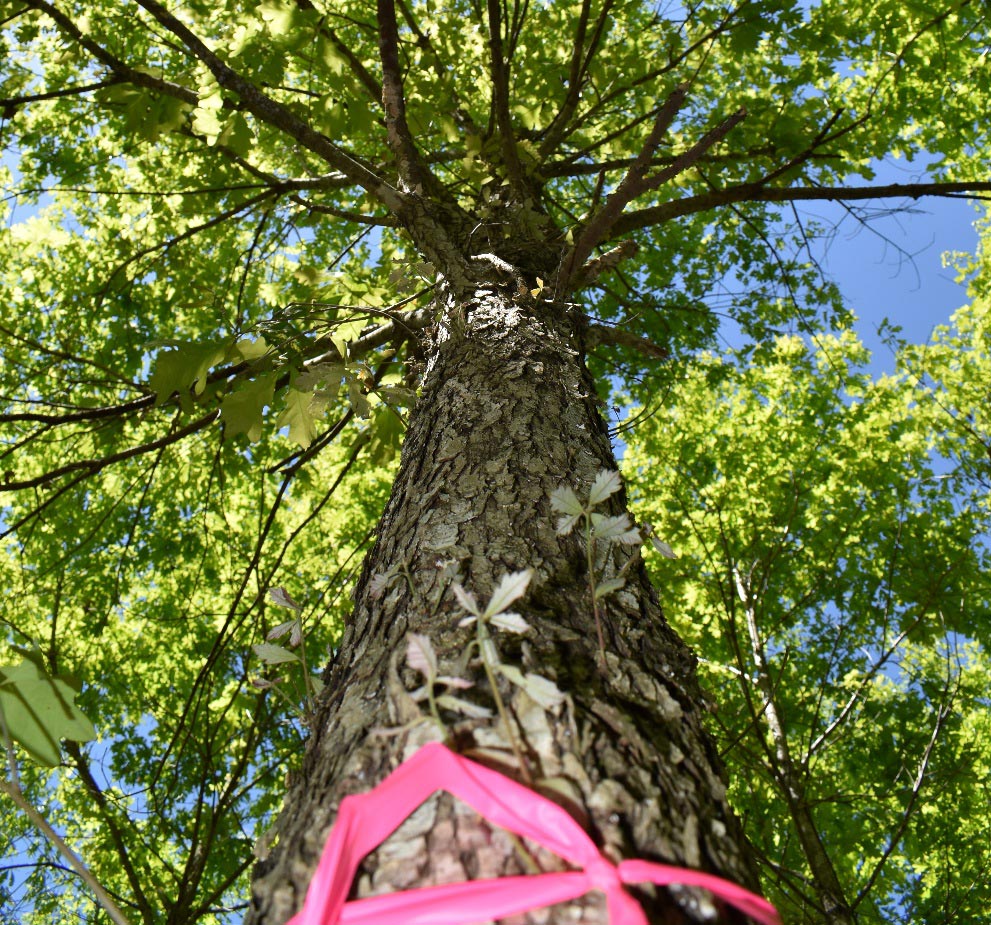
    White Oak Tree UT Tree Improvement Program
    White oaks are among the target species for the UT Tree Improvement Program, which has been working for decades to improve tree genetics. Scott Schlarbaum, UTIA distinguished professor of forestry, leads the UT Tree Improvement Program and is among the co-authors of the paper describing the white oak genome and how local adaptations may have implications for the species to heat and drought stress. Credit: Photo by A. Mains, courtesy UTIA

    Also central to the effort were Seth DeBolt, professor of horticulture and director of the James B. Beam Institute for Kentucky Spirits at the University of Kentucky, and Dana Nelson of the U.S. Forest Service Southern Research Station and director of the Forest Health Research and Education Center at the University of Kentucky.

    Genetic Diversity and Evolutionary Insights

    Says Staton and her co-authors in the paper, “The white oak genome represents a major new resource for studying genome diversity and evolution in Quercus. Also, unbiased gene annotation is key to accurately assessing R [disease resistance] gene evolution in Quercus.”

    The paper addresses the extent of the genetic diversity and population differentiation in Q. alba, and how gene content and disease resistance genes appear to have evolved during the history of Quercus and related taxa. The authors also discuss phylogenetic hypotheses – how oak species are evolutionarily related – as supported by whole genome data.

    The study notes that the amount of standing genetic variation and the extent to which populations are locally adapted will have implications for the response of Q. alba and other white oak species to increasingly prevalent heat and drought stress. The details of this study are of interest to those invested in the sustainability of white oak across economic, ecological, and cultural boundaries.

    Reference: “A haplotype-resolved reference genome of Quercus alba sheds light on the evolutionary history of oaks” by Drew A. Larson, Margaret E. Staton, Beant Kapoor, Nurul Islam-Faridi, Tetyana Zhebentyayeva, Shenghua Fan, Jozsef Stork, Austin Thomas, Alaa S. Ahmed, Elizabeth C. Stanton, Allan Houston, Scott E. Schlarbaum, Matthew W. Hahn, John E. Carlson, Albert G. Abbott, Seth DeBolt and C. Dana Nelson, 11 February 2025, New Phytologist.
    DOI: 10.1111/nph.20463

    Part of the project was sponsored by Makers Mark Distillery and Independent Stave Company. The white oak tree whose genome was sequenced for the study is from the Makers Mark campus in Loretto, Kentucky.

    Never miss a breakthrough: Join the SciTechDaily newsletter.
    Follow us on Google and Google News.

    DNA Forests Genetics Trees University of Tennessee
    Share. Facebook Twitter Pinterest LinkedIn Email Reddit

    Related Articles

    Walnut Trees’ 40-Million-Year-Old Secret: How They Switch Genders Every Season

    DNA Hoarders: Genetic Duplication Linked to the Origin and Evolution of Pine Trees and Their Relatives

    Scientists Find Genes to Save Ash Trees From Deadly Beetle That Is Expected to Kill Billions of Trees Worldwide

    Rare Example of Bacterial Gene Transfer Providing Evolutionary Benefit

    Human Y-Chromosome Has Enough Genes to Stay for Millions of Years

    Researchers Study Regulatory Gene’s Role in Sperm Quality Control

    Researcher Studies Root Growth to Develop Hardier, Weather-resistant Crops

    Researchers Complete Genome Sequence of a Denisovan Human Finger Bone

    Researchers May Be Able to Sequence Genomes of Any Microbes

    Leave A Reply Cancel Reply

    • Facebook
    • Twitter
    • Pinterest
    • YouTube

    Don't Miss a Discovery

    Subscribe for the Latest in Science & Tech!

    Trending News

    Largest-Ever Study Finds Medicinal Cannabis Ineffective for Anxiety, Depression, PTSD

    250-Million-Year-Old Egg Solves One of Evolution’s Biggest Mysteries

    Living With Roommates Might Be Changing Your Gut Microbiome Without You Knowing

    Century-Old Cleaning Chemical Linked to 500% Increased Risk of Parkinson’s Disease

    What if Your Memories Never Happened? Physicists Take a New Look at the Boltzmann Brain Paradox

    One of the Universe’s Largest Stars May Be Getting Ready To Explode

    Scientists Discover Enzyme That Could Supercharge Ozempic-Like Weight Loss Drugs

    Popular Sweetener Linked to DNA Damage – “It’s Something You Should Not Be Eating”

    Follow SciTechDaily
    • Facebook
    • Twitter
    • YouTube
    • Pinterest
    • Newsletter
    • RSS
    SciTech News
    • Biology News
    • Chemistry News
    • Earth News
    • Health News
    • Physics News
    • Science News
    • Space News
    • Technology News
    Recent Posts
    • Challenging the Narrative: New Study Shows U.S. Life Expectancy Is Rising Across All States
    • Mystery Illness Kills 5 in Burundi As Doctors Scramble for Answers
    • Bone-Strengthening Discovery Could Reverse Osteoporosis
    • The Most Elusive Number in Physics Just Got Even More Mysterious
    • Scientists Uncover Hidden Trigger Behind Stem Cell Aging
    Copyright © 1998 - 2026 SciTechDaily. All Rights Reserved.
    • Science News
    • About
    • Contact
    • Editorial Board
    • Privacy Policy
    • Terms of Use

    Type above and press Enter to search. Press Esc to cancel.