
Close Menu
    Facebook X (Twitter) Instagram
    SciTechDaily
    • Biology
    • Chemistry
    • Earth
    • Health
    • Physics
    • Science
    • Space
    • Technology
    Facebook X (Twitter) Pinterest YouTube RSS
    SciTechDaily
    Home»Chemistry»Scientists Develop an Efficient Way to Produce Low-Cost Heatsinks
    Chemistry

    Scientists Develop an Efficient Way to Produce Low-Cost Heatsinks

    By National University of Science and Technology MISISDecember 27, 2020No Comments3 Mins Read
    Facebook Twitter Pinterest Telegram LinkedIn WhatsApp Email Reddit
    Share
    Facebook Twitter LinkedIn Pinterest Telegram Email Reddit
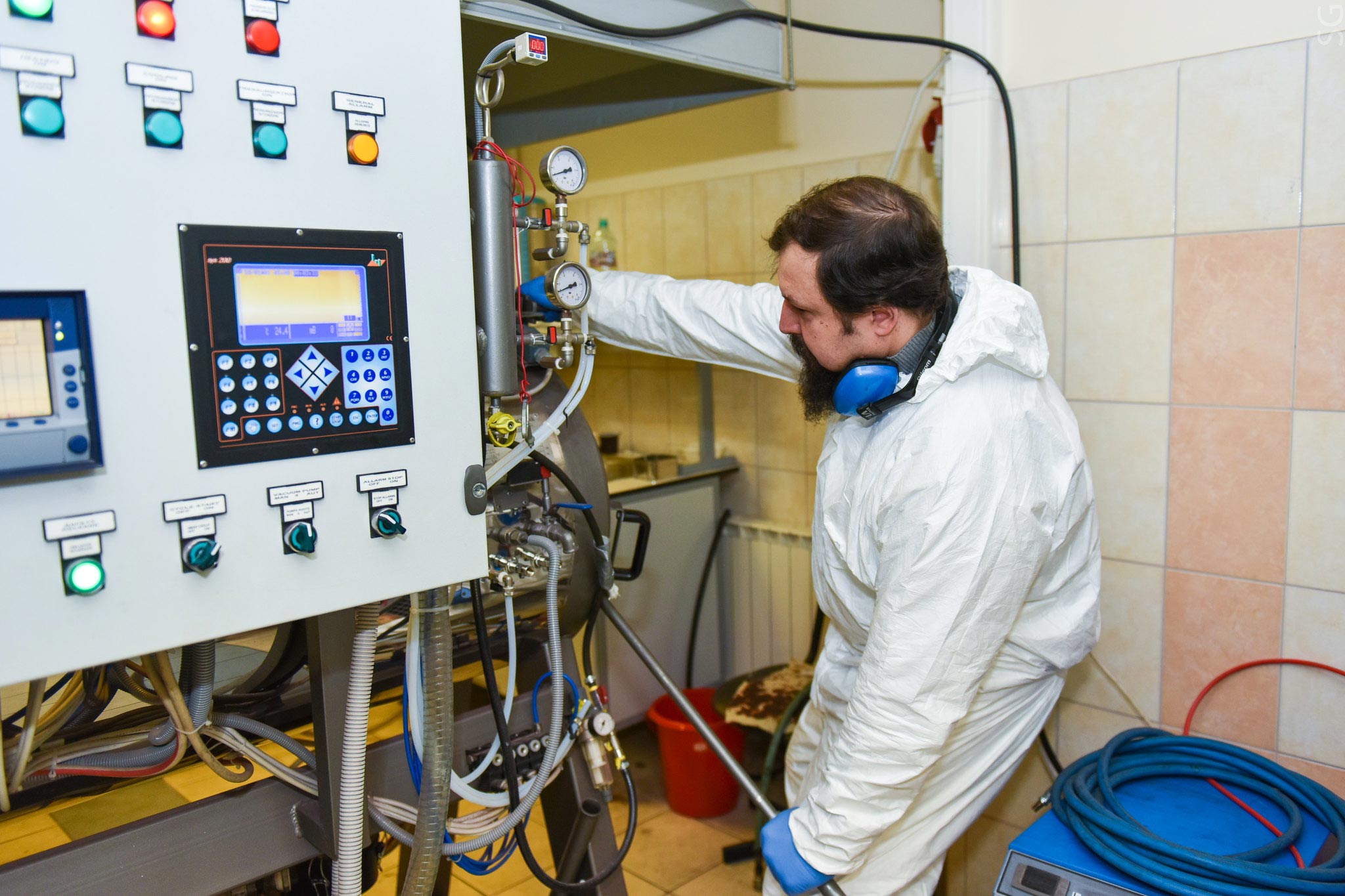
    Andrey Stepashkin
    Andrey Stepashkin, researcher at NUST MISIS Center for Composite Materials. Credit: Sergey Gnuskov/NUST MISIS

    NUST MISIS scientists found a way to reduce the cost of industrial and electronics heatsink production up to 10 times. Consequently, the product itself would also cost less. The proposed methods presume the use of rubbers and silicon carbide as components, i.e. these components are mixed, pressed, and sintered. The article on the research is published in Polymers.

    Heat sinking in operating devices is a constant necessity as overheating inevitably shortens the service life of expensive equipment. One of the most popular heat-sinking materials is graphite as it perfectly resists high temperatures. But this is an expensive material, since its production requires fairly “clean” conditions and exceptionally high-quality raw materials.

    Scientists from NUST MISIS Center for Composite Materials found a way to significantly reduce the manufacturing cost of heat sinks. Instead of graphite, it was proposed to use polymer materials, rubbers with silicon carbide inclusions. In this case, the mass of inclusions can even exceed that of the base material, depending on the desired strength, ductility, and heat resistance of the final material.

    The production process is quite simple: the rubber mass is placed between two rollers that rotate towards each other at different speeds. Powdered silicon carbide is also added there. The rollers mix the materials and pull a uniform mass. Next, the mass is placed in a special press-form, where it is shaped in a desired way. Finally, the pressed billet is sintered at 360 °C (680 °F).

    “This is a very low-waste production: at the initial mixing stage, the mass is homogeneous, like plasticine or clay. Its remains can be immediately reused. In addition, both rubber and silicon carbide are inexpensive materials, if compared to graphite. The material obtained after sintering can withstand temperatures up to 300 °C (572  °F), it perfectly sinks heat, and almost does not conduct current. That is, it can be used both in industry and in electronics,” comments Andrey Stepashkin, a researcher at NUST MISIS Center for Composite Materials.

    However, as noted by scientists, their main achievement is not even in creating this particular material, but in working out the mechanical properties (strength, crack resistance, plasticity, etc.) that can be created using the methods described above. So, if silicon carbide is replaced with carbon fiber or, for example, boron nitride, such composites will find application in other areas of technology, such as conductive components of electronics.

    Reference: “Low-Temperature Carbonized Elastomer-Based Composites Filled with Silicon Carbide” by Andrey A. Stepashkin, Semen D. Ignatyev, Dilyus I. Chukov, Victor V. Tcherdyntsev, Sergey D. Kaloshkin and Elena V. Medvedeva, 12 November 2020, Polymers.
    DOI: 10.3390/polym12112669

    Never miss a breakthrough: Join the SciTechDaily newsletter.
    Follow us on Google and Google News.

    Electrical Engineering Materials Science National University of Science and Technology Polymers
    Share. Facebook Twitter Pinterest LinkedIn Email Reddit

    Related Articles

    Incredible New Polymer Fibers Are Ultra Light and Super Strong

    Scientists Turn Plastic Waste Into Valuable Chemicals With Sunlight

    Forget ‘Super’ Glue, Scientists Develop New ‘Hyper’ Glue

    Material Synthesized That Can Increase/Decrease Volume by 100x Controlled by Electrical Signal

    US Army Synthetic Biology Research Advances Toward New Class of High-Performance Materials

    Unique Particles – With Stickiness of Gecko Feet – Formed by Harnessing Chaos

    Super Durable, Flexible, Water-Repelling Material Inspired by Porcupinefish

    Storing Secret Messages in Light-Sensitive Polymers

    MIT Researchers Develop New Strategy for Stronger Polymers

    Leave A Reply Cancel Reply

    • Facebook
    • Twitter
    • Pinterest
    • YouTube

    Don't Miss a Discovery

    Subscribe for the Latest in Science & Tech!

    Trending News

    Popular Sugar-Free Sweetener Linked to Liver Disease, Study Warns

    What Is Hantavirus? The Deadly Disease Raising Alarm Worldwide

    Scientists Just Discovered How the Universe Builds Monster Black Holes

    Scientists Unveil New Treatment Strategy That Could Outsmart Cancer

    A Simple Vitamin May Hold the Key to Treating Rare Genetic Diseases

    Scientists Think the Real Fountain of Youth May Be Hiding in Your Gut

    Ravens Don’t Follow Wolves, They Predict Them

    This Common Knee Surgery May Be Doing More Harm Than Good

    Follow SciTechDaily
    • Facebook
    • Twitter
    • YouTube
    • Pinterest
    • Newsletter
    • RSS
    SciTech News
    • Biology News
    • Chemistry News
    • Earth News
    • Health News
    • Physics News
    • Science News
    • Space News
    • Technology News
    Recent Posts
    • Scientists Revive Ancient Chemistry Trick To Engineer Next-Generation Glass
    • Scientists Use AI To Supercharge Ultrafast Laser Simulations by More Than 250x
    • Scientists Just Found a Surprising Way To Destroy “Forever Chemicals”
    • Popular Supplement Ingredient Linked to Shorter Lifespan in Men
    • Scientists May Have Found a Way To Repair Nerve Damage in Multiple Sclerosis
    Copyright © 1998 - 2026 SciTechDaily. All Rights Reserved.
    • Science News
    • About
    • Contact
    • Editorial Board
    • Privacy Policy
    • Terms of Use

    Type above and press Enter to search. Press Esc to cancel.