
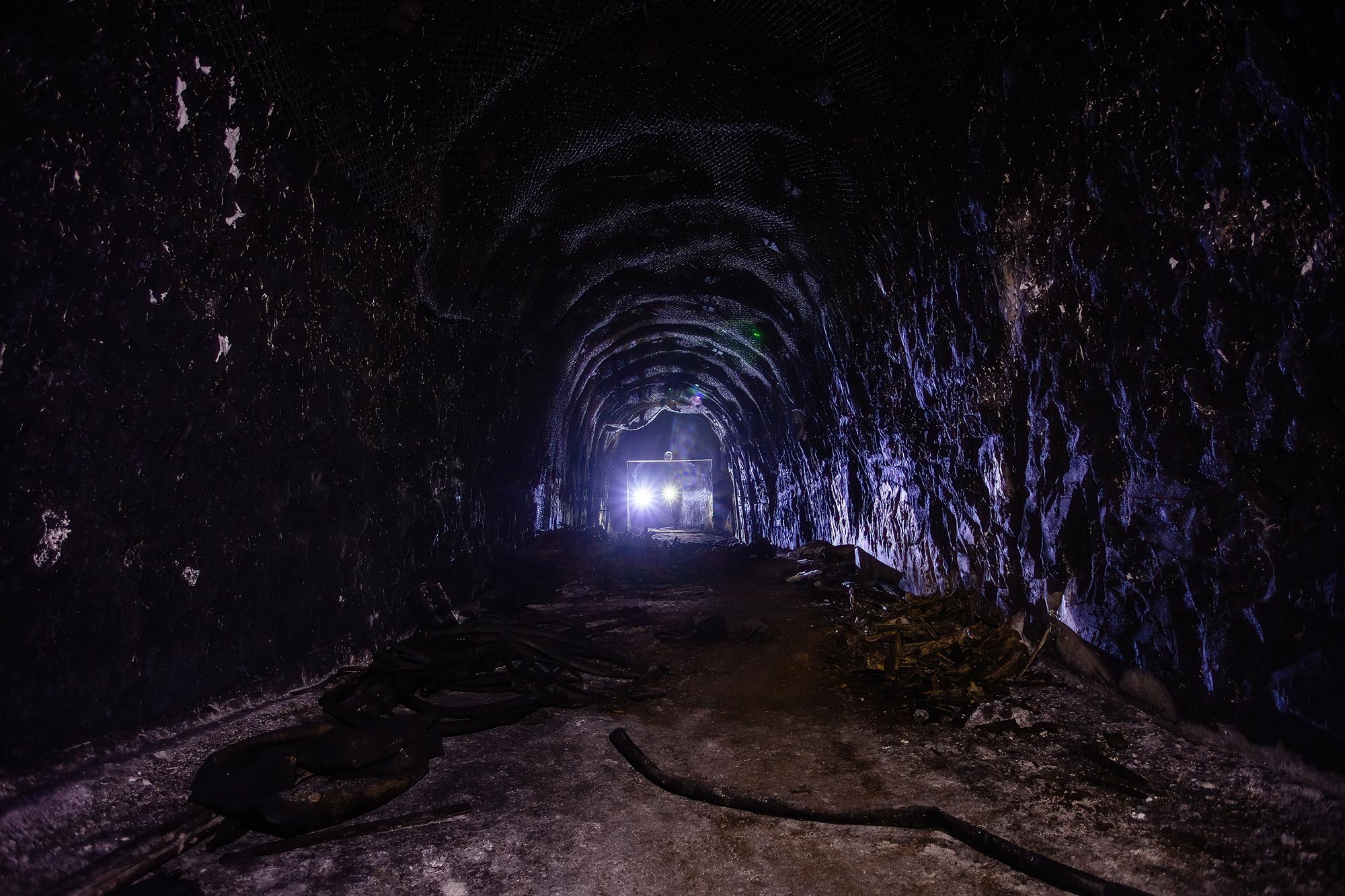
Uncontrolled and untreated runoff from abandoned mines may release carbon dioxide from bedrock into the atmosphere.
For the past 250 years, coal mining has taken place on an industrial scale in Pennsylvania, USA. By 1830, Pittsburgh was burning more than 400 tons of coal daily. This heavy reliance on coal has fueled climate change, but the environmental effects of mining extend beyond its combustion. Many abandoned mines, particularly those left unregulated before Congress established federal standards in 1977, continue to leak polluted drainage. Yet, their lasting impact may go even further.
Discovery of ongoing CO2 emissions from old mines
At the GSA Connects 2025 meeting in San Antonio, Texas, Dr. Dorothy Vesper, a geochemist at West Virginia University, presented findings showing that abandoned coal mines could release carbon dioxide continuously through leaking water, even long after mining operations have ceased.
In a 2016 study, Vesper and her research team determined that water draining from just 140 abandoned mines in Pennsylvania emits as much carbon dioxide annually as a small coal-fired power plant. Because the total number of abandoned mines remains unknown in Pennsylvania and beyond, these emissions represent a significant but poorly quantified contributor to human-caused climate change.
“We would like to have a much better handle on how big these carbon emissions are,” says Vesper. “A huge part of it is just not even knowing where the discharges are. And it’s not just Appalachia. It’s all over the country. It’s all over the world, really, these mine waters.”
Chemical reactions releasing ancient carbon
The mine water, rich in sulfuric acid produced from the natural chemistry of coal deposits, reacts with carbonate rocks such as limestone that are found near coal seams. These rocks contain carbon dioxide that was trapped millions of years ago when the rocks first formed. As the acidic water dissolves the carbonate minerals, it releases carbonate ions (CO3) that transform into carbon dioxide or other carbon compounds in the water. Once the mine drainage reaches the surface and interacts with air, the carbon dioxide can “degas,” entering the atmosphere and adding to greenhouse gas concentrations.
Prior to Vesper’s work, CO2 emissions from degassing of mine drainage hadn’t been extensively quantified. Part of the problem is the sheer number of abandoned mines and the fact that they aren’t well cataloged. Often, Vesper and her students would tromp through the woods to measure a reported mine and find no trace of the opening or that the discharge no longer flowed.
Another problem is that standard field instruments can’t measure extremely high concentrations of CO2, and Vesper has found that some mine drainage contains up to 1,000 times more CO2 than would be expected in normal water. To make her measurements, then, Vesper had to turn to an unexpected source for a measuring device.
“It’s basically out of the soda industry. Bottling plants and breweries have them,” says Vesper. The beverage instrument is “designed to be carried around the brewery floor and connect to these giant vats. So, it’s really portable, and it can handle really high CO2.”
Findings and future directions
Specialized instrument in hand, Vesper, along with her students and collaborators, tracks down old mines to measure the CO2 being carried out through water drainage. The results from some mines were comparable to the CO2 given off by hydrothermal springs, and vastly higher than water draining from typical natural limestone caves. Further, the amount of CO2 at each site changed through time, dependent on hydrologic conditions around the mine.
In the future, Vesper hopes to measure more mines for longer periods and in different conditions, add methane to her suite of analyses, and explore how different remediation techniques might prevent the CO2 from being released to the atmosphere and contributing to climate change.
“I think that even just small things in remediation design could make a difference, like keeping the discharge underground in pipes and introducing it to treatment wetlands from the subsurface,” says Vesper. “Then you’re fine. It’s not going to degas in the environment as easily.”
Meeting: Connects 2025
Never miss a breakthrough: Join the SciTechDaily newsletter.
Follow us on Google and Google News.
2 Comments
“Because the total number of abandoned mines remains UNKNOWN in Pennsylvania and beyond, these emissions represent a significant but poorly quantified contributor to human-caused climate change.”
How can Vesper logically conclude that the amount is significant if she doesn’t know what the amount is? I would have more respect for her concerns if she would state her best estimate, along with the 2-sigma uncertainty. Are the abandoned mine contributions more than 10% of the total? It is unknown. It would be more accurate and honest for her to say, “I’m concerned, but I don’t yet have sufficient data to conclude that it is actually significant.”
5
“This heavy reliance on coal has fueled climate change, …”
That is a commonly espoused opinion but doesn’t quite rise to the level of certainty that would justify stating it as a fact. There is currently no agreement on the climate sensitivity, ranging from less than 1 deg C to 6 degrees C for a doubling of CO2 in the atmosphere. Furthermore, arguments can be, and have been, put forward that the net cause and effect relationship between temperature and CO2 emissions, as commonly claimed, is backwards.
Even her specialized research ignores the fact that chemical reactions proceed more rapidly if the components are warmer. That is, as the air and water warm, the conversion of pyrite and marcasite to the sulfate melanterite accelerates, as does the byproduct, carbon dioxide. Furthermore, the warmer ground water releases more CO2 because it is less soluble in warm water than cold water. Incidentally, the oxidation of the iron sulfides is an exothermic reaction that warms the water and air in the tunnels. Yet, none of this information is shared with the lay reader.
This comes across as advocacy research where the hypothesis — abandoned coal mines are contributing significantly to global warming — is only reinforced because the results that don’t fit the narrative are simply ignored. That is, the data are cherry picked.