

Understanding Muscle Protein Dynamics
Muscle movement relies on the interaction between two key proteins: actin and myosin. These proteins slide past each other to generate the force needed for movement. For this process to work efficiently, actin and myosin must be precisely organized within the sarcomere, the basic structural and functional unit of muscle cells. This arrangement is crucial for maintaining muscle health, particularly during exercise, periods of stress, and as the body ages.
Role of Chaperones in Muscle Function
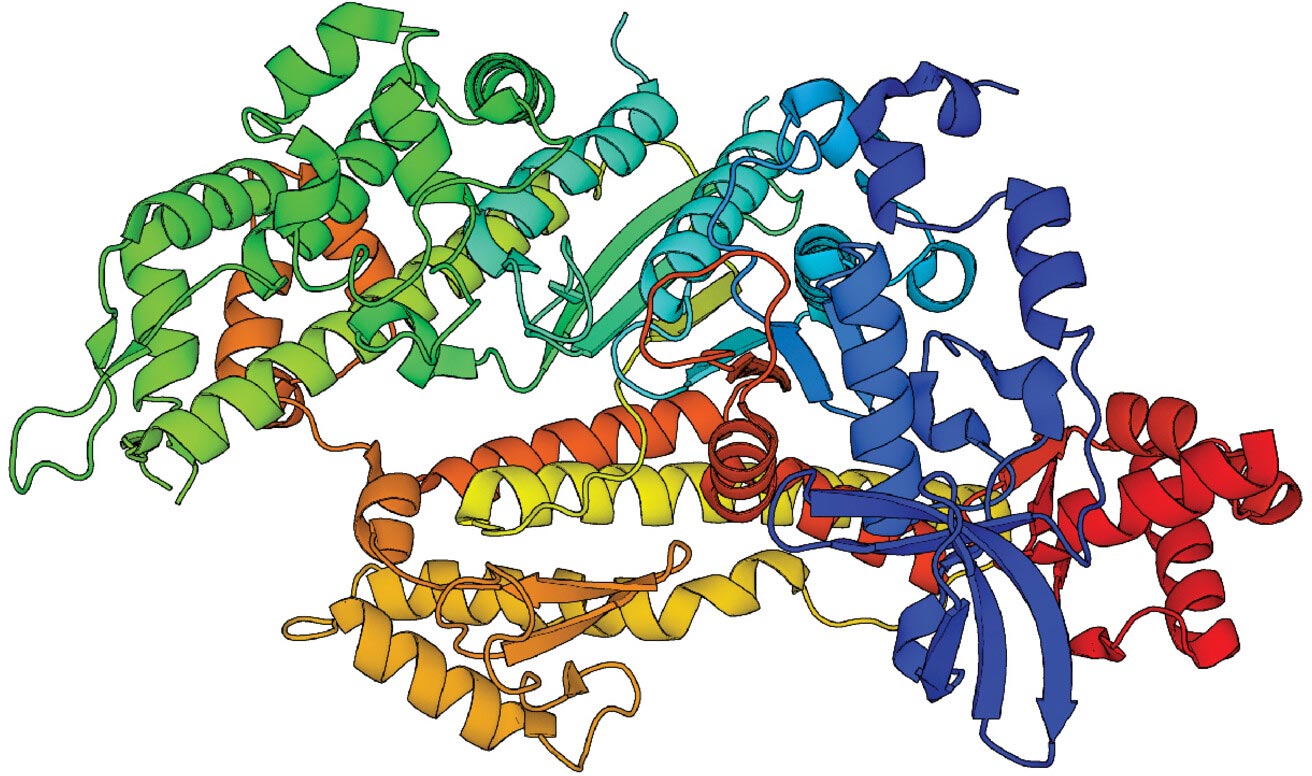
To ensure proteins achieve their correct shape, cells use specialized molecular assistants called chaperones. These chaperones act as caretakers, helping proteins fold and assemble correctly. For myosin, which makes up about 16% of the total protein in muscle cells, proper structure is especially important. One critical chaperone for this task is UNC45, found in all eukaryotic organisms. Identified through genetic studies, UNC45 plays a vital role in shaping myosin and preserving the integrity of the sarcomere. The importance of UNC45 is evident in severe muscle disorders, known as myopathies, which can result from mutations in the UNC45 gene.
Beyond its role in helping myosin fold correctly, UNC45 also helps tag and remove faulty proteins, ensuring that only optimal myosin remains in muscle cells. However, the precise molecular mechanism by which UNC45 fulfills its dual role in keeping muscle cells healthy has remained unknown.
New Insights into Muscle Health Mechanisms
Researchers from Tim Clausen’s lab at the IMP have revealed the molecular details of how UNC45 mediates both processes. The scientists discovered that the chaperone can differentiate between healthy and damaged myosin, and direct it into appropriate assembly or degradation pathways depending on its folding state. The findings also directly link myosin quality control to myosin-related muscle diseases, revealing a previously unexplored connection. The scientists now published their study in the journal Nature Communications.
To degrade or not to degrade, that is the question: how a molecular helper holds the key to muscle health
Incorrectly shaped proteins–myosin included–are identified and targeted for degradation through a process called ubiquitination, where a small molecule called ubiquitin is attached to them. This tagging marks proteins for breakdown, ensuring that only fit ones are preserved. Such a quality control mechanism is also crucial for keeping muscle cells healthy and functioning properly. During this process, UNC45 interacts with a protein evaluator–that of the class of E3 ubiquitin ligases–enabling it to selectively channel faulty myosin molecules to their breakdown.
Advanced Techniques Uncover Protein Interactions
To understand how UNC45 distinguishes between healthy and faulty myosin, researchers recreated their interaction using proteins from the model organism C. elegans, a nematode worm. They employed advanced techniques, including crosslinking mass spectrometry, to identify the exact contact points between the chaperone and myosin. This method chemically links interacting proteins, allowing scientists to see where and how they connect.
“The chaperone UNC45 can interact with both properly folded and incorrectly shaped myosin, resulting in different functional complexes,” explains Antonia Vogel, former student in the Vienna BioCenter PhD Program at the Clausen lab. These connections determine whether the myosin is structurally sound. One complex will be prone to ubiquitination and degradation, while the other will not, with the myosin’s folding state determining its own fate. “We found how different elements of the protein quality control system in muscle cells work together and compete to decide whether a protein gets folded correctly or is tagged for removal,” concludes Vogel.
To understand how myosin interacts with UNC45 at a structural level, researchers used X-ray crystallography, a technique that achieves detailed atomic resolution of proteins. Purified proteins are first turned into a crystal, then irradiated with high-energy beams. The resulting radiation patterns provide clues on the structure of the protein. “We discovered that one specific part of myosin, the FX3HY motif, plays a crucial role in recruiting and connecting to UNC45,” says Renato Arnese, Research Assistant in the Clausen lab. “This motif acts as a recognition signal that is consistently found across different organisms.”
Link Between Myosin Quality Control and Myopathies
Other than being essential for this chaperone-substrate interaction, it is also involved in human pathology. “Several site-specific mutations in this region prevent UNC45 from connecting with myosin, causing the protein to never reach its proper shape,” explains Arnese. Additionally, a single point mutation in the FX3HY motif is linked to a severe developmental myopathy, the Freeman Sheldon Syndrome (FSS).
“Our findings establish the first direct connection between defects in myosin quality control and the onset of myopathies,” says Tim Clausen. “The fact that mutations in myosin and UNC-45 that cause disease in humans are also replicated in C. elegans makes this model system highly valuable for studying such conditions.”
The study paves the way to better understand how other client-specific chaperones work, and to investigate whether other muscle diseases could stem from issues with myosin quality control.
Reference: “UNC-45 assisted myosin folding depends on a conserved FX3HY motif implicated in Freeman Sheldon Syndrome” by Antonia Vogel, Renato Arnese, Ricardo M. Gudino Carrillo, Daria Sehr, Luiza Deszcz, Andrzej Bylicki, Anton Meinhart and Tim Clausen, 25 July 2024, Nature Communications.
DOI: 10.1038/s41467-024-50442-6
Never miss a breakthrough: Join the SciTechDaily newsletter.
Follow us on Google and Google News.
9 Comments
its all BS
Source of why please?
Why?
Its all BS apparently expresses a fearful and hostile categorical rejection of a wide class of study and scientific report in an area of growing and important advance such as protein formation… likely to lead the use of AI in medical analysis and controversial interventions, where ethics, good review and cautionary practice are seriously in question. The BS comment could be from ignorance or could be driven by a real concern about corporate greed or excessive unregulated pharma. Probably both. Guess we’ll probably never know.
🤣 …..they are pushing a toxic agenda.
…..look up where “UNC45” is found in nature.
Why do you immediately start with the negative language?
It is a preliminary hypothesis.
Requires further study to confirm or deny the question.
Your approach says “stop the investigation “. In other words, your approach says “stay ignorant “.
I choose to nit listen to your fears
They literally are trying to convince people to start eating worms and flies 🤢🤮
This article never once says that the researchers are advocating for people to consume worms. The scientists simply extracted these proteins from the worms to run experiments on. We live in a time where gene editing technology like crispr exists. To prevent issues like Freeman Sheldon Syndrome they are studying the works of this protein and they ways it interacts with other proteins. They used the worms because it’s is easier and possibly more ethical than taking samples from people. Those worms have the same protein in them that we have. Studies on this protein go back to atleast 2013 and probably earlier.