
Close Menu
    Facebook X (Twitter) Instagram
    SciTechDaily
    • Biology
    • Chemistry
    • Earth
    • Health
    • Physics
    • Science
    • Space
    • Technology
    Facebook X (Twitter) Pinterest YouTube RSS
    SciTechDaily
    Home»Biology»Scientists Discover Bacteria That Could Help Us Win the Fight Against Mosquitoes
    Biology

    Scientists Discover Bacteria That Could Help Us Win the Fight Against Mosquitoes

    By University of ExeterNovember 4, 2024No Comments3 Mins Read
    Facebook Twitter Pinterest Telegram LinkedIn WhatsApp Email Reddit
    Share
    Facebook Twitter LinkedIn Pinterest Telegram Email Reddit
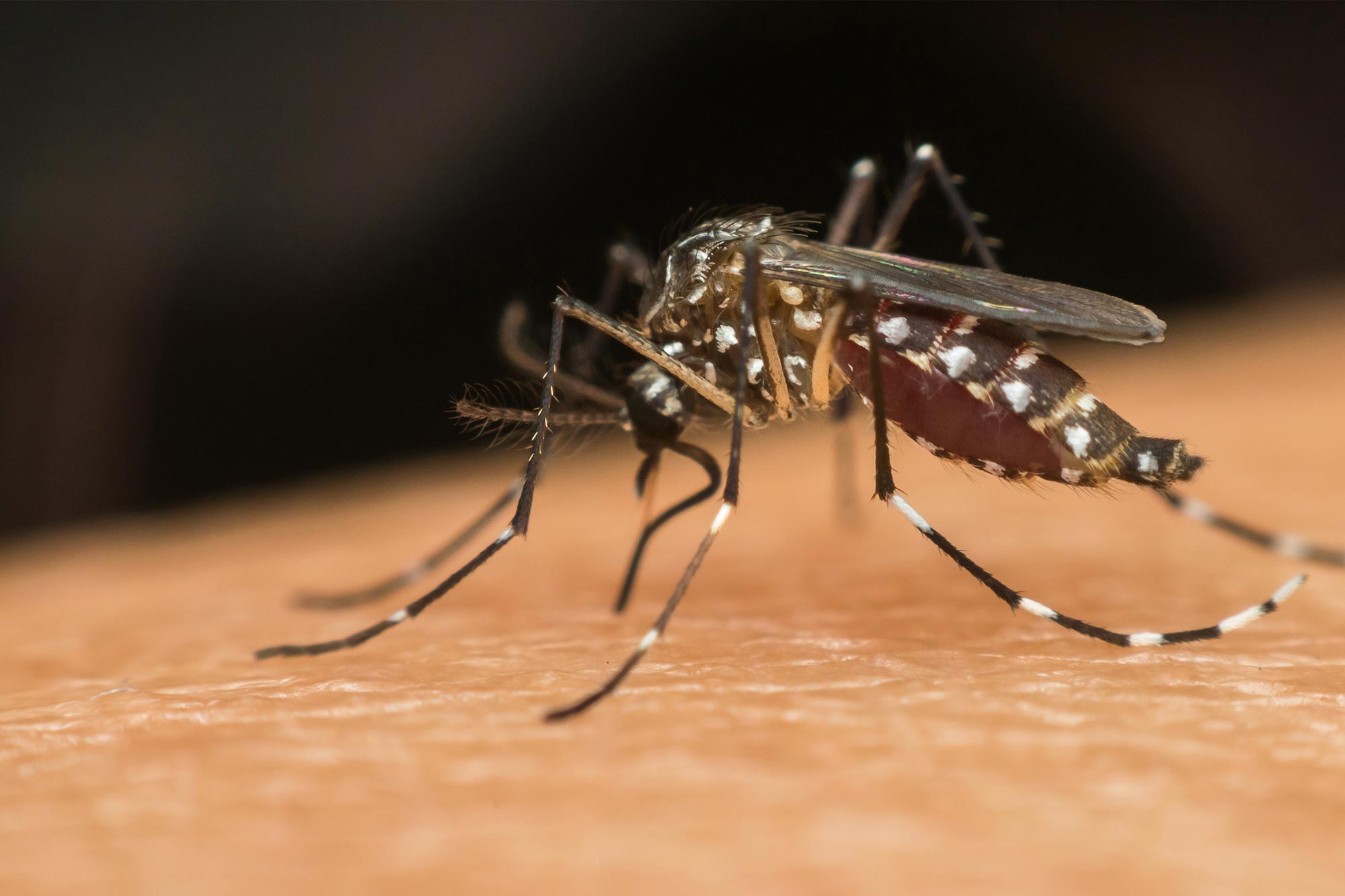
    Mosquito Aedes Aegypti on Human Skin
    Research shows that Asaia bacteria can speed up the development of mosquito larvae, aiding disease control programs. These findings may improve the efficiency of mass mosquito breeding.

    Scientists have discovered that a type of bacteria, Asaia, accelerates the growth of Aedes aegypti mosquito larvae by a day, potentially enhancing mosquito control programs.

    These programs, crucial for battling diseases like dengue and Zika, release sterilized or genetically modified mosquitoes to reduce disease transmission.

    Mosquito-Borne Illness and Control Programs

    A new study has found that certain bacteria can accelerate mosquito larvae growth, a discovery that may support global health efforts.

    The Aedes aegypti mosquito, which spreads diseases such as dengue, yellow fever, and Zika, is a target of anti-disease programs. These programs focus on breeding and releasing non-biting male mosquitoes, either sterile or modified to block disease transmission.

    Compared to widespread insecticide spraying, mass release programs offer a more effective solution, especially since mosquitoes are increasingly resistant to common insecticides.

    Impact of Asaia Bacteria on Larval Development Speed

    In the study, researchers from the universities of Exeter and Wageningen investigated how Asaia bacteria influence mosquito larvae development. They found that exposure to Asaia bacteria sped up larvae growth by a day—an advantage that could aid large-scale mosquito breeding programs needing to produce millions of adults quickly.

    “We know that every species, including humans, depends on a ‘microbiome’ – a complex mix of microorganisms living inside the body,” said Professor Ben Raymond, of the Centre for Ecology and Conservation on the University of Exeter’s Penryn Campus in Cornwall.

    “Asaia bacteria have been suggested as beneficial parts of mosquito microbiomes, but this has never been rigorously tested in Aedes aegypti.

    “We know that Aedes aegypti mosquito larvae can’t develop at all without a microbiome, and our study shows two Asaia species can play a beneficial role.”

    The larval period of Aedes aegypti mosquitoes usually lasts about 10 days, so accelerating by a day could be a valuable boost to mass production.

    Experiment: Introducing Asaia Bacteria to Larvae

    In the study, Asaia bacteria were added to the water where mosquito larvae developed.

    Two particular species accelerated larval development.

    The mechanism for this is unclear, but it does not appear that these bacteria provided direct nutritional benefits.

    Instead, they changed the wider bacterial community, reducing abundance of certain bacteria – including some species that may be slightly parasitic.

    Asaia bacteria also remove oxygen – creating conditions that produce hormones to promote development.

    Reference: “Asaia spp. Accelerate development of the yellow fever mosquito, Aedes aegypti, via interactions with the vertically transmitted larval microbiome” by Alessandro Roman, Constantianus Johanna Maria Koenraadt and Ben Raymond, 17 October 2024, Journal of Applied Microbiology.
    DOI: 10.1093/jambio/lxae261

    Never miss a breakthrough: Join the SciTechDaily newsletter.
    Follow us on Google and Google News.

    Infectious Diseases Mosquito Public Health University of Exeter Zika Virus
    Share. Facebook Twitter Pinterest LinkedIn Email Reddit

    Related Articles

    Rewriting Mosquito DNA to End Disease Spread

    Mosquito Protein Discovery Could Lead to Treatments Against Life-Threatening Viruses

    World’s Deadliest Animal: Mosquitoes’ Taste for Blood Traced to Four Types of Neurons

    Researchers Reveal Possible New COVID-19 Coronavirus Entry Points

    Genetic Material From SARS-CoV-2 – The COVID-19 Coronavirus – Detected in Untreated Wastewater From Louisiana

    Researchers Examined What COVID-19 Does to Taste Bud Cells – Here’s What They Found

    How Mosquitoes Got Their Taste for Human Blood – What It Means for the Future

    Is SARS-CoV-2, the Virus That Causes COVID-19, Transmitted by Mosquitoes? Here’s What Scientists Found

    Problematic Spread of Disease-Transmitting Asian Tiger Mosquitoes in American Heartland

    Leave A Reply Cancel Reply

    • Facebook
    • Twitter
    • Pinterest
    • YouTube

    Don't Miss a Discovery

    Subscribe for the Latest in Science & Tech!

    Trending News

    Why Popular Diabetes Drugs Like Ozempic Don’t Work for Everyone: The “Genetic Glitch”

    Scientists Stunned After Finding Plant Thought Extinct for 60 Years

    Scientists Discover Tiny New Spider That Hunts Prey 6x Its Size

    Natural Component From Licorice Shows Promise for Treating Inflammatory Bowel Disease

    Scientists Warn: Popular Sweetener Linked to Dangerous Metabolic Effects

    Monster Storms on Jupiter Unleash Lightning Beyond Anything on Earth

    Scientists Create “Liquid Gears” That Spin Without Touching

    The Simple Habit That Could Help Prevent Cancer

    Follow SciTechDaily
    • Facebook
    • Twitter
    • YouTube
    • Pinterest
    • Newsletter
    • RSS
    SciTech News
    • Biology News
    • Chemistry News
    • Earth News
    • Health News
    • Physics News
    • Science News
    • Space News
    • Technology News
    Recent Posts
    • Pomegranate Compound Could Help Protect Against Heart Disease
    • Your Blood Test Might Already Show Alzheimer’s Risk
    • Common Pregnancy Medications Linked to Higher Autism Risk in Massive U.S. Study
    • Scientists Teach AI To Think Like a Professional Chemist
    • Scientists Were Wrong About This Strange “Rule-Breaking” Particle
    Copyright © 1998 - 2026 SciTechDaily. All Rights Reserved.
    • Science News
    • About
    • Contact
    • Editorial Board
    • Privacy Policy
    • Terms of Use

    Type above and press Enter to search. Press Esc to cancel.